Types of Dachshunds: Coats, Sizes and Which Is Most Common

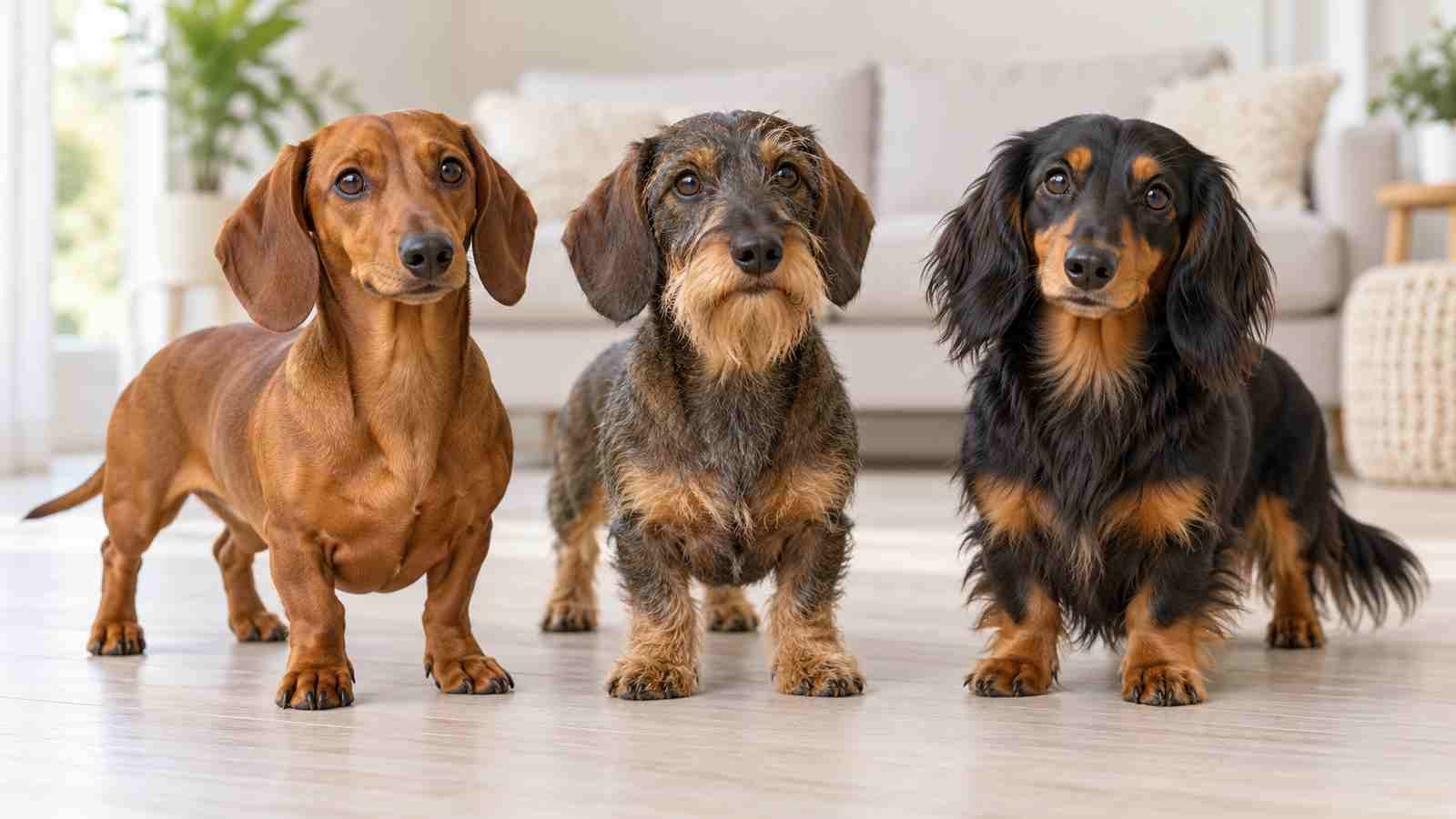
There are six main types of dachshunds: three coats (smooth, wirehaired and longhaired) in two sizes (standard and miniature). That’s how the AKC and the UK’s Royal Kennel Club split the breed. Europe’s FCI adds a smaller rabbit size, which makes nine.
So when you’re working out which type you have, or which one you want, you’re really making two choices. Coat is one and size is the other. Pretzel is a miniature, so that’s half of his label, and his coat is the other half. Colors and patterns like dapple or cream sit on top of those two choices without making a new type.
How many types of dachshunds are there?
The number of dachshund types depends on the registry: six under the AKC, nine under the FCI, and six under the Royal Kennel Club, which registers each one as a separate breed. All three agree on the three coats and disagree on sizes.
Under the AKC standard, the dachshund “is bred with three varieties of coat” and shown in two sizes. Miniatures “are not a separate classification” but a class division for dogs 11 pounds and under at 12 months or older, as you’ll see in the AKC’s official dachshund standard.
| Registry | Sizes | Coats | Types in total |
|---|---|---|---|
| AKC (US) | Standard, miniature (11 lb and under at 12 months) | Smooth, wirehaired, longhaired | 6, as one breed |
| FCI (Europe) | Standard, miniature, rabbit (measured by chest at 15 months) | Smooth, wire-haired, long-haired | 9, as one breed |
| Royal Kennel Club (UK) | Standard, miniature | Smooth, wire, long | 6, each registered as its own breed |
FCI standard number 148 gives Germany as the breed’s origin. It describes three sizes and three coats “resulting in nine varieties”, and it sizes a dog by measuring around the chest instead of putting it on a scale. The UK goes the other way. Keeping six separate registers means its numbers can show you how popular each type really is.
Which type of dachshund is the most common, and which is the rarest?
The miniature smooth is the most common type of dachshund in UK registrations, with 8,908 of the 14,658 registered in 2025, about 61%. The rarest is the standard longhaired, with 91 puppies registered that year, under 1%.
Those figures come from the Royal Kennel Club’s quarterly hound statistics. I added up the four 2025 quarters for each of the six dachshund breeds, and every total matched the year figure the club prints. Keep the limits in mind, though. These are pedigree puppies registered in the UK, so they don’t cover US dogs or pets that were never registered.
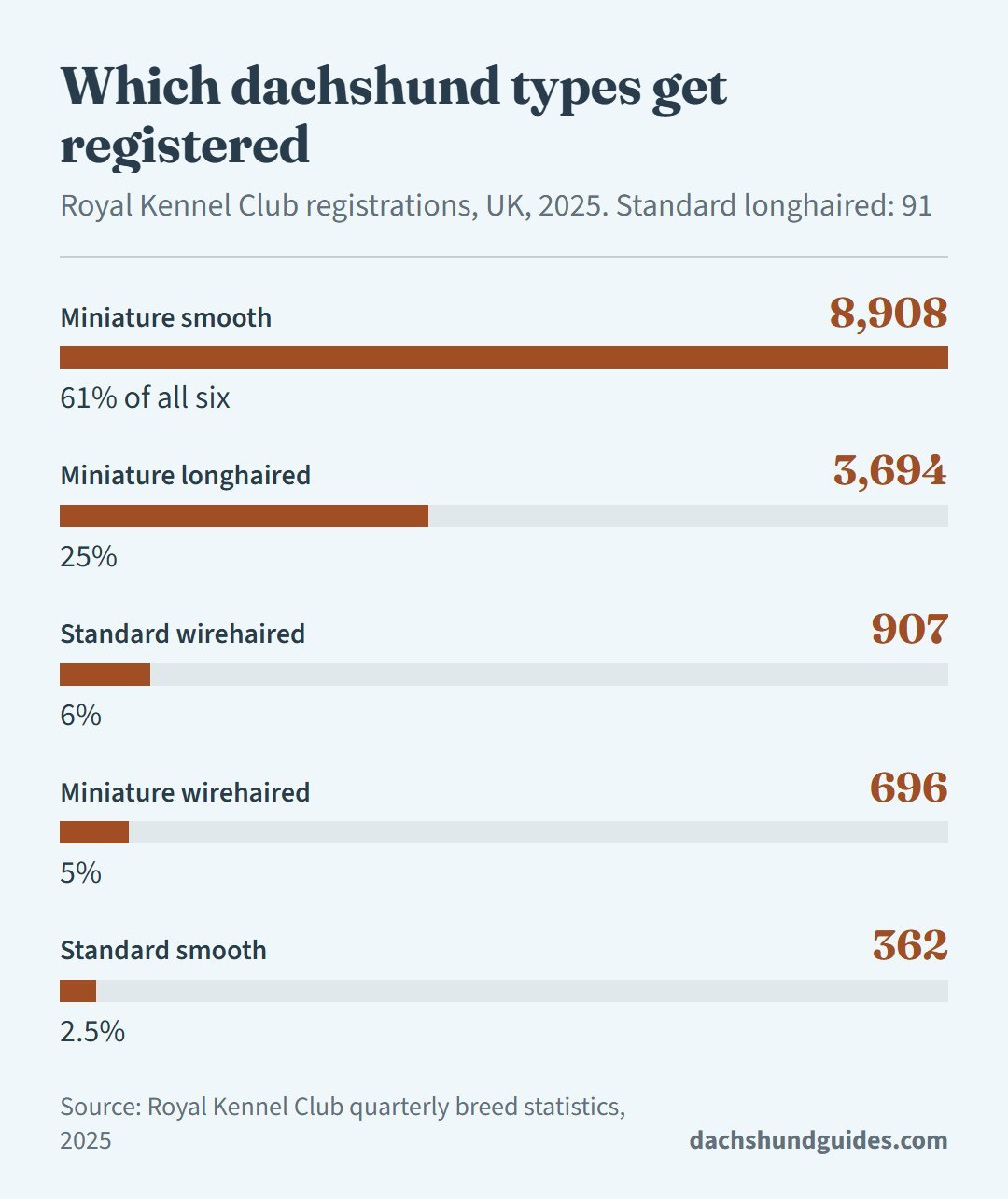
Put the miniatures together and you get 13,298 registrations, about 91% of the breed. Standards are close to disappearing from UK paperwork, with 907 wirehaired, 362 smooth and just 91 longhaired.
Is there a US version of this? Not really. The AKC ranks the dachshund as a single breed in its popularity list, so you won’t find a count by coat or size to compare against.
Popularity looks different next to temperament data. Dachshund Health UK, a UK dachshund health charity, surveyed owners about behavior. Miniature smooths came out as the hardest variety to house-train and the most likely to be nervous of people, while standard longhaireds and wirehaireds (“Longs” and “Wires” in the survey) were the most outgoing and friendly.
That puts the UK’s most registered type at the hard end of the house-training scale. My dachshund temperament guide has the full breakdown. It’s owner-reported, so read it as a tendency, not a promise about your dog.
The three dachshund coats
You’ll notice the coat every day, mostly at grooming time. Each coat comes in both sizes, and the AKC holds all three to the same body standard.
Smooth
A smooth coat should be “short, smooth and shining”, neither too long nor too thick, in the AKC’s words. Of the three, it needs the least work. A wipe-down and a quick brush now and then keeps it looking right. My long hair vs short hair comparison covers shedding and upkeep side by side.
Wirehaired
Wirehaired dachshunds have a tight, short, thick, rough outer coat over a softer undercoat, according to the AKC, plus a beard and eyebrows that change the whole face. The standard even calls a missing undercoat a fault. If you like a dog that looks a bit like a scruffy terrier, you’ll probably love this one. The wire haired dachshund guide goes into coat care.
Longhaired
Longhaired dachshunds carry “sleek, glistening, often slightly wavy” hair that’s longer under the neck, on the chest and belly, on the ears and behind the legs. It looks elegant, and it’s the coat that asks you for the most brushing. You can read about the coat gene and the care routine in the long haired dachshund guide.
Dachshund sizes and the labels no registry uses
Dachshunds come in two official sizes in the US and the UK, standard and miniature, and three under the FCI, which adds the rabbit size. Tweenie, teacup and micro are names sellers and owners use, and no registry defines them.
Weight is how the AKC splits them: a standard is usually 16 to 32 pounds, and a miniature is 11 pounds and under at 12 months or older. My standard vs mini comparison lines up size, lifespan and back problems if you’re torn between the two.
Europe’s FCI doesn’t weigh the dog at all. It measures chest circumference at 15 months or older, and its rabbit dachshund is 27 to 32 cm around the chest for males and 25 to 30 cm for females. Since the AKC has no rabbit size, a dog that small simply shows as a miniature in the US. You’ll find how it’s measured in the kaninchen dachshund guide.
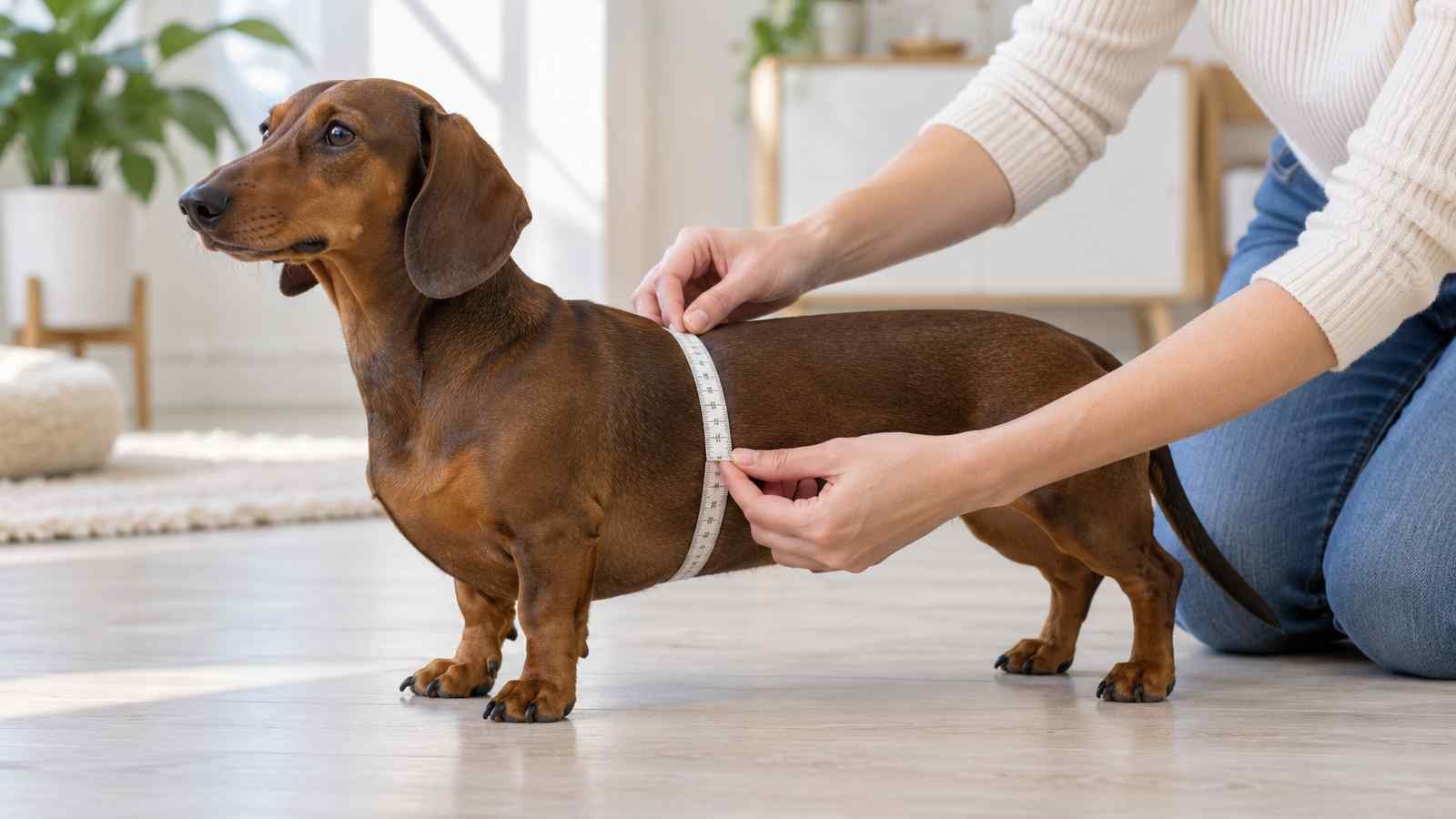
What about a dog in between? From 11 to 16 pounds, a dachshund is too heavy for the AKC’s miniature class and lighter than the usual standard range, and owners call these dogs tweenies. “Teacup” and “micro” are a different matter, because they’re sales words for a small miniature. If a seller uses them, the teacup dachshund article explains what you’re actually being sold.
When an owner on r/Dachshund asked whether the vet had made a mistake by writing “mini” on papers for a puppy the seller called a tweenie, the most upvoted practical answer was that it’s only a weight label:
“Probably going to be on the bigger side if the dad was a standard but it’s not really a mistake. There’s no difference between minis, Tweenies and standards. It’s just a weight classification, my boy was meant to be a mini but he’s 9.2kg and that’s a healthy weight for his size. You’ll be able to see as he grows. If he’s got big paws and a wide tail he’s probably going to be big.”
– r/Dachshund, May 2025 (184 upvotes)
Mini, tweenie or standard?
Enter your puppy’s weight and age, and the Puppy Weight Calculator estimates the adult weight from veterinary growth records. Pick the toy group for an expected miniature or the small group for a standard; it flags a toy-group result that lands over the AKC’s 11-pound miniature line.
Try the weight calculatorAre colors and patterns separate types?
Colors and patterns aren’t separate types of dachshund. A red, a black and tan, a cream or a dapple can be any of the coats and sizes, so “isabella dachshund” or “piebald dachshund” describes the color, not a third axis.
Watch for this when a listing calls a color rare and prices it like a different dog. The AKC standard lists one-colored dogs like red and cream, and two-colored dogs like black, chocolate, wild boar, gray (blue) and fawn (Isabella) with tan or cream markings. My dachshund colors guide goes through each one, and patterns like dapple get their own page.
Dachshund types: quick answers
What is the calmest type of dachshund?
The calmest types of dachshunds in Dachshund Health UK’s owner survey were the longhaireds, standard and miniature, which owners rated the least excitable. Standard and miniature smooths were rated the most excitable.
Owners in a r/dachshunds thread on exactly this question mostly agreed longhairs were calmer, but not all of them:
“No. My gram had a short haired female that was one of the calmest dogs I’ve ever seen. My long haired female is high strung and anxiety ridden.”
– r/dachshunds, February 2025 (12 upvotes)
What is a tweenie dachshund?
A tweenie dachshund is a dog between about 11 and 16 pounds, too heavy for the AKC’s miniature class and lighter than the usual standard range. It’s an owner term, not a registry size.
If you’re choosing, decide on the coat first, because you’ll be brushing it every week for 12 years or more.
Size mostly decides how much dog you’re carrying up the stairs.
