
Kaninchen Dachshund: The Rabbit Size and How It’s Measured

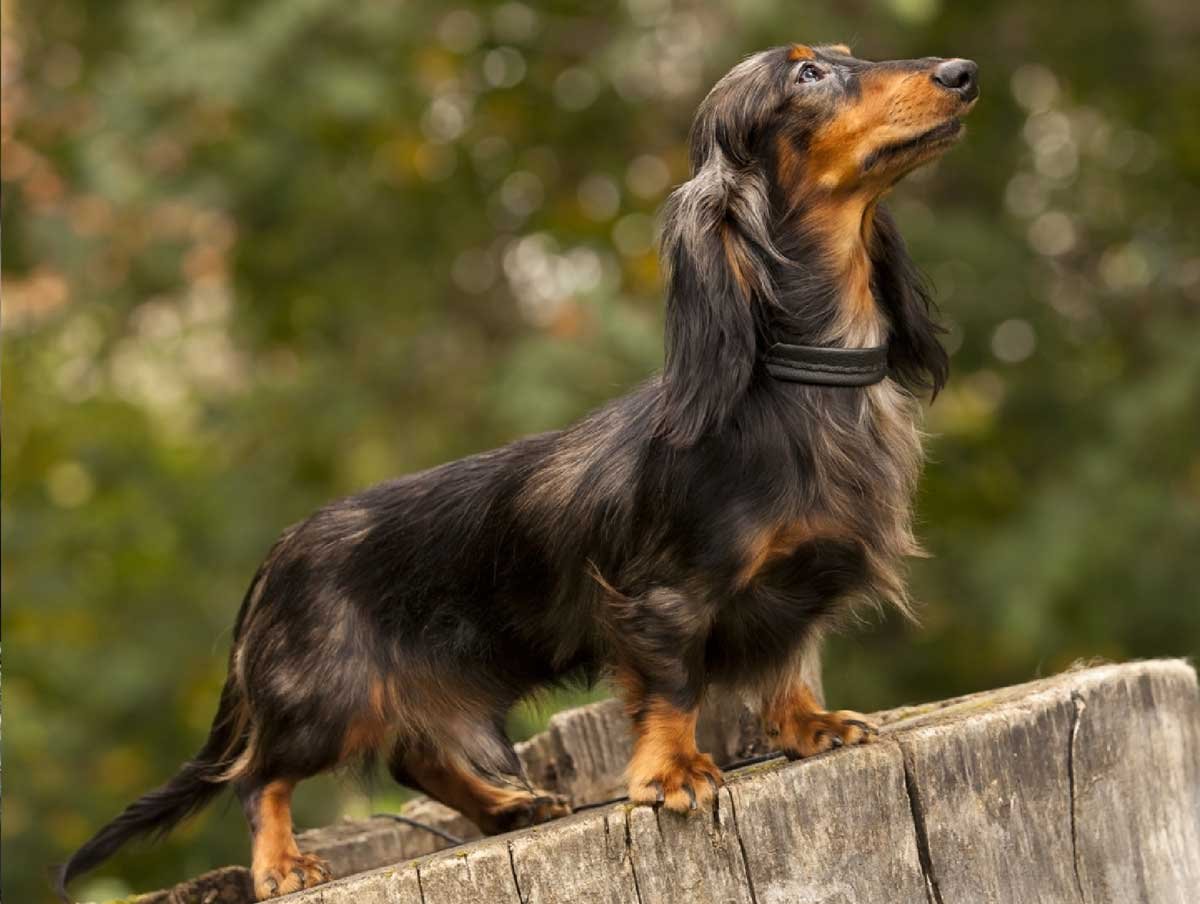
A kaninchen dachshund is the smallest of the three dachshund sizes in the FCI breed standard, the one used in Germany and most of Europe. Kaninchen is German for rabbit, so you’ll also see it called the rabbit dachshund. Under the current standard, it’s defined by chest circumference rather than weight: 27 to 32 cm for males and 25 to 30 cm for females, measured at 15 months or older.
The AKC doesn’t have this size, so if you’re in the US, you’ll find the smallest dachshunds shown as miniatures.
Kaninchen vs miniature vs standard
The FCI standard for the dachshund describes one breed in three sizes and three coats, smooth, wire-haired and long-haired, which makes nine varieties. Here are its size bands, with inches added by us:
| Size | Males (chest) | Females (chest) |
|---|---|---|
| Standard | over 37 cm, up to 47 cm (14.6-18.5 in) | over 35 cm, up to 45 cm (13.8-17.7 in) |
| Miniature | over 32 cm, up to 37 cm (12.6-14.6 in) | over 30 cm, up to 35 cm (11.8-13.8 in) |
| Kaninchen (rabbit) | 27 cm up to 32 cm (10.6-12.6 in) | 25 cm up to 30 cm (9.8-11.8 in) |
If you look closely, you’ll notice the bands meet: a male with a 32 cm chest is a kaninchen, and one with a 33 cm chest is a miniature. Between the two smallest sizes, the difference can come down to a centimeter of tape.
How the chest is measured
The standard says you take the chest circumference when the dog is at least 15 months old, running a tape from the highest point of the withers to the lowest point of the chest without pulling it tight.
So a puppy can’t be confirmed as a kaninchen at eight weeks, whatever the listing says. You’d need to measure the adult dog.
Why the chest and not weight? The standard doesn’t say. It describes a dog built for “agile, quick work above and below ground”, and Dogs Queensland’s breed page says the miniature and kaninchen sizes were bred to hunt small prey such as rabbits. Our reading is that a chest measurement tracks the dog’s frame around the ribs, which is what matters in a burrow, while weight also moves with how much the dog eats.
The weight limits you’ll see are out of date
Search for kaninchen dachshund size and you’ll keep running into weight limits. Dogs Queensland’s breed page, for example, says males can weigh up to 3.5 kg (7.7 lb) and females 3 kg (6.6 lb), and that the chest must be 30 cm or less.
Published as valid from 25 May 2021, the current FCI standard sets no weight limit at all. Size is defined by chest circumference alone, with separate ranges for males and females. Some national clubs have caught up. Dogs New Zealand’s breed page already prints the new sex-based ranges.
If you’re buying one, ask the breeder which figure they use. Are they quoting “under 3.5 kg”? Then they’re working from an older description, not the one judges use now.
Is the kaninchen recognized in the US?
Not by the AKC, whose standard says dachshunds are bred and shown in two sizes, standard and miniature, and that miniatures compete in a class for “11 pounds and under at 12 months of age and older”. There’s no third size in it, and no chest measurement either.
In the AKC system, a kaninchen-sized dog would simply show as a miniature in that 11-pound class. The kaninchen label tells you about its size or its European pedigree, not about a different AKC class. Our dachshund vs mini dachshund guide covers the two AKC sizes, and teckel vs dachshund explains the German names.
Can a kaninchen keep up on runs?
We couldn’t find a study on distance running in kaninchens, but owners have argued it out. A February 2026 r/Dachshund thread asking whether a fit kaninchen could build up to 10 km runs drew 639 upvotes, and the top reply came from another kaninchen owner:
“I always let him dictate pace and distance. The moment he slows down, we take a break or I carry him. He’s turning 10 soon and definitely needs more recovery now, but even when he was young and in peak condition, I honestly don’t think 10 km would have been realistic for him.”
– r/Dachshund, February 2026 (322 upvotes)
Another owner in the thread (57 upvotes) summed it up as “Hike yes, run no.” That’s experience, not a vet guideline, so if you want to build up distance with your dog, check with your vet first, given the breed’s back.
Health and lifespan
We couldn’t find any study that reports kaninchen dachshunds on their own. In the largest UK lifespan study, rabbit dachshunds were grouped with miniatures, and that miniature group had a median lifespan of 14.0 years. Our dachshund lifespan guide has the details.
Kaninchens are the same breed with the same long back, so the breed’s main risk, disc disease, applies just as much to your dog. See our guide to dachshund health problems for the warning signs.
Kaninchen dachshund: common questions
Is a kaninchen a separate breed?
No, the FCI standard treats it as one of three sizes of the dachshund, alongside the standard and the miniature, in any of the three coats.
How much does a kaninchen dachshund weigh?
No weight appears in the current FCI standard, which defines the size by chest circumference: 27 to 32 cm for males and 25 to 30 cm for females.
Can a dachshund live with a rabbit?
Be careful if you keep rabbits, because the FCI standard describes the dachshund as a “passionate, persistent and fast hunting dog”, and the kaninchen size is named after the prey it was bred for. Our guide on whether dachshunds get along with other pets covers introductions.
What is a kaninchen dachshund’s temperament?
One temperament covers every size in the FCI standard: “Friendly by nature, neither fearful nor aggressive, with even temperament.”
