
Dachshund vs Mini Dachshund: Size, Lifespan, Back Risk and Temperament Compared

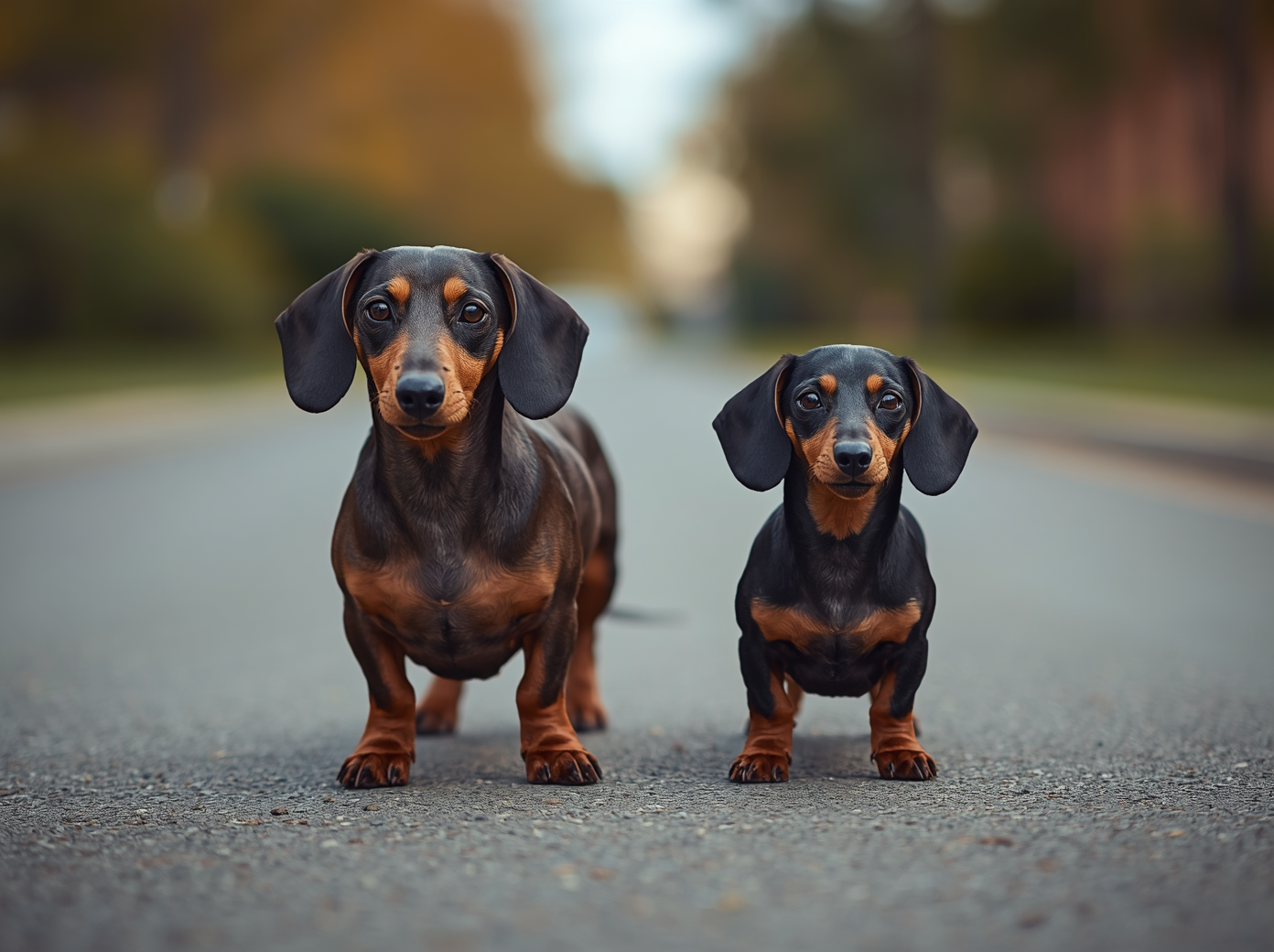
Choose a mini if you want the smallest dog and a slightly longer median lifespan; choose by coat if you’re mainly worried about the back, because disc disease varied more by coat than by size. They’re the same breed in two sizes. The AKC puts standards at usually 16 to 32 pounds and minis at 11 pounds and under at 12 months or older. Minis lived slightly longer in UK data, with a median of 14.0 years against 13.2. Back problems and temperament depend more on coat variety than on size alone.
So if you’re choosing, size isn’t the only thing to compare, and the coat you pick changes the odds more than you’d expect.
Size: what each standard says
The AKC doesn’t treat the miniature as a separate breed or even a separate classification. Its breed standard says miniatures compete in a class division for “11 pounds and under at 12 months of age and older”. Here’s how the two sizes compare:
| Standard | Miniature | |
|---|---|---|
| Weight (AKC) | Usually 16-32 pounds | 11 pounds and under, at 12 months or older |
| Height (AKC) | 8-9 inches | 5-6 inches |
| Chest (FCI, males) | Over 37 cm up to 47 cm | Over 32 cm up to 37 cm |
| Chest (FCI, females) | Over 35 cm up to 45 cm | Over 30 cm up to 35 cm |
The FCI standard used in Europe also has a third, smaller size, the rabbit dachshund, which our kaninchen dachshund guide covers.
There’s a gap between 11 and 16 pounds that neither AKC size covers, and plenty of pet dachshunds fall into it. In US vet records analysed for a growth-chart study, the average adult dachshund fell in a 6.5 to 9 kg group, about 14 to 20 pounds. Owners call these dogs “tweenies”. Our miniature dachshund full grown guide covers how to tell which size yours is.
Lifespan: minis lived slightly longer
A 2024 UK study of 584,734 dogs gave miniature dachshunds a median lifespan of 14.0 years (95% CI 13.7 to 14.2) and standards 13.2 years (13.0 to 13.5). Both beat crossbred dogs at 12.0 years. Compared with crossbreds, the risk of dying at any given point was lower for minis, with a hazard ratio of 0.65, than for standards at 0.77.
That’s about 0.8 years at the median, a real difference in a large dataset that still won’t decide how long your own dog lives. Our dachshund lifespan guide has the full figures.
Back problems: coat matters more than size
Do minis have fewer back problems? Not in a simple way, as the DachsLife 2015 survey of 2,031 UK dachshunds shows. Owner-reported, vet-diagnosed disc disease varied by variety like this:
| Variety | Disc disease |
|---|---|
| Standard smooth | 24.4% |
| Miniature wirehaired | 17.7% |
| Miniature smooth | 17.1% |
| Miniature longhaired | 13.3% |
| Standard longhaired | 12.6% |
| Standard wirehaired | 7.1% |
The highest and the lowest rates were both in standards. If you want a standard, the coat you choose makes the bigger difference: smooth and wirehaired standards were more than three times apart. The miniatures didn’t stand out either way; they sat in between. Our guide to dachshund health problems covers the warning signs.
Temperament: what owners report
Owners in Dachshund Health UK’s 2022 temperament analysis described clear differences by variety, and some of them track size:
- Miniature smooths were the most likely to be nervous of people and the hardest to house-train.
- Miniature longhaireds and miniature smooths were the most likely to bark persistently.
- Standard longhaireds and wirehaireds were the most outgoing and friendly and the easiest to house-train.
So if a calm, easy dog matters most to you, the survey points toward a standard longhaired or wirehaired rather than toward a smaller size. Our dachshund temperament guide has the full numbers.
Which is better for you?
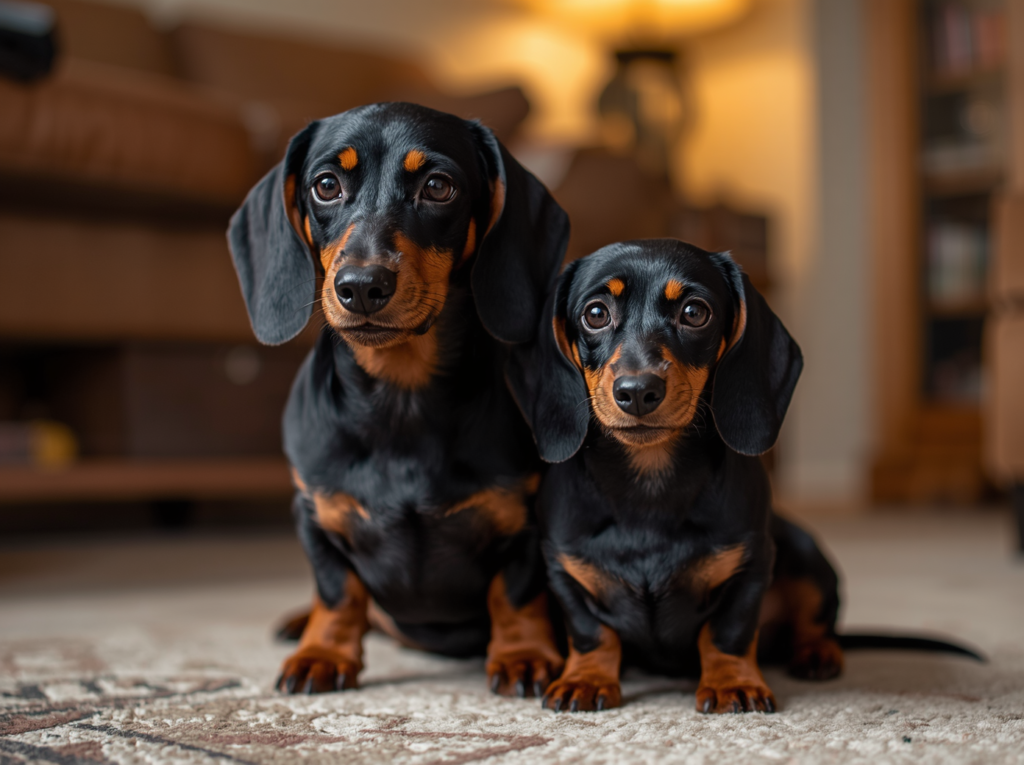
It depends on what you’re optimizing for, and there isn’t one right answer. A mini is easier to carry, and in the UK data it lived slightly longer. A standard gives you more dog, and the standard wirehaired had the lowest disc disease rate of any variety. One owner who chose a big standard on purpose wrote:
“Orik is a large male weighing in at a whooping 32lbs. I intentionally picked a standard breeder. He’s a big boy. According to the vet he is perfect.”
– r/Dachshund, November 2025 (170 upvotes)
Whichever size you pick, ask the breeder for the parents’ adult weights and coat, because the average pet dachshund in those US vet records weighed more than the 11-pound miniature limit.
Dachshund vs mini dachshund: common questions
Is a mini dachshund a different breed?
No. The AKC says miniatures aren’t a separate classification, and the FCI treats standard, miniature and rabbit as sizes of one breed.
How can you tell if your dachshund is a miniature?
Weigh your dog at 12 months or older. Under AKC rules, 11 pounds and under is a miniature; the FCI measures the chest at 15 months instead.
Which dachshund is the calmest?
In UK owner surveys, standard longhaired dachshunds came out with the most positive traits, followed by wirehaired. Miniature smooths were the most likely to be nervous of people.
