How to Choose the Right Coat for a Dachshund: Fit, Warmth, and Comfort

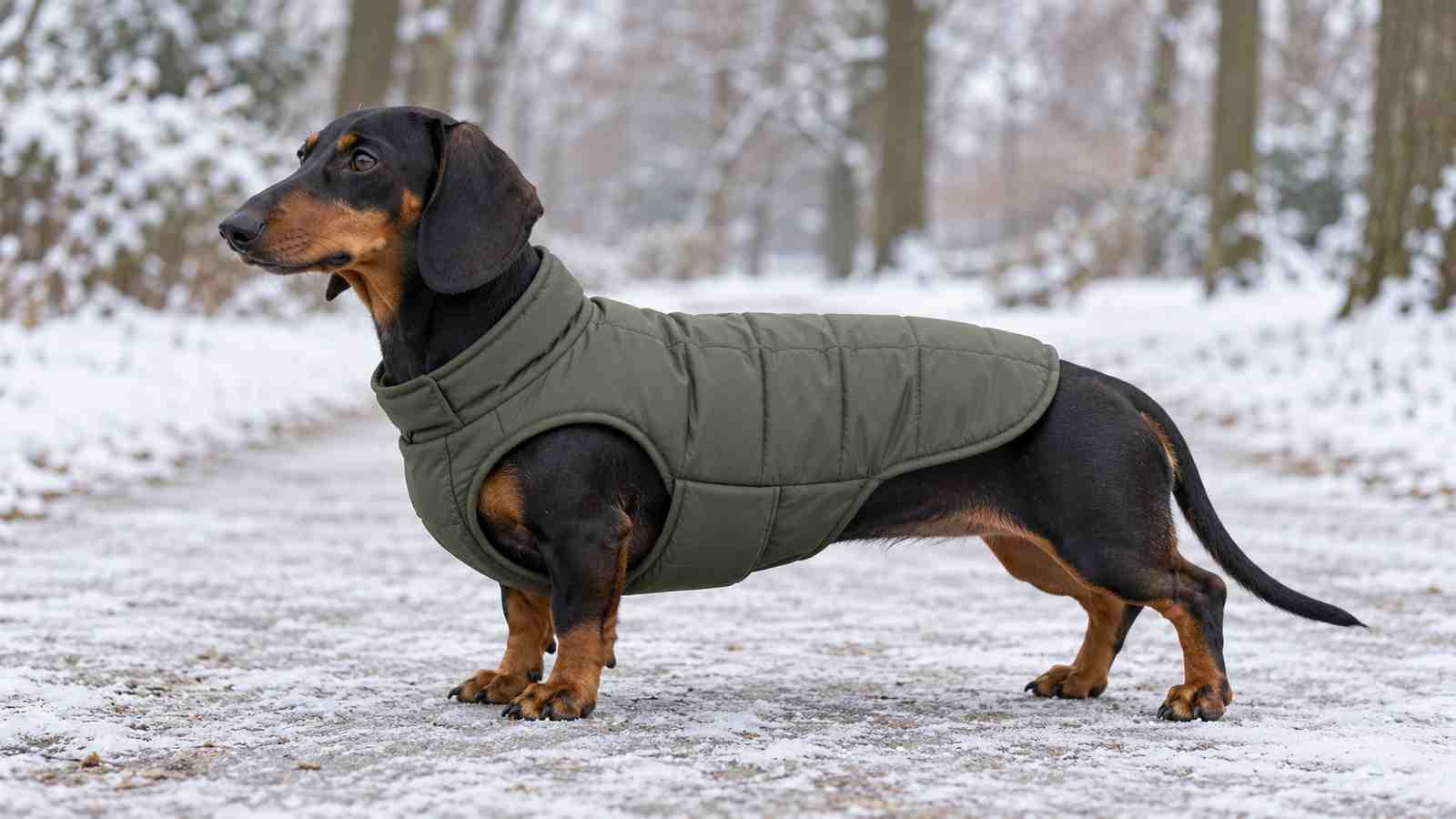
Choosing a coat for a dachshund involves more than finding the right size or picking a warm fabric. Dachshunds have a long back, short legs and often a deep chest, and those proportions are exactly what most dog coats aren’t cut for.
A coat that fits around the chest may be too short along the back. Go up a size for more coverage and the neck can end up loose and the body baggy.
And a thick winter coat that looks warm still isn’t much use if your dog can’t move naturally in it.
Whether you’re shopping for a lightweight layer or a padded winter coat, knowing your dachshund’s proportions will help you make a better choice. Here’s what to check, in the order you’ll need it.
Start with your dachshund’s measurements
Weight is a useful starting point for dog clothing, but it doesn’t tell the whole story. Two dachshunds of similar weight can have different chest, neck and back measurements, and the same coat will fit them differently.
Before you buy, take three measurements:
- Chest circumference: around the widest part of the chest, usually just behind the front legs.
- Neck circumference: around the base of the neck, where the coat is designed to sit.
- Back length: with your dog standing naturally, from the base of the neck to the base of the tail, following the maker’s instructions.
Our dachshund sweater guide walks through each measurement step by step, with typical back lengths for miniatures and standards.
Compare all three numbers with the size chart for the exact coat you want. Don’t assume every garment from one brand runs the same: a light top and a padded winter coat may have different cuts and different room for layering.
Find a comfortable fit around the chest
A dachshund’s chest is often the first place a coat goes wrong. Too tight, and it restricts comfortable movement; too loose, and it shifts around while your dog walks. You want the middle.
That’s the classic sizing dilemma. A coat fits the chest but stops short on the back, and the next size up fixes the length but leaves extra fabric at the neck or body. So what do you go by?
Instead of trusting the size label, hold the coat’s actual measurements up against your dog’s, and look for a cut that fits the chest without going baggy elsewhere.
Once it’s on, let your dog walk, turn, sit and lie down somewhere safe, and watch for fabric that bunches, twists or gets in the way of the legs.
Pay attention to back length
A dachshund’s long back is one of the breed’s most distinctive features, and it matters when you’re choosing outerwear. A coat can sit comfortably on the chest and still end well before the base of the tail, leaving part of the back bare once your dog starts moving.
Longer isn’t automatically better, though. Fabric that runs too far can get in the way of the back legs or rub. One owner in Northern Europe described exactly that trade-off with a second-hand parka on a standard dachshund:
“35cm length is slightly short on him but works fine if the snap on the back is open. 40cm would be perfect. It does chaff a bit on the back legs though.”
– r/Dachshund, January 2026
So the goal is the length that suits your own dog.
Look for coats that list a back-length measurement rather than just small, medium or large. If your dog falls between sizes, send the maker your neck, chest and back numbers and ask. That usually gets you further than picking a size by weight.
Consider belly coverage
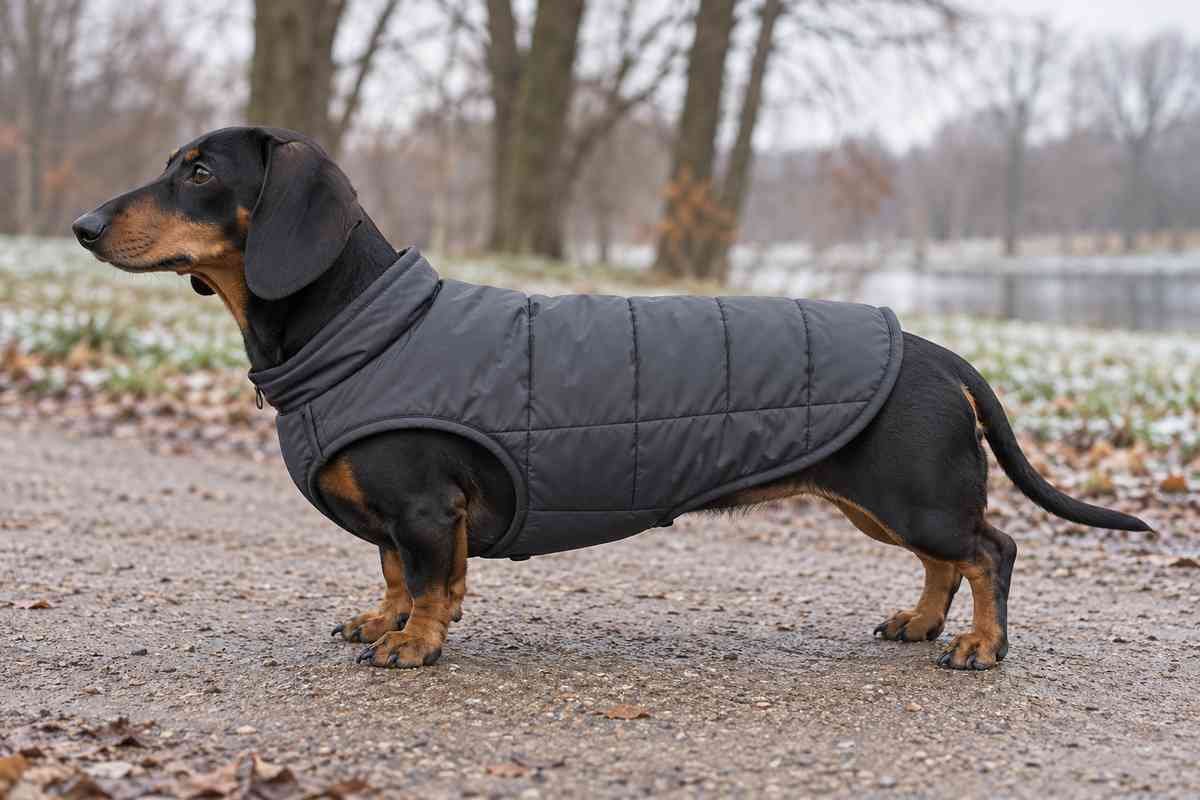
Because dachshunds stand so close to the ground, their underside meets cold pavement, wet grass and muddy paths first. The American Veterinary Medical Association’s cold weather safety advice says short-legged pets may get cold faster because their bellies and bodies are more likely to touch snow-covered ground.
Owners notice it, too. In a 2024 r/Dachshund thread, an owner who’d lived in Erie, Pennsylvania, said their female dachshund loves her parka “mostly because it protects her belly from the snow.”
The owner of a longhaired dog had the opposite problem in autumn, and wondered how many leaves and pine needles their dog managed to fling “into the armpit” on a walk.
So think about your dog’s daily routine. Is it a short walk on a dry sidewalk, or a long outing in cold, wet weather? The first asks much less of a coat.
A coat with a belly panel can cover the underside and cut down on cold air and splashes. It still shouldn’t get in the way of peeing, leg movement or breathing, so check it from several angles and make sure it stays put without pressing tight against the body.
Choose insulation for your dog and the weather
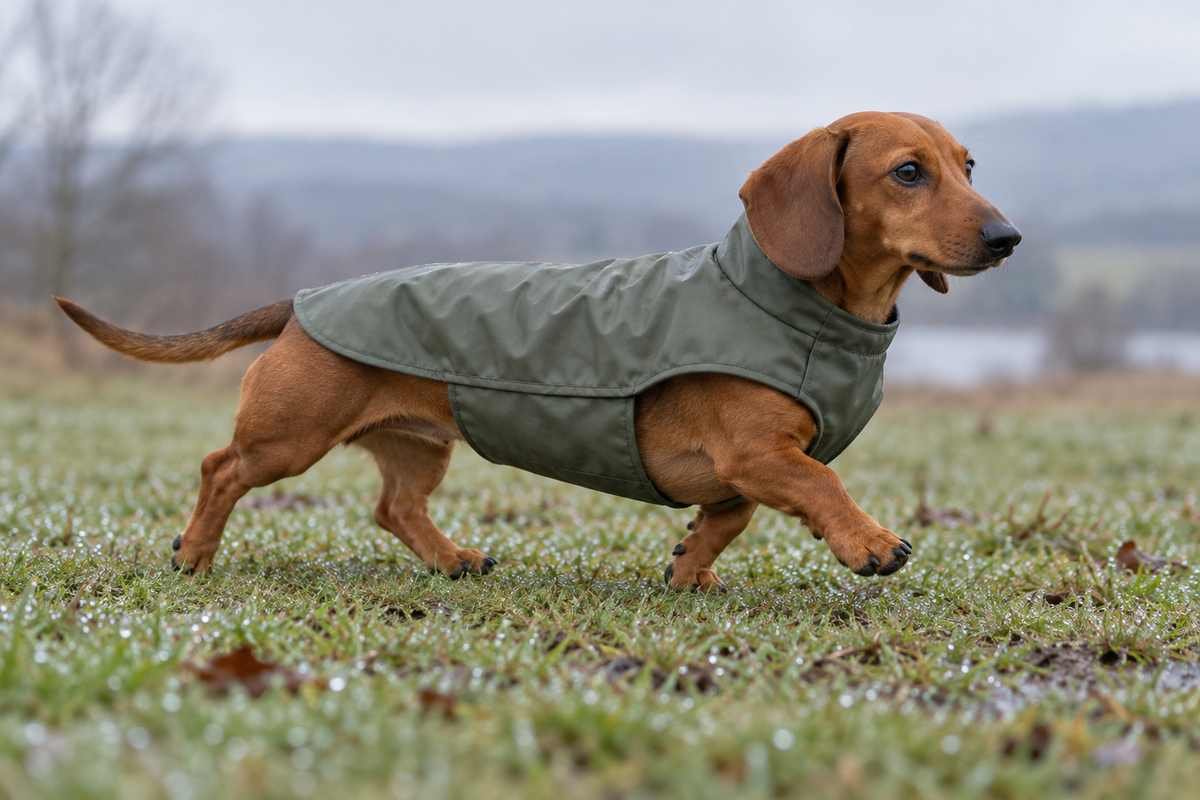
A winter coat adds warmth, but not every dachshund needs the same amount, since coat type, age, body condition, activity level and the weather all change how comfortable a dog is outdoors.
The coat your dog was born with matters most. The AVMA says long-haired or thick-coated dogs tend to be more cold-tolerant, though they’re still at risk in cold weather, while short-haired pets feel the cold faster because they have less protection.
A smooth dachshund often needs more from a coat than a longhaired one does, but go by the dog in front of you.
Think about the temperature, wind, rain and length of the walk, because a padded coat makes sense in real cold, and a lighter layer in milder weather.
Thicker isn’t always better. Your dog should still be able to move freely in it, and you should watch for signs of overheating or discomfort. If you’re not sure whether it’s too cold to go out at all, our guide to when it’s too cold to walk your dachshund covers the temperatures.
Keep a dry coat for wet days
A coat that gets soaked stops doing its job. The AVMA puts it plainly: wet sweaters or coats can actually make your dog colder. It suggests keeping several on hand, so your dog goes out in a dry one each time.
For a dachshund that means two coats rather than one, especially through a rainy stretch. One can dry on the radiator while the other’s on the dog. A waterproof shell for rain and a warmer coat for cold days will see most dogs through the season.
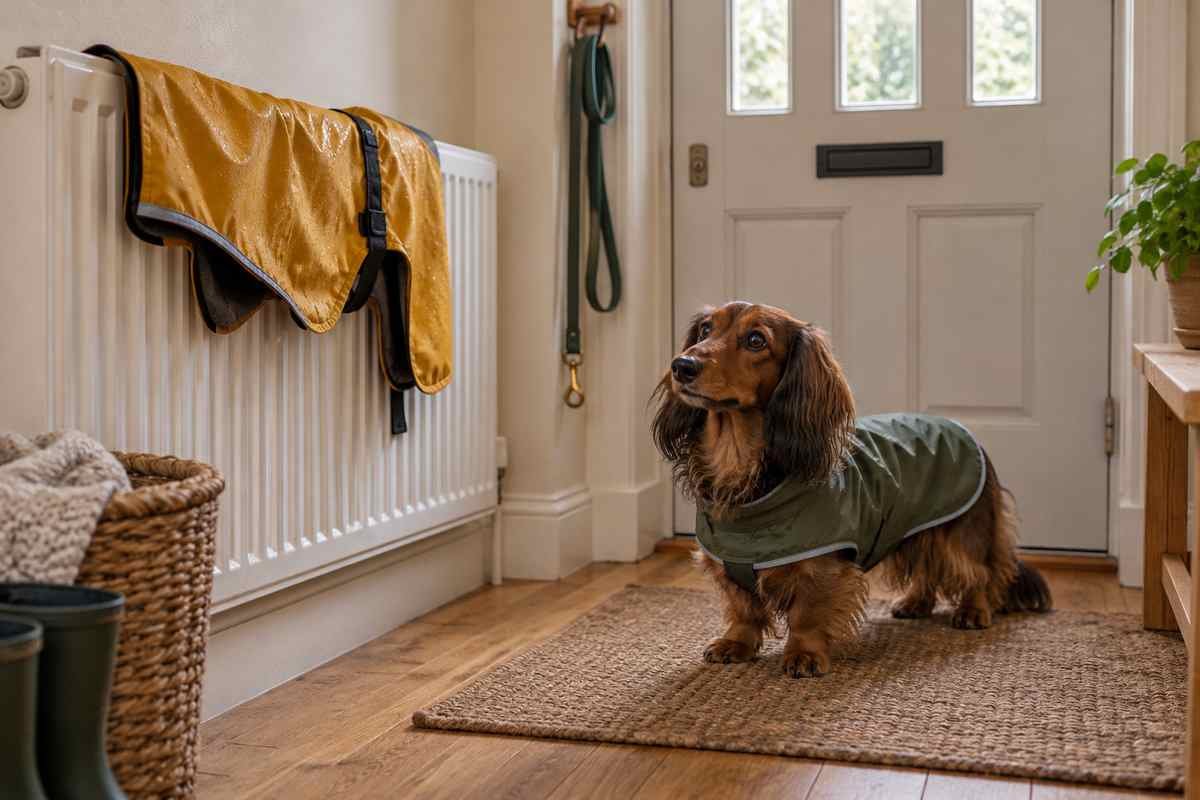
When you get home, check the coat and your dog’s skin for damp, especially around the chest, belly and legs.
The AVMA also advises wiping down your dog’s feet, legs and belly after winter walks, because they can pick up de-icing products and other chemicals your dog might lick off later. On a dachshund, the belly is where most of that ends up.
Look beyond thickness and appearance
Warmth matters, but practical details decide whether a coat works in everyday life:
- Easy fastening: a coat that goes on and off easily makes getting ready for a walk less of a struggle. Some dogs do better without leg holes at all. One r/Dachshund owner said their dachshund can only wear coats that fasten with Velcro under her belly, because “if it had sleeves or holes her front leg would always get stuck.”
- Secure fit: adjusters help keep the coat in place without pressure or looseness.
- Freedom around the legs: your dog should be able to walk, turn, sit and lie down naturally.
- Suitable materials: weigh up weather resistance, insulation, breathability and how easy the fabric is to wash.
- Leash and harness compatibility: check whether the coat works with your dog’s existing walking gear. If your dog walks in a harness, look for a leash opening, or a coat that sits over the harness without lumps.
On that last point, one owner with a waterproof thermal coat skips its built-in harness and puts a regular harness underneath, after another dog in the family “managed to break free from the integral harness.”
If you’re choosing the harness too, our dachshund harness page explains how to size one by chest girth.
Avoid sizing up automatically
When a coat looks too short or tight, the next size up can seem like the easy fix. Sometimes it works. Just as often, though, it trades one problem for another: more back coverage, but a neck opening that gapes and a body that slides around as your dog moves.
Instead, check all three measurements against the maker’s chart. Chest says one size and back says another? Ask the brand before you buy.
And remember that a coat and a lightweight shirt from the same company can fit differently, because a coat is cut with room for layers.
Check the fit before heading outside
Even a coat that matches the size chart needs a test on your dog. Let your dachshund wear it for a little while somewhere familiar, and see whether it stays in place and lets your dog move normally.
Check the neckline, chest, back, belly and the areas around the front legs: the coat shouldn’t pull tight across the chest, slide around or drag on the ground.
If your dog seems uncomfortable, moves oddly or keeps trying to get it off, take it off and rethink the fit.
Some dogs just need a slow introduction. Owners who’ve been through it suggest short sessions every day, a few minutes at a time, while the dog sits, eats or walks around. A comfortable fit matters more than getting your dog into a particular style.
If you’re looking for clothing made around a dachshund’s long-backed shape, you can browse Longback Studio’s dachshund coat collection. The company says each piece is tailored around back length and a deep chest, in Mini, Tweenie and Standard sizes.
As with any brand, check the measurements and features of the individual coat before deciding whether it suits your dog.
Final thoughts on choosing a coat for a dachshund
Chest circumference, back length, belly coverage, insulation and freedom of movement all go into a coat that fits a dachshund well. Start with accurate measurements, compare them with the specific coat, and think about the weather it’ll be worn in.
The best coat isn’t necessarily the thickest or the biggest. It’s the one that covers the back and belly and keeps your dachshund warm and dry while still letting it move comfortably.
About the author: Lucas Cheng is the founder of Longback Studio, focused on breed-specific pet clothing and practical care advice for dachshund families.
