
Dachshund Colors: Every One the Breed Standard Recognizes

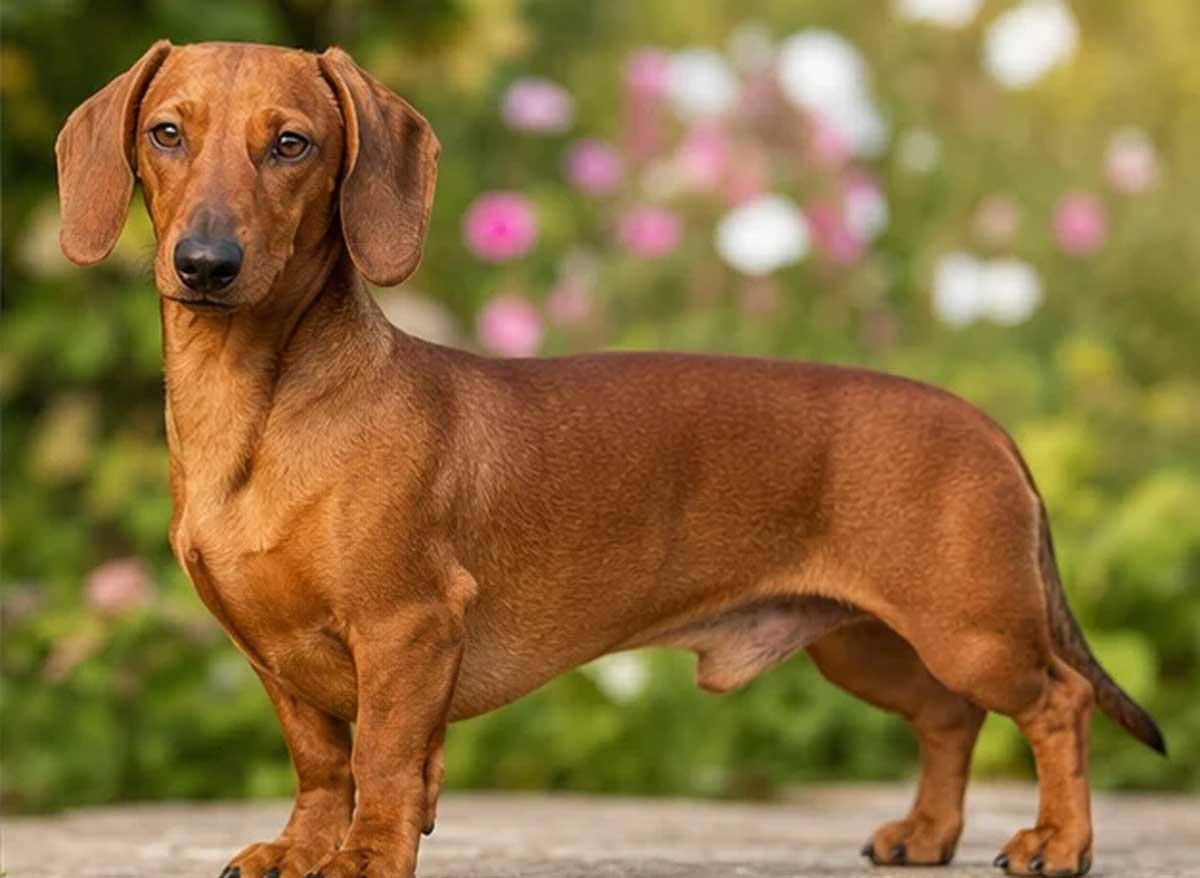
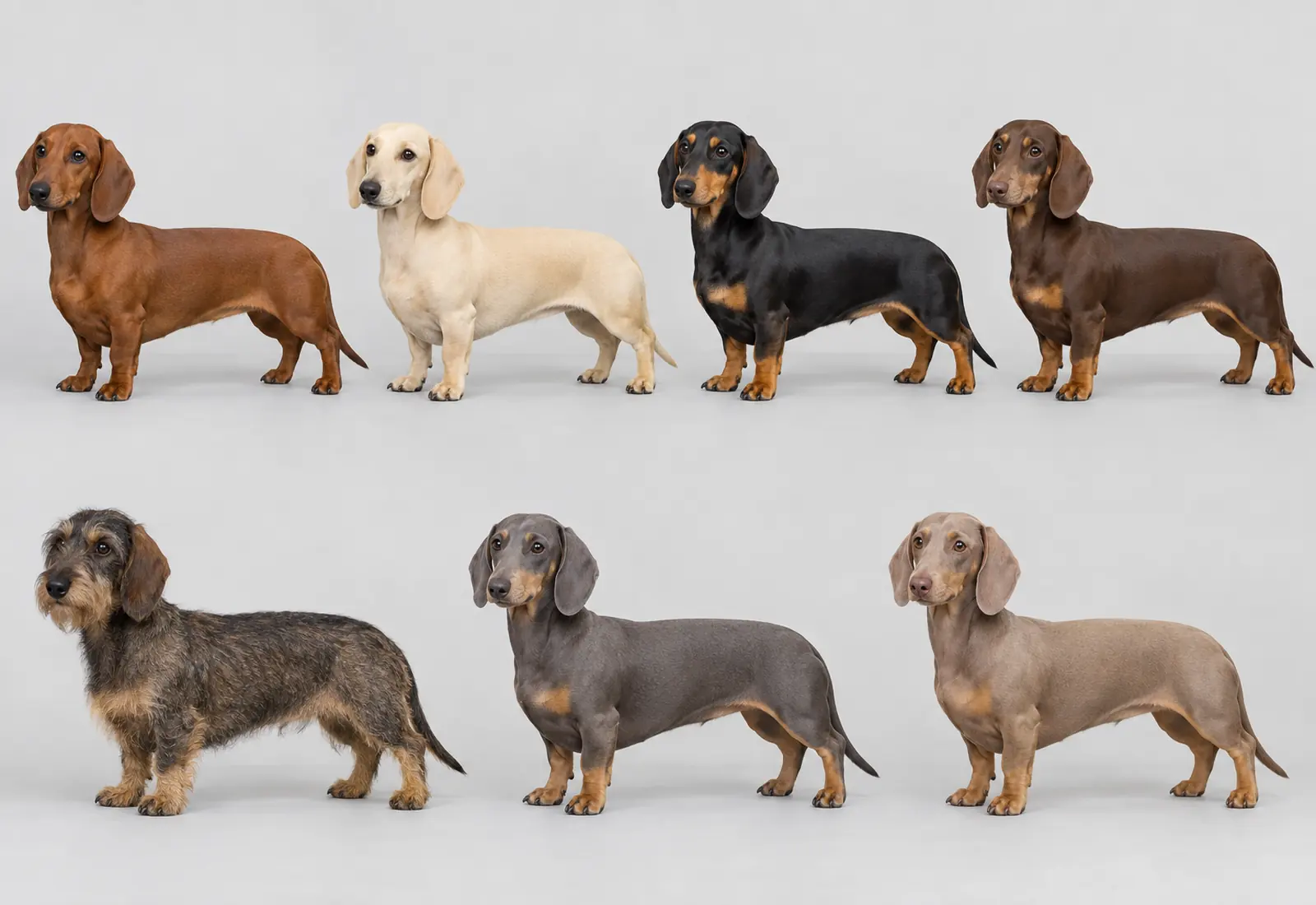
The Dachshund Club of America’s standard names seven base colors: red, cream, black and tan, chocolate and tan, wild boar, gray (blue) and fawn (Isabella). It then names four patterns, which are dapple, brindle, piebald and sable.
Nearly every coat you’ll see advertised is one of those under a different name.
That list is shorter than the ones on most breeder pages, and I think the gap is the most useful thing you can take away. When a seller offers you a color you can’t find in the standard, you’re usually looking at a renamed combination rather than a discovery.
Owners ask about their own dogs constantly, which tells you how slippery the names get:
“Would you guys consider this to be a cream color? when I bought her I was told that she was a cream.” – r/Dachshund, March 2026 (1,690 upvotes)
The seven dachshund colors the standard names
A base color is your dog’s underlying coat color, before any pattern lands on top of it. The DCA lists seven of them.
Its colors and patterns sheet shrinks the picture even further: “There are only two basic pigments that determine color—black & red. White hair is when no pigment is produced.”
Everything else is those two pigments modified. Here’s the full set.
| Base color | What you see | How the standard treats it |
|---|---|---|
| Red | Deep mahogany through to pale gold | One-colored, with or without interspersed dark hairs |
| Cream | Pale blonde, no red tone | One-colored; see the English cream line |
| Black and tan | Black body, tan points | Two-colored |
| Chocolate and tan | Brown body, tan points | Two-colored |
| Wild boar | Banded hairs, a grizzled look, mostly wirehaired dogs | Two-colored |
| Gray (blue) | Smoky slate with points | Two-colored; a dilute of black |
| Fawn (Isabella) | Pale grayish-brown with points | Two-colored; a dilute of chocolate |
The AKC standard is fussy about where the tan sits on a two-colored dog. It wants it over the eyes, on the sides of the jaw and underlip, the inner edge of the ear, front, breast, inside and behind the front legs, on the paws, around the anus, and along a third to half of the tail’s underside.
Too much of it counts as a fault. A little white on the chest is allowed but not wanted.
A pattern is not a color
This is where most of the confusion starts, and the standard is blunt about it. Brindle “is a pattern (as opposed to a color),” and so is piebald.
A pattern sits on top of whichever base color your dog already has. That’s why correct names stack: black and tan dapple, chocolate and tan dapple, red piebald.
- Dapple is the merle pattern. Lighter areas against the darker base, and the standard says neither the light nor the dark should dominate.
- Brindle puts dark stripes across the body. On some dogs you only see it in the tan points.
- Piebald is white spotting over the base color, with clearly defined patches and no lighter shading inside the colored areas.
- Sable is a uniform dark overlay on a red dog. The overlay hairs are double-pigmented, each tip much darker than the base.
Say the base color first and the pattern second, and you’ll be speaking the same language as a pedigree.
Wild boar is the awkward one, and the DCA says so itself. Although its standard lists wild boar as a color, the club’s sheet calls it “more likely a pattern in Dachshunds, seen most typically in Wirehaired Dachshunds (and sometimes in Smooths).” It reads as banding on each hair, with the base color closest to the skin, which gives that grizzled look. So is it a color or a pattern? The club hedges, and that is the honest answer.
Two of these patterns also come with a parent rule you can check before a litter is even born. Brindle needs at least one brindle parent. A true sable needs a sable parent, and its hairs are banded with two colors.
The two colors called rarest are the two the club warns about
Gray (blue) and fawn (Isabella) carry the biggest premium, and they are the only two the DCA attaches a health note to. Its sheet says both are dilutes, gray of black and fawn of chocolate, then adds that these dilutes “may also be associated with health issues, such as thin coats, skin sensitivity, vaccine failures and reduced lifespan.”
That’s the breed club, in its own document, about two colors its own standard permits.
It isn’t a ban and it isn’t a scare. It’s a trade you should know you’re making before you pay extra, because the premium is being charged for the dilution itself.
So what do you ask? Ask a breeder what they’ve seen in their dilute lines, coat and skin especially. Someone who has worked with them for years and tells you there’s nothing to discuss hasn’t read the same sheet you have.
Piebald or dapple? The test most pages get backwards
Look at the eyes first. Blue eyes, whole or partial, are explicitly acceptable on a dapple and are a disqualification on a piebald. One feature, two verdicts, same standard.
I want to flag something, because it caught me out when I started reading about patterns. Many pages, including Google’s own AI summary for this search, describe piebald as asymmetric patches on white.
The DCA says close to the opposite. Piebalds “typically have symmetrical markings on the head (with or without a white blaze), a white tipped tail and may have freckling.” Asymmetric marking with large areas of white, especially on feet, belly and sides, is what it describes for double dapples.
So if you’ve been using symmetry as your test, which way round did you learn it? Two features settle it faster:
- Eyes. Any blue means dapple, not piebald. The AKC standard calls partial or wholly blue eyes on a dapple “as acceptable as dark eyes,” and a disqualification on a piebald.
- Ticking. Small flecks of color in the white areas are acceptable on a piebald. The DCA notes that double dapples never have it.
For the pattern itself in depth, there’s a full guide to the dapple dachshund, and a side-by-side on piebald vs dapple that goes further into the genetics.
Names that aren’t in the standard
“Silver dapple” is the one you’ll meet most often. It isn’t a color in the standard at all. The DCA says a black and tan dapple is “often mistakenly referred to as a ‘Silver’ Dapple.”
Isabella, on the other hand, is real. It’s the standard’s own alternative name for fawn.
Sable gets misapplied nearly as often. The DCA notes that red longhairs with a dark overlay are frequently mistaken for sable, and that sable is thought to share a gene with wild boar. If the seller can’t name a sable parent, the label is a guess.
Then there’s the red dapple problem, which matters more than it sounds. Red dapples exist, but the DCA warns they’re hard to spot, and “the dappling on a Red may quickly fade visually.” Sometimes birth is the only moment it was obvious.
That’s why most breeders pair dapple dogs only with black and tan or chocolate and tan. It stops them doubling up on a dapple nobody could see.
Doubling up is the thing to avoid. Breeding two dapple carriers can produce double dapples, and the DCA lists deafness, reduced eye size and missing eyes among the results. A seller offering a litter from two dapple parents is telling you something about how they plan matings.
What dachshund colors don’t tell you
Color predicts less than the marketing suggests. The AKC standard opens its color section by saying base color “is immaterial,” which is a judge’s way of saying it doesn’t decide whether the dog is a good one.
Temperament is a common thing to hope for from a color chart, and neither document offers it. The standard judges temperament on its own terms, and the DCA’s color sheet makes no personality claims about any of the seven.
If a page tells you one color is calmer than another, that claim isn’t coming from either of these two documents.
Health works the same way, with the dilute note above as the one exception. Bruno had a disc episode a few years ago, surgery and a long recovery, and none of it had anything to do with what color he is.
The risks I’d put on a list for a breeder sit somewhere else entirely. See the breed’s common health problems for the ones that earn your questions.
When color or pattern puts a dog out of the ring
On a piebald, the AKC standard disqualifies partially or wholly blue eyes, a head more than 50 percent white, white on any part of either ear, and white around the eyes. A pure white dog with no body spots is disqualified outright.
Show people need this, and pet buyers sometimes want it too, because a disqualifying feature can say something about how a litter was bred.
Wall eyes are a serious fault on any dachshund except a dapple, where they’re fine. Nails may be partly or wholly white on a piebald.
None of this affects whether a dog makes a good companion, and all of it affects paperwork.
Dachshund colors: what owners ask
What are the rarest dachshund colors?
Gray (blue) and fawn (Isabella) are the hardest to find of the seven the standard names, and both are dilutes that the DCA associates with thin coats, skin sensitivity, vaccine failures and reduced lifespan. Wild boar is uncommon outside wirehaired dogs.
Neither document publishes frequency figures, so treat any percentage you see elsewhere as an estimate.
What dachshund colors does the AKC recognize?
One-colored: red and cream. Two-colored: black, chocolate, wild boar, gray (blue) and fawn (Isabella), each with tan or cream markings. Patterns: dapple, brindle, piebald and sable. The standard adds that base color is immaterial to judging.
Which rare dachshund color is blue?
Gray. The standard writes it as “gray (blue)”, so the two words mean one coat, a dilute of black that reads as smoky slate.
It isn’t a reference to eye color, which is a separate matter and depends on whether your dog is dappled.
Is double dapple a color?
No. It’s the result of breeding two dapple carriers together, and the DCA lists deafness, reduced eye size and missing eyes among its associated problems. Double dapples are usually marked asymmetrically with large areas of white, and never show ticking.
Do miniature dachshunds come in the same colors?
Yes. Miniatures aren’t a separate breed in the AKC standard. They compete in a class division for dogs 11 pounds and under at 12 months or older, and the same color and pattern rules apply.
If you’re weighing the two sizes, the standard vs miniature comparison covers the rest.
Can you tell a puppy’s adult color at eight weeks?
Not reliably, and red dapples are the clearest example. The DCA says the dappling on a red can fade visually, sometimes leaving birth as the only moment it showed.
Ask what the parents were, and ask what the breeder recorded at whelping. The DCA adds that DNA testing can help identify a dog’s color or pattern, which is the only way to settle a faded red dapple.
