
Piebald vs Dapple Dachshund: What’s the Difference?

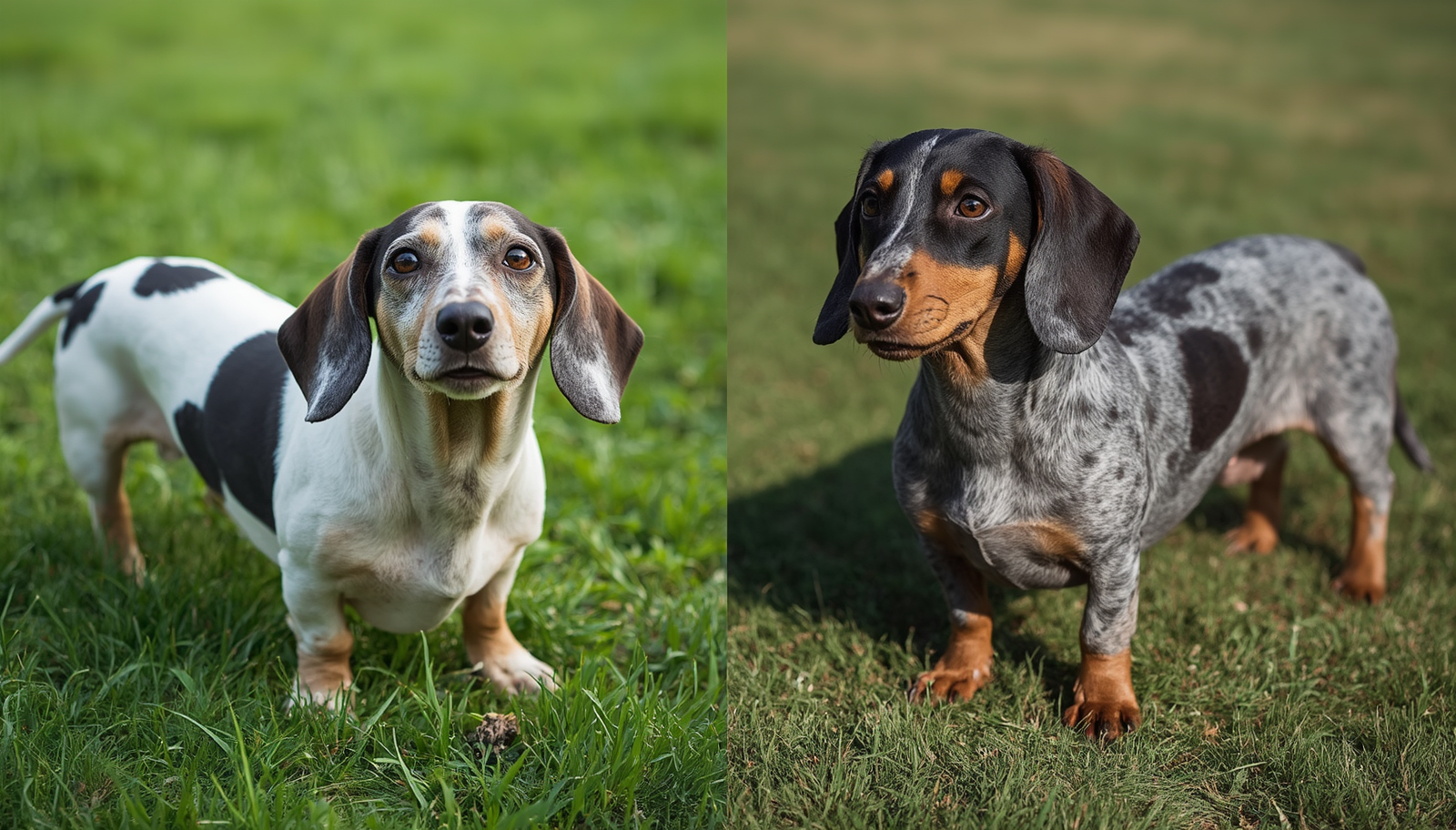
The first time I saw a piebald vs dapple dachshund side by side, I thought I was looking at completely different breeds. One had bold white patches with clean, crisp borders the other had a hypnotic swirling of colors that looked like a watercolor painting had come to life. Both were undeniably beautiful. Both were 100% dachshund. But the differences between them go far deeper than aesthetics.
If you’ve been researching the piebald vs dapple dachshund debate, you’re not alone. With the Dachshund breaking into the AKC’s top five most popular dog breeds in 2025 the first time it’s cracked that milestone interest in their unique coat varieties has surged dramatically. Whether you’re a future Doxie parent or a seasoned breeder, understanding these two patterns is absolutely worth your time.
The piebald vs dapple dachshund topic might seem niche, but with Doxies now sitting in the AKC top five, it’s a question millions of dog lovers are asking. Let’s break it all down.
What Makes a Piebald Dachshund Unique?
When you’re exploring the piebald vs dapple dachshund question, the piebald pattern is usually the more immediately recognizable of the two. Piebald dachshunds feature a white base coat adorned with solid patches of a second color commonly chocolate, black, red, or cream with clean, well-defined borders. There’s no blending, no swirling, no mottled effect. Just bold contrast.
Genetically, piebald is a recessive trait. This means both parents must carry the piebald gene for a puppy to display the pattern. You won’t accidentally produce a piebald litter unless both sides of the breeding pair contribute.
Some quick piebald facts worth knowing:
- Piebalds typically have at least 80% white coat coverage, though this varies widely
- White on the head should stay under 50% to be considered a true piebald
- Their paws usually have white fur, and tails often show a white tip
- Brown or dark eyes are the norm blue eyes are not a piebald trait
What Makes a Dapple Dachshund Unique?
In the piebald vs dapple dachshund comparison, the dapple pattern is the showstopper that stops people in their tracks. Dapple dachshunds carry the merle gene, which creates a swirling, marbled, or mottled effect within colored areas of the coat. The result is a coat that shifts between lighter and darker shades of the same base color almost like sunlight filtered through leaves.
Unlike piebald, dapple is a dominant gene. That means only one parent needs to carry it to potentially produce dapple offspring. This genetic dominance also comes with a caveat: breeding two dapple dachshunds together creates a “double dapple,” which carries significant health risks including deafness, blindness, and other congenital defects.
Key dapple characteristics include:
- Blue eyes or partially blue eyes are common in dapple dachshunds
- The pattern appears as lighter patches over a darker base color not crisp, but blended
- A single dapple parent is enough to pass the trait to offspring
- Dapple can appear over any base color, creating stunning combinations like chocolate dapple or black and tan dapple
Piebald vs Dapple Dachshund: Side-by-Side Comparison
When placing the piebald vs dapple dachshund patterns under the microscope, the visual and genetic differences couldn’t be more stark. Here’s a clear breakdown:
| Feature | Piebald Dachshund | Dapple Dachshund |
|---|---|---|
| Gene Type | Recessive | Dominant |
| Pattern Appearance | Solid patches on white base | Marbled/mottled swirls on base color |
| Edge Definition | Clean, crisp borders | Blended, irregular edges |
| Eye Color | Brown/dark (no blue) | Often blue or partially blue |
| Parents Required | Both must carry piebald gene | Only one parent needs dapple gene |
| Double Pattern Risk | Low; no “double piebald” issue | High; double dapple causes health defects |
| AKC Recognition | Yes | Yes |
| White Coverage | Typically 80%+ of coat | Variable; usually less than piebald |
The Genetics Behind Each Pattern
Understanding the piebald vs dapple dachshund difference at a genetic level helps you become a more informed buyer or breeder. The piebald vs dapple dachshund distinction is rooted in two entirely separate genetic mechanisms.
How Piebald Genetics Work
Piebald in dachshunds is controlled by the MITF gene, which regulates how melanin (color pigment) is distributed across the skin and coat. When a dog inherits two copies of the recessive piebald allele (one from each parent), the white spotting appears. Carriers dogs that have only one copy will look completely normal but can pass the gene to their offspring.
How Dapple (Merle) Genetics Work
Dapple is caused by a SINE insertion in the PMEL gene, which disrupts normal pigment production and creates those characteristic lighter patches within a colored coat. Because it’s dominant, even one copy produces the visible dapple effect. The danger arises with two copies this creates a “double merle” or double dapple situation, which is widely discouraged by responsible breeders and breed health organizations.
According to the AKC, breeding two dapple dachshunds can result in puppies born with severely impaired vision, hearing loss, or both making genetic awareness non-negotiable for anyone involved in dachshund breeding.
Health Considerations: Piebald vs Dapple Dachshund
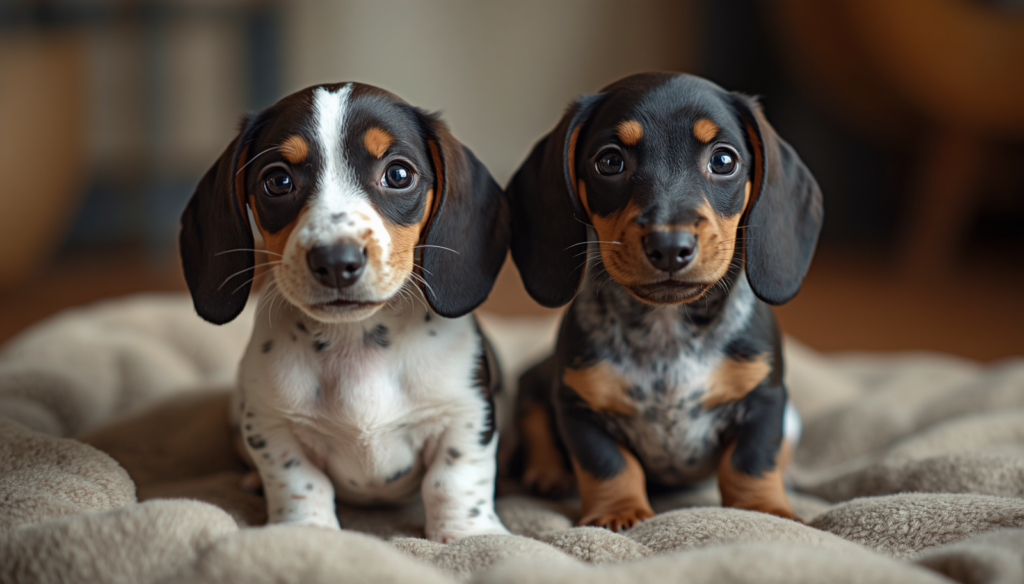
This is where the piebald vs dapple dachshund conversation takes a serious turn. Both patterns can carry health risks, but they differ significantly in severity and likelihood.
Piebald Health Risks
Extreme white coats in piebalds particularly when white extends significantly across the head have been associated with a higher risk of congenital deafness. This is linked to the absence of pigment-producing cells in the inner ear, a phenomenon seen across multiple breeds with high white coverage.
Dapple Health Risks
Single dapples, while visually gorgeous, carry their own low-level risks related to the merle gene. Double dapples are the real concern puppies produced from two dapple parents can suffer from:
- Vision impairment or blindness (including micro-eyes or missing eyes)
- Congenital deafness
- Asymmetrical or otherwise malformed eye development
If you’re researching the piebald vs dapple dachshund question with a health-first lens, single piebalds generally carry fewer severe risks than double dapples. However, any extreme white coloring in either pattern warrants discussion with a knowledgeable veterinarian.
My Personal Take: Choosing Between the Two
I’ll be honest with you when I was first trying to decode the piebald vs dapple dachshund question, I was purely seduced by aesthetics. That marbled dapple coat felt otherworldly. But the more I learned about the genetic risks behind double dapples, the more I found myself gravitating toward the clean elegance of a well-marked piebald.
There’s something deeply satisfying about a chocolate piebald trotting across the grass with those bold, clean-edged patches bold and graphic, like a living piece of art. That said, a single dapple from a responsible breeder who DNA-tests their stock? Equally stunning and equally safe.
The piebald vs dapple dachshund decision should never be made on looks alone. It should factor in the breeder’s ethics, the parents’ genetic profiles, and your own preparedness for any health needs that might arise.
For a deeper dive into Dachshund-specific care, breeding history, and variety breakdowns, visit our Dachshund Guides section it’s packed with research-backed resources for every Doxie lover.
Can a Dachshund Be Both Piebald and Dapple?
Yes and this is one of the most misunderstood aspects of the piebald vs dapple dachshund world. A dapple piebald dachshund inherits both genes simultaneously, resulting in a white base coat (from the piebald gene) where the colored patches also show marbled, swirling dapple effects. These dogs can have either brown or blue eyes, and their patterns are uniquely unpredictable no two look quite alike.
Crucially, a dapple piebald is not the same as a double dapple. They may look similar to the untrained eye, but the genetics are entirely different. If you’re unsure which pattern your dachshund carries, genetic testing through services like Embark or Wisdom Panel can provide a definitive answer.
What the Numbers Tell Us
In 2025, the Dachshund replaced the Poodle in the AKC’s top five most popular breeds a milestone the breed had never previously achieved. In 2024, 13,941 Dachshund litters were registered with the AKC, and 19,826 individual Dachshunds were registered overall. That’s a massive population and within it, coat pattern diversity like the piebald vs dapple dachshund split is more relevant than ever for breeders making responsible decisions.
As demand for visually distinctive Doxie coats grows alongside overall breed popularity, understanding patterns at the genetic level isn’t just for breeders it’s increasingly relevant for any prospective owner walking into a conversation with a seller.
How to Identify a Piebald vs Dapple Dachshund at a Glance
Still confused when you see one in person? Many new Doxie owners struggle with the piebald vs dapple dachshund identification challenge. Here are fast identification tips:
- Look at the edges of colored patches. Clean, sharp borders = piebald. Blended, irregular, watercolor-style edges = dapple.
- Check the eyes. Blue eyes, whole or partial, mean dapple. That one isn’t a judgment call. The AKC standard calls partial or wholly blue eyes on a dapple “as acceptable as dark eyes,” and on a piebald it’s a disqualification.
- Look for ticking. Small flecks of color in the white areas are acceptable on a piebald. The Dachshund Club of America notes that double dapples never have it, so ticking argues against a double dapple.
- Look at whether the markings are symmetrical. The DCA describes piebalds as “typically symmetrical markings on the head (with or without a white blaze), a white tipped tail,” and describes double dapples as “usually marked asymmetrically” with large areas of white on feet, belly and sides. Plenty of pages have this the wrong way round, so check which version you learned.
- Go outside. Natural daylight reveals dapple’s mottling far more clearly than indoor lighting, where it can look almost solid.
How Often Each One Turns Up
So which one is actually rarer? The two inheritance patterns answer that better than any percentage can.
Piebald is recessive, and the DCA notes the pattern “can be carried through generations before being expressed.” A piebald litter can turn up from two parents that never showed it. Dapple needs only one dapple parent.
What keeps dapples from being commoner still is deliberate. The DCA says most breeders pair dapples only with black and tan or chocolate and tan, because a red dapple’s marking can be hard to see and pairing two carriers risks a double dapple.
Neither the AKC nor the DCA publishes frequency figures, so treat any percentage you’re shown as an estimate. If you want the full recognized list of dachshund colors and where your dog’s pattern sits in it, start there.
FAQ: Piebald vs Dapple Dachshund
1. Is a piebald dachshund the same as a dapple dachshund?
No. Piebald and dapple are two different coat patterns caused by different genes. Piebald is a recessive gene that creates solid-colored patches on a white base, while the dapple (merle) gene is dominant and produces a mottled or marbled pattern within the colored areas of the coat.
2. Are dapple dachshunds more expensive than piebald dachshunds?
In many cases, yes. Dapple Dachshunds—especially those with blue eyes or rare coat colors—often cost more than Piebald Dachshunds. However, pricing also depends on coat type, pedigree, breeder reputation, health testing, and overall rarity.
3. Are piebald dachshunds healthy?
Yes. Most Piebald Dachshunds are healthy. However, dogs with extensive white markings, particularly around the head and ears, may have a slightly increased risk of congenital deafness. Like all Dachshunds, they are also susceptible to Intervertebral Disc Disease (IVDD) because of their long backs.
4. Can you breed a piebald dachshund with a dapple dachshund?
Yes, but responsible breeding practices are essential. Puppies may inherit both coat pattern genes and produce dapple piebald offspring. Reputable breeders perform DNA testing and carefully evaluate both parents to reduce genetic health risks before breeding.
5. How can I tell if my dachshund is piebald, dapple, or a double dapple?
Visual appearance can provide clues, but it isn’t always reliable. The most accurate way to identify your Dachshund’s coat genetics is through DNA testing. Double Dapple Dachshunds often have larger irregular white patches, blue eyes, or eye abnormalities, but only genetic testing can confirm the coat pattern with certainty.
