
Dachshund Scottie Mix: Bladder Risk From One Side, a Better Back Than You’d Think

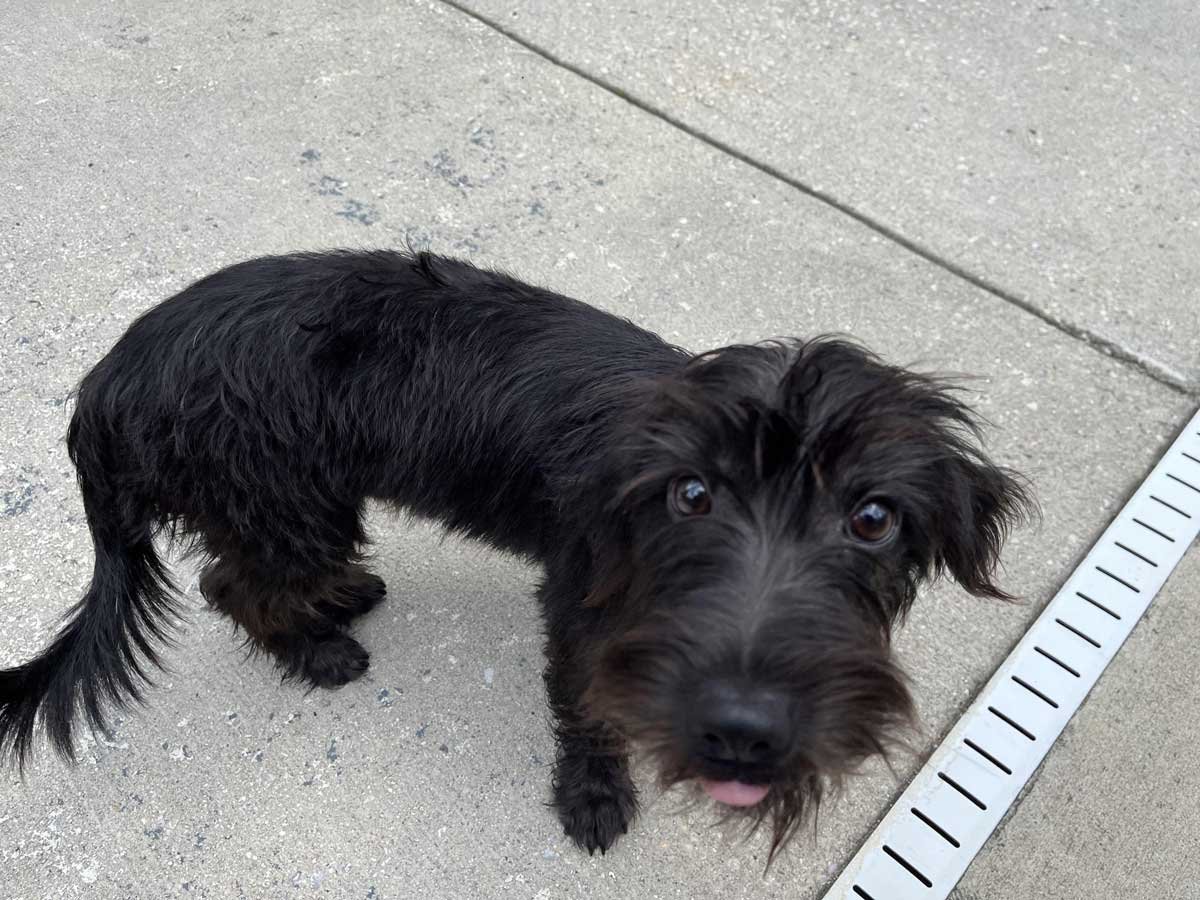
Put a Scottish Terrier together with a standard or miniature dachshund and you get the dachshund Scottie mix, which you’ll see sold as a Doxie-Scot. You can expect a small, sturdy, independent dog with a wiry or smooth coat and strong opinions about strangers.
Two things about this cross rarely get mentioned. The Scottie side is linked to a high rate of bladder cancer, and there’s something you can do about one of the risk factors. Your dog’s back, on the other hand, comes out better than in most dachshund crosses.
What a Doxie-Scot is
There’s no breed standard and no measured sample of these dogs, so I’m not going to invent a size range for the cross. Here’s what the AKC lists for each parent:
| Dachshund | Scottish Terrier | |
|---|---|---|
| Height | 8-9 in (standard), 5-6 in (miniature) | 10 in |
| Weight | 16-32 lb (standard), 11 lb and under (miniature) | 19-22 lb (male), 18-21 lb (female) |
| Life expectancy | 12-16 years | 12 years |
With a standard dachshund parent, the two overlap closely in weight, while a miniature parent will usually pull your puppy smaller, so ask which size it was.
The Scottie side: bladder cancer and lawn chemicals
Scottish Terriers are well known in veterinary research for bladder cancer. Purdue University researchers reported from an earlier study that Scotties are about 20 times more likely to develop bladder cancer than other breeds.
The same group then compared 83 Scotties with bladder cancer against 83 Scotties treated for unrelated problems. Dogs exposed to herbicide-treated lawns and gardens had between four and seven times the risk, and the greater the exposure, the higher the risk.
Should you panic? No, and two cautions come with that figure. It’s an association from a case-control study, not proof that a particular chemical causes the cancer, and the lead researcher said the results don’t mean everyone should avoid treated lawns. It’s also purebred Scottie data, and nobody has studied whether your Doxie-Scot inherits the same susceptibility.
Still, it’s one of the few cancer risks where you can do something. If your dog has a Scottie parent, I’d keep it off lawns that have just been treated, and pay attention to any change in how an older dog urinates, because that’s worth a vet visit at any age.
The back: one copy, not two
Here’s the good news for you. A 2019 UC Davis study found that disc disease is driven mainly by an extra FGF4 gene copy on chromosome 12, which acts in a dominant way. Dachshunds carried it at an allele frequency of 0.99.
Scotties are short-legged too, but for a different genetic reason. The study notes that breeds carrying only the other copy, on chromosome 18, such as the Scottish Terrier and the West Highland White Terrier, aren’t considered at high risk for disc disease.
What does that mean for your puppy? It will almost certainly get one disc-disease copy from the dachshund parent, and usually no second one from the Scottie. That’s a better position than a basset or corgi cross, where both parents carry it. One copy is still enough to raise the risk, though, so don’t treat the back as safe.
Among purebred dachshunds, the DachsLife survey of 2,031 dogs found 15.7% had been affected by disc disease. I’ve been through disc surgery with Bruno, so I’d still plan for it with any long-backed cross. There’s more in our guide to dachshund health problems.
What to ask the breeder
You’ll want to see health results for the Scottie parent before you commit, and according to the AKC, the Scottish Terrier Club of America recommends three tests for breeding stock:
- Patella evaluation, for slipping kneecaps.
- A DNA test for von Willebrand disease type III, a bleeding disorder.
- Craniomandibular osteopathy screening, a bone condition of the jaw and skull.
Ask to see the Scottie parent’s results, and ask which size the dachshund was. If a breeder can’t tell you either, you’ve learned something useful about that breeder.
Coat, training and other pets
Scotties have a harsh, wiry outer coat over a soft undercoat. The AKC says it’s ideally hand-stripped about once a month, and that clipping is acceptable but will eventually lose the harsh texture, with clipped coats kept on a six- to eight-week schedule. If your Doxie-Scot gets that coat, plan for the same.
Keep your training sessions short, since the AKC recommends sessions of no more than 15 minutes, varied so the dog doesn’t get bored, and describes the breed as independent enough to test you.
If you have a cat, watch it closely, because the AKC says the Scottie’s hunting instinct remains strong, which can complicate life for the neighbor’s cat, and that Scotties can be cantankerous around other dogs. The AKC also describes the dachshund as bred to be an independent hunter, so careful introductions matter on both sides. Our guide to a dog chasing the cat covers what actually helps.
Dachshund Scottie mix: common questions
What is the life expectancy of a dachshund terrier mix?
No one has measured it for this cross. The AKC lists the Scottish Terrier at about 12 years and the dachshund at 12-16 years, which is the only data available.
What is a cross between a Chihuahua and a dachshund called?
A Chiweenie. It’s covered in our Chihuahua dachshund mix guide.
What is a Basset Hound dachshund mix called?
Usually a Basschshund. The dachshund basset mix guide explains why that cross gets the disc gene from both sides, unlike a Doxie-Scot.
What are the best dachshund mixes?
There isn’t one best cross, because each partner breed brings its own risks. The dachshund mixes page compares the common ones.
