
Is Peppermint Oil Safe for Dogs? Not on Them or in a Closed Room


Is peppermint oil safe for dogs? Not in concentrated form. Don’t put it on your dog’s skin, in food or water, or run it in a diffuser in a room your dog can’t leave. Essential oils pass quickly through skin, gut and lungs, and no one has set a safe dose of peppermint oil for dogs.
A sealed bottle on a high shelf won’t hurt anyone. The trouble starts when the oil gets onto a dog or into the air of a small room the dog lives in, and a small dog like a dachshund takes the same drop on far less body weight.
Is peppermint oil safe for dogs?
Concentrated peppermint oil isn’t safe for dogs. The American College of Veterinary Pharmacists’ Pet Poison Control page lists nausea, vomiting, an altered mental state and fatigue as signs of toxicity, notes a risk of liver failure, and says there is “no established threshold for toxicity.”
The route matters less than you’d hope. The Merck Veterinary Manual’s chapter on essential oils, reviewed in March 2025 by a Pet Poison Helpline veterinarian, says these oils are “readily and rapidly absorbed through the GI tract, skin, lungs, and mucous membranes.”
A drop rubbed on your dog’s coat ends up licked off and swallowed as well.
Here’s the honest limit. The case records for peppermint on its own aren’t as deep as for tea tree or pennyroyal, and Merck’s chapter doesn’t single it out. That’s a gap in the research, and nobody has shown a safe amount either.
A 2024 study in the Journal of Veterinary Science tested five essential oils, peppermint among them, against ticks and fleas. Only clove and one other oil went on to the skin test on 60 dogs, so peppermint was never tested on a dog’s skin.
Why some sites say peppermint is fine for dogs
You’ll find peppermint dog shampoos and “natural” flea sprays for sale, which is why so many owners end up confused. One owner on Reddit summed it up:
“Some articles say it can cause extreme harm and even kill a dog, while others say it’s harmless and is even used in dog-approved products.”
– r/dogs, November 2025
Part of the answer is in federal pesticide law. Peppermint oil is on the EPA’s list of minimum risk pesticide ingredients in 40 CFR 152.25, alongside lemongrass, rosemary and geranium oils. Products built only from those ingredients don’t have to be registered, so no EPA reviewer signed off on them for your dog.
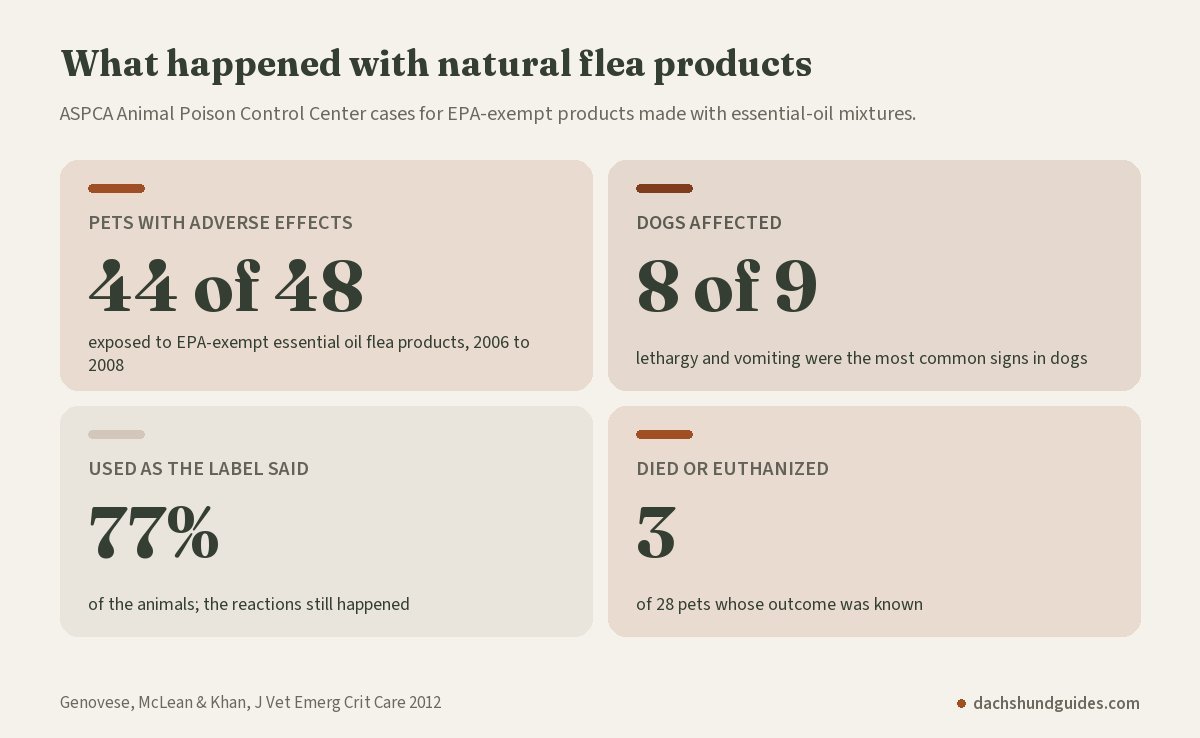
Poison-control records show what that can mean. The ASPCA Animal Poison Control Center reviewed calls about these exempt, plant-based flea products from 2006 to 2008 (Genovese et al., Journal of Veterinary Emergency and Critical Care). Of 48 pets, 44 had adverse effects, including 8 of the 9 dogs.
The products had been used as the label directed in 77% of those animals, and dogs most often showed lethargy and vomiting.
Of the 28 pets with a known outcome, half recovered after a bath, while the others needed IV fluids, muscle relaxants or seizure medication, and 3 died or were euthanized.
A 2026 review of the study names peppermint, thyme, cinnamon and clove among the oils in those products.
The worst case on record is a close relative. Pennyroyal is a mint, and in 1992 the Journal of the American Veterinary Medical Association described a dog treated for fleas with pennyroyal oil from a health food store. It vomited within two hours and died within 48, despite emergency care.
So what about that peppermint shampoo? It’s a diluted product that usually didn’t have to be tested on dogs before it reached the shelf, so it isn’t proof the oil is safe.
If you’ve been spraying peppermint oil for roaches or mice, keep your dog off those floors and baseboards, and wipe them down.
Can you diffuse peppermint oil around a dog?
It’s safest not to run an active diffuser with peppermint oil in a room your dog spends time in. Does the type of diffuser matter? Merck says it does.
Passive ones, such as reed diffusers, “do not emit actual droplets of oil.” Ultrasonic and nebulizing diffusers do, and those microdroplets “can collect on hair” when a pet is in the same room.
Oil on the coat gets licked. That’s how an air freshener turns into an oral dose.
There isn’t a study that measured what a home diffuser does to a dog, so nobody can give you a safe number of minutes or drops.
If you want to keep using peppermint, use a passive diffuser, put it where your dog can’t knock it over, and leave a door open so your dog can walk away from the smell. A dog that leaves the room, sneezes or drools when it’s on is telling you something.
Signs of essential oil poisoning in dogs
Drooling, vomiting, lethargy, wobbliness and tremors are the signs to watch for after an essential oil exposure. In a 2014 ASPCA study of 337 dogs and 106 cats poisoned by 100% tea tree oil, signs appeared within 2 to 12 hours and lasted up to 72 hours.
PetMD also lists trouble breathing, pawing at the mouth and red lips, gums or skin.
If your dog has licked, eaten or been coated in peppermint oil, call before you do anything else. The ASPCA Animal Poison Control Center is at (888) 426-4435 and Pet Poison Helpline at (855) 764-7661, and both may charge a fee.
Have the bottle in your hand, your dog’s weight, and a rough idea of how much and when.
Turn off the diffuser and get your dog into fresh air while you wait. Don’t give anything by mouth unless the person on the phone tells you to.

Essential oils that are toxic to dogs
Tea tree, pennyroyal, wintergreen, peppermint, cinnamon, citrus, pine, ylang ylang, sweet birch, hyssop and lemongrass all appear on PetMD’s list of oils to keep away from dogs. Tea tree has the strongest record. In that 2014 study, 89% of the 443 animals had been given the oil on purpose, mostly on the skin.
Wintergreen and sweet birch carry methyl salicylate, which Merck says can cause aspirin poisoning. If you’ve read about cinnamon too, can dogs have cinnamon covers why the oil is so much riskier than the spice.
Don’t treat any list of “safe” oils as settled; it isn’t. PetMD calls lavender one of the oils often considered safer, while a veterinarian quoted by the AKC names lavender among the oils that are toxic to pets. When two vet sources disagree, keep the bottle closed.
For fleas, the products your vet prescribes have been through review, which the natural sprays haven’t. Flea and tick prevention for dachshunds walks through those options.
If you also have a cat
Peppermint oil is riskier for cats than for dogs. Why are cats worse off? The veterinary pharmacists’ page calls it “toxic to cats when ingested or inhaled,” and cats outnumbered dogs four to one in the flea-product records. In the tea tree study, younger and smaller cats were more likely to get seriously ill. Merck adds that a cat’s grooming habit raises the risk from oil on the coat.
In a home with both, any diffuser that’s safe enough for the cat is the one to judge by. Can cats have cinnamon explains why cats handle these oils so poorly.
So keep the peppermint oil if you like it. Keep it capped, keep it off your dog, and keep it out of the air your dog can’t escape.
