Dachshund Hair Loss: Where It Starts Tells You a Lot

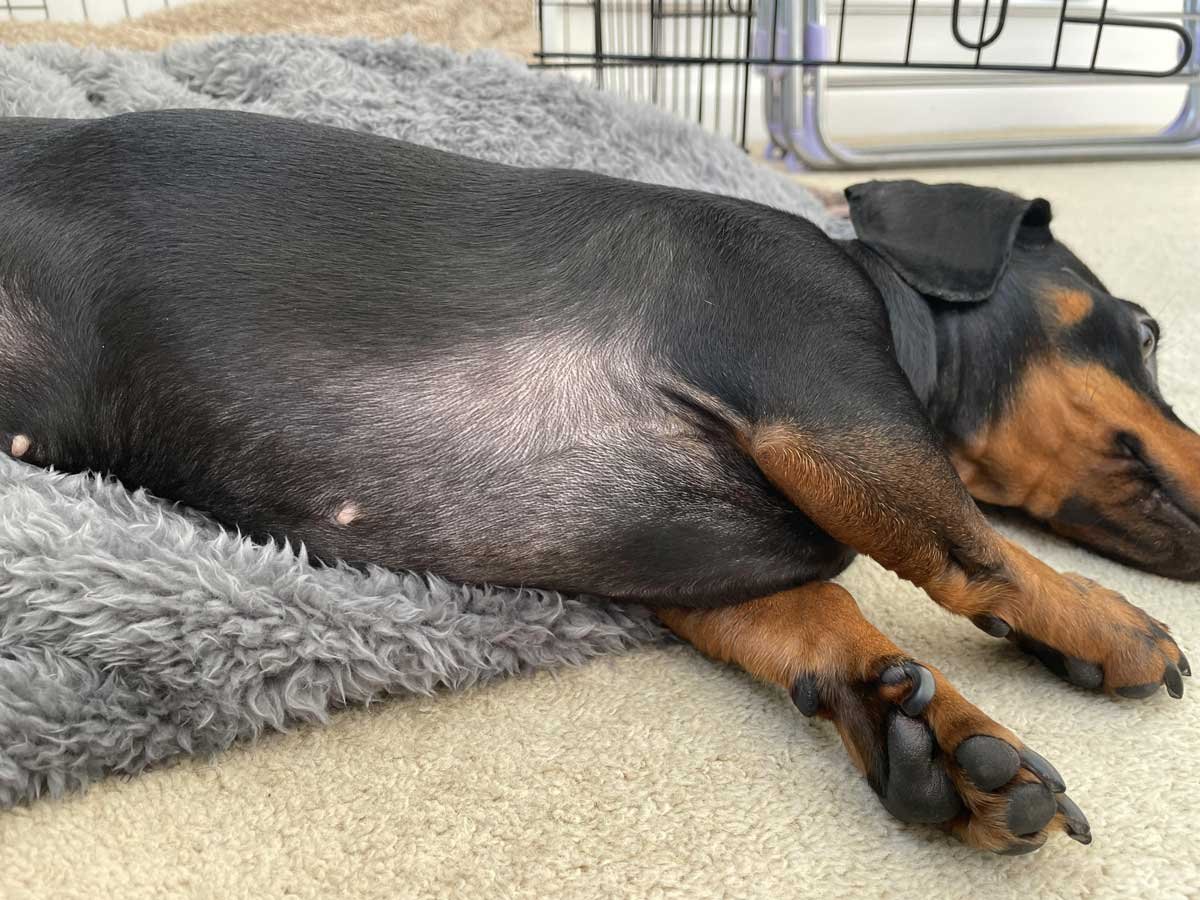
Dachshund hair loss is usually one of a handful of inherited, painless patterns, most often on the ears or the underside, and many of them start before your dog’s first or second birthday. The kind to take to a vet quickly is hair loss with redness, itching, smell or sores.
So what should you look at first? Where the hair goes, how old your dog was when it started, and which color of hair is falling out. Those three things narrow it down a long way before anyone takes a sample.
How common hair loss is in dachshunds
The best numbers come from DachsLife 2021, a skin and coat survey of 9,908 dachshunds run by the Dachshund Breed Council and The Kennel Club. Out of 8,763 dogs with an answer, 2,438, or 27.8%, had been affected by at least one skin or coat condition at some point.
Owners reported 2,655 conditions in all. Skin allergies made up 38.1% of those reports, and patterned baldness came second at 24.2%. Color dilution alopecia was much rarer, reported in 135 dogs, which is 1.4% of everyone in the survey.
For both patterned baldness and color dilution alopecia, the median age when owners first noticed signs was 2 years. Bear in mind that’s what owners reported, not what a vet confirmed.
Where the hair is missing tells you a lot
Veterinary dermatology references describe several hair-loss patterns that turn up in dachshunds more than in most breeds. Each has a typical place and a typical age, which is why you’ll want to note both before your vet appointment:
| What you see | Typical start | Likely condition |
|---|---|---|
| Thinning on the outside of both ears, slowly going bald, skin turning dark | Before age 1, often 6-9 months | Pinnal alopecia (ear pattern baldness) |
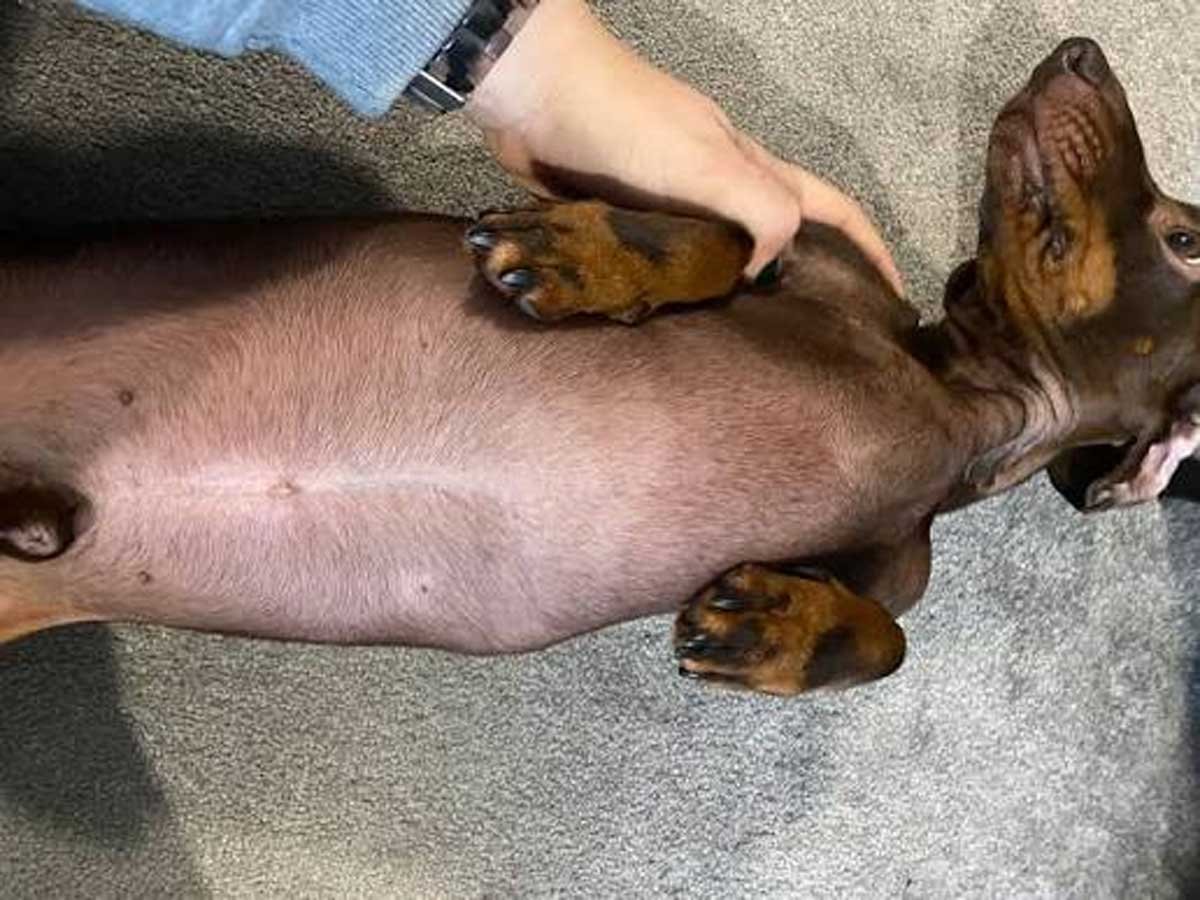
| Thin or missing hair behind and in front of the ears, under the neck, across the belly and inner thighs | Around 6 months, spreading over a year | Pattern baldness of the underside |
| Hair loss only in blue or fawn (isabella) areas, sometimes starting with bumps along the back | 3 months to 3 years | Color dilution alopecia |
| Hair loss only in the black-haired areas | Not given in our sources | Black hair follicular dysplasia |
| Dark, thickened, velvety skin, usually on the legs and groin | By about 1 year | Primary hyperpigmentation (acanthosis nigricans) |
| Red, itchy, smelly, flaky or sore patches | Any age | A secondary problem such as infection, allergy, parasites or a hormone disorder |
The ear pattern is the classic one. A University of Minnesota dermatology handbook describes it starting between 6 and 9 months and slowly progressing until both ears are completely bald by 8 to 9 years. The Merck Veterinary Manual adds that it isn’t linked to any wider illness, so if your dachshund has bald, dark ears and no other signs, you’re usually just looking at an inherited trait.
The same handbook describes the underside pattern as recognized most often in dachshunds, and says fine, small hairs may still be visible in the bald areas.
Owners notice it too. In a February 2023 r/Dachshund thread about a 2-year-old miniature losing hair on her chest and tummy, the top reply (173 upvotes) was:
“This is very common, we’ve always called it ‘Dachshund Pattern Baldness'”
– r/Dachshund, February 2023 (173 upvotes)
Another reply (38 upvotes) added the caveat I’d add too: hair loss can be a sign of some diseases, so it’s worth getting checked.
A table like this narrows things down, but it doesn’t diagnose anything, and I wouldn’t use it to skip the vet. Your dog can have more than one of these at once, and the last row overlaps with all of them, so if there’s any redness, itching or smell, start there.
The dilute-color warning
Does coat color really matter? More than most owners expect. In DachsLife 2021, dachshunds in dilute colors, meaning blue or isabella, were significantly more likely to have a skin or coat condition, with an odds ratio of 1.78. Among blue dachshunds, 55.4% (36 of 65) had at least one.
The gap was biggest for patterned baldness. Six of 8 isabella dachshunds and 16 of 28 blue dachshunds were affected, and dilutes had 3.77 times the odds compared with other colors. Those samples are small, so read the percentages as a direction rather than a precise rate, but the survey found the difference statistically significant.
Dilutes were also more likely to have color dilution alopecia and autoimmune conditions, though not more likely to have allergies, dermatitis or ear fissures.
Dachshund Health UK says there’s no cure and no DNA test for color dilution alopecia, and that bare skin from it is prone to sunburn and infection. It advises people not to buy “rare” blue or isabella dachshunds and not to breed from them. If you’re looking at puppies, I’d steer clear of those colors, and our dachshund colors guide shows how to recognize the dilute shades.
What your vet will check
Before the appointment, write down three things: how old your dog was when the hair started thinning, where it started, and whether there’s any itching or smell. Those answers line up directly with the table above.
They’re also the first questions a vet is likely to ask you, so having them written down saves time in a short appointment. Bring photos too.
According to the Merck Veterinary Manual, your vet will want to rule out other causes first if you’ve got a young dachshund losing hair. That can mean skin scrapings for parasites, impression smears for bacterial infection, blood tests for thyroid and adrenal disease, allergy testing or a food trial, and sometimes a skin biopsy.
If allergies turn out to be part of it, our guides to seasonal allergies and paw licking go further.
Can it be treated?
It depends on which kind your dog has. For the inherited patterns the honest answer is mostly no, while hair loss that’s caused by something else usually improves once that cause is treated.
For pattern baldness, the Minnesota handbook says there’s no specific treatment for follicular dysplasias, although some dogs have regrown significant hair after a few months on melatonin prescribed by a vet. Merck reports no effective treatment for the ear pattern. Dachshund Health UK says color dilution alopecia has no cure.
Primary hyperpigmentation in dachshunds isn’t curable either, Merck says, but in some dogs it’s only cosmetic and you won’t need to treat it. Secondary hyperpigmentation, triggered by inflammation or friction, does go away once the underlying cause is found and treated, though it can take months.
Please don’t start supplements or human hair-loss products on your own. Any treatment, and any dose, should come from your vet once the cause is known.
If you’re thinking of breeding, don’t. Both the handbook and Dachshund Health UK say dogs with these inherited patterns shouldn’t be bred from.
Dachshund hair loss: common questions
Why are my dachshund’s ears going bald?
Most often it’s pinnal alopecia, an inherited pattern that starts before age 1 and slowly progresses. It isn’t linked to illness and doesn’t need treatment, but see your vet if the ears are red, crusty or itchy.
What are the early signs of hair loss in a dachshund?
Thinning hair on the outside of the ears, or on the neck, chest and belly, often in the first year. With dilute colors, watch for thinning or bumps in the blue or fawn areas.
What can I give my dachshund for hair loss?
Nothing, until your vet has worked out the cause. Secondary hair loss improves when the underlying problem is treated, and the inherited patterns mostly don’t respond to home remedies.
Is pattern baldness painful for my dog?
Merck describes the ear pattern as not associated with any wider illness. The bare skin can burn in strong sun, so some shade on hot days is sensible, and anything sore or itchy needs a vet.
