Bichon Dachshund Mix: The Hormone Disorder and Back Gene Behind the Fluff

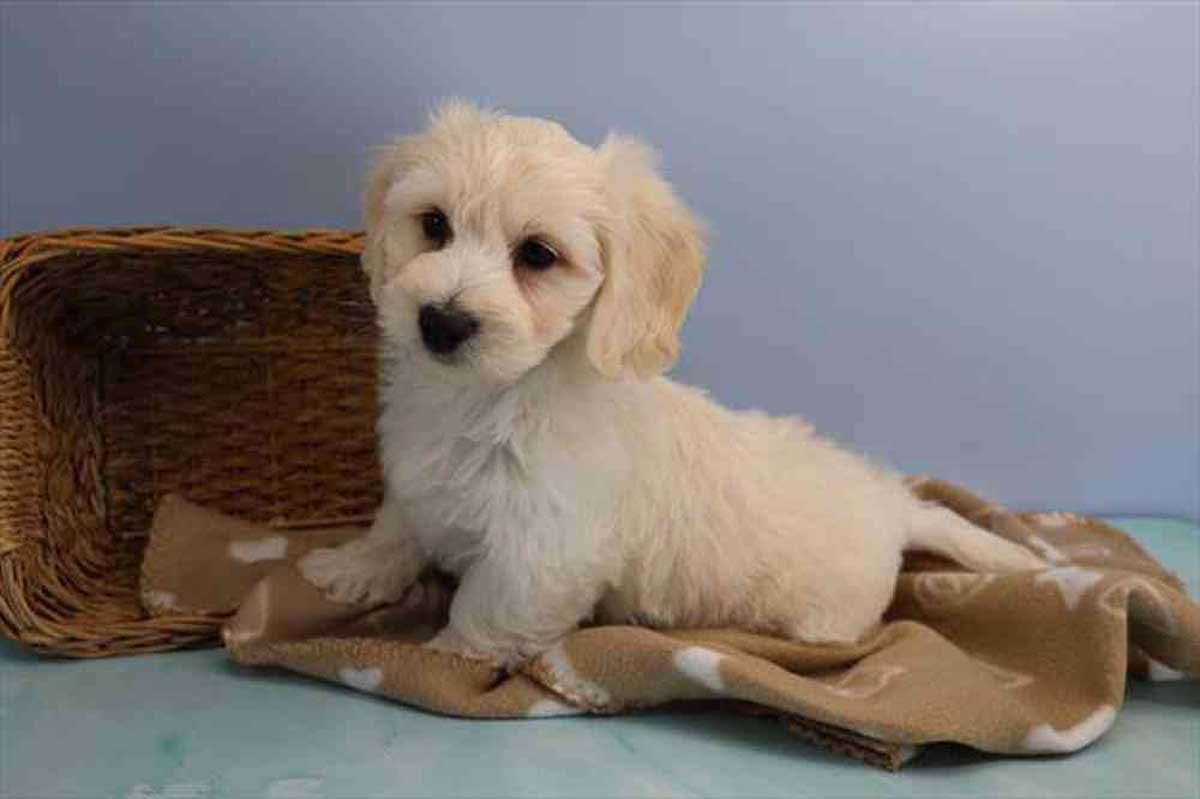
A bichon dachshund mix, often listed as a Doxie-Chon, crosses a white, curly-coated Bichon Frise with a standard or miniature dachshund. You’ll usually get a small, affectionate dog, but not necessarily the low-shedding coat people buy a Bichon for.
What the breed write-ups skip is the Bichon side’s health record. It’s linked to a hormone disorder that shows up in older dogs, and it carries the same disc-disease gene as the dachshund more often than you’d expect.
What a Doxie-Chon is
There’s no breed standard and no measured sample of these dogs, so I won’t make up a size range for the cross. Here’s what the AKC lists for each parent:
| Dachshund | Bichon Frise | |
|---|---|---|
| Height | 8-9 in (standard), 5-6 in (miniature) | 9.5-11.5 in |
| Weight | 16-32 lb (standard), 11 lb and under (miniature) | 12-18 lb |
| Life expectancy | 12-16 years | 14-15 years |
Both parents are small, so you’re looking at a small dog either way. Ask the breeder which size the dachshund parent was. That matters more than anything else for adult weight.
What the Bichon side brings: Cushing’s disease
Cushing’s disease, or hyperadrenocorticism, is an excess of the body’s own cortisol, and it’s mostly a problem of older dogs. A VetCompass study of 210,824 dogs in UK first-opinion practices put the overall diagnosis rate at 0.28%.
The Bichon Frise stood out, with 6.5 times the odds of a diagnosis compared with crossbred dogs. The same study found higher odds in dogs aged 12 or older and in dogs at or above their breed’s average weight.
Does that make your Doxie-Chon 6.5 times more likely to get it? Not necessarily. That figure compares purebred Bichons with crossbreds in general, and nobody has studied this particular cross. What it tells you is that the Bichon parent is where a Cushing’s risk would come from, and it’s one more reason to keep your dog at a healthy weight as it ages.
When a dog starts losing hair, the Merck Veterinary Manual describes vets testing thyroid and adrenal function as part of the workup, so a hormone problem is one of the things your vet will want to rule out. Why does age matter here? The inherited hair-loss patterns in dachshunds usually start young, so new hair loss in an older dog is the kind worth a vet visit. Our dachshund hair loss guide covers those inherited patterns in detail.
The back: the disc gene on both sides
A 2019 UC Davis study found that an extra FGF4 gene copy on chromosome 12 raises the risk of disc disease in a dominant way, so a single copy is enough. Dachshunds carried it at an allele frequency of 0.99.
The Bichon numbers depend on which group you look at. In the study’s breed sample, Bichons carried it at 0.50. Among Bichons aged 10 or older with no disc disease diagnosis, the frequency was 0.18, and Bichons with the copy had 10 times the risk of disc disease of Bichons without it.
For your puppy, the dachshund side almost guarantees one copy, and some puppies will get a second from the Bichon. So a Doxie-Chon shouldn’t be assumed to have a safer back than a dachshund just because the Bichon doesn’t look long-backed.
Carrying it isn’t the same as getting sick. Among purebred dachshunds, the DachsLife survey of 2,031 dogs found 15.7% had been affected. I’ve been through disc surgery and recovery with Bruno, so I’d plan for the possibility rather than hope the cross skipped it. There’s more in our guide to dachshund health problems.
Is a Bichon dachshund mix hypoallergenic?
Don’t count on it, because the AKC calls the Bichon relatively hypoallergenic because it sheds very little, with loose hair caught up in its undercoat rather than falling out. The dachshund, by contrast, is a moderate shedder.
A puppy that takes the Bichon coat may shed little; one that takes a smooth dachshund coat will shed like a dachshund. If allergies in your household are the reason you’re looking at this cross, spend time with the actual puppy, and with an adult dog from the same parents if you can. There’s more in are dachshunds hypoallergenic.
Grooming, potty training and time alone
A Bichon-type coat is real work. The AKC recommends brushing at least two or three times a week, ideally daily, and a bath and clip at least monthly, which is why most pet owners book a groomer every four to six weeks. Teeth need attention too: the AKC warns of early tooth loss if brushing isn’t a priority.
Plan for patience with house-training. The AKC says Bichons have a reputation for being difficult to housebreak, though easy to train otherwise, and respond best to positive rewards. Our dachshund potty training guide has a schedule you can follow from the first week.
The AKC also says a Bichon needs to be with its family and may develop unwanted behaviors if it’s regularly left alone for long periods. Bichons are surprisingly fast, too, so a fenced yard is a good idea.
Bichon dachshund mix: common questions
What is a Bichon dachshund mix called?
Usually a Doxie-Chon. The name doesn’t come with a breed standard, so it won’t tell you the size or coat.
What is a Schweenie?
A different cross: the Shih Tzu dachshund mix. It’s covered in our Shih Tzu dachshund mix guide.
What is a Basset Hound dachshund mix called?
Usually a Basschshund. Our dachshund basset mix guide explains why that cross carries the disc gene from both sides.
What’s the best breed to mix with a dachshund?
There isn’t one best cross, because each partner breed brings its own risks. The dachshund mixes page compares the common ones.
