
Dachshunds & Allergies: What Every Owner Must Know


You fell in love with a dachshund at a friend’s place those soulful eyes, that ridiculous little body, the way they waddled across the room like they owned it. Then the sneezing started. Sound familiar?
If you’re here asking are dachshunds hypoallergenic, you’re not alone. Thousands of prospective dachshund owners type that exact question into Google every single month. And the answer, while disappointing at first, comes with a silver lining worth reading all the way to the end.
Let’s break this down honestly, the way a friend who happens to know a lot about dog allergies would.
What Does “Hypoallergenic Dog” Actually Mean?
Before we get into whether are dachshunds hypoallergenic is a yes or a no, let’s clear up a massive misconception that floats around pet communities.
There is no such thing as a 100% hypoallergenic dog. Not a single breed. The term “hypoallergenic” in the pet world simply means a dog is less likely to trigger an allergic reaction not that it’s completely allergen-free. It’s marketing language that became common usage, and it has caused a lot of confusion (and heartbreak) for allergy sufferers.
According to the Asthma and Allergy Foundation of America, pet allergies are not caused by fur they are triggered by a protein called Can f 1, found in a dog’s dander (dead skin cells), saliva, and urine. That protein becomes airborne, sticks to surfaces, and finds its way into your nasal passages whether you like it or not.
So when someone asks are dachshunds hypoallergenic, the real question they’re asking is: “Do dachshunds produce fewer allergens than other breeds?”
The answer is: not really.
Are Dachshunds Hypoallergenic? The Short Answer
No. Are dachshunds hypoallergenic? They are not. Dachshunds are moderate shedders that produce dander, carry allergens in their saliva, and are not classified as a low-allergen breed by any major veterinary or allergy organization.
That said and this is the part most articles skip the story doesn’t end there. The severity of your reaction depends on multiple factors, and some allergy sufferers do manage to live happily with a doxie. But we’ll get to that.
Why Dachshunds Trigger Dog Allergies
The Role of Dander, Saliva, and Urine
People often assume that if a dog doesn’t shed much, it won’t cause allergies. But fur is just the carrier, not the cause. When a dachshund licks its coat, the saliva dries and releases allergenic proteins into the air. Dander microscopic flakes of dead skin floats freely and can remain airborne for hours.
According to the American College of Allergy, Asthma, and Immunology (ACAAI), approximately 10% of the U.S. population has some form of dog allergy. More broadly, research shows that 15–30% of people with allergies experience reactions specifically to cats and dogs.
A 2021 Statista survey of U.S. adults found that 12% of allergy sufferers identified pet allergies as their primary trigger behind pollen (44%) and drug allergies (15%), but still a significant portion of the allergic population.
When you consider that 67% of U.S. households own a pet (American Pet Products Association), and that 90% of all U.S. residences test positive for animal allergens even without a pet present, it becomes clear that managing pet allergies is less about avoidance and more about informed coexistence.
Are dachshunds hypoallergenic? Science says no and their biology tells us why.
Double Coats and Seasonal Shedding
Dachshunds have a double coat an outer layer and a dense undercoat. This undercoat sheds heavily twice a year, typically in spring and autumn. During these “blowing coat” seasons, dander and allergen levels in the home spike significantly. Even outside of shedding season, they shed year-round at a moderate rate.
This double-coat structure is actually one of the key reasons the answer to are dachshunds hypoallergenic is a firm no.
Dachshund Coat Types and Allergen Levels Compared
One useful nuance: dachshunds come in three coat types, and they don’t all behave the same way when it comes to allergens.
| Coat Type | Shedding Level | Dander Risk | Grooming Needs | Best for Allergy Sufferers? |
|---|---|---|---|---|
| Smooth-coated | Moderate (year-round) | Moderate | Low | Not ideal |
| Long-haired | Moderate to high | Higher | High | Least suitable |
| Wire-haired | Low to moderate | Lower | Moderate | Most tolerable |
So if you’re genuinely asking are dachshunds hypoallergenic because you want the least reactive variety, wire-haired dachshunds are generally the better choice for people with mild sensitivities. Their coarser, denser outer coat traps more dander close to the body rather than releasing it freely into the air.
That said, no coat type makes a dachshund hypoallergenic. Wire-haired just means slightly less likely to trigger symptoms not allergy-safe.
How Bad Are Dachshund Allergies, Really?
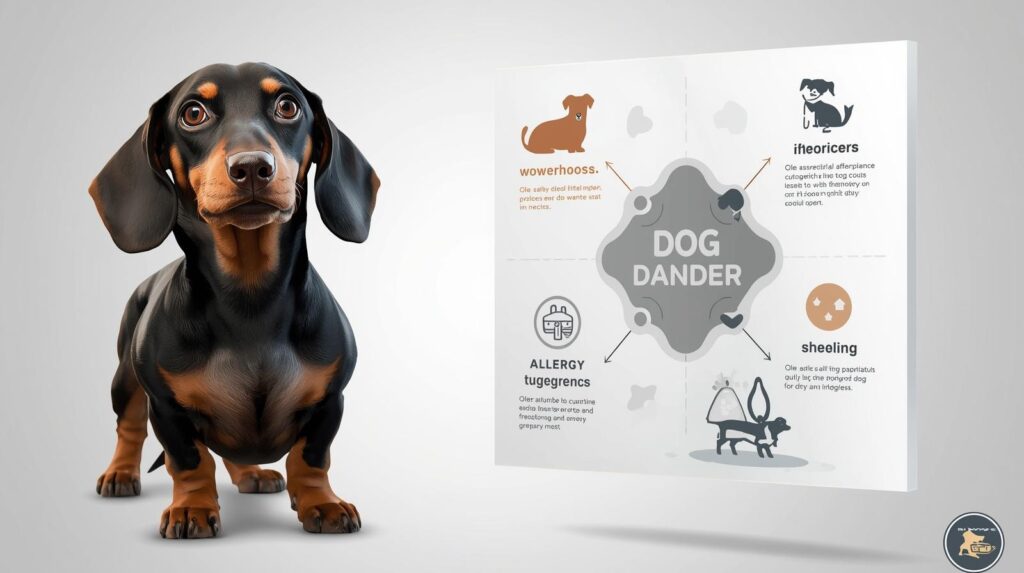
I’ve spoken with plenty of dachshund owners who have allergies. Their experiences range widely. One friend described adopting a smooth-coated dachshund despite her dog allergy, only to discover her symptoms were manageable with a daily antihistamine and consistent vacuuming. Another told me he had to rehome his long-haired doxie within three months because the constant sneezing was affecting his sleep and work.
The point is: are dachshunds hypoallergenic? No but whether your allergy reacts to this specific dog is deeply personal.
Factors that influence your reaction include:
- The severity of your allergy — mild sensitivity vs. full-blown asthma triggers
- The individual dog — allergen production varies dog to dog, even within the same breed
- Your home environment — carpets, upholstered furniture, and poor ventilation amplify allergens
- Your exposure history — some people build tolerance over time; others don’t
The ACAAI recommends spending time with the specific dog you’re considering adopting before committing, to gauge your personal reaction. This is practical advice most breeders and rescue organizations are happy to accommodate.
Can Allergy Sufferers Live With a Dachshund?
Here’s where I give you the honest, nuanced answer that most click-bait articles avoid.
Yes with the right strategies, some allergy sufferers can and do live happily with dachshunds.
7 Practical Tips to Reduce Dachshund Allergens at Home
- Groom regularly — Brush your dachshund 2–3 times per week (outdoors if possible) to reduce dander buildup. Bathing monthly with a vet-approved shampoo also helps.
- Invest in a HEPA air purifier — HEPA filters capture particles as small as 0.3 microns, including pet dander. Place units in bedrooms and living areas.
- Establish pet-free zones — Keep the bedroom off-limits. Since you spend 7–9 hours there, reducing allergen exposure in that space makes a meaningful difference.
- Use allergen-proof covers — Cover mattresses and pillows with allergen-barrier cases to prevent dander accumulation.
- Vacuum frequently with a HEPA vacuum — Standard vacuums can redistribute dander into the air. HEPA-filter vacuums trap it instead.
- Wash hands after contact — Simple, but often overlooked. Avoid touching your face after petting your dog.
- Consult an allergist — Immunotherapy (allergy shots) has shown strong long-term results for pet allergies. The ACAAI notes that allergy shots administered weekly for 1–3 years can lead to significant symptom remission.
Managing life with a dachshund when you have allergies is a commitment but for the right person, it’s absolutely worth it.
Are Dachshunds Hypoallergenic Compared to Other Breeds?
It helps to put dachshunds in context. While are dachshunds hypoallergenic is a no, some breeds are genuinely better for allergy sufferers not because they’re allergen-free, but because they produce significantly less Can f 1 or shed minimally.
Breeds commonly recommended for allergy sufferers include:
- Poodle (all sizes) — minimal shedding, less dander airborne
- Bichon Frisé — tightly curled coat traps dander
- Portuguese Water Dog — low-shed, famously used by the Obama family due to allergy concerns
- Maltese — single-coat, low shedding
- Schnauzer — wire-haired coat, relatively low dander output
If your allergy is severe and non-negotiable, one of these breeds may be a better fit. If you’re specifically drawn to the dachshund’s personality and your allergy is mild, managing symptoms with the tips above may make coexistence entirely workable.
The Emotional Side: When You Love a Dog You’re Allergic To
I want to take a moment here because this is something the clinical articles miss entirely.
Choosing a pet is emotional. You don’t just pick a breed off a spreadsheet. You meet a puppy and something clicks. And then someone tells you that the dog might make you sick, and you feel genuinely torn.
I get it. And I think it’s worth acknowledging that are dachshunds hypoallergenic is often not just a factual question it’s a hopeful one. People want the answer to be yes. They’ve already decided they want this dog.
If that’s you: don’t let the “no” be the end of the conversation. Talk to your allergist. Spend time with the specific dog. Try the management strategies. Some people find a way. Others don’t and that’s okay too. But going in with clear information is always better than going in with false hope.
Expert Perspective on Pet Allergies
Dr. James Li of the Mayo Clinic has noted that while no dog is truly allergy-free, the quantity of allergens a dog produces can vary considerably even between two dogs of the same breed. This variability is why individual exposure testing is so important before adoption.
The National Institute of Environmental Health Sciences confirms that pet allergens come from proteins in dander, saliva, and urine not the hair itself. This is a crucial point: even a short-haired dachshund or a freshly groomed one will still produce the protein that triggers your immune response. Grooming reduces the spread of allergens but doesn’t eliminate the source.
This is why are dachshunds hypoallergenic while a tempting question to answer with “kind of” is ultimately a no.
Summary: The Truth About Dachshunds and Allergies

Let’s bring it all together. Here’s what we know for certain:
- Are dachshunds hypoallergenic? No. All three coat types shed and produce allergenic dander.
- The true cause of dog allergies is the protein Can f 1 in dander, saliva, and urine not fur.
- Wire-haired dachshunds are marginally better for allergy sufferers, but not hypoallergenic.
- 10–30% of people with allergies react to dogs, per AAFA and ACAAI data.
- With the right management strategies HEPA filtration, regular grooming, pet-free sleeping zones, and medical treatment some allergy sufferers can live comfortably with a dachshund.
- Always spend time with the individual dog before adopting to gauge your personal reaction.
For a broader look at the breed, our Dachshund Guides cover health, temperament, training, and everything in between.
Frequently Asked Questions
1. Are dachshunds hypoallergenic at all?
No. Are dachshunds hypoallergenic? They are not classified as hypoallergenic by any major veterinary or allergy organization. They shed moderately and produce dander and saliva proteins that trigger dog allergies. No coat type smooth, long-haired, or wire-haired is considered low-allergen.
2. Which dachshund coat type is best for allergy sufferers?
Wire-haired dachshunds are generally considered the most tolerable for people with mild dog allergies. Their coarser coat tends to release less airborne dander than smooth or long-haired varieties. However, they are still not hypoallergenic, and individual reactions will vary.
3. Can I build tolerance to dachshund allergens over time?
Some people do develop reduced sensitivity after prolonged exposure, but this is not guaranteed and should not be relied upon as a strategy. An allergist can recommend immunotherapy (allergy shots), which has a strong evidence base for reducing long-term pet allergy symptoms.
4. What are the best truly low-allergen dogs similar to dachshunds in personality?
If you love the spunky, independent, playful personality of a dachshund but need a lower-allergen breed, consider a Miniature Schnauzer or a Toy Poodle. Both have bold personalities with significantly lower allergen output.
5. Is there any dog breed that is 100% hypoallergenic?
No. As confirmed by the American Kennel Club and allergy specialists, no dog breed is 100% hypoallergenic. Every dog produces some level of Can f 1 protein. So-called hypoallergenic breeds simply produce less of it which is why even among “safe” breeds, some individuals with severe allergies still react. Have you talked to your allergist yet about which breed might work best for your specific allergy profile?
