
Why Do Dogs Eat Cat Poop? And the Fixes That Actually Work

Dogs eat cat poop because, to a dog, it’s food left lying around, and scavenging is normal canine behavior.
The Merck Veterinary Manual says eating feces can come from “normal investigative and exploratory behaviors,” and there’s no evidence it means your dog is hungry or short of a nutrient.
Stopping it is the harder part. In a survey of nearly 1,500 owners of stool-eating dogs, people said nearly every fix they tried, from deterrent powders to “leave it” training, worked for 4% of dogs or fewer. The part you don’t have to leave to chance is access: where the litter box sits and how often it’s scooped.
Why do dogs eat cat poop?
Most dogs that eat cat poop are doing what scavengers do, finding something edible and eating it before anyone stops them. You’ll often read that cat feces smell like cat food because cats eat a high-protein diet. It’s a reasonable guess, but it isn’t something anyone has measured.
The best data comes from a 2018 study by Benjamin Hart and colleagues, built on two surveys with more than 3,000 replies from dog owners. It looked at dogs eating dog stools, but cat stools turned up in the results.
In the published analysis, dogs reported to eat cat stools were more likely to eat dog stools too, as were greedy eaters, dogs that ate dirt and dogs from multi-dog homes.
Breed mattered as well. Hart’s team found terriers and hounds were the groups most likely to eat stools, and the dachshund sits in the American Kennel Club’s Hound Group. If your dachshund has found the litter box, you’re in very common company.
Diet didn’t explain it. The study found no link between stool eating and what the dogs were fed or how old they were, and stool eaters were as easy to house-train as other dogs. If your dog also raids the cat’s bowl or toy basket, the guides to dogs eating cat food and catnip and cat toys cover those habits.
Is it bad if your dog eats cat poop?
For a healthy adult dog, it usually isn’t serious, though it isn’t risk-free: cat feces can carry Toxoplasma gondii, a parasite that rarely makes healthy adult dogs ill but can hit puppies hard.
Toxoplasma can only complete its life cycle in cats. Merck says healthy adult dogs usually show no signs of infection, while puppies can become seriously ill, with fever, diarrhea, breathing trouble or seizures.
Living with a cat does seem to raise a dog’s exposure. A 2024 study of 120 dogs in Italy found antibodies to Toxoplasma were significantly more common in dogs that lived with cats and in dogs with a stool-eating habit.
Timing matters here. According to the CDC, the parasite in cat feces doesn’t become infectious until 1 to 5 days after the cat passes it. That’s why daily scooping is the standard advice for people, and it should cut your dog’s exposure for the same reason.
Can the litter hurt your dog as well? It can, in large amounts. Falls Village Veterinary Hospital in Raleigh warns that a dog that swallows a lot of litter, particularly the clumping kind, can end up with an intestinal blockage.
How do you stop a dog eating cat poop?
It’s worth knowing what owners have already tried, so you don’t repeat it. In Hart’s survey, chasing the dog away from stools, lacing stools with pepper or using an electronic or noise collar each worked in 1 to 2% of cases. Rewarding “leave it” did a little better, at 4%.
Eleven commercial additives sold to stop stool eating didn’t fare any better, with reported success of 0 to 2%. So is there a vitamin that fixes it? With no link to diet in the study, there’s no evidence a supplement will help.
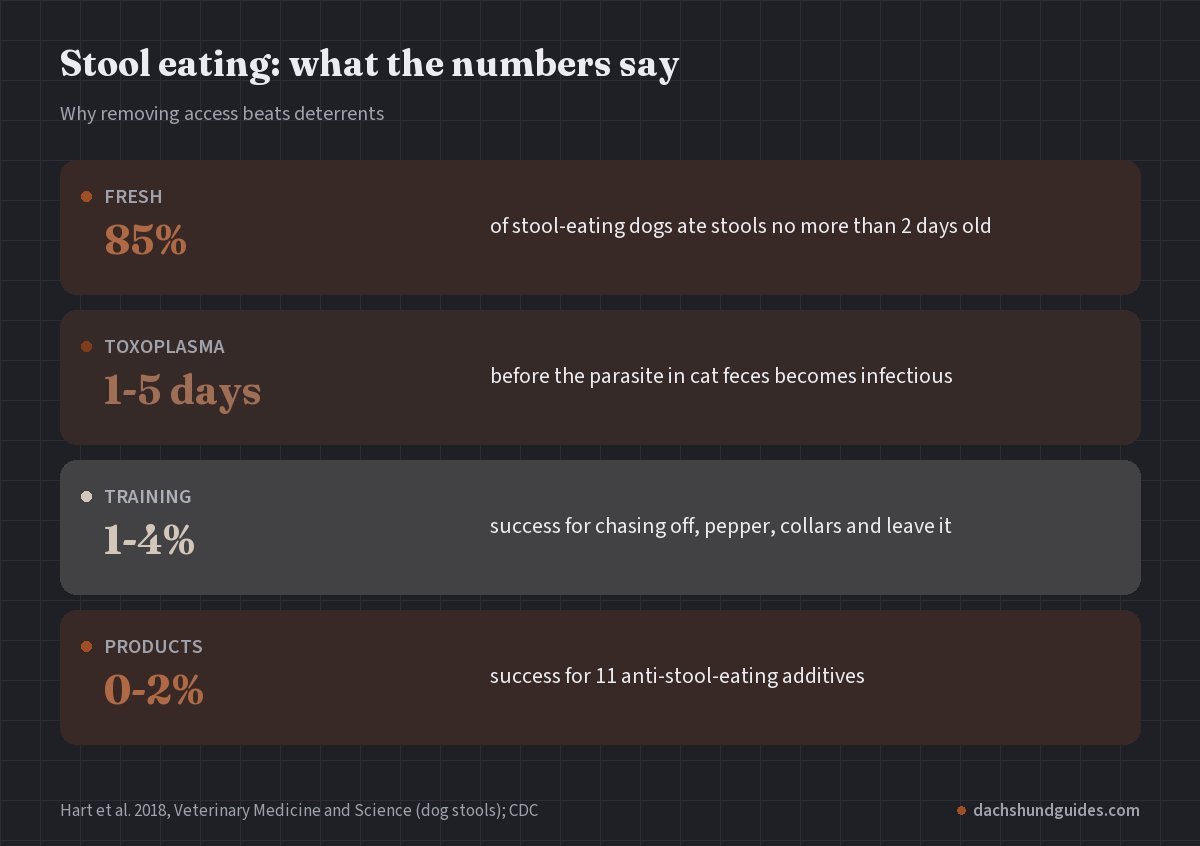
Those figures come from dogs eating dog stools, so read them as a close guide for cat poop.
They line up with one more finding from the same study: stool eaters go for fresh stools, with 85% eating ones no more than two days old. Access and freshness are the two things you can change.
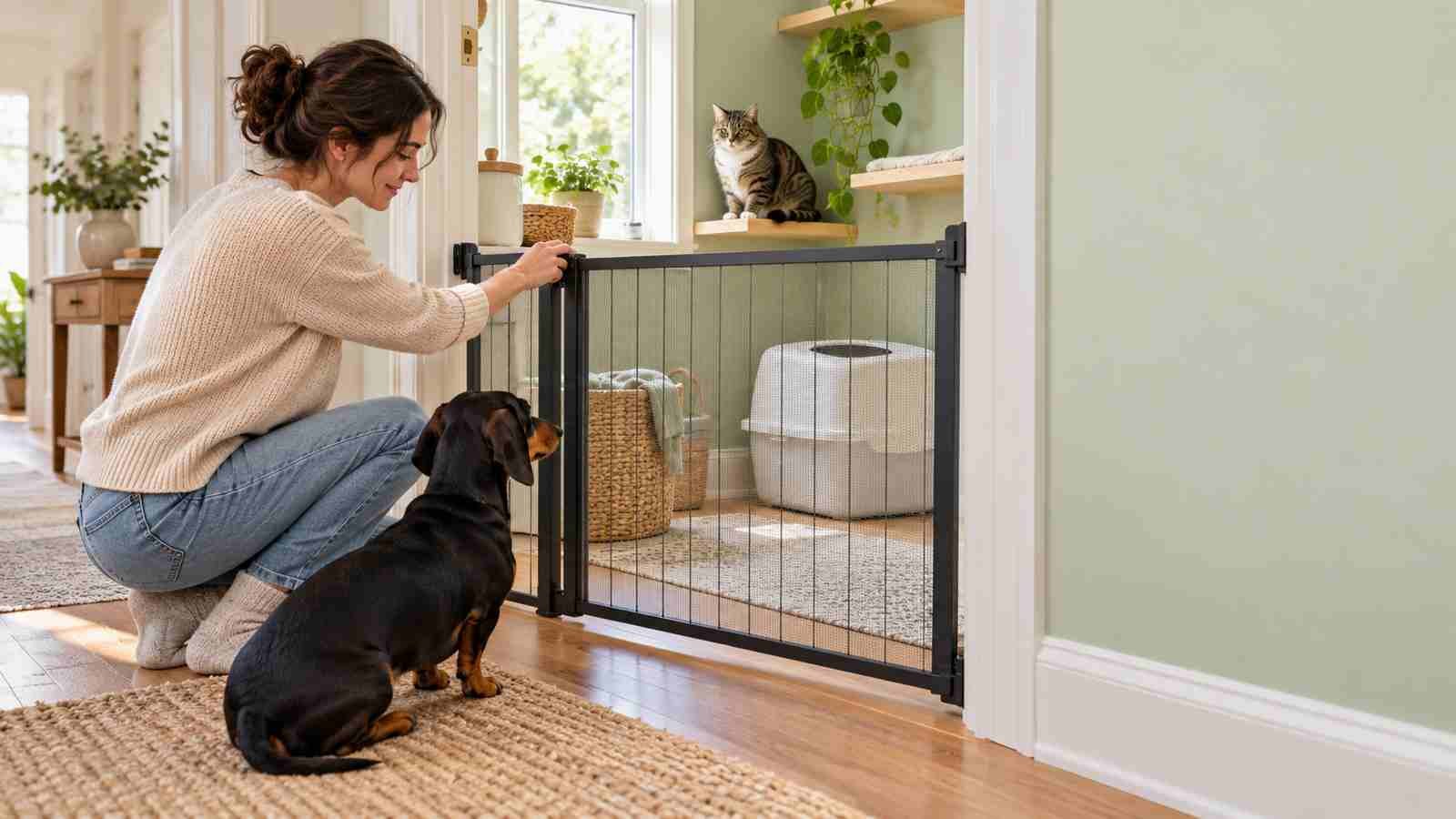
- Gate the litter box room. A baby gate across the door keeps your dog out while the cat jumps over; the piece on dogs chasing cats shows the setup. For an older or arthritic cat, Falls Village suggests fitting the gate a few inches off the floor, so check your dachshund can’t squeeze under too.
- Change the box. A covered or top-entry box keeps some dogs out. Falls Village says a lid works in some homes and not at all in others. Cats can be fussy, too, so make sure yours doesn’t start going elsewhere.
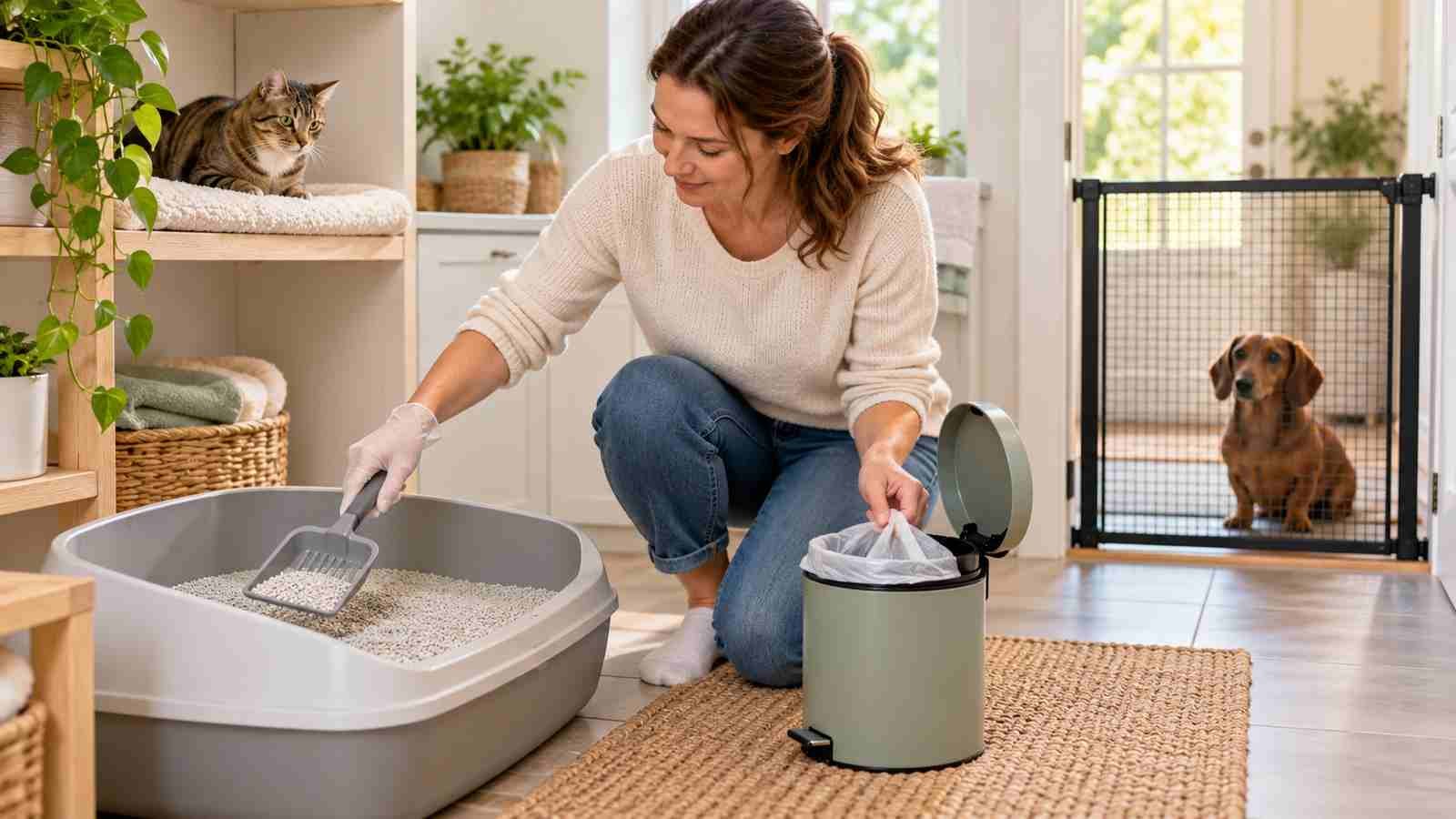
- Scoop every day. There’s less fresh stool to find, and you’re clearing feces before Toxoplasma in them can become infectious. If anyone in your home is pregnant, Merck’s advice is that someone else does the scooping.
- Train “leave it” as a backup. It had the best success rate in Hart’s survey, and at 4% it clearly can’t do the job alone. It’s still worth having, and the dachshund training guide walks through it.
In a March 2026 r/dogs thread about a dog raiding the litter box, one reply described the problem and the fix:
“my puppy could literally just walk in the box and feast away. So I got the litter boxes with the holes in the top and it’s worked perfectly!”
– r/dogs, March 2026 (7 upvotes)
What to do if your dog just ate cat poop or litter
If it was a mouthful from the box, you usually don’t need to do more than clean up and block access. Keep an eye on your dog afterward.
Call your vet if your dog swallowed a lot of litter, or if you see bloating, vomiting, diarrhea, lethargy, or a change in thirst or appetite, the signs Falls Village lists. Call sooner for a puppy, since Merck notes puppies are the dogs toxoplasmosis can make seriously ill.
Has your dog started doing it all of a sudden? Mention it to your vet.
Merck notes that eating feces can sometimes be part of a wider behavior problem, such as a compulsive disorder, and a new habit that arrives with other changes is worth checking.
In the end, it comes down to access and timing. Put the box where your dog can’t reach it, scoop it every day, and there’s far less left for your dog to find.
