Can Dogs Eat Cat Food? A Raid Is Fine, a Habit Isn’t

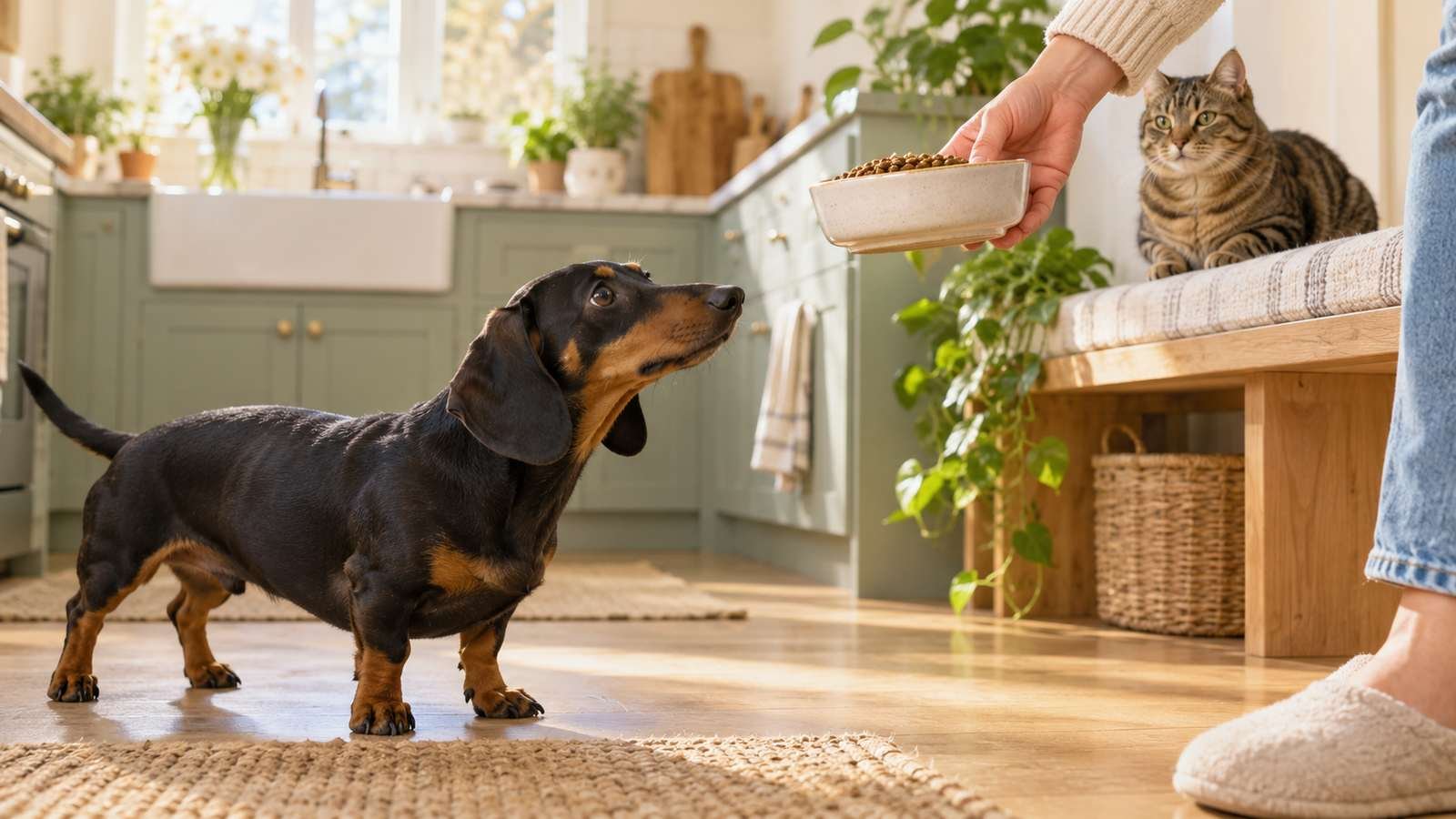
Yes, a dog that empties the cat’s bowl will usually be fine. Cat food isn’t toxic to dogs the way grapes and raisins can be, and vets who write about it describe one stolen meal as unlikely to cause serious problems. The problem is the habit.
Cat food is built to a cat’s richer minimums, so if your dog raids the bowl every day, it’s eating a second, fattier dinner on top of its own. So can dogs eat cat food as a regular thing? We’d say no.
For dachshunds the reasons are sharper than for most breeds. They’re among the breeds reported with more pancreatitis, and extra weight raises the odds of the back problems they’re already prone to.
What happens if your dog eats cat food
Most of the time, nothing much. A dog with a sensitive stomach may vomit or get diarrhea afterward. Watch for anything that keeps going.
Call your vet if your dog stops eating, vomits repeatedly or seems weak or sore.
Those last signs matter because they overlap with pancreatitis. The Merck Veterinary Manual lists not eating, vomiting, weakness, abdominal pain, dehydration and diarrhea as the most common signs in severe cases, and says milder cases can show only vague signs like lethargy or a poor appetite.
The same manual says increased prevalence has been reported in several breeds, dachshunds among them.
That doesn’t mean your dog will get it from one bowl of cat food. It does mean that if your dachshund is off its food the day after a raid, you should call rather than wait and see.
How cat food differs from dog food
Cat food sets a higher floor for protein and fat, and it carries nutrients only cats need from their food. The Association of American Feed Control Officials (AAFCO) publishes the minimums that complete pet foods in the US are formulated to meet, and the gap is clear on paper:
| AAFCO adult minimum (dry matter) | Dog food | Cat food |
|---|---|---|
| Protein | 18% | 26% |
| Fat | 5.5% | 9% |
| Taurine | no minimum | 0.10% dry, 0.20% canned |
| Arachidonic acid | no minimum | 0.02% |
| Niacin | 13.6 mg/kg | 60 mg/kg |
None of that is harmful to a dog in itself. Unlike cats, dogs don’t need taurine or arachidonic acid from their food, and the dog standards don’t list them. It’s the cat that’s at risk the other way round, which our guide to whether cats can eat dog food covers.
What matters for you as a dog owner is the richness: more fat and protein per bite, in a food made for an animal with different needs.
Does cat food cause pancreatitis in dogs?
There’s no study tying cat food itself to pancreatitis, and the evidence that dietary fat alone triggers it is weak. What the research does support is that eating things outside the usual diet raises the odds, and a raid on the cat bowl is a change from the usual diet.
A 2026 review in the Journal of the American Veterinary Medical Association looked at the evidence behind restricting dietary fat to prevent pancreatitis. The authors found the early studies relied on experimental models, small samples and diets unlike today’s, and that newer work has generally failed to confirm a consistent link between dietary fat and the onset of the disease.
No study has looked at cat food on its own, but dietary indiscretion in general is a different story. In a 2008 study of 198 dogs with pancreatitis and 187 controls, owners who reported their dog eating unusual food items had about 6.1 times the odds, and getting into the trash about 13.2 times.
Merck calls dietary indiscretion a common risk factor in dogs.
If your dachshund has had pancreatitis before, the cat bowl should be out of bounds.
Merck says a low-fat diet, under 20 grams of fat per 1,000 calories, is crucial for treating dogs with the disease. AAFCO’s minimum fat for cat food works out to about 22.5 grams per 1,000 calories on its own energy assumption, so even the leanest complete cat food sits above that line.
Why a daily habit matters more for a dachshund
Every bowl your dachshund steals is food on top of the meals you measured out, and extra weight is one of the few back risks you can control. In a 2025 study of 43,517 dogs, dachshunds had the highest rate of owner-reported disc disease of any breed, and overweight dogs had higher odds of it.
The numbers are stark: 15.3% of the dachshunds in the Dog Aging Project data had owner-reported intervertebral disc disease (IVDD), against 1.2% of all dogs, and being overweight carried an odds ratio of 1.67.
Our guide to dachshunds and stairs goes through that study in detail, and our page on food for overweight dachshunds covers getting weight back down.
Is a lean dog that gets the odd mouthful in trouble? Not really, and you don’t need to worry much. The one to watch is the dog that’s learned the cat leaves half a bowl every morning.
Why your dog prefers the cat’s bowl
Cat food is richer, and it’s made to tempt picky eaters. A veterinarian writing for PetMD points out that cat foods are engineered to be highly palatable for cats, and that dogs love their high-protein content. To a dog, that bowl smells like a better dinner sitting unguarded on the floor.
In Reddit threads on this, replies keep landing on the same answer: move the bowl. One reply in a r/Dogtraining thread on exactly this problem put it bluntly:
“The only solution is to put the cat’s food where the dog can’t access it. I’ve never heard of any trainer, of even great skill, who has trained a dog to ignore a bowl of cat food when no one is around to enforce the “rule.””
– r/Dogtraining, October 2019 (34 upvotes)
Keeping the cat’s bowl out of your dachshund’s reach
Put the cat’s food somewhere the cat can reach and your dog can’t. With a dachshund that’s easier than with most dogs, because short legs put a counter, a shelf or the top of the washer out of reach, and you don’t want a long-backed dog jumping for it anyway.
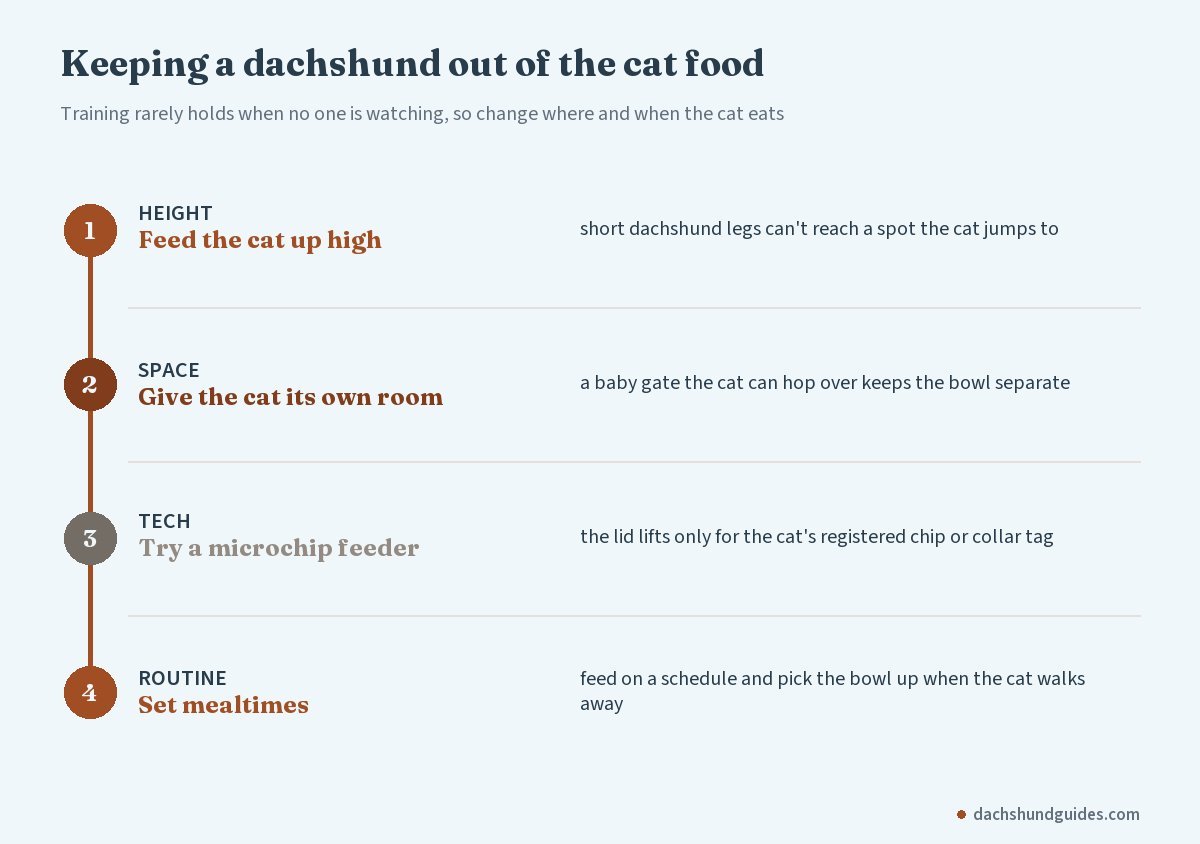
- Feed the cat up high. A counter, a sturdy shelf or the top of the washer and dryer all work, and owners in Reddit threads on this problem mention every one of them.
- Give the cat its own room. A baby gate the cat can hop over, or a room your dog doesn’t go into, keeps the bowl separate.
- Try a microchip feeder. These lift the lid only for the cat’s registered microchip or collar tag, which suits a cat that likes to graze.
- Set mealtimes. Feed the cat on a schedule and pick the bowl up when it walks away, so there’s nothing left to steal.
If you’re still working out how the two get along at all, our guides to dachshunds and cats and introducing a cat to a dog cover the rest of the household setup.
Can dogs eat cat food? Quick answers for two-pet homes
Can dogs eat cat food if you run out of dog food?
For a meal or two, it won’t hurt most dogs. Cat food isn’t toxic to them, it’s just richer than they need. Pick up dog food as soon as you can, and skip it entirely if your dog has had pancreatitis or is on a low-fat diet.
Is any cat food okay for dogs?
Not as a regular diet. Cat food is formulated to meet a cat’s standards, not a dog’s, and even AAFCO’s minimum fat for cat food is above the low-fat level Merck recommends for dogs with pancreatitis.
My dog ate the whole bowl. Should I call the vet?
Not usually, if your dog is otherwise healthy and acting normally. Call if vomiting or diarrhea keeps going, your dog won’t eat, or it seems weak or sore, and call sooner for a dachshund with past pancreatitis.
