
Dachshund Health Problems Every Owner Should Know

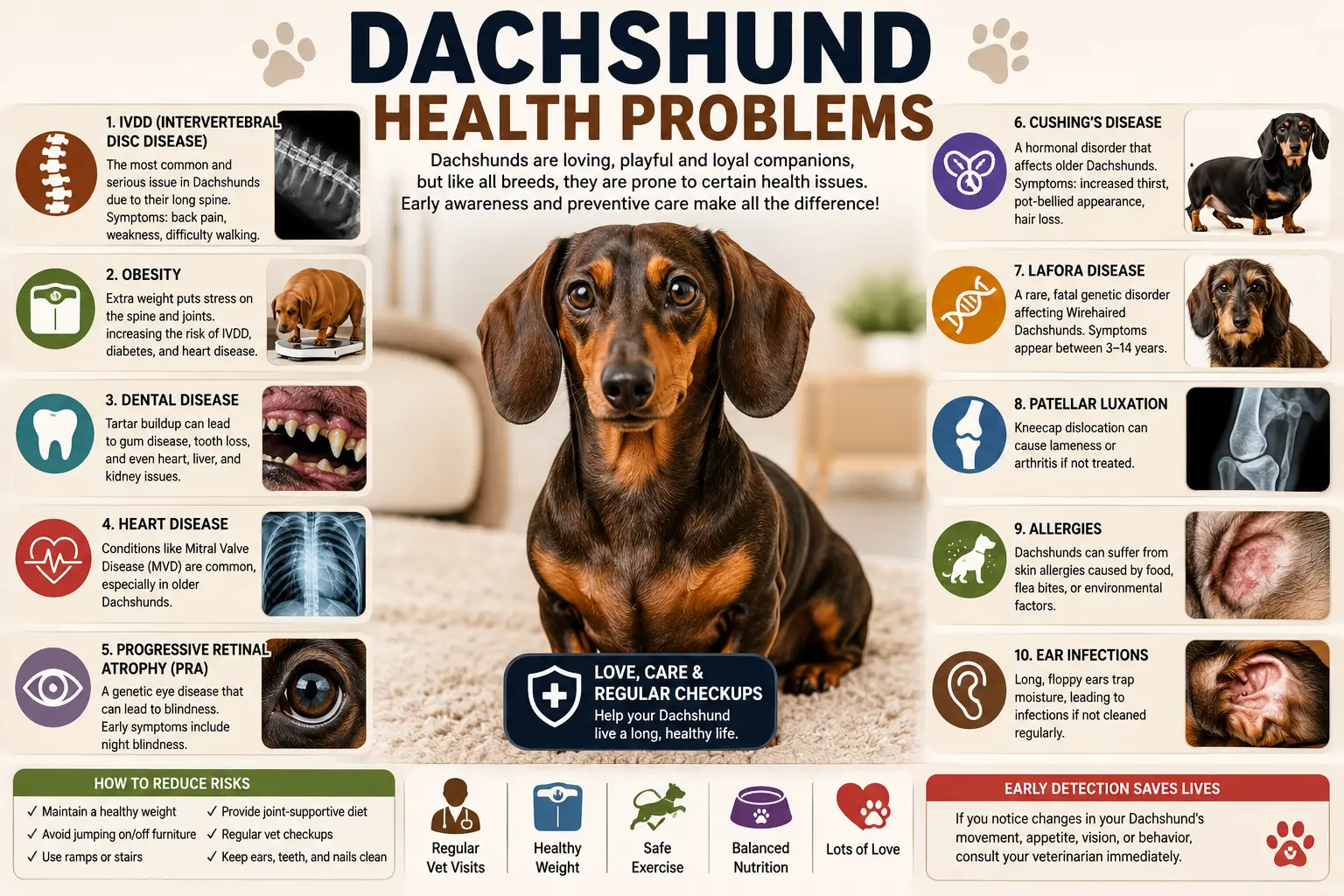
My dachshund, Bruno, lost the use of his back legs while he was chasing a ball in the backyard. It was a spinal disc problem, the condition vets call IVDD, and it took surgery and a long recovery before he was moving normally again. It’s also the most common of the dachshund health problems that owners don’t see coming.
If you love these long-bodied little dogs (and honestly, who doesn’t?), understanding their vulnerabilities isn’t pessimism it’s preparation. Dachshunds are cheerful, fearless, and deeply loyal. But their iconic build comes with a set of health challenges that every owner should know inside out. In this guide, we break down the most critical dachshund health problems, what the latest research says, and what you can do to keep your pup thriving for years.
What Makes Dachshunds Prone to Health Problems?
Dachshunds were bred in 18th-century Germany to hunt badgers underground. Their elongated bodies and short, stubby legs a result of chondrodysplasia, a genetic dwarfism of the long bones gave them the perfect shape for burrowing. But that same body structure is the root cause of many dachshund health problems today.
Their long vertebral column places enormous mechanical stress on the spine. Their compact jaw crowds teeth together. Their low-to-the-ground frame makes weight gain especially damaging. And because they’re so popular consistently ranking in the top 10 dog breeds in the U.S. dachshund health problems affect a large number of families every year.
Understanding these issues early puts you in control.
The 7 Most Common Dachshund Health Problems
1. Intervertebral Disc Disease (IVDD) The #1 Threat
If there’s one dachshund health problem that defines the breed, it’s IVDD. Intervertebral disc disease occurs when the cushioning discs between spinal vertebrae degenerate, herniate, or rupture pressing on the spinal cord and causing pain, weakness, or even paralysis.
According to a landmark study published in Canine Genetics and Epidemiology, the overall prevalence of IVDD in dachshunds is 15.7%, with Standard Smooth-Haired dachshunds reaching as high as 24.4%. That means roughly 1 in 4 smooth-haired dachshunds will be diagnosed with IVDD in their lifetime. The breed is at a relative risk 10–12 times higher than other dog breeds.
The 2025 Dachshund Health Report from dachshundhealth.org.uk brings even more precise findings:
- Dogs with poor X-ray screening results (Grade 3) were 12 times more likely to develop back problems
- In Dachshund Health UK‘s owner survey, dogs over 3 walked in harnesses were 2.3 times more likely to have had an IVDD incident than dogs walked in collars, but the charity stresses this does not show the harness caused it: owners often switch to a harness after a back problem
- Dogs neutered before 2 years old showed higher IVDD rates
- Dachshunds with one normal copy of the FGF4L2 gene had 75% perfect spine scores
Symptoms to watch: back pain, reluctance to climb stairs, dragging hind legs, loss of bladder control.
What you can do: Maintain a healthy weight and plenty of exercise, use a ramp where the dog would otherwise jump down from furniture, and screen with X-rays through a vet-approved program. Stairs are not the risk they are often assumed to be: in the same survey, dachshunds over 3 that used a flight of stairs every day had lower odds of IVDD than dogs kept off stairs, although puppies under 12 months and dogs over 7 are more at risk of hurting themselves (more on the dachshund stairs page). Walk the dog in whichever of a collar or harness it handles well; after a neck (cervical) disc problem, ask the vet whether a harness is the better choice. The 2024 data also shows that 96% of dogs who still had feeling in their back legs recovered within 12 weeks with non-surgical treatment.
Early signs of IVDD in a dachshund
The earliest signs of IVDD in a dachshund are pain signs, not paralysis: yelping when picked up, refusing to jump or climb, an arched back and a head held low. Wobbling in the back legs comes next, and paralysis usually follows that incoordination instead of arriving first.
Dachshund Health UK, the breed’s UK health charity, sorts the signs into three groups. A dog will not necessarily show all of them:
- Pain: yelping, unprovoked or when handled; reluctance to jump or climb; an arched back; the head carried low; reluctance to lower the head to eat or to look up; apparent tummy pain or nibbling at the flank.
- Incoordination: stumbling, swaying and wobbliness, most often in the hind legs; paws occasionally placed upside down; claws scraping the ground.
- Paralysis: usually the hind legs, sometimes all four, usually preceded by incoordination, and sometimes accompanied by urinary incontinence.
Dachshund IVDD Support Australia lists quieter signs as well: a dog that turns unusually quiet or withdrawn, avoids a full, vigorous body shake, or lies stiffly on its bed instead of rolling onto its back.
Plan for a missed diagnosis. In a survey of owners in Dachshund Health UK’s Facebook group, only half of IVDD cases were correctly diagnosed by the general-practice vet at the first visit, and a quarter were put down to something else, such as muscle pain, arthritis or a stomach problem. If a dachshund with these signs is sent home with another explanation and does not improve, ask about IVDD by name.
Until the vet sees the dog, keep it in a crate or pen with no running, jumping or climbing onto furniture. Paralysis, or wobbliness that is getting worse quickly, is an emergency.
What IVDD surgery costs
IVDD surgery for a dog in the US runs from about $3,000 to $15,000, and most of that spread comes from what the quote includes. Cascade Veterinary Referral Center puts surgery at around $3,000 to $8,000 including the appointments and testing needed beforehand. Southeast Veterinary Neurology quotes $10,000 to $15,000 all in, a figure that covers the MRI, the surgery, pain medication, 3 to 4 days in hospital, physical therapy and a follow-up exam.
Ask what is inside the number before comparing two hospitals. Southeast Veterinary Neurology notes that some quotes cover the operation alone and leave out the neurological exam, bloodwork, imaging, anesthesia and the hospital stay.
Not every dog goes straight to surgery. Dachshund Health UK says crate rest with anti-inflammatories and pain relief may suit a dog with mild pain and no incoordination, and that a dog showing no improvement after 4 weeks may then need to be considered for surgery. Insurance is the other half of the cost question: a dachshund that has already had a back episode can still be insured, but with the spine excluded, which the dachshund pet insurance guide works through.
Crate rest: what it involves
Crate rest means the dachshund lives in a crate around the clock for weeks, leaving it only for toilet breaks, physiotherapy or quiet cuddle time, and it is carried to and from the crate every time. Dachshund IVDD Support Australia (DISA) sets 4 to 6 weeks or longer for a suspected episode with no neurological signs, and at least 8 weeks once there is any neurological involvement.
DISA does not soften the shortcut: 10 days, or 2 to 3 weeks, is in its words “a recipe for another, worse episode.” Dachshund Health UK describes a typical course of 6 to 8 weeks, after which a dog that has improved by week 4 returns to a normal routine gradually over the next 1 to 4 weeks.
The equipment is basic. Dachshund Health UK suggests a small crate, as wide as the dog’s length and about 1.5 times its body length, lined with vet bedding or a folded blanket instead of a bean bag. DISA prefers a metal crate with a roof, suggests 36 inches as a size that leaves room to eat and to use a pee pad at one end, and lifts with two hands, one under the chest and one supporting the rear.
Any deterioration during crate rest means going back to the vet, because Dachshund Health UK notes it is likely to lead to a recommendation of surgery.
2. Obesity A Silent Accelerator of Dachshund Health Problems
Obesity is one of those dachshund health problems that sneaks up slowly. Because dachshunds have short legs and a low center of gravity, extra weight isn’t just a cosmetic issue it actively compresses the spine, worsens joint pressure, and increases cardiovascular strain.
Being overweight accelerates the severity of IVDD disc rupture, raises the risk of arthritis, and compounds heart disease. It’s essentially a multiplier for almost every other dachshund health problem on this list.
“Obesity is the most preventable health problem in dogs. For dachshunds especially, every extra pound is a pound the spine wasn’t designed to carry.”
General consensus among veterinary nutrition specialists
Prevention tips:
- Measure food portions carefully don’t free feed
- Limit treats to 10% of daily caloric intake
- Aim for at least 30–60 minutes of gentle, low-impact exercise daily
- Schedule annual weight checks with your vet
3. Degenerative Mitral Valve Disease (DMVD)
Heart disease is another significant entry in the list of dachshund health problems, particularly in older and miniature varieties. Degenerative mitral valve disease sometimes called “leaky valve disease” is a slowly progressive condition where the heart’s mitral valve deteriorates over time, causing blood to flow backward and the heart to overwork.
Dachshunds are also over twice as likely as many other breeds to develop patent ductus arteriosus (PDA), a congenital heart defect where a key blood vessel fails to close after birth.
Regular cardiac screening, especially for dachshunds over age 7, is strongly recommended. Early detection through a vet listening for heart murmurs can add meaningful quality years to your dog’s life.
4. Eye Conditions From Cataracts to PRA
Eye problems represent a cluster of dachshund health problems that are easy to miss in early stages. The most serious is Progressive Retinal Atrophy (PRA), a hereditary condition in which photoreceptor cells in the retina gradually degenerate leading to progressive vision loss and eventually blindness.
Miniature longhaired dachshunds are especially susceptible to a cone-rod dystrophy form of PRA that can cause blindness as early as 1–2 years of age. According to research from the UC Davis Veterinary Genetics Laboratory, late-onset rcd4-PRA typically appears between 5 and 12 years of age in affected dachshunds.
Beyond PRA, dachshunds are prone to:
- Cataracts (lens clouding)
- Glaucoma (pressure buildup in the eye)
- Corneal ulcers
- Cherry eye (prolapsed third eyelid gland)
Annual eye exams are a simple, low-cost way to catch these dachshund health problems before they become irreversible.
5. Dental Disease
Because dachshunds have shorter jaws, their teeth are naturally crowded a setup that traps food, accelerates tartar buildup, and leads to periodontal disease. Dental disease is among the most overlooked dachshund health problems, even though it affects the majority of dogs over age three.
Left untreated, gum disease doesn’t just cause tooth loss bacteria from infected gums can enter the bloodstream and damage the kidneys, liver, and heart.
Prevention: Daily tooth brushing, dental chews, and professional cleanings once or twice a year. Studies have shown that brown seaweed (Ascophyllum nodosum) can clinically reduce tartar buildup and may be worth adding to your dog’s diet.
6. Cushing’s Disease (Hyperadrenocorticism)
Cushing’s disease is one of those dachshund health problems that often gets misdiagnosed as normal aging. It occurs when the adrenal glands overproduce cortisol, usually due to a benign tumor on the pituitary gland.
Symptoms include:
- Pot-bellied appearance
- Excessive thirst and urination
- Thinning skin or hair loss
- Increased appetite
- Lethargy
Because these signs develop gradually often over months or years many owners assume their older dog is “just slowing down.” A simple blood and urine panel from your vet can diagnose this condition. Once identified, it’s manageable with medication.
7. Neurological Conditions Epilepsy and Lafora Disease
Some dachshund health problems go beyond physical structure and into genetics. Miniature wirehaired dachshunds have a notably high prevalence of Lafora disease, a progressive myoclonic epilepsy caused by a mutation in the Epm2b gene. Research published in peer-reviewed journals suggests that the carrier plus affected rate in miniature wirehaired dachshunds may be as high as 20%.
Other neurological dachshund health problems include idiopathic epilepsy (seizures with no identifiable cause) and narcolepsy.
If your dachshund experiences sudden jerky movements, reflex myoclonus, or unexplained seizures especially after age 5 consult a veterinary neurologist promptly.
Comparing Dachshund Health Problems at a Glance
| Health Problem | Prevalence / Risk | Age of Onset | Preventable? |
|---|---|---|---|
| IVDD | 15.7–24.4% (breed-wide) | 3–7 years | Partially |
| Obesity | Very common; lifestyle-driven | Any age | Yes |
| Degenerative Mitral Valve Disease | Higher in seniors | 7+ years | No (manageable) |
| Progressive Retinal Atrophy | Genetic; miniature longhaired risk | 1–12 years | No (screen early) |
| Dental Disease | Majority of dogs over age 3 | 2+ years | Yes |
| Cushing’s Disease | Moderate; older dogs | 6+ years | No (treatable) |
| Lafora Disease / Epilepsy | Up to 20% in wirehaired variety | 5+ years | No (genetic) |
How to Proactively Manage Dachshund Health Problems
Managing dachshund health problems isn’t just about reacting it’s about building a lifestyle that protects your dog from the inside out. Here’s what the latest veterinary guidance recommends:
1. Weight Management
The single most impactful thing you can do. A lean dachshund is a healthier dachshund. Stick to portion-controlled feeding and avoid high-calorie treats.
2. Spine-Safe Environment
Install ramps or pet stairs for couches and beds. Avoid letting your dachshund jump from heights. Neither a collar nor a harness has been shown to prevent back problems, so choose the one that fits the dog well, and ask the vet about a harness after any neck disc problem. Limit activities like rough play that torque the spine.
3. Regular Vet Screenings
Annual wellness visits, X-ray spinal screening, eye exams, cardiac checks (especially after age 7), and bloodwork panels can catch dachshund health problems before they escalate.
4. Genetic Testing
For miniature longhaired and wirehaired dachshunds especially, genetic testing for PRA, Lafora disease, and FGF4L2 status gives you critical foresight. Responsible breeders should already have this data ask for it.
5. Nutrition
Joint-supportive supplements like glucosamine, chondroitin, and omega-3 fatty acids (algal oil) have evidence behind them for supporting spine and joint health. Probiotics may support oral health.
My Personal Take on Dachshund Health Problems
After seeing Bruno go through spinal surgery and a long recovery, I gained a deep respect for how fragile these little dogs can be despite their fearless attitudes. The thing about dachshund health problems is that they’re largely manageable when you stay informed and proactive. Bruno eventually regained full mobility and the experience turned me into a passionate advocate for IVDD awareness.
These dogs give you so much joy, loyalty, and personality. Staying educated about dachshund health problems is the least we can do in return.
For more breed-specific guidance, make sure to explore our Dachshund Guides they cover everything from diet to training.
FAQ: Dachshund Health Problems
What is the most common dachshund health problem?
Intervertebral Disc Disease (IVDD) is the most common health problem affecting Dachshunds. Studies estimate that up to 24.4% of Standard Smooth-Haired Dachshunds may develop IVDD during their lifetime, making spinal care a top priority for owners.
Can dachshund health problems be prevented?
Some Dachshund health problems, such as obesity and dental disease, are largely preventable through proper nutrition, regular exercise, and routine dental care. While genetic conditions like IVDD and Progressive Retinal Atrophy (PRA) cannot always be prevented, early screening and healthy lifestyle choices can help reduce their impact.
At what age do dachshund health problems usually start?
Many Dachshund health conditions develop at different stages of life. IVDD commonly appears between 3 and 7 years of age, while heart disease and Cushing’s disease are more common after age 7. Eye conditions like PRA may begin as early as 1 to 2 years in some dogs. Regular veterinary checkups are essential throughout your dog’s life.
Are miniature dachshunds more prone to health problems than standard dachshunds?
Miniature Dachshunds are susceptible to many of the same health conditions as Standard Dachshunds. However, some miniature varieties have a higher risk of inherited disorders, including Lafora disease in Wirehaired Dachshunds and early-onset Progressive Retinal Atrophy in Longhaired Dachshunds.
What should I ask my vet about dachshund health problems at each visit?
Ask your veterinarian about spinal health, weight management, heart examinations, dental care, eye health, and whether genetic testing is appropriate for your Dachshund’s variety. Preventive care and early detection are the best ways to manage potential health problems.
