
Safe Ice Melt for Pets: Pick Urea, Then Lock Up the Bag

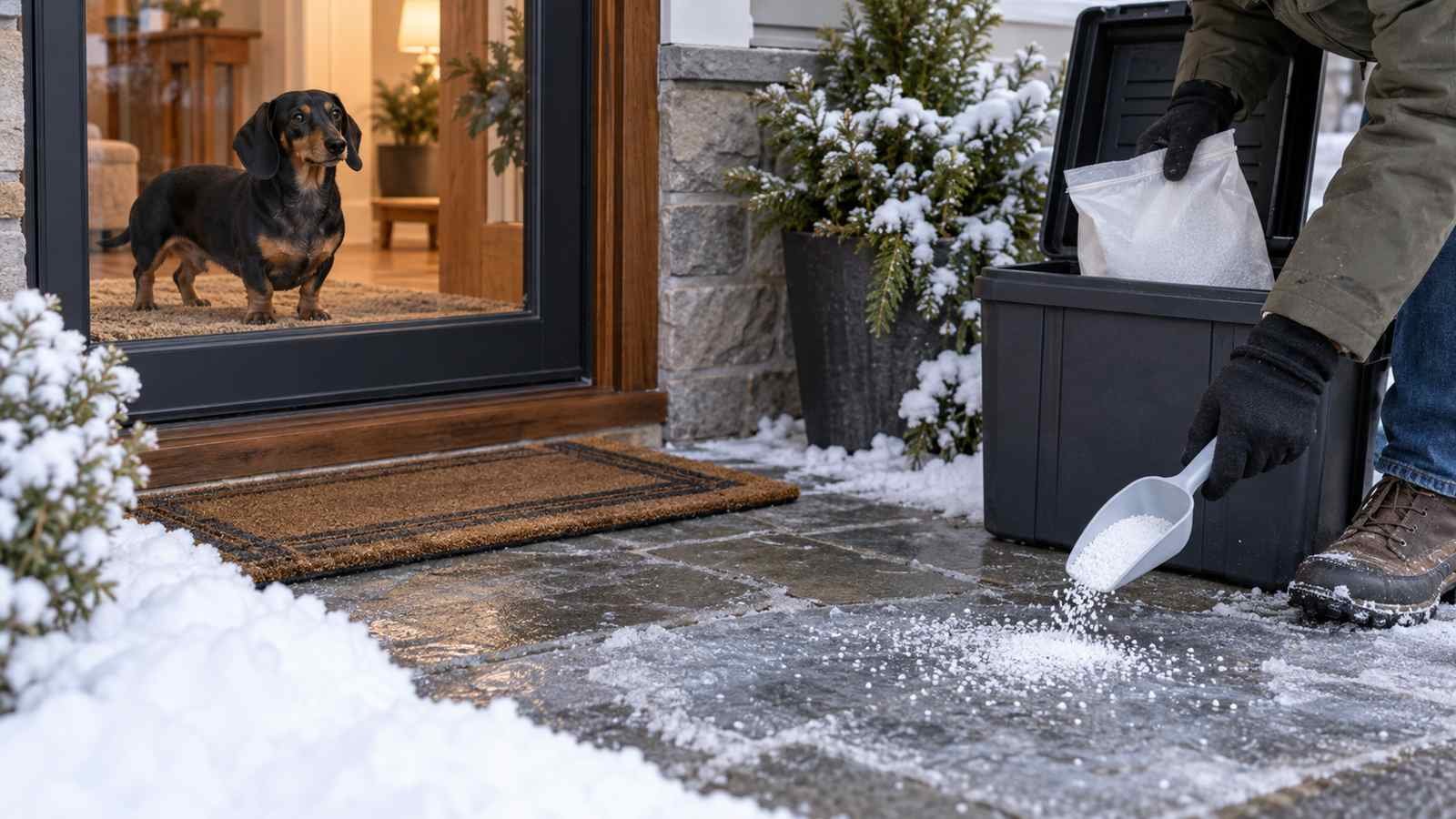
The safest ice melt for pets is one with urea as its main ingredient. ASPCA Poison Control calls urea the least irritating to the stomach of all the common de-icer ingredients, though no ice melt is fully safe if a dog eats enough of it.
So if you’re standing in the hardware aisle, turn the bag over and read the active ingredient, not the paw print on the front. “Pet friendly ice melt” is a claim the maker puts there.
The bigger risk for a dachshund isn’t the walk at all; it’s the open bag in the garage, and the math on that is worth knowing before the first snow.
What is a safe ice melt for pets?
A pet safe ice melt is one built on the gentlest ingredient you can find, and urea sits at the top of that list. ASPCA Poison Control recommends products that list urea as the primary ingredient, especially for dogs that lick their feet or drink from puddles.
Here’s how the common ingredients line up, from gentlest to roughest:
- Urea (sometimes sold as carbonyl diamide): least irritating to the stomach, per ASPCA Poison Control. AKC still warns it can cause drooling or vomiting if your dog eats it.
- Magnesium chloride: PetMD lists it with urea as the ingredients “considered slightly safer.”
- Potassium chloride and sodium chloride (rock salt): larger amounts can bring vomiting, diarrhea, dehydration and electrolyte trouble, according to ASPCA Poison Control.
- Calcium chloride: eaten in large amounts, it may cause ulcers in the mouth and stomach, ASPCA Poison Control warns.
- Ethylene glycol blends: PetMD warns that these contain the same active ingredient as antifreeze, which is deadly to pets.
There’s a trade-off you should expect. PetMD notes that the gentler ingredients are also less effective at melting ice. You may need to shovel first and treat what’s left.
Brand pages won’t settle it for you either. Morton, for one, says its Safe-T-Pet melt is salt- and chloride-free and “less irritating to pets’ paws than plain salt.” That’s a comparison with rock salt, and it’s a fair one, but it isn’t a promise that your dog can eat it.
How much rock salt is toxic to a dog?
Salt can start to make a dog sick at 2 to 3 grams per kilogram of body weight, and the lethal dose is about 4 g/kg, according to the Merck Veterinary Manual’s chapter on salt toxicosis. It lists rock salt among the salty things pets have eaten.
Those numbers don’t mean much until you put a dachshund’s weight on them. So what do they look like for yours? The AKC standard puts miniatures at 11 pounds and under, and standards at 16 to 32 pounds.
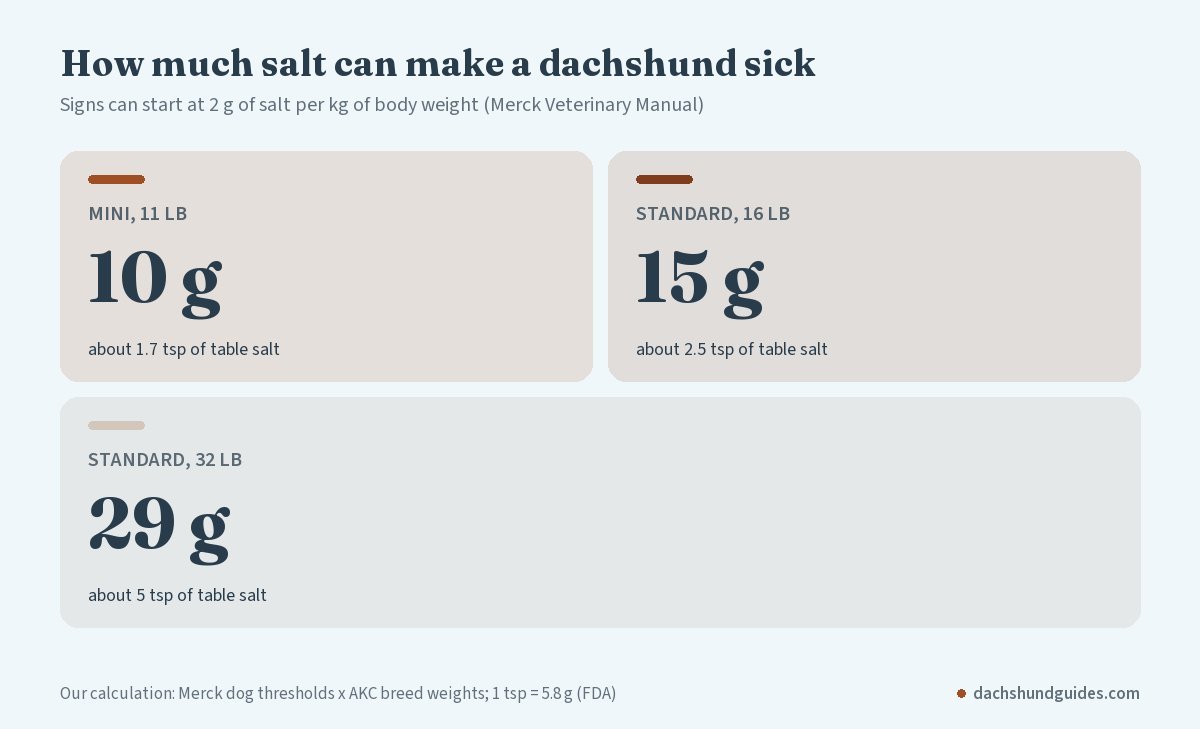
An 11-pound miniature weighs about 5 kg. At the low end of Merck’s range, that’s roughly 10 g of salt before signs can show, and about 20 g at the lethal mark.
How much is 10 grams? The FDA puts a teaspoon of table salt at about 2,300 mg of sodium, which works out to about 5.8 g of salt. So a mini can get sick on less than two teaspoons, and 20 g is under an ounce.
A 16-pound standard reaches the low end at about 15 g, roughly two and a half teaspoons. A 32-pound standard gets there at about 29 g, around five teaspoons or an ounce, with the lethal mark near two ounces.
Keep the limits of this in mind. The figures are for sodium chloride, and blends mixed with other chlorides won’t behave the same. The teaspoons are table salt, too, and pellets from a bag don’t measure the same way, so treat the grams as the figure that counts. Water matters as well, and Merck says salt toxicosis is unlikely while a dog’s body is working normally and it has fresh water to drink.
What the math does make clear is where the danger sits. No dachshund licks 10 g of salt off its feet. A torn bag on the garage floor can hand it that much in a few mouthfuls.
Is ice melt toxic to dogs on paws and sidewalks?
Ice melt on paws and sidewalks is rarely dangerous to dogs. ASPCA Poison Control says a couple of licks of a paw or treated ground won’t cause serious problems, though you may see some drooling, vomiting or diarrhea that settles on its own.
That’s also the most common worry by far. ASPCA Poison Control’s most frequent ice melt calls are about pets licking their feet after a walk, then about licking treated ground. Dogs eating from the container comes third, and it’s the serious one.
Skin is a separate issue. Poison Control says ice melt can dry out and irritate paws and skin, and PetMD reports that most cause irritation after repeat or prolonged contact. Some of the harsher ones can cause chemical burns.
A dachshund’s build adds a wrinkle here. A miniature stands only 5 to 6 inches at the shoulder under the AKC standard, so a few inches of salted slush can reach the chest and belly, not just the feet.
That’s why Poison Control’s advice to wipe the product off paws and fur matters more for a low-slung dog. The full routine, including booties versus paw wax, is in the guide to walking your dachshund in the cold.
You can’t control the rest of the block. PetMD notes that most sidewalks aren’t treated with pet-safe products, so the bag you buy only protects your own steps. If your dog keeps working at its feet after winter walks, the paw-licking guide covers what else could be behind it.
Sand, kitty litter and other options that don’t melt anything
If you can’t find a urea melt, you don’t have to fall back on rock salt. Poison Control lists sand, gravel, kitty litter and wood ash as traction products. They won’t melt the ice, but they’ll give you and your dog some grip on it.
Pet-safe melts can sell out in a hard winter. In a January 2026 thread in r/SouthJersey, an owner said the stores near them were out and their landlord had left the kind of salt that can hurt dogs. One reply was simple:
“I always just used sand. Its pet safe, doesnt create runoff, and does a decent job of providing grit. When the ice and snow melt you just sweep it off”
– r/SouthJersey, January 2026 (18 upvotes)
ASPCA Poison Control agrees that sand is a safe option for traction, and sweeping it up once the ice is gone keeps it from being tracked inside.
Whatever you spread, use the amount on the label. “More is not better,” Poison Control says, and extra product just leaves more on the ground for paws to pick up.
What to do if your dog ate ice melt
If your dog ate ice melt, take away the source and work out how much is gone. ASPCA Poison Control says a dog that ate more than a casual lick, has more than mild vomiting or shows any neurological signs should be seen by a vet right away.
Watch the next few hours closely. What are you looking for? Merck says excess salt makes dogs vomit within several hours, and signs can move on to weakness, diarrhea, muscle tremors and seizures.
Don’t wait it out if things look worse. In one case Poison Control recorded, a dog that swallowed an ice melt product was lethargic with bloody stools a day later, and its electrolytes were badly off.
Before any signs show, Merck says the best step for a small animal is access to water and close watching for several hours. Merck also notes that vets may make a dog vomit when the amount eaten is known and signs haven’t started, so call before you decide anything.
For advice on the spot, call your vet or Pet Poison Helpline at (855) 764-7661. Have the bag in your hand when you do, because they’ll need the ingredient list and your dog’s weight to judge the risk.
Then move the bag somewhere your dachshund can’t get at it.
