Are Poinsettias Toxic to Dogs? Mildly, and They’re Not the Plant to Worry About


Poinsettias are only mildly toxic to dogs. The milky sap can irritate your dog’s mouth and stomach and may cause drooling or vomiting, but the ASPCA’s own plant database calls the poinsettia “generally over-rated in toxicity.” Serious poisoning is rare.
So if your dog just chewed a leaf off the one on the coffee table, you can take a breath. Keep an eye on them and read on, because a few other holiday plants deserve more of your worry than this one.
Are poinsettias toxic to dogs?
Yes, but only mildly. Pet Poison Helpline says poinsettias are “only mildly toxic to cats and dogs,” and that the poisoning they’re known for “is greatly exaggerated.”
The trouble’s in the sap, and you can usually see it: a milky white liquid where a leaf or stem breaks. According to the helpline, it contains diterpenoid euphorbol esters and saponin-like detergents, which irritate whatever they touch.
Here’s what you might see if your dog chews or swallows part of the plant:
- Drooling and lip-licking
- Vomiting, usually mild
- Diarrhea, though the helpline says that’s rare
- Red, swollen or itchy skin where the sap touched
- Eye irritation, if sap gets rubbed into the eyes
Does a small dog change the picture? The helpline does list the size of the animal and the amount eaten among the things that decide what’s toxic for a particular pet. Nobody publishes a leaf count for dachshunds, though, and the signs it lists are the same mild ones.
Where the poinsettia’s bad name came from
Poinsettias have a scary reputation that the poison center record doesn’t back up. In a 1996 study, researchers went through 849,575 plant exposures reported to US poison control centers and pulled out the 22,793 that involved poinsettias.
Not one of those cases was fatal, 92.4% of the people exposed developed no toxicity at all, and 96.1% were never treated in a health care facility.
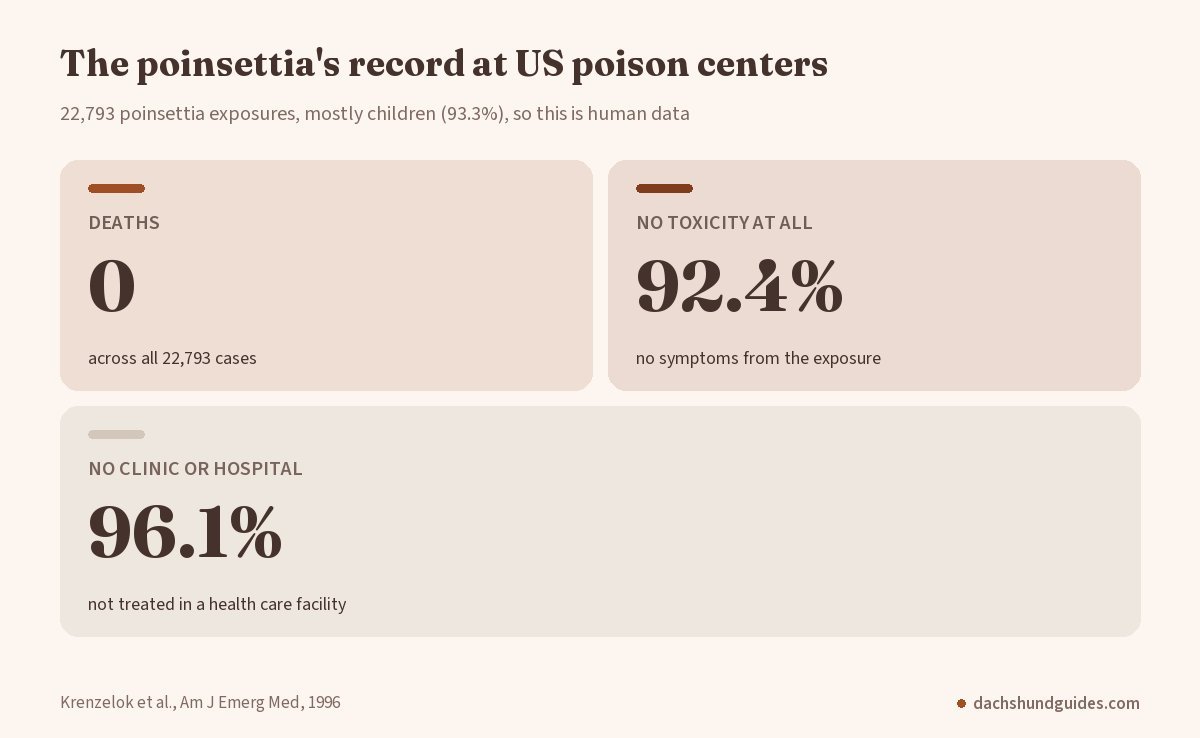
Those are human cases, and 93.3% of them involved children, so they aren’t a direct measure of what happens to a dog. They do show how far the plant’s name has drifted from its record. The study’s title put it plainly: poinsettia exposures “have good outcomes…just as we thought.”
Part of the fear may just come from how common the plant is. A second analysis by the same lead author ranked poinsettias third among all plant exposures reported to US poison centers over ten years, behind only philodendron and dieffenbachia. When a plant shows up in that many homes, it shows up in a lot of phone calls.
Poinsettia keepers say much the same. One reply in r/poinsettias put it this way:
“They aren’t actually poisonous and are instead only mildly toxic. Usually if a pet eats some leaves, they throw up and that’s about it. Rarely do they even need medical care.”
– r/poinsettias, May 2026 (2 upvotes)
Which Christmas plants are toxic to dogs?
Several Christmas plants are more of a risk to dogs than the poinsettia. The ASPCA lists mistletoe, amaryllis and Christmas rose as toxic to dogs with signs that go beyond mouth irritation, while Christmas cactus and rosemary are non-toxic. Here’s how eight common ones compare in its database:
| Plant | Dogs | Cats | What the ASPCA lists |
|---|---|---|---|
| Poinsettia | Toxic (mild) | Toxic (mild) | Irritant sap; mouth and stomach irritation, sometimes vomiting |
| Holly | Toxic | Toxic | Vomiting, diarrhea, depression; leaves and berries are low toxicity |
| American mistletoe | Toxic | Toxic | Vomiting, diarrhea, difficulty breathing, low heart rate, rarely low blood pressure |
| Amaryllis | Toxic | Toxic | Vomiting, diarrhea, abdominal pain, drooling, tremors |
| Christmas rose (hellebore) | Toxic | Toxic | Cardiac glycosides; drooling, abdominal pain, diarrhea |
| Easter lily | Non-toxic | Toxic | In cats: kidney failure, and death is possible |
| Christmas cactus | Non-toxic | Non-toxic | No toxicity listed |
| Rosemary | Non-toxic | Non-toxic | No toxicity listed |
The tree itself isn’t off the hook either. AKC’s chief veterinarian, Dr. Jerry Klein, names balsam, pine and cedar alongside amaryllis and holly as holiday plants that can be dangerous to pets who eat them.
Is mistletoe poisonous to dogs?
Yes, mistletoe is poisonous to dogs, and it’s the one on this list to hang well out of reach. The ASPCA’s entry for American mistletoe lists vomiting and diarrhea, but also difficulty breathing and a low heart rate. Those aren’t stomach signs; they’re heart and lung signs.
Fallen berries and leaves under a doorway sit right at your dachshund’s nose height. If you hang a sprig, you’ll want to check the floor under it every day.
Is holly poisonous to dogs?
Holly’s toxic to dogs, but only mildly. Should you take it down? You don’t have to: the ASPCA lists vomiting, diarrhea and depression, and it notes that the leaves and berries are low toxicity.
Lilies matter more if you have a cat
If your dachshund shares the house with a cat, you’ll want lilies out of the house entirely. The ASPCA lists the Easter lily as non-toxic to dogs, but in cats it can cause vomiting, lethargy and kidney failure, and death is possible.
Dr. Klein’s advice is blunt: “Homes with cats should never have lilies in them.” He also points out that they’re often missed in floral arrangements. That’s worth remembering when a holiday bouquet arrives at the door, and it’s one more thing to plan for in a dachshund and cat household.
What to do if your dog ate a holiday plant
If your dog ate a poinsettia, take away what’s left and wipe any sap off their mouth and skin. Mild drooling or vomiting is what Pet Poison Helpline describes. Anything more, or any of the other toxic plants in the table, is worth a call.
Before you call, try to work out exactly what the plant was. Don’t know? Take a photo of it, and of any leaves your dog dropped. The ASPCA’s entries show how much the answer changes between species, and between a lily and a cactus.
You can reach ASPCA Animal Poison Control at (888) 426-4435 or Pet Poison Helpline at (855) 764-7661. Both may charge a consultation fee, so if it’s office hours, your own vet’s a good first call.
Holiday hazards don’t stop at the plants, of course. Raisins in holiday baking are a bigger worry than a poinsettia leaf, and the guide to dogs and grapes explains why. And outside, it’s the ice melt on the steps.
For the plants, though, the rule is simple.
The poinsettia can stay where it is if your dog doesn’t bother with it. The mistletoe goes up high, and if there’s a cat in the house, the lilies come out of the bouquet before it goes on the table.
