
Chocolate Dachshund Coat Color, Genes and How Common It Is

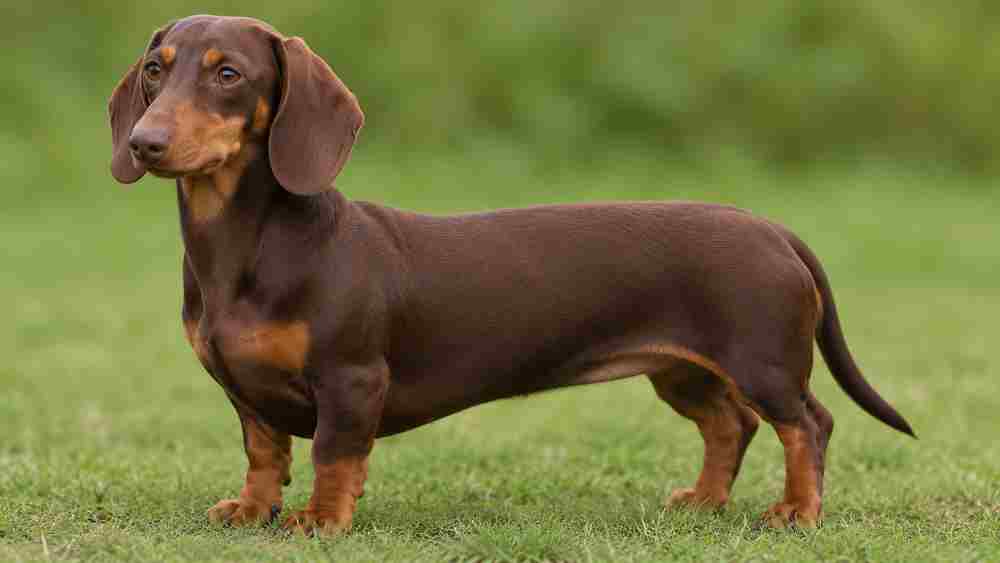
A chocolate dachshund is a dachshund whose coat is brown where most are black. The breed standard lists it as chocolate with tan or cream markings, so you’ll usually see it written as chocolate and tan. It takes two copies of one recessive gene.
Chocolate here means coat color. If your dog ate chocolate, our chocolate toxicity calculator works out whether the dose is a problem.
The Dachshund Club of America’s color sheet names chocolate and tan as one of the base colors, next to red, cream, black and tan, wild boar, gray (blue) and fawn (isabella). Our dachshund colors overview puts them side by side.
What makes a dachshund chocolate?
A dachshund is chocolate when it inherits the recessive brown version of the TYRP1 gene from both parents, which turns black pigment brown. A dog with a single copy usually still looks black, so you can’t pick the color from one parent.
The evidence is a 2002 study in Mammalian Genome by Schmutz and colleagues. All 43 brown dogs they tested carried two TYRP1 variants, and none of the 34 black dogs did. It wasn’t a dachshund-only study, so you’re reading general dog genetics.
So how can two black and tans produce a chocolate puppy out of nowhere? Each can carry one brown copy without showing it. Two chocolate parents don’t have that problem, since they only have brown copies to hand down.
What does a chocolate and tan dachshund look like?
The AKC standard puts chocolate among the two-colored dachshunds: a brown coat with deep, rich tan or cream markings over the eyes, on the muzzle, chest, legs and paws. Nose and nails are dark brown, though self-colored is acceptable.
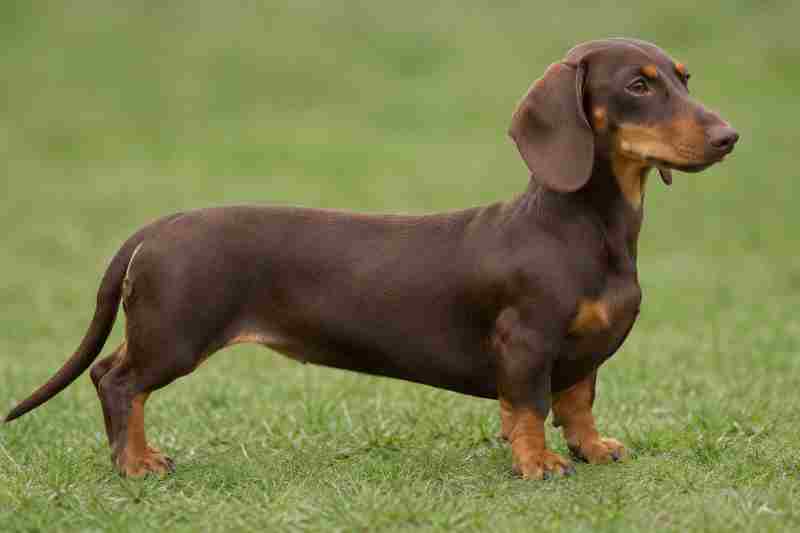
One detail trips people up: the standard’s one-colored dachshunds are red and cream only, so a “solid chocolate” dog with no points isn’t a color it names, and you shouldn’t take a breeder’s word for it.
Coat length doesn’t change the color. For wirehaired dachshunds the standard says all the listed colors and patterns are admissible, and it names a chocolate-and-tan boar variation with self-colored nose, nails, eye rims and eyes. Owners still get asked about it:
“I posted on here in March just before we picked up our (supposedly mini) chocolate wire haired boy (last photo). I just wanted to post an update of him now, absolutely gorgeous, 10.75kg and still fully chocolate. I was wondering if anyone else has a fully chocolate wire? We get asked if he’s a cross most days!”
– r/Dachshund, November 2026 (440 upvotes)
Our wire haired dachshund page covers that variety in full.
Chocolate dapple dachshund
A chocolate dapple dachshund is a chocolate and tan with the dapple (merle) pattern over it: lighter patches mottled across the brown. The AKC standard says a dapple’s base may be any acceptable color, and the DCA sheet pictures a chocolate and tan dapple.
The pairing to avoid is two dapples. The DCA sheet says double dapples from two dapple parents are more likely to have deafness, reduced eye size or missing eyes. Most breeders, it adds, breed dapples only to black and tan or chocolate and tan.
So a chocolate dapple puppy should come from one dapple parent and one plain parent.
Ask to see both parents before you put down a deposit, because you can’t tell the pairing from the puppy, and a litter from two dapples can look just as pretty as any other. Our dapple dachshund page has the hearing numbers for one copy versus two.
Chocolate or isabella?
An isabella dachshund is a chocolate with a second gene, dilution, fading the brown to a milky fawn. The DCA sheet calls fawn (isabella) a dilute of chocolate and says dilutes may be associated with health issues such as thin coats and skin sensitivity.
The same sheet lists chocolate and tan as a base color without a health note. A deep brown dog and a faded one can look alike in puppy photos, so you’ll want the isabella dachshund page for the nose clue and the DNA test.
How common are chocolate dachshunds?
Chocolate and tan was 1,241 of 9,807 dachshunds, about 13%, in the 2021 DachsLife survey of UK owners. Black and tan, the most common color, was 3,313 (33.8%).
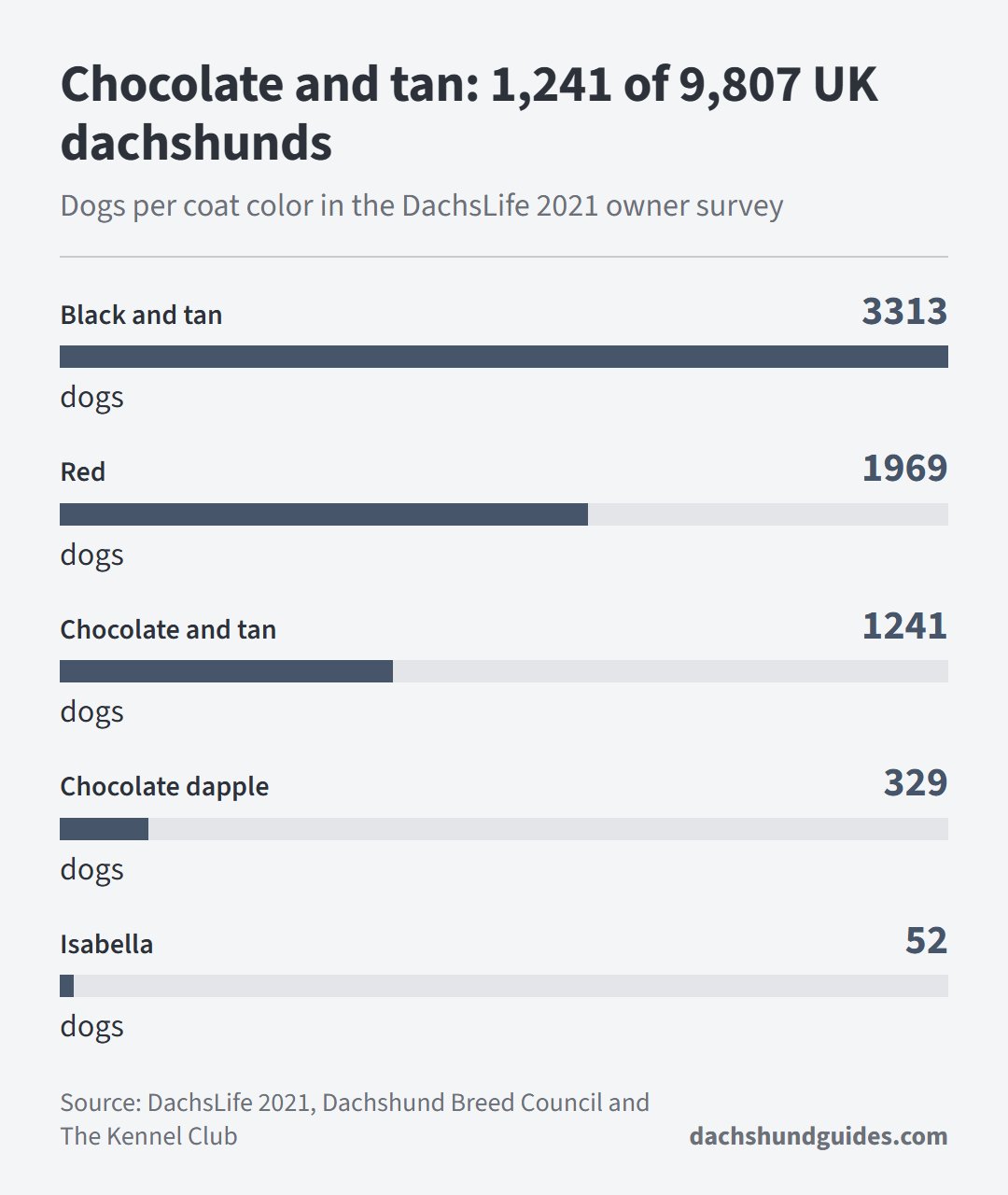
Chocolate dapple was 329 dogs, about 3%, and isabella 52. That’s a UK owner survey, not a registry count, and I found no equivalent US figure by color.
At roughly one dog in eight, chocolate and tan isn’t a rare color. Is a breeder who asks extra for a “rare chocolate” giving you a reason that isn’t the coat? If not, you don’t owe the premium.
Chocolate dachshund questions
How much does a chocolate dachshund cost?
No source I found prices chocolate dachshunds apart from other colors, so you’re back to the general cost question. Our dachshund price page shows what moves the number for you.
Is a chocolate and tan dachshund the same as a chocolate dachshund?
Yes. The standard lists chocolate with tan or cream markings, and the DCA sheet writes the color as chocolate and tan. A chocolate dachshund with no points at all isn’t a color the standard names, and you won’t find it listed.
Are chocolate dachshunds less healthy than black and tan ones?
The DCA sheet attaches its health note to the dilutes, blue and isabella, and not to chocolate. I found no breed study that compares chocolate with black and tan directly.
