
Do Goldendoodles Shed? The Complete Truth About Your Favorite Doodle

Introduction: Understanding Goldendoodle Shedding
When my neighbor Sarah first brought home her golden-colored Goldendoodle, one of the first questions everyone asked was simple yet critical: “Do these dogs shed?” It’s a question I hear constantly from potential owners who love the breed but worry about maintaining a fur-free home. The reality is that understanding shedding patterns isn’t just about cleanliness; it’s about making an informed decision for your family.
Goldendoodles have skyrocketed in popularity, with a remarkable 160.3% increase in ownership from 2013 to 2021, according to Nationwide pet insurance data. Much of this surge stems from the belief that these charming dogs are hypoallergenic and won’t leave your furniture covered in hair. But the truth about shedding is far more nuanced than marketing suggests.
In this comprehensive guide, we’ll answer the pressing question: do goldendoodles shed? We’ll explore the science behind their coats, examine different generations and coat types, and provide realistic expectations before bringing one of these delightful dogs into your home.
What Does It Mean When Do Goldendoodles Shed?
To properly address whether do goldendoodles shed, we must first understand what shedding actually means. Shedding refers to the natural process where dogs lose their old hair, which is then replaced by new growth. This is a normal biological function that occurs in most canine breeds, though the amount and frequency vary significantly.
The confusion around this topic often stems from conflating two different concerns: hair shedding and allergen production. While these issues overlap, they’re not identical. Hair itself rarely triggers allergies. Instead, the culprit is dander, microscopic skin flakes containing allergenic proteins that become airborne and settle throughout your home. Understanding this distinction helps clarify why these dogs shed less noticeably than some breeds, even if they still produce allergens.
For those asking whether do goldendoodles shed, it’s essential to recognize that approximately 10 to 20 percent of people worldwide experience dog allergies, according to the American College of Allergy, Asthma and Immunology. This massive population of allergy sufferers fuels the persistent question of whether these charming hybrids can live comfortably with people suffering from allergies.
Genetics and Coat Types: Why Do Goldendoodles Shed Differently?
Whether do goldendoodles shed depends heavily on genetics. Goldendoodles inherit traits from both parent breeds, the Poodle and the Golden Retriever. Understanding this genetic lottery is crucial to predicting shedding patterns. Poodles possess a single-layer coat that continuously grows without seasonal shedding cycles, while Golden Retrievers sport a double coat designed for water-shedding, which means seasonal fur loss is significant.
The furnishings gene plays a critical role in determining shedding levels. Dogs with two copies of the furnishings gene typically exhibit lower shedding, while those with fewer copies tend to shed more heavily.
Straight-Coated Goldendoodles
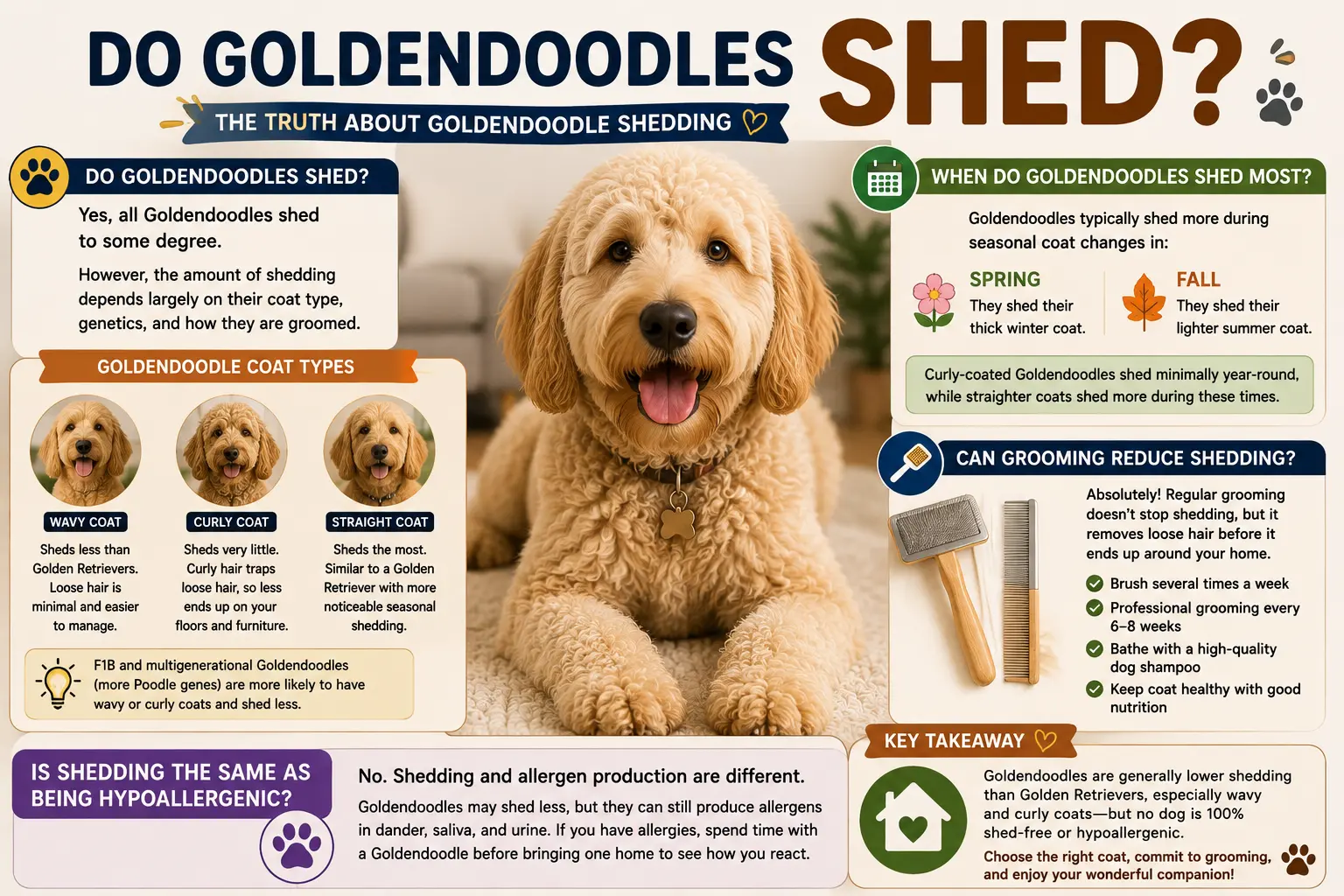
When do goldendoodles shed with straight coats, they shed comparably to purebred Golden Retrievers. These dogs lose hair continuously throughout the year, with pronounced increases during spring and fall. Owners should expect to find visible hair on furniture, clothing, and floors daily. If you’re concerned about do goldendoodles shed and you’re considering a straight-coated variety, prepare for consistent grooming and cleaning. For more comprehensive breed comparison guides, check out Dachshund Guides which offers detailed insights into different dog breeds and their care requirements.
Wavy-Coated Goldendoodles
Wavy-coated Goldendoodles represent the middle ground. These hybrids shed noticeably more than curly variants but significantly less than straight-coated dogs. Seasonal increases occur but remain less extreme than retriever varieties. Many owners find this coat type a reasonable compromise between the desired Poodle-like appearance and manageable shedding levels.
Curly-Coated Goldendoodles
Curly-coated Goldendoodles shed the least among all coat types, making them the best choice for those concerned about shedding. Loose hairs become trapped within the tight curls rather than falling freely onto surfaces. While these dogs do shed, the hair stays contained within the coat until removed through brushing. This trapped-hair phenomenon explains why many owners report visible shedding is minimal, though grooming is absolutely essential to prevent mat formation.
Goldendoodle Generations and Shedding
The generation of your Goldendoodle significantly influences shedding patterns. Understanding these generational differences helps set realistic expectations for what to expect with your future companion.
F1 Goldendoodles (50% Golden Retriever, 50% Poodle)
First-generation crosses present a genetic coin flip. Do goldendoodles of this generation shed? Yes, they shed lightly to moderately, depending on which parent’s genes dominate. Some F1 Goldendoodles inherit the Poodle’s low-shedding coat, while others lean toward their Golden Retriever heritage with noticeable shedding.
F1B Goldendoodles (75% Poodle, 25% Golden Retriever)
When evaluating do goldendoodles shed at the F1B generation, the answer becomes more favorable for allergy sufferers. F1B Goldendoodles typically shed very minimally to almost not at all. Their higher Poodle percentage dramatically reduces hair loss, making them an excellent choice for families with moderate allergies.
F2 and Multigenerational Goldendoodles
Subsequent generations become increasingly unpredictable in their shedding patterns. Genetic outcomes become less predictable as you move further from the original cross. Some owners report excellent results, while others experience moderate shedding. This unpredictability makes coat type a more reliable predictor than generation alone.
The Shedding Comparison Table
Understanding whether do goldendoodles shed compared to other breeds provides helpful context:
| Breed | Shedding Level | Annual Shedding Duration | Grooming Frequency | Allergen Production |
|---|---|---|---|---|
| Goldendoodle (Curly) | Minimal | Continuous (light) | 6-8 weeks | Low |
| Goldendoodle (Wavy) | Moderate | Year-round (seasonal peaks) | 6-8 weeks | Low-Moderate |
| Goldendoodle (Straight) | Heavy | Year-round (spring/fall peaks) | 6-8 weeks | Moderate-High |
| Golden Retriever | Very Heavy | Year-round (extreme seasonal) | Every 4-6 weeks | High |
| Standard Poodle | Minimal | Continuous growth (no shedding) | 6-8 weeks | Very Low |
| Labrador Retriever | Very Heavy | Year-round (extreme seasonal) | Every 4-6 weeks | High |
This comparison clearly shows that when do goldendoodles shed depends entirely on coat type, with curly-coated varieties shedding far less than their retriever cousins.
Seasonal Shedding in Goldendoodles
For those wondering whether do goldendoodles shed seasonally, the answer is: it depends on their coat type. Goldendoodles inheriting Golden Retriever genetics experience “blowing their coat” during seasonal transitions. Spring shedding occurs as dogs lose their winter undercoat to prepare for warmer months. Fall shedding happens as they develop a thicker coat for winter protection.
Understanding seasonal patterns helps owners plan grooming schedules accordingly. During these peak seasons, even low-shedding curly-coated varieties may shed more noticeably. Regular brushing during these periods is non-negotiable.
Grooming Strategies: Managing Shedding
The good news is that proper grooming dramatically reduces visible shedding and prevents serious coat issues. Here’s what you need to know when dealing with shedding:
Regular Brushing
Brushing is your primary defense against loose hair accumulation. Regular brushing removes hair before it falls onto your furniture. For curly coats, brush every 2-3 days. Wavy-coated Goldendoodles need brushing 2-3 times weekly. Straight-coated varieties should be brushed daily, especially during shedding seasons.
Using a high-quality slicker brush or undercoat rake proves essential. An undercoat rake removes loose undercoat hair more effectively than standard brushes during peak shedding times. I personally use a professional-grade rake during spring with my friend’s Goldendoodle, and the amount of hair removed is genuinely surprising.
Professional Grooming
Professional groomers are invaluable when managing do goldendoodles shed. Scheduling appointments every 6-8 weeks helps prevent mating and ensures proper coat health. Many groomers use high-velocity dryers that effectively remove loose hair throughout the undercoat.
Bathing Routines
Regular bathing reduces shedding by loosening dead hair. When do goldendoodles shed, bathing them every 4-8 weeks (depending on activity level and coat type) helps manage loose hair. Use a gentle, high-quality dog shampoo formulated for Doodles. The bath’s water pressure naturally helps release loose undercoat hair, which you can then brush out.
Nutrition and Supplements
A healthy coat starts from within. When do goldendoodles shed excessively, poor nutrition might be partly responsible. Ensure your dog receives omega-3 and omega-6 fatty acids from quality dog food. Many owners report that adding fish oil supplements reduces shedding significantly. For evidence-based guidance on pet nutrition and coat health, consult Vetstreet resources created by veterinary professionals.
Personal Insights: Living with a Shedding Goldendoodle
I remember visiting my cousin with her two-year-old standard Goldendoodle, Luna. When I first arrived, I asked the inevitable question: “Do goldendoodles shed?” She laughed and showed me her grooming station. Despite having a curly coat, Luna still shed noticeable amounts during spring. My cousin had invested in a professional-grade vacuum and maintained a strict grooming schedule. She admitted that while do goldendoodles shed much less than her previous Golden Retriever, preparation was still essential.
What struck me was her perspective shift. She stopped fighting the shedding and instead worked with it through prevention. By committing to regular brushing and professional grooming every six weeks, she kept Luna’s shedding to minimal visible levels.
Debunking the Hypoallergenic Myth
A recent study found that 79% of survey respondents believed Goldendoodles to be completely hypoallergenic. This widespread misconception directly impacts expectations around coat maintenance and allergen production. The truth is more nuanced.
While curly and wavy-coated Goldendoodles shed less and produce fewer allergens than straight-coated varieties, no Goldendoodle is completely hypoallergenic. They still produce dander and allergens in saliva. Responsible breeders stress that these hybrid dogs shed enough to potentially trigger allergies in severely allergic individuals.
The distinction between “hypoallergenic” and “allergy-friendly” is crucial. These dogs may produce fewer allergens, particularly F1B and curly-coated varieties. Are they safe for everyone with allergies? Absolutely not without careful consideration and testing beforehand.
Health Considerations and Coat Condition
Understanding normal versus abnormal shedding patterns helps distinguish healthy coat cycles from potential health issues. Excessive shedding beyond seasonal expectations can indicate:
- Nutritional deficiencies
- Allergies or food sensitivities
- Skin infections or parasites
- Stress or anxiety
- Hormonal imbalances
If you notice unusual shedding patterns or bald patches, consult your veterinarian. Sometimes excessive hair loss signals an underlying health concern requiring professional attention.
Making Your Decision: Is a Goldendoodle Right for You?
So, do goldendoodles shed? The honest answer is yes, though the amount varies significantly based on coat type and genetics. Before bringing a Goldendoodle home, consider these factors:
If you have severe allergies, an F1B curly-coated Goldendoodle offers the best chance of manageable hair loss and reduced allergen exposure. However, even then, visit the breeder’s home and spend time with parent dogs before committing.
If you’re prepared for grooming commitments, these hybrids are manageable. The investment in regular brushing, professional grooming, and high-quality vacuum cleaners makes a substantial difference.
If you want a completely non-shedding dog, Goldendoodles might not be ideal. Consider purebred Poodles or other truly low-shedding breeds instead.
FAQ: Your Goldendoodle Shedding Questions Answered
Do Goldendoodles shed more than Golden Retrievers?
No. Goldendoodles with straight coats may shed similarly to Golden Retrievers, while wavy and curly-coated Goldendoodles generally shed less. F1B and later generations with more Poodle genetics are often more likely to have lower-shedding coats, although individual dogs can vary.
What time of year do Goldendoodles shed the most?
Goldendoodles may shed more noticeably during spring and fall as their coats change seasonally. However, the amount of shedding depends heavily on coat type. Curly-coated Goldendoodles typically shed very little visibly, while straighter-coated dogs may show more seasonal shedding.
Can you reduce shedding through grooming alone?
Regular grooming can significantly reduce the amount of loose hair around your home. Frequent brushing, appropriate bathing, and professional grooming help remove loose hair before it falls onto furniture and floors. Grooming cannot completely stop natural shedding.
Do Goldendoodles shed if they have a curly coat?
Yes. Even curly-coated Goldendoodles shed some hair, but loose hairs often become trapped within the curls instead of falling freely. Regular brushing is important to remove this hair and prevent mats and tangles.
Is shedding the same as being hypoallergenic?
No. Shedding and allergen production are different issues. A low-shedding Goldendoodle can still produce allergens through dander, saliva, and skin proteins. Low shedding therefore does not guarantee that a dog is hypoallergenic. If you have allergies, spending time with a specific Goldendoodle before adoption can help you determine how you react to that individual dog.
