Things About Owning a Dachshund

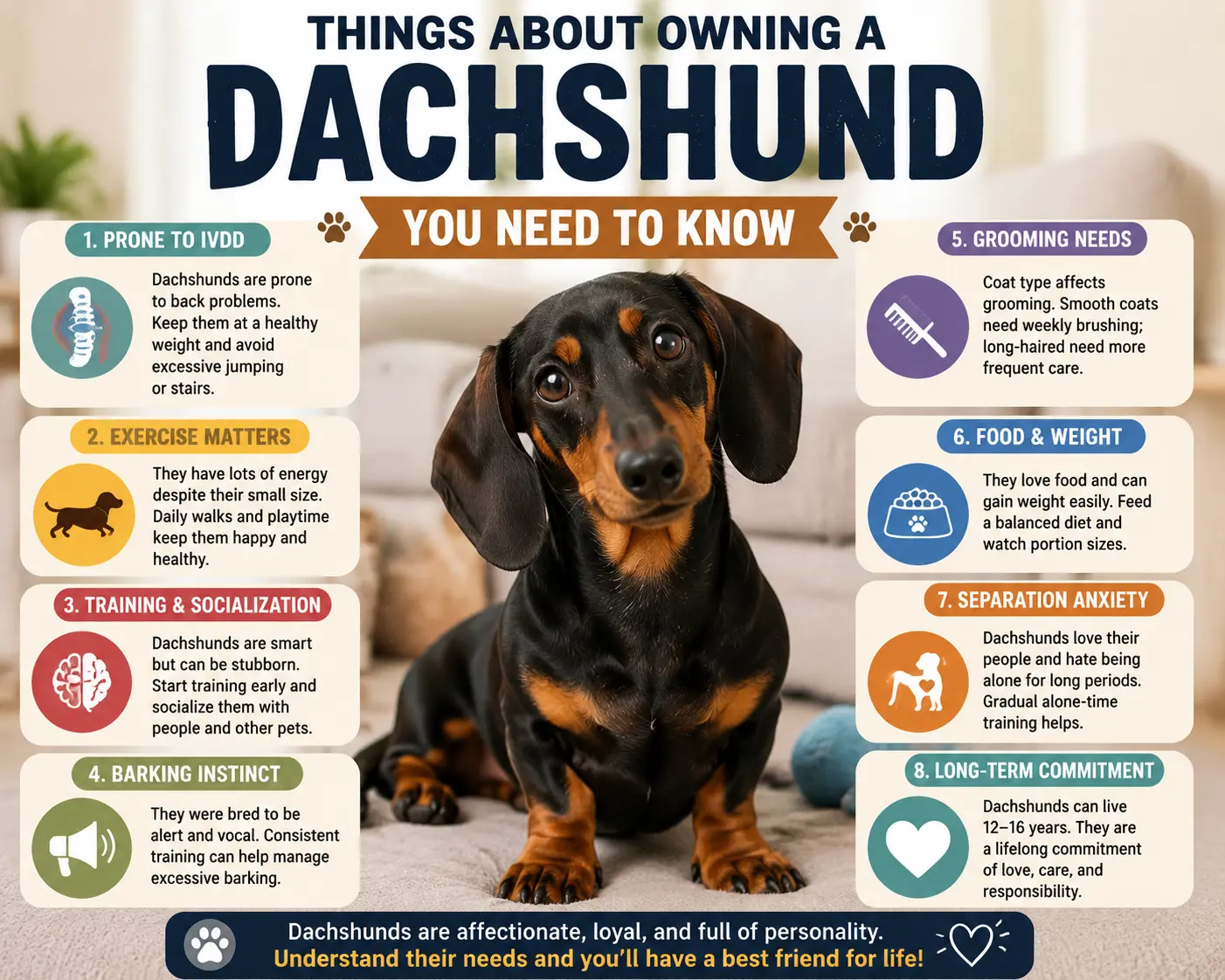
Why Dachshunds Have Stolen Millions of Hearts
I share my home with two dachshunds, Bruno and Pretzel, and the things about owning a dachshund that matter most aren’t the ones in the memes. About one in four dachshunds develops a back problem called IVDD, and training only sticks in short sessions of 10 to 15 minutes. They’re also very easy to fall for.
But there are real, important things about owning a dachshund that every prospective or current owner needs to understand. These are not just cute lap dogs. They are opinionated, energetic, historically purpose-bred hunting dogs wrapped in an adorably long package and they deserve an owner who truly gets them.
According to the American Kennel Club’s 2025 breed popularity rankings, dachshunds jumped to 5th place in the United States, their highest ranking since 2003. That surge in popularity makes it more important than ever to share the real facts about life with a dachshund, not just the highlights reel.
Things About Owning a Dachshund: The Breed at a Glance
Before diving deeper, here is a quick snapshot of what you are signing up for when you bring one of these sausage-shaped dogs into your home.
| Feature | Details |
|---|---|
| Lifespan | 12 to 16 years |
| Weight (Standard) | 16 to 32 lbs |
| Weight (Miniature) | Under 11 lbs |
| Coat Types | Smooth, Wirehaired, Longhaired |
| Temperament | Loyal, stubborn, curious, brave |
| Energy Level | Moderate to high |
| AKC Ranking (2025) | #5 in the US |
| Lifetime Ownership Cost | $18,000 to $20,000 (average) |
One of the most eye-opening things about owning a dachshund is the long-term financial commitment. According to Spot Pet Insurance’s 2025 data, the total cost of owning a dachshund over their average lifetime ranges from $18,000 to $20,000, including food, vet care, grooming, and preventive health expenses.
The Personality: Bold, Stubborn, and Deeply Loyal
One of the most surprising things about owning a dachshund is discovering just how big their personality is. These dogs were originally bred in Germany to hunt badgers an animal that will fight back so their fearless streak is completely intentional.
What Dachshund Owners Commonly Experience
Dachshunds bond fiercely with one or two people in a household. They will follow you from room to room, sit on your feet while you work, and stare at you with an intensity that makes you feel both adored and slightly judged.
They are also notoriously stubborn. Training a dachshund requires patience, consistency, and a real sense of humor. One of the honest things about owning a dachshund is that they often know exactly what you want them to do and simply decide it is not worth their time unless there is a treat involved.
Positive reinforcement works well. Short training sessions (10 to 15 minutes maximum) keep them engaged. Push too hard and they will simply disengage. Work with their intelligence and their love of food, and you will get surprisingly good results.
Health: The Most Critical Things About Owning a Dachshund
This is the section I wish every new dachshund owner read before bringing their dog home, because understanding the health landscape is genuinely one of the most important things about owning a dachshund.
IVDD: The Dachshund’s Biggest Health Risk
Intervertebral Disc Disease, or IVDD, is the most serious breed-specific condition in dachshunds. According to PetMD, as many as 25% of dachshunds develop IVDD during their lifetime a rate 10 to 12 times higher than in the general dog population.
IVDD occurs when the cushioning discs between the vertebrae in the spine degenerate or herniate, pressing on the spinal cord. This can cause pain, loss of mobility, and in severe cases, paralysis. The condition can progress within hours, so recognizing early warning signs is critical.
Early warning signs of IVDD include:
- Reluctance to jump or climb stairs
- Crying or yelping when touched along the back
- A hunched or arched posture
- Weakness or wobbling in the hind legs
- Loss of bladder or bowel control
The good news: the 2024 Dachshund Health Report from the UK found that 96% of dogs who still had feeling in their back legs recovered within 12 weeks with non-surgical treatment. Even among dogs who had lost feeling, 48% recovered. Early intervention is the key variable.
Lifestyle Choices That Protect the Spine
One of the most practical things about owning a dachshund is learning how your daily routines affect their spinal health. The 2024 Dachshund Health Report also found that dogs neutered before two years of age had higher IVDD rates, which is worth discussing with your vet before making that decision.
Spine-protective habits every dachshund owner should adopt:
- Use ramps or steps for furniture access instead of letting them jump
- Always support both the chest and hindquarters when lifting
- Keep them at a healthy weight even a pound or two of extra weight dramatically increases spinal strain
- Avoid high-impact activities like leaping for frisbees or rough-and-tumble play with larger dogs
Other Health Issues to Watch For
Beyond IVDD, things about owning a dachshund also include awareness of:
- Obesity: Dachshunds love food and will beg relentlessly. Excess weight accelerates spinal disease, joint problems, and can lead to diabetes and heart disease.
- Dental Disease: Their small jaws make them prone to dental overcrowding and tartar buildup. Daily brushing and regular dental cleanings are not optional.
- Mitral Valve Disease: A common heart condition in older dachshunds, particularly in miniatures.
- Patellar Luxation: The kneecap can slip out of place, causing lameness or a characteristic “skipping” gait.
Exercise and Mental Stimulation: More Than Just a Walk
Many people assume that because dachshunds are small, they do not need much exercise. This is one of the most common misconceptions about things about owning a dachshund.
Dachshunds are working dogs at heart. They were built for endurance, nose work, and problem-solving. A quick spin around the block will not satisfy them mentally or physically. They need:
- Daily walks of at least 30 to 45 minutes, broken into two sessions
- Nose work and scent games hide treats around the house and let them hunt
- Puzzle feeders to slow down eating and engage their brain
- Controlled playtime that avoids high-impact jumping
Without enough stimulation, dachshunds become destructive, vocal, and even anxious. Boredom is their enemy, and one of the things about owning a dachshund that new owners underestimate.
Training Tips: Working With (Not Against) the Dachshund Mind
Training is genuinely one of the trickiest things about owning a dachshund. Their intelligence is not the issue their willingness to comply on your schedule is.
Barking and Digging
Dachshunds were bred to bark to alert hunters and to dig to flush prey from underground burrows. These are not bad habits they are deeply hardwired instincts. Managing them is one of the ongoing things about owning a dachshund rather than something you will eliminate entirely.
Providing a designated digging spot in the yard and training a “quiet” command early will make a significant difference in your sanity and your neighbors’ goodwill.
Socialization Matters More Than You Think
Early socialization is one of the non-negotiable things about owning a dachshund. Expose puppies to different sounds, people, surfaces, and animals before 16 weeks of age. Dachshunds who are not well socialized can develop fear-based reactivity or resource guarding that becomes increasingly difficult to address in adulthood.
The Emotional Experience: What Nobody Tells You
I want to be real with you here, because the emotional side of things about owning a dachshund is rarely talked about honestly.
These dogs are velcro animals. They want to be with you constantly. That is beautiful when you work from home and want a warm, snoring companion on your lap. It becomes challenging when you have a long work day, social obligations, or a travel schedule.
Dachshunds can develop separation anxiety, expressed through howling, destructive chewing, and house training regression. This is not a character flaw it is the price of their extraordinary loyalty. Building independence slowly, using crate training from puppyhood, and practicing short absences regularly are the most effective strategies.
For a deeper look at breed-specific care strategies, explore our Dachshund Guides for comprehensive resources across every life stage.
Grooming: Easier Than You Think, With One Exception
Grooming needs are one of the more manageable things about owning a dachshund, but they vary significantly by coat type.
| Coat Type | Grooming Frequency | Key Needs |
|---|---|---|
| Smooth | Weekly brush | Minimal shedding, occasional bath |
| Longhaired | 3 to 4 times weekly | Regular combing, ear checks |
| Wirehaired | Monthly hand-stripping | Professional grooming recommended |
Regardless of coat type, ear care is essential for all dachshunds. Their floppy ears trap moisture and debris, making them prone to ear infections. Weekly ear checks and cleaning are among the preventive things about owning a dachshund that often get overlooked until there is already a problem.
The Financial Reality of Dachshund Ownership
Understanding the financial picture is one of the most practical things about owning a dachshund. Beyond the initial purchase price which ranges from $500 to $3,500 for a reputable breeder the annual costs add up faster than most new owners expect.
Estimated Annual Costs:
- Food: $400 to $700
- Routine vet visits: $200 to $400
- Dental care: $300 to $700 per cleaning (under anesthesia)
- Pet insurance: $400 to $800 per year
- Grooming: $200 to $600 (varies by coat type)
- Toys, supplies, training: $200 to $500
And if IVDD does occur, surgical treatment can range from $3,000 to $8,000 or more. Pet insurance specifically designed to cover IVDD is one of the smartest investments for any dachshund owner, and one of the most overlooked things about owning a dachshund until it is too late.
Is a Dachshund Right for You?
After everything we have covered, the honest answer is: a dachshund is an extraordinary companion for the right person. They are funny, loyal, endlessly entertaining, and capable of forming bonds that last a lifetime. Their 12 to 16 year lifespan means you are committing to a long relationship one that will ask a lot of you and give back even more.
The things about owning a dachshund that matter most are not the cute things. They are the willingness to protect their spine, manage their weight, invest in their training and socialization, and accept that you will probably never pee alone again.
If you are ready for that truly ready then you are ready for a dachshund.
Frequently Asked Questions
Are Dachshunds good for first-time dog owners?
Yes, Dachshunds can be excellent companions for first-time owners who are willing to learn about the breed and stay consistent with training. Their independent personality and unique health needs require patience, but understanding the essential things about owning a Dachshund before bringing one home makes the experience far more rewarding.
How much exercise does a Dachshund actually need?
Although they’re small dogs, Dachshunds need 30–60 minutes of exercise every day. Two moderate walks combined with mental enrichment, such as scent games or puzzle toys, are ideal. Avoid excessive jumping or stair climbing to help protect their spine.
Can Dachshunds be left alone during the workday?
Dachshunds prefer companionship and may develop separation anxiety if left alone for long periods. If you work full-time, consider arranging a dog walker, doggy daycare, or another pet for company. Gradually teaching your Dachshund to spend time alone also helps build confidence.
What is the biggest health expense Dachshund owners face?
Intervertebral Disc Disease (IVDD) is typically the most expensive health condition affecting Dachshunds. Surgery for severe cases can cost $3,000–$8,000, making early pet insurance and preventive spinal care worthwhile investments.
Do Dachshunds get along with children and other pets?
Yes. With proper socialization, Dachshunds usually get along well with respectful children and other pets. Because of their long backs, young children should always be taught how to hold and interact with them safely, and all play should be supervised.
