
Can Dachshunds Be Left Alone? A Comprehensive Guide

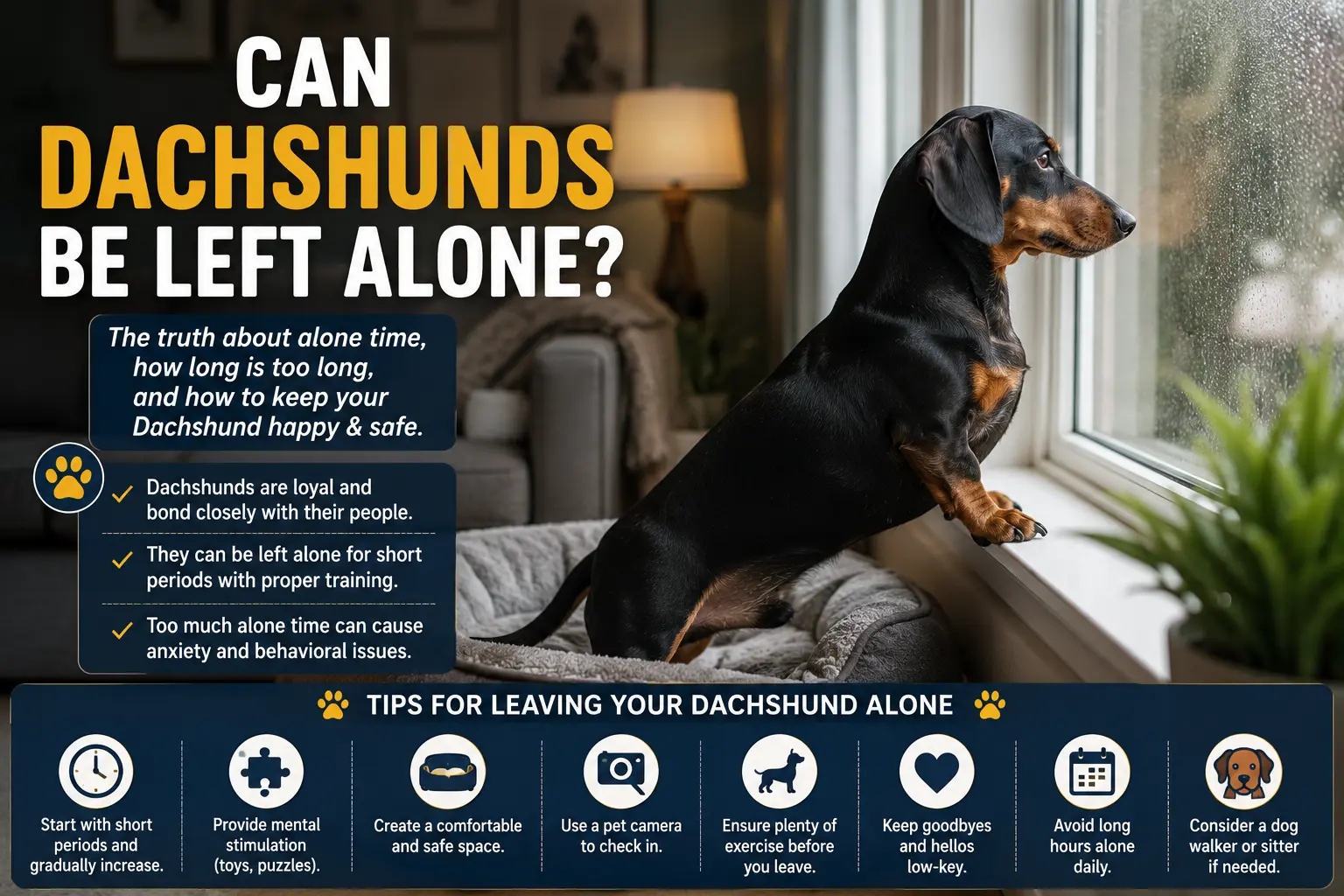
When I started leaving Pretzel, my miniature dachshund, on his own, he panicked after about a minute. Eight weeks of daily practice later, he could rest for six or seven hours. So yes, dachshunds can be left alone, but most of them have to be taught how, and how long depends on the dog’s age, temperament and training.
The truth is, can dachshunds be left alone depends on numerous factors, including age, temperament, training, and your individual dog’s anxiety levels. While it’s possible to leave dachshunds alone, these loyal companions are particularly prone to separation challenges due to their breeding history and emotional nature. Understanding whether can dachshunds be left alone safely will help you make informed decisions about your pet’s wellbeing and your household routine.
Understanding Dachshund Temperament and Loyalty
Dachshunds possess one of the most distinctive personalities in the dog world. Originally bred in Germany to hunt alongside humans in close partnership, these small but mighty dogs were designed to work with people, not independently. This heritage explains why dachshunds form such intense bonds with their owners it’s literally in their DNA.
Your dachshund’s loyalty is both a blessing and a challenge. These dogs are incredibly affectionate, often following their humans from room to room, eager to be involved in every aspect of family life. This “velcro dog” behavior is endearing when you’re home, but it raises an important question: can dachshunds be left alone without developing anxiety?
The answer is yes, but with caveats. Many dachshund owners struggle with leaving their dogs alone because their pets genuinely don’t want to be alone. Unlike some breeds that are naturally more independent, dachshunds thrive on human companionship. However, with proper conditioning, training, and realistic expectations, you can teach your dachshund that can dachshunds be left alone is manageable.
The Separation Anxiety Crisis: What Recent Data Shows
Recent statistics reveal a troubling trend in canine separation anxiety one that hits dachshunds particularly hard. According to data from veterinary behavioral specialists, dog separation anxiety has increased over 700% in just two years following the COVID-19 pandemic. This dramatic surge highlights how dramatically our pets’ routines shifted when we returned to pre-pandemic schedules.
A national pet owner survey found that 44% of dog owners express significant worry about their pets experiencing separation anxiety. Even more striking, 41% of dog owners observed noticeable changes in their pet’s mental health post-pandemic. Among those changes, the most common behaviors included:
- Following owners to the door with melancholic gazes (48%)
- Vocalizing after owner departure (33%)
- Restless pacing (22%)
For dachshunds specifically, the concern runs deeper than average. Their genetic predisposition toward attachment, combined with reduced socialization during pandemic lockdowns, has created a perfect storm for anxiety-related behaviors. Many dachshunds adopted during the pandemic never learned to be alone, making the transition to normal work schedules particularly challenging.
How Long Can Dachshunds Safely Be Left Alone?
This is the question every dachshund owner asks. Veterinary experts generally recommend that adult dachshunds can be left alone for a maximum of 4-6 hours comfortably, though many adapt to 8-9 hours if given proper preparation and environmental enrichment. However, occasionally extending beyond this timeframe is different from regularly leaving your dachshund alone for these durations.
The reality for most working owners is challenging: if you work an 8-hour day plus commute time, can dachshunds be left alone for that entire stretch? Technically yes, but it requires significant preparation, mental stimulation, and often midday intervention through dog walkers or pet sitters.
For puppies, the timeline is much shorter. Veterinary behaviorists recommend leaving dachshund puppies alone for no more than one hour per month of age, up to a maximum of 3-4 hours. So a 3-month-old puppy should not exceed 3 hours alone. This rapid growth in capacity typically reaches adult levels by 6-8 months old, though the emotional readiness for extended alone time develops more slowly.
Age-Based Guidelines for Dachshund Alone Time
| Dachshund Age | Maximum Alone Time | Considerations |
|---|---|---|
| Under 3 months | 1-3 hours | Multiple potty breaks needed; high separation anxiety risk |
| 3-6 months | 3-4 hours | Gradual increase; beginning to hold bladder better |
| 6-12 months | 4-6 hours | Adolescent phase; may test boundaries |
| Adult (1-7 years) | 4-9 hours | Ideal: 4-6 hours; can adapt to 8-9 with prep |
| Senior (7+ years) | 4-6 hours | Bladder control diminishes; may have medical needs |
Real-Life Experience: My Journey Teaching Pretzel to Be Comfortable Alone
When I first brought Pretzel home, he couldn’t tolerate more than 15 minutes alone without spiraling into panic. The high-pitched howling, the destructive scratching at the door frame, the stress-related accidents it all pointed to classic separation anxiety. Like many dachshund owners, I initially blamed myself. Had I done something wrong during socialization?
The turning point came when I stopped viewing alone time as a punishment or unavoidable evil, and instead framed it as a trainable skill. I started with the basics: leaving the room for just 5 seconds, returning calmly without fanfare, and gradually extending the duration. Over 8 weeks of consistent daily practice, Pretzel progressed from panicking at 1 minute alone to comfortably resting for 6-7 hours.
What changed? Three things: first, I established an unwavering daily routine that Pretzel could predict; second, I ensured he had vigorous exercise before my departure; third, I used high-value puzzle toys that occupied his mind during my absence. By rewarding calm behavior rather than reacting to anxious outbursts, Pretzel learned that my departure wasn’t a threat it was just another part of his predictable day.
This experience taught me that can dachshunds be left alone successfully depends less on the breed’s inherent nature and more on the owner’s commitment to gradual, consistent conditioning. Most dachshunds can learn to tolerate alone time, but it requires patience.
Signs Your Dachshund Is Struggling with Alone Time
Recognizing whether your dachshund is comfortable alone or developing anxiety is critical. Many owners mistake boredom for anxiety, or fail to notice early warning signs that can dachshunds be left alone without intervention.
Behavioral Red Flags
- Excessive vocalization: Persistent barking, howling, or whining that begins within minutes of your departure
- Destructive behavior: Frantic chewing of door frames, window sills, or furniture particularly near exits
- Elimination accidents: House soiling only when alone, despite being fully housetrained
- Pacing patterns: Fixed patterns of repetitive walking, often in circles or along hallways
- Escape attempts: Clawing at doors, attempting to dig through crates, or jumping at windows
- Physical signs: Drooling, panting heavily, trembling, or refusing food until your return
The key distinction is that these behaviors occur only when your dachshund is alone or when you’re preparing to leave. If you observe your dachshund engaging in destructive behavior while you’re home, the cause likely isn’t separation anxiety.
Creating the Right Environment: Essential Strategies
If you need to leave your dachshund alone, optimize the environment to promote calm behavior. Can dachshunds be left alone more successfully when certain conditions are met:
Pre-Departure Preparation
Before leaving, ensure your dachshund has burned off excess energy. A 20-30 minute walk or vigorous play session helps channel nervous energy into productive exhaustion. A tired dachshund is far more likely to rest peacefully than an under-exercised one.
Establish a calm departure routine. Avoid emotional goodbyes or excessive attention before leaving these actually amplify anxiety. Simply pick up your keys, put on your coat, and depart matter-of-factly. When returning home, delay your greeting until your dachshund has settled.
Environmental Enrichment
Create a comfortable “safe zone” where your dachshund feels secure. Use a crate (if crate-trained positively), a specific room, or a pen in a social area of your home. Add familiar bedding, a snuggle toy with your scent, and 2-3 long-lasting chews or puzzle feeders.
White noise or calming music can mask triggering outdoor sounds that elevate anxiety. Many dachshunds respond well to background noise that masks doorbell sounds, traffic, or passing neighbors.
Mental Stimulation Tactics
Leave interactive puzzle toys that require problem-solving. Kong toys filled with frozen treats, snuffle mats, or slow feeders keep your dachshund mentally engaged. The key is providing toys specifically for alone time, creating a positive association with your departure.
Preventing Separation Anxiety: Start Early
The best approach to whether can dachshunds be left alone successfully is prevention. Teaching young puppies to tolerate solo time from day one dramatically reduces anxiety development later.
Start exposing puppies to brief separations immediately even just leaving the room for a few seconds. Reward calm behavior during these micro-separations with treats and praise. Gradually extend the duration over weeks and months. This positive conditioning teaches puppies that being apart from you is normal and safe.
Avoid constant contact during puppyhood. While it’s tempting to hold your dachshund puppy all day, this inadvertently teaches them that they need your constant presence. Instead, practice setting them down regularly and rewarding independent play. This builds confidence and self-soothing skills.
Socialization also matters tremendously. Dachshunds exposed to different environments, people, and experiences develop resilience. A well-socialized dachshund recognizes that new or changing situations are manageable, which transfers directly to managing alone time.
When Professional Help Becomes Necessary
If your dachshund exhibits severe anxiety despite your training efforts, professional intervention is worth exploring. Board-certified veterinary behaviorists can assess your dachshund’s specific situation and design customized behavior modification programs.
In some cases, short-term anti-anxiety medication prescribed by your veterinarian used alongside behavioral training, never as a standalone solution can lower anxiety enough for training to take effect. Think of medication as a tool that creates a window of opportunity for learning.
Additionally, dog walkers, pet sitters, or doggy daycare provide practical solutions if your work schedule requires leaving your dachshund alone for extended periods. Many dachshund owners find midday visit services essential for their peace of mind.
FAQ: Can Dachshunds Be Left Alone?
Can Dachshunds be left alone for 8 hours daily while I’m at work?
Technically, yes, but it isn’t ideal. Most Dachshunds cope best with no more than 6 hours alone. If your schedule regularly requires 8 or more hours away, consider hiring a dog walker, arranging doggy daycare, or asking someone to provide a midday visit for exercise, companionship, and bathroom breaks.
At what age can Dachshunds be left alone for longer periods?
Most Dachshunds can gradually handle 4–6 hours alone by 6 to 8 months of age, provided they’ve been trained to be comfortable on their own. However, every dog is different, and confidence with alone time depends as much on temperament and training as it does on age.
Can Dachshunds be left alone overnight, and is it safe?
Occasional overnight absences may be manageable if your Dachshund has fresh water, a comfortable sleeping area, and appropriate bathroom arrangements. However, routinely leaving a Dachshund alone overnight is not recommended because they thrive on human companionship. A trusted pet sitter or boarding facility is a better option for extended absences.
What’s the difference between normal behavior and separation anxiety in Dachshunds?
A relaxed Dachshund may sleep, play quietly with toys, or calmly wait for your return. In contrast, separation anxiety often causes persistent barking, destructive chewing, pacing, attempts to escape, or indoor accidents that begin soon after you leave and continue throughout your absence.
Can Dachshunds be left alone if I work from home most of the time?
Yes. Even if you work from home, it’s important to practice leaving your Dachshund alone for short periods each day. This helps build confidence and independence while reducing the risk of separation anxiety if your routine changes in the future.
Wrapping Up: Answering the Core Question
So, can dachshunds be left alone? The answer is: yes, they can learn to be comfortable alone, but it requires intentional preparation, consistent training, and realistic expectations. Unlike some independent breeds, dachshunds aren’t natural solo artists they’re performers who thrive in the spotlight of human companionship. However, that loyalty and affection doesn’t mean they’re incapable of handling time apart.
The journey with Pretzel taught me that addressing separation anxiety or preventing it from developing is one of the most valuable investments you can make in your dachshund’s wellbeing. When your dachshund learns that alone time is safe and predictable, it transforms not just their behavior but your own peace of mind.
Your dachshund has incredible potential to adapt, learn, and grow in confidence. With the right approach, training methods, and environmental supports, most dachshunds can manage the alone time their modern owners require. The question isn’t whether dachshunds can be left alone it’s whether you’re willing to invest the time to teach them how.
Explore our Dachshund Guides for more breed-specific advice and training strategies tailored to these wonderful little dogs.
For more detailed behavioral guidance, consult resources from the ASPCA.
