Doxiepoo: What a Dachshund Poodle Mix Gets From Each Parent

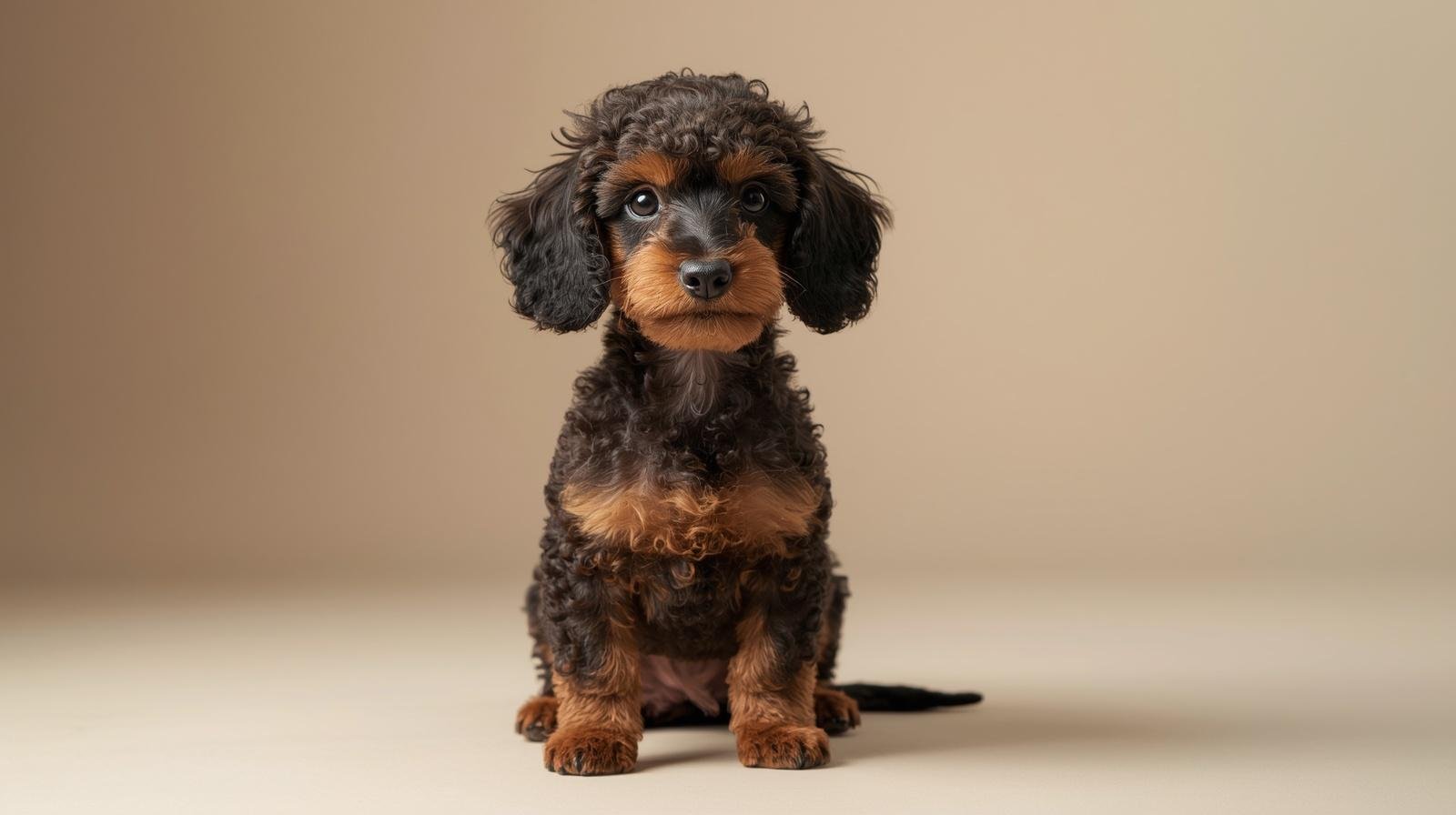
A doxiepoo is a dachshund crossed with a poodle, usually a toy or miniature poodle. There’s no breed standard, so what you get comes down to the two dogs that made it.
The part buyers tend to miss is the back. Nearly every dachshund carries two copies of the gene variant behind early disc disease, and most toy and miniature poodles in one large sample carried it too. Being half poodle doesn’t get a doxiepoo out of the dachshund’s back problems.
What is a doxiepoo?
A doxiepoo is a first-generation cross between a purebred dachshund and a purebred poodle, sold under several names: doxiedoodle, doxipoo or just a dachshund poodle mix. Kennel clubs don’t recognize it. Nobody sets a target for its size, coat or color.
That matters when you’re comparing puppies. Two litters with the same name can come from very different parents. One litter can even hold a sleek, short-coated puppy next to a shaggy one.
If you’re weighing it against other crosses, the dachshund mixes page lines them up side by side.
How big does a doxiepoo get?
Most doxiepoos end up somewhere between their two parents, and the poodle parent’s size is the best clue you’ve got. Nobody has weighed a sample of grown doxiepoos, so you have to start from the American Kennel Club’s figures for each parent breed.
- Miniature dachshund: 11 pounds and under, about 5 to 6 inches tall.
- Standard dachshund: 16 to 32 pounds, 8 to 9 inches tall.
- Toy poodle: 4 to 6 pounds, no more than 10 inches.
- Miniature poodle: 10 to 15 pounds, 10 to 15 inches.
- Standard poodle: 40 to 70 pounds, over 15 inches.
A miniature dachshund crossed with a toy poodle should stay small. Pair a standard dachshund with a miniature poodle, though, and you can end up with a good deal more dog.
So ask which poodle size the breeder used. “Mini doxiepoo” in an ad doesn’t settle it.
Do doxiepoos shed, and are they hypoallergenic?
Many doxiepoos shed less than a smooth dachshund, but none is reliably hypoallergenic. Whether your puppy keeps a low-shedding, poodle-type coat depends on which coat genes it inherits, and allergen testing hasn’t found poodle-type dogs carrying less of the main dog allergen.
Three genes explain most dog coats, according to a 2017 review by the researchers who mapped them. RSPO2 adds the furnishings that give a dog its beard and eyebrows. FGF5 decides much of the hair length, and KRT71 adds curl.
The same review notes that breeds that rarely shed, poodles included, almost always carry two copies of the RSPO2 variant. Portuguese water dogs without it do shed.
Where does that leave your puppy? A smooth or long-haired dachshund doesn’t carry the variant, so a puppy from that pairing gets one copy at most, from the poodle. A wire-haired dachshund is different, since furnishings are what make the wire coat.
That’s why doxiepoo coats vary so much. One owner described a puppy from a red mini poodle and a smooth mini dachshund like this:
“Haven’t noticed an undercoat and she seems to be continuously growing fur but it isn’t really curly, more wavy.”
– r/Dachshund, July 2026 (38 upvotes)
Fur that keeps growing has to be cut. A low-shedding doxiepoo usually swaps hair on your sofa for regular clipping, and you’ll want to price that in before you buy.
On allergies, the coat isn’t the whole story. One study measured Can f 1, the main dog allergen, in hair samples and in homes (Vredegoor et al., 2012). Poodles, labradoodles and other dogs sold as hypoallergenic carried more of it in their coats than other dogs did.
Airborne levels didn’t differ between breeds, and settled floor dust was lower only in labradoodle homes. A 2024 review of the research came to the same view and stressed how much individual dogs of one breed differ.
Does someone in your home have dog allergies? Then spend real time with the actual puppy before you commit. The dachshund half of that question is in are dachshunds hypoallergenic.
Does a doxiepoo inherit the dachshund’s back problems?
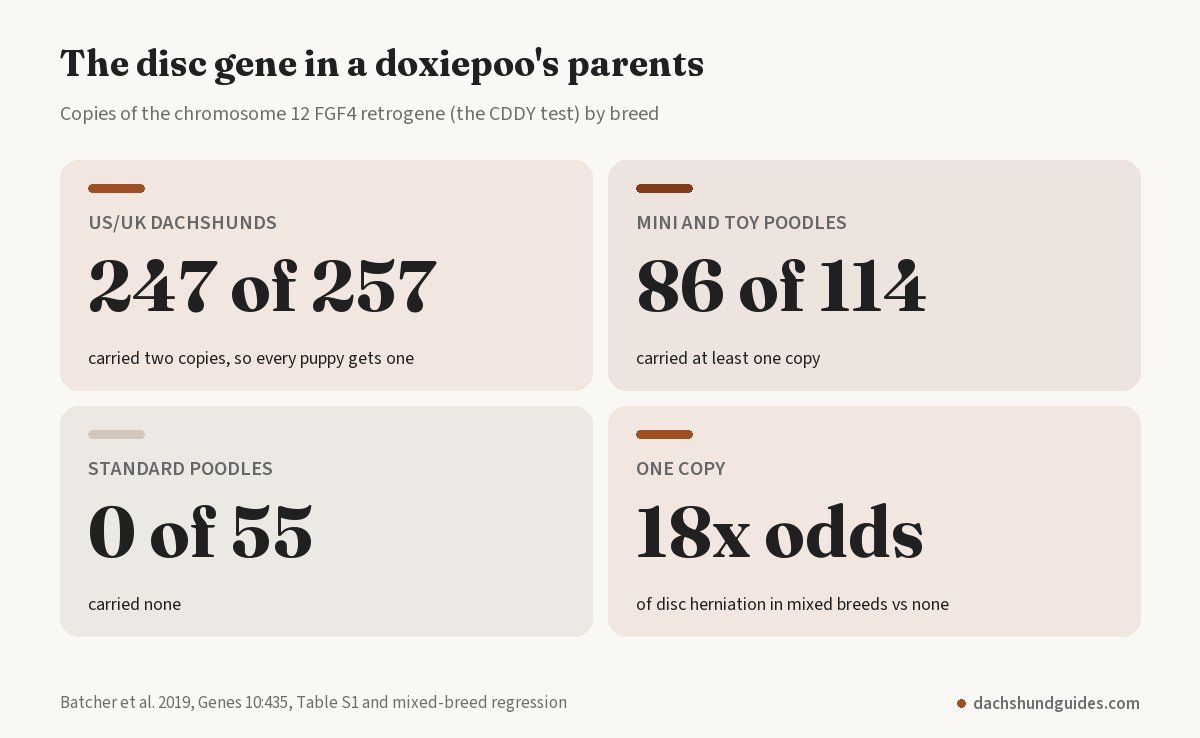
Very likely, yes. Nearly all dachshunds carry two copies of the chromosome 12 FGF4 retrogene, the variant linked to early disc disease, so almost every doxiepoo gets at least one. Most toy and miniature poodles tested carried it as well, and one copy is enough to raise the risk.
The counts come from a 2019 University of California, Davis study that genotyped more than 3,000 dogs from 75 breeds (Batcher et al., Genes). In its supplementary table, 247 of 257 American and British dachshunds carried two copies.
Among toy and miniature poodles, 86 of 114 carried at least one copy and 43 carried two. None of the 55 standard poodles carried it.
The UC Davis Veterinary Genetics Laboratory tests for it commercially, usually listed as CDDY. It works in a dominant way. In the same study, dogs with one copy had their first disc surgery about 29 months younger than dogs with none, and a second copy barely moved that age.
In mixed-breed dogs, one copy came with about 18 times the odds of a disc herniation. A second copy did matter for calcified discs on X-rays: roughly 6 times the odds for one copy, 15 times for two. With a mini or toy poodle parent, plenty of puppies could inherit two.
You’ll often read that IVDD mainly threatens doxiepoos with a dachshund-like build. The variant does shorten legs, and the 2017 study that identified it traced short legs and disc disease to the same spot on chromosome 12.
But a dachshund parent with two copies passes one to every puppy. Your leggy doxiepoo carries it just as surely as a short one.
The everyday precautions and warning signs are the same as for a purebred, and they’re laid out in dachshund health problems.
How long do doxiepoos live?
No one has studied doxiepoo lifespan, but both parents are long-lived breeds. In a UK study of more than 580,000 dogs, poodles and miniature dachshunds each had a median lifespan of 14.0 years, standard dachshunds 13.2, and crossbreeds as a group 12.0.
That crossbreed figure lumps together every kind of mixed dog of every size, so it doesn’t mean your doxiepoo will die younger than its parents. Their numbers are the closest reference you’ll find, and dachshund lifespan explains what shortens them.
What to ask before you buy a doxiepoo
Since the name promises so little, your useful questions are about the parents. These are the ones the evidence above supports:
- Which poodle size is the parent? Toy, miniature or standard decides most of the adult size, and in the UC Davis sample it also changed whether the poodle carried the disc variant.
- Have both parents had the CDDY test? The dachshund will almost certainly show two copies. The poodle’s result tells you whether puppies get one copy or could get two.
- What coat does the dachshund parent have? A wire-haired parent can pass on furnishings, and a smooth or long-haired one can’t.
- Can an allergy sufferer at home meet the puppy first? In the allergen study, dogs within one breed varied more than breeds did from each other.
Temperament is the one thing no test predicts, and there’s no data on the cross at all. You’ll find the dachshund side in dachshund temperament. An hour with both parents will tell you the rest.
