
Senior Dachshund Care: What Changes After Ten and What You Can Treat

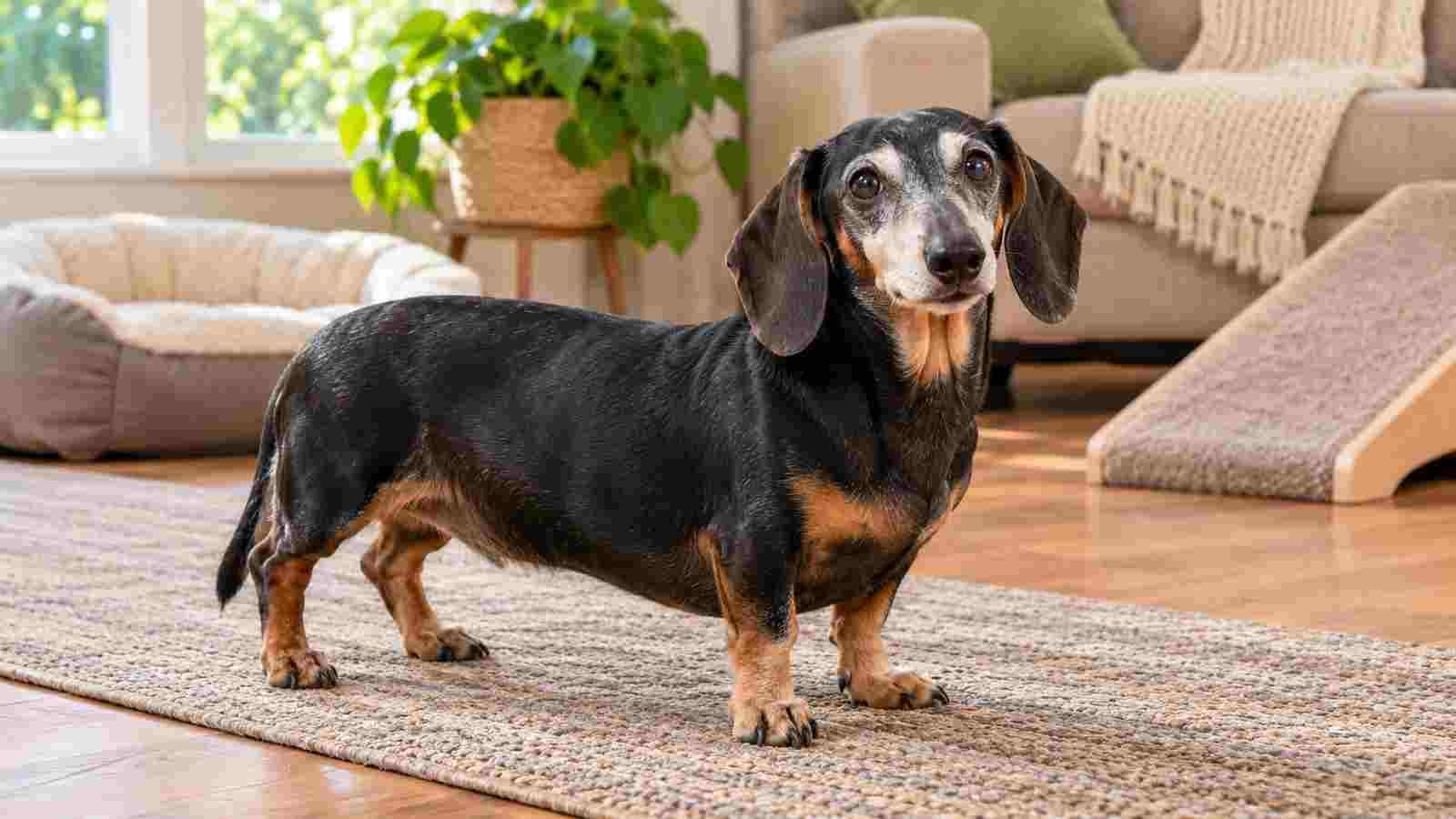
A senior dachshund is one in the last quarter of its expected life, which works out to about 10 for a miniature and a little under 10 for a standard. From then on, you’ll see slower walks, more sleep, stiffer stairs, worse teeth and, in some dogs, a foggier mind.
Plenty of that gets put down to age when it isn’t. Pain, bad teeth and canine cognitive dysfunction all look like “he’s just getting old”, and all three can be treated.
When does a dachshund become a senior?
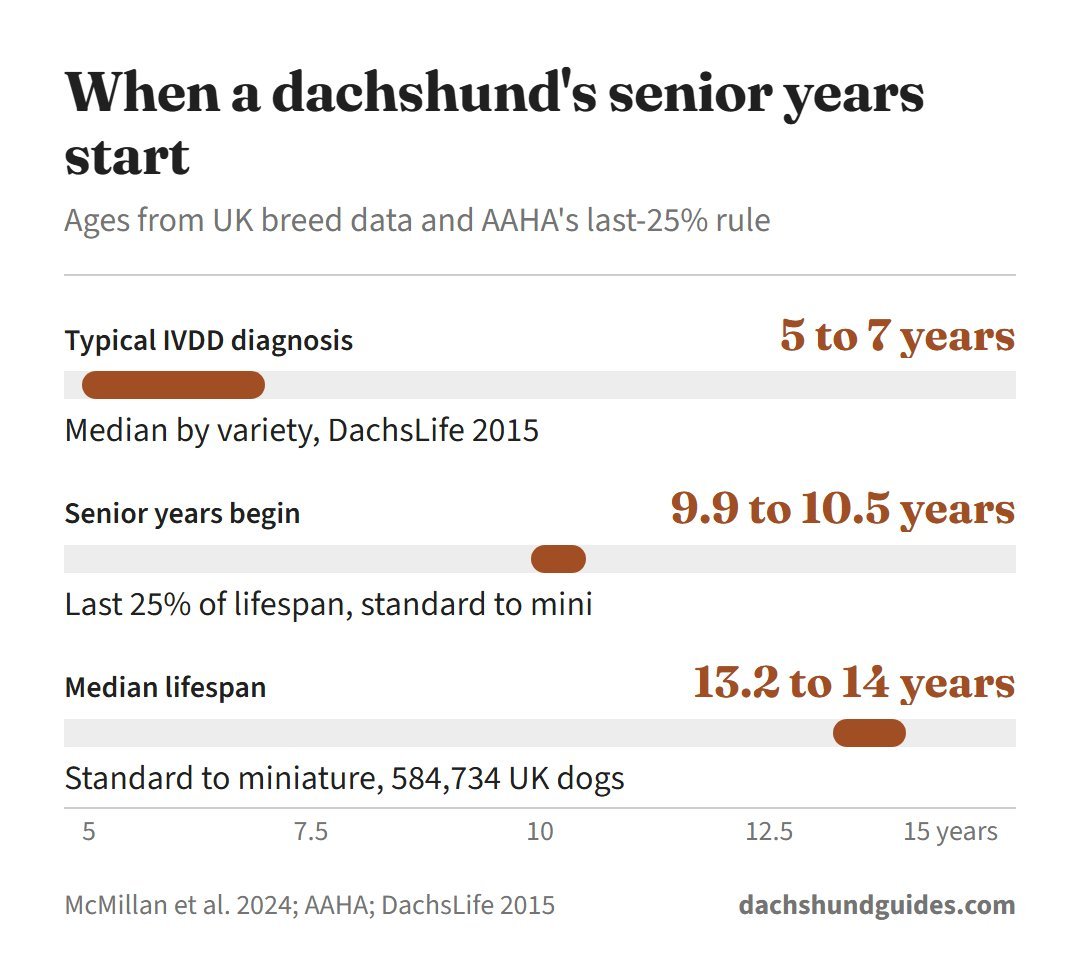
A dachshund doesn’t turn senior on a set birthday. The American Animal Hospital Association’s 2023 Senior Care Guidelines skip a fixed age on purpose. They use AAHA’s life stage definition instead: senior is the last 25% of a dog’s estimated lifespan.
For dachshunds, the best lifespan estimate comes from a 2024 UK study of 584,734 dogs. It put the median at 14.0 years for miniatures and 13.2 for standards, as our dachshund lifespan page explains.
Take off a quarter and the senior years start at about 10.5 for a miniature and 9.9 for a standard.
That’s where your conversation with the vet starts, not a switch that flips. A lean, active 11-year-old and an overweight 9-year-old with a bad back won’t need the same plan. If you’d like the human-years version, the dog age calculator converts it for you.
Is it old age, or is it pain?
Pain is the change you’re most likely to miss. The AAHA guidelines say owners often read changes in older pets as normal aging when they may be chronic pain, and that the signs can be subtle.
In a dachshund, a lot of that pain comes from the back. Disc disease is usually diagnosed in middle age (the DachsLife survey put the average at 5.4 years), but older dogs had higher odds of it, and it doesn’t stop at 10. Our IVDD page lists the stages and warning signs.
Would you know it if you saw it? It isn’t always a yelp or a wobble. One r/Dachshund owner described what their dog does:
“My Dougal’s symptoms of IVDD pain include staring into space, hiding in corners and wanting to sleep on his own. He also shakes and walks around with his tail between his legs.”
– r/Dachshund, June 2025
That was a reply to someone whose 14-year-old had suddenly started acting afraid of them. Dementia was the first guess in the thread, and pain was the second.
Pain is the one to rule out first, because AAHA says treating it early improves the outcome. If you’re torn between the two, ask your vet for a pain assessment before you accept “he’s just old”.
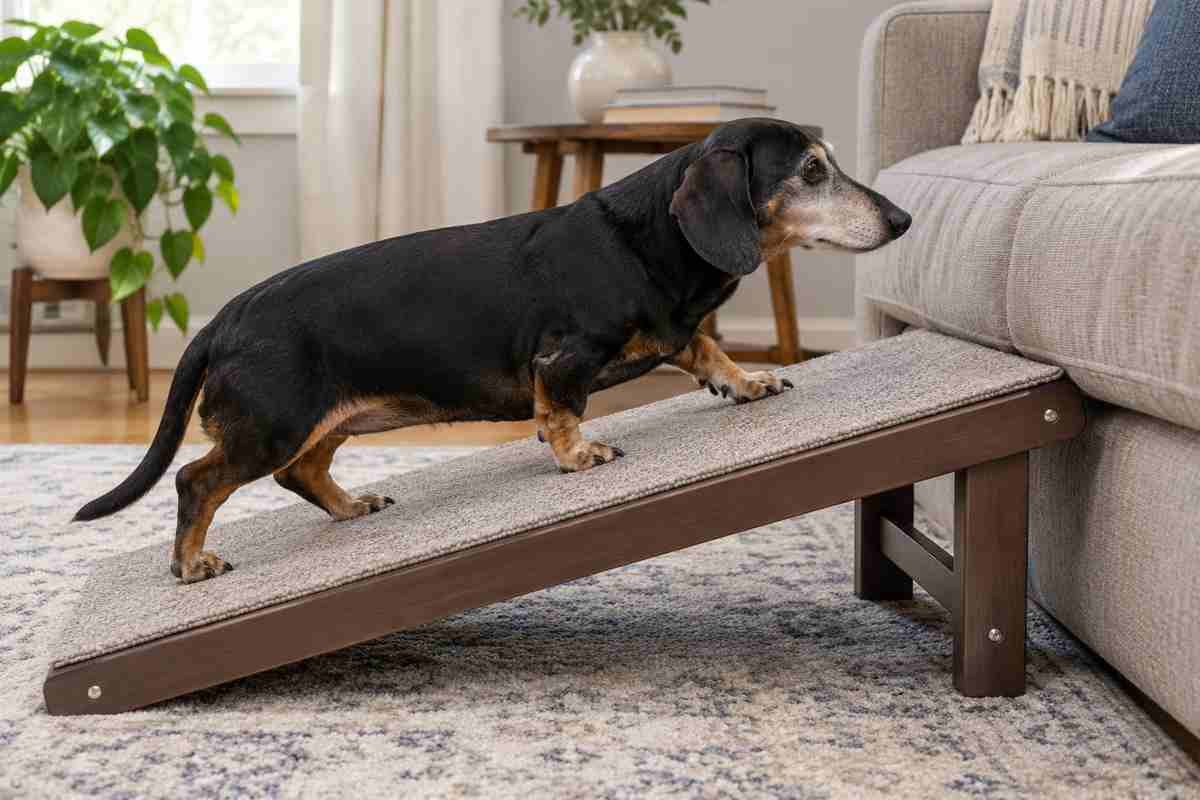
At home, you can make the floors and furniture easier. AAHA’s list of home changes includes ramps, rugs or yoga mats for grip, toe grips and a proper bed. A ramp to the couch saves your dog’s back from the jump down, and a bed with sides to lean on helps a dog that’s stiff when it gets up.
Don’t write off the teeth
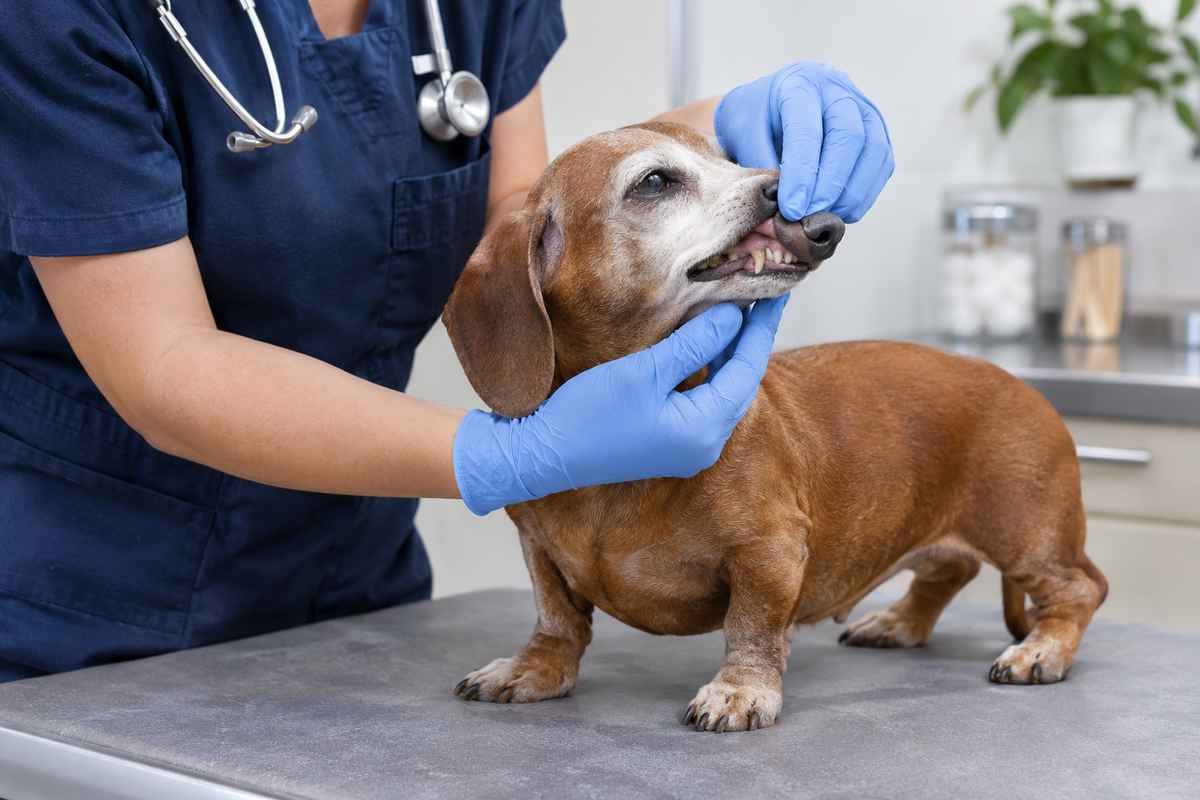
Small, older dogs get more gum disease. The AAHA guidelines warn that bone loss around the teeth in tiny senior dogs can get bad enough to fracture the jaw.
Bad breath is the obvious sign. A sore mouth is easier to miss, because a dog can keep eating while it hurts, as one owner below found.
Most owners’ real worry is the anesthetic. AAHA is clear that advanced age alone isn’t a reason to avoid it, as long as your dog is checked first, with bloodwork and attention to the kidneys and heart.
Two r/Dachshund owners described how it went. One agonized over a dental for a 15-year-old who seemed fine, then reported that the vet took out 18 teeth and that “it was SO needed”. The other said their 12-year-old had seemed completely fine, eating like normal, before most of her teeth came out, and was much spunkier afterward.
If I had a dachshund over ten, a dental check is the one I’d push for. If your dog’s breath has turned, our page on dachshund bad breath lists the signs that mean a vet visit, not a new chew.
Confusion, night pacing and accidents
Dogs get a form of dementia called canine cognitive dysfunction. The AAHA guidelines put age-related cognitive impairment at about 14 to 22.5% of dogs older than 8, and say treatment works best when it starts early.
Vets group the signs under DISHAA:
- Disorientation, such as seeming lost in a familiar room
- Changes in how your dog interacts with you and other pets
- Sleeping in the day and restless at night
- House-training lapses
- Activity changes, including pacing
- Anxiety
Your vet will rule out other causes first, because pain and organ disease can look the same. Selegiline is the only drug labeled for canine cognitive dysfunction. AAHA says diets aimed at it worked best alongside enrichment like exercise, new toys and short training games.
Do you have a wirehaired miniature? That variety has one more thing to rule out. Miniature wirehaired dachshunds can inherit Lafora disease, a progressive epilepsy.
In a 2017 study of 27 affected dogs, signs started at an average of 6.94 years (anywhere from 3.5 to 12), most often as sudden jerks set off by light, sound or movement. Later on, 51.9% developed dementia and 48.1% went blind.
So a wire-haired dachshund that jerks or startles easily in its later years needs a vet, not just watching. If your dog has episodes like that, film one. A reply to the owner of a nearly 16-year-old with head tremors put it simply: a video is valuable for the vet.
Food and weight after ten
Older dogs tend to lose muscle and gain fat, and they need fewer calories than they did at five. AAHA links a lean body condition (4.5 to 5 on the 9-point scale) to longer life in dogs, and says extra weight affects mobility, which is the last thing a long back needs.
So weigh your dog every month and adjust the bowl before the number creeps. The dog calorie calculator gives you a daily target from your dog’s weight. Weight loss you didn’t plan for isn’t good news. It’s a vet question.
A monthly check you can do at home
The AAHA guidelines suggest a vet workup once or twice a year for senior dogs, usually with blood and urine tests. Between visits, these steps give your vet something real to compare:
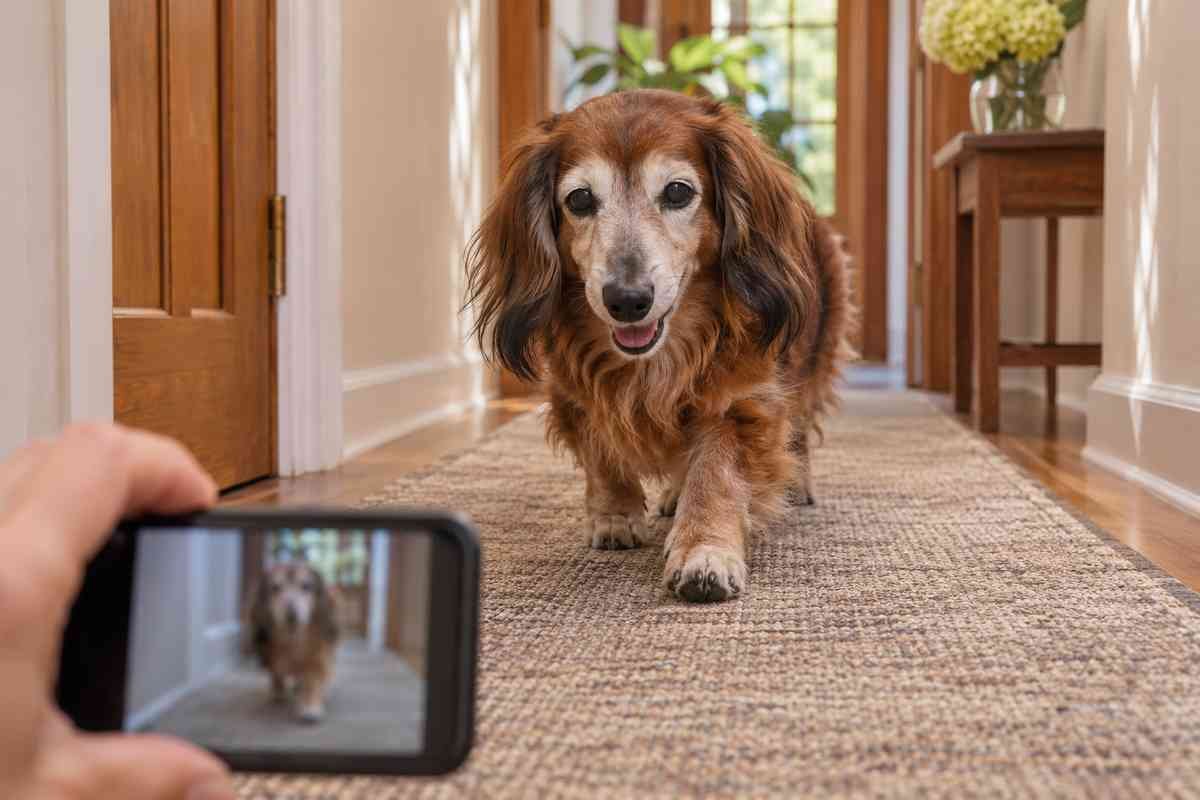
- Film a short walk. Ten seconds on your phone, same hallway each month. AAHA says these videos help vets spot early joint and nerve problems.
- Weigh your dog and write the number down.
- Lift the lip. Look for red gums, brown buildup or a tooth that’s moved, and notice if your dog chews on one side.
- Note the nights. Pacing, waking and barking, or accidents in the house all count as DISHAA signs.
- Mark good and bad days on a calendar. AAHA suggests it because it gives a more accurate picture than memory.
When the calendar or the video changes, book the visit then. Don’t wait for the next scheduled one. Bring the videos and the calendar, and ask the vet to look at the mouth and feel along the spine.
Small changes at home help too. For a dog that’s going deaf, one owner on r/Dachshund uses a vibration collar (not a shock collar) to tell her 14-year-old it’s time to come in.
Knowing when it’s time
Deciding when to let a senior dachshund go is the hardest call you’ll make, and there’s no single sign. AAHA notes that very few quality-of-life scales for pets have been validated, and that most you’ll find online haven’t been.
That’s another reason the calendar matters. A run of bad days is easier to see written down.
Losing control of the bladder or bowels comes up a lot. In a thread about an elderly dog who couldn’t make it outside, one reply called not making it to the toilet “usually one of those signs” and said to talk to the vet. Others kept their dogs going with training pads or an indoor grass patch.
One owner wrote that their dog was 18 when they had to let him go, adding: “Honestly, I think we waited too long.” Talk to your vet while your dog’s still having good days, so you aren’t making the decision in a crisis.
Senior dachshund questions
How long do dachshunds live?
About 13 to 14 years. In the 2024 UK study, the median was 14.0 years for miniatures and 13.2 for standards, and plenty of dogs live past that. The median is the age by which half had died, not a limit.
How old is a 13- or 15-year-old dachshund in human years?
Using the 2020 Wang formula (16 times the natural log of the dog’s age, plus 31), which was built from DNA changes in Labrador retrievers rather than the old seven-to-one rule, a 13-year-old dachshund is about 72 in human years and a 15-year-old about 74. A 10-year-old works out to about 68.
