
Dachshund Teeth: Baby Teeth, Double Canines and Gum Disease

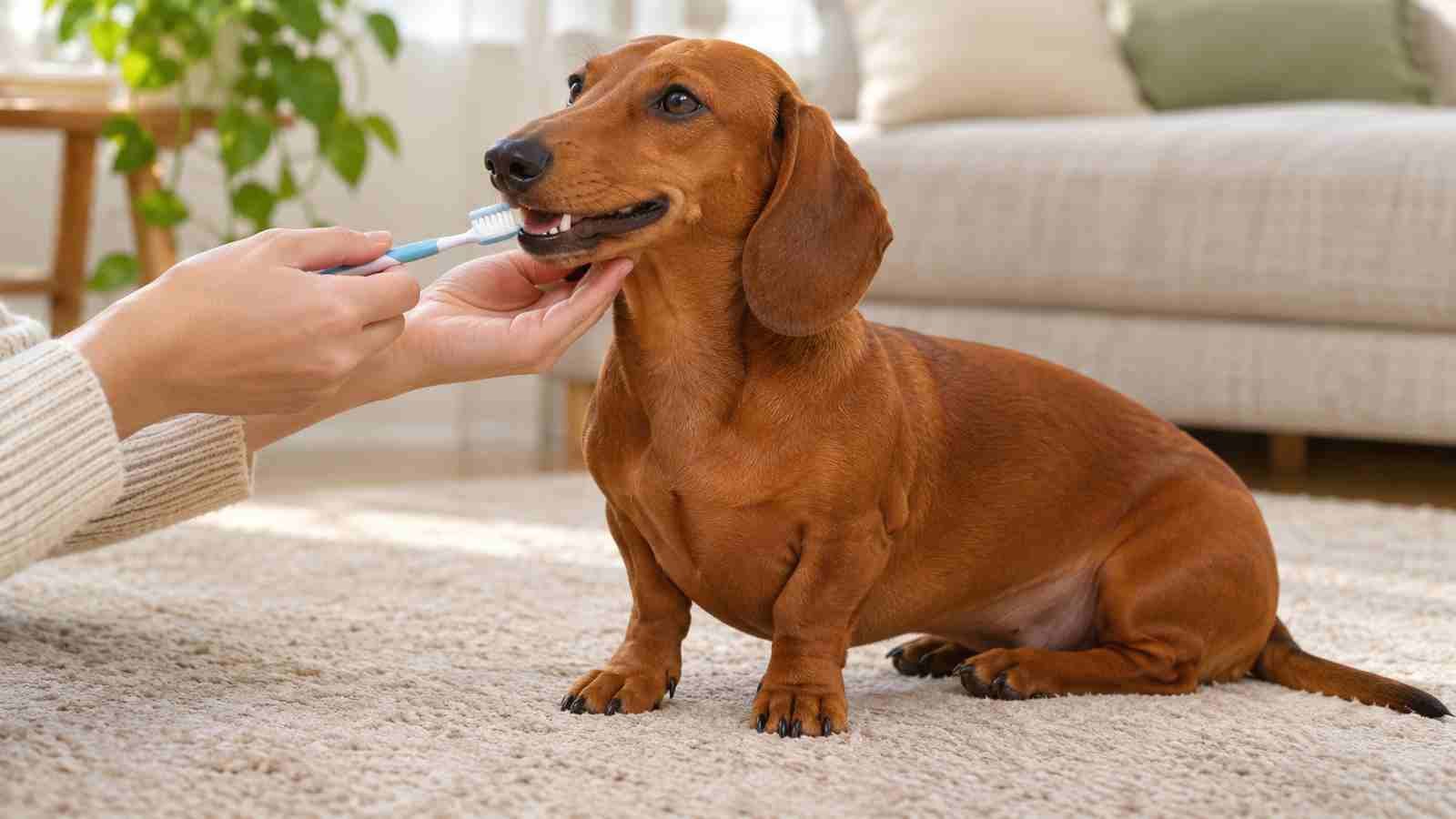
Dachshund teeth follow the usual dog pattern: 28 baby teeth, replaced by 42 adult teeth by about 6 to 7 months. Where dachshunds stand out is how often those teeth go wrong.
In Banfield’s 2023 records, 79.3% of dachshunds were diagnosed with an oral health issue, third among the 10 most popular breeds. So if your dog’s mouth needs work, you’re in very common company.
How many teeth does a dachshund have?
A dachshund puppy has 28 baby teeth and an adult has 42, the same as any other dog. According to VCA’s veterinary dentists, the baby teeth come through from about three weeks and are all in by six weeks.
The swap starts at around 3.5 to 4 months, front teeth first. By 6 to 7 months, most puppies have their full adult set. One r/Dachshund owner said most of their dogs had all their permanent teeth by 5 to 6 months, so a little earlier isn’t a worry.
Double canines: when baby teeth stay put
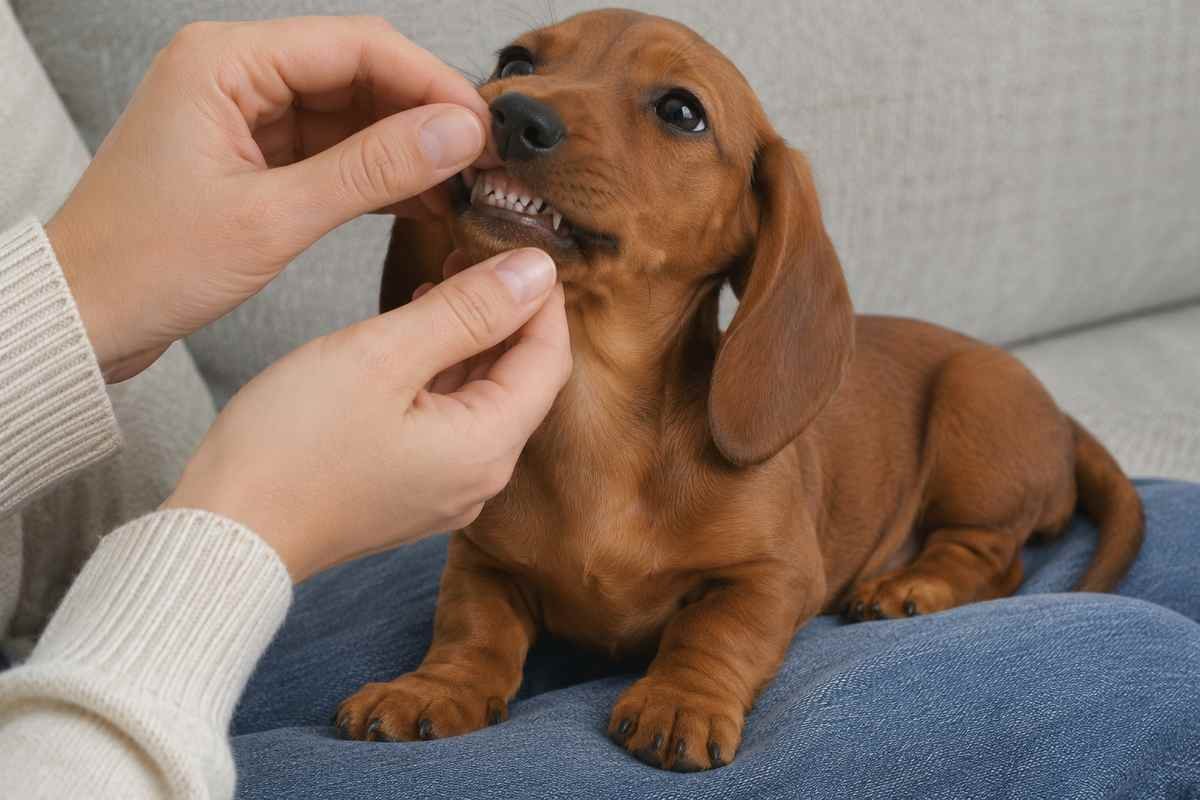
Have you looked in your puppy’s mouth and seen two fangs side by side? That’s a retained baby tooth.
Your puppy’s adult canine has come in, but the baby one hasn’t fallen out.
VCA says it happens most with the upper canines, then the lower canines, then the incisors, and that small breeds are especially prone to it. Its advice is to have the baby tooth pulled promptly, which usually lets the adult tooth move into its proper place.
Here’s where owners and vets often part ways.
Plenty of r/Dachshund owners waited and had the baby teeth taken out during the spay or neuter, so their dog only went under once, and some vets they saw were fine with that. VCA’s dentists disagree: they say that in most cases it isn’t recommended to wait for the spay or neuter, because the longer the baby tooth stays, the less room the adult tooth has to settle where it should. If you’re weighing the two, I’d ask the vet how crowded that spot already looks.
The gap between the two teeth is the problem. Food and plaque collect there, and one owner who left a single retained tooth said it “catches food really bad” and now has to be flossed. If your vet suggests pulling it now, don’t push it back to fit the surgery date. Our page on neutering a dachshund covers that timing on its own.
Are dachshunds prone to dental problems?
Yes. In two large US datasets drawn from Banfield Pet Hospital records, dachshunds sit near the top: 79.3% of the dachshunds Banfield saw in 2023 had an oral health issue diagnosed, against 73% of all dogs.
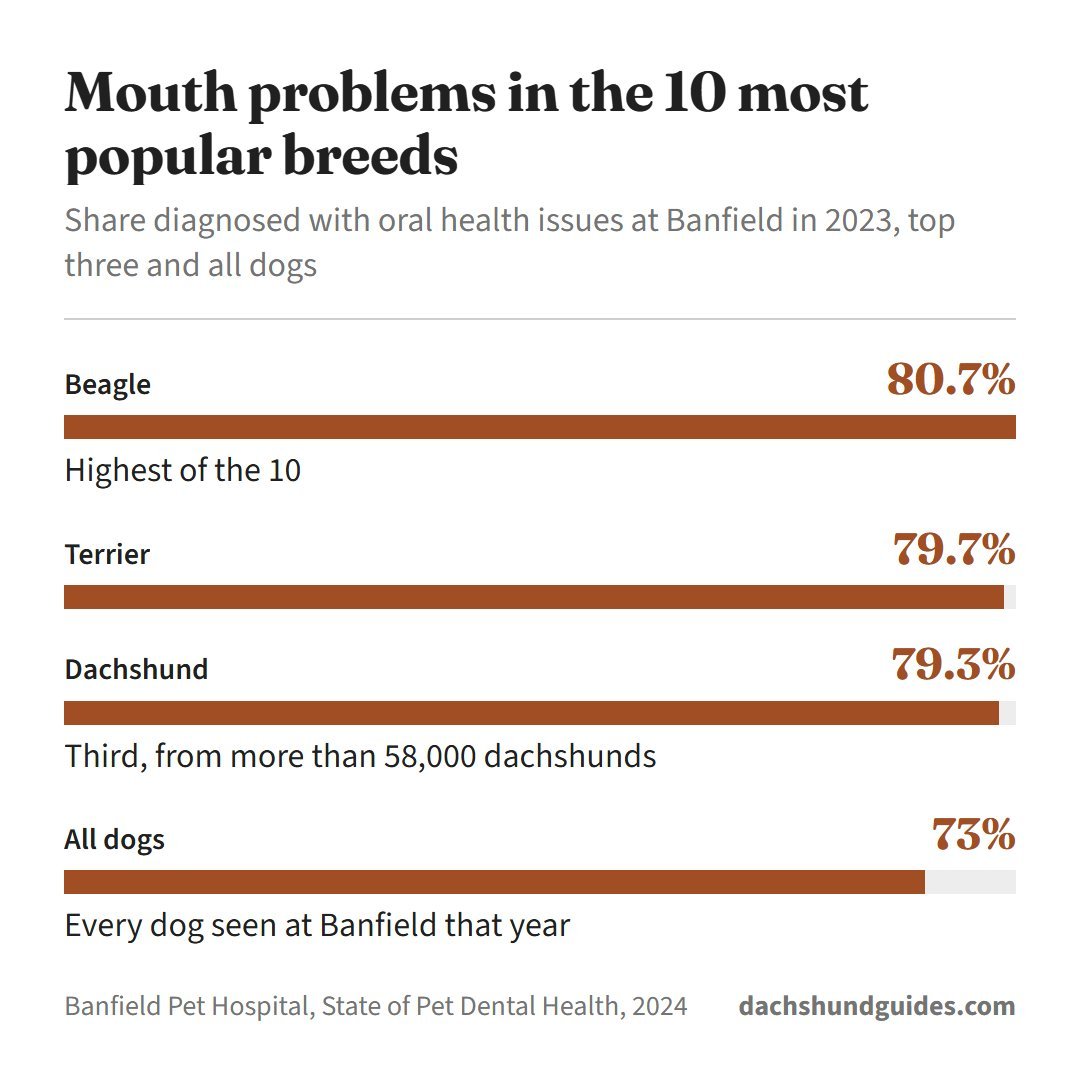
That figure is from Banfield’s own 2024 dental health report, which covered dogs seen at its 1,000-plus hospitals in 2023, more than 58,000 of them dachshunds. Only beagles and terriers ranked higher among the 10 most popular breeds.
The second is a 2021 study by Wallis and colleagues in The Veterinary Journal, which looked at over 3 million dog records across 60 breeds. It listed a 28.1% periodontal disease rate for dachshunds, and found the smallest breeds were up to five times as likely to be diagnosed as giant breeds.
Why are the two numbers so far apart? They don’t measure the same thing. Banfield’s figure counts any diagnosed oral health issue, while the study counted periodontal disease diagnoses only, and dvm360’s write-up notes that diagnosis records tend to miss cases, so the real rate is likely higher.
Either way, genes play a part you can’t brush away. One owner described two dachshunds in the same house:
“The Boy won’t let us near his mouth (we assume rescue trauma) but has a Hollywood smile. The Girl let us brush her teeth and never complained but had to have ten removed in one go.”
– r/Dachshund, January 2024
That was a reply to an owner who brushed their dog’s teeth four times a week and still heard that the 7-year-old needed 12 to 15 teeth out.
How often should you brush a dachshund’s teeth?
Daily, if you can. The best evidence is a 2015 study in the Journal of Veterinary Dentistry that brushed beagles’ teeth at four different frequencies for 28 days. Brushing every day or every other day worked significantly better against plaque, tartar and gum inflammation than brushing weekly or every other week. The authors recommended daily brushing.
That’s why “a few times a week” can still end in extractions for you. It’s better than nothing, but it isn’t what the study found works best.
The back teeth are the hardest to reach. One owner who brushes regularly said their dog still needed four extracted, “the very back ones that are difficult to reach”.
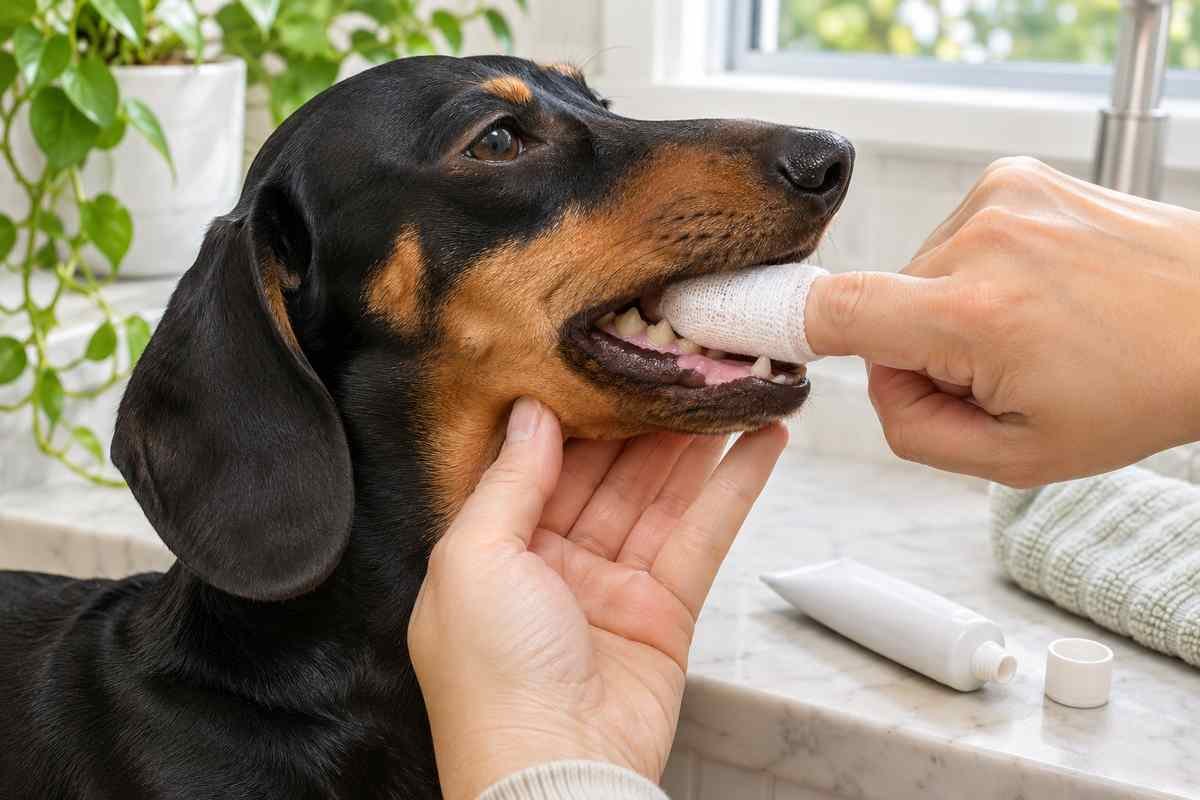
If your dachshund fights the brush, try what one owner’s vet suggested: wrap gauze around your finger, add dog toothpaste and rub the back teeth. They said you can see the plaque come off on the gauze. Honestly, I’d start there with any dog that hates a brush.
If bad breath is what you’ve noticed, the page on why dachshunds have bad breath separates the dental causes from the ones that aren’t, and the grooming schedule shows where teeth fit in a weekly routine.
Cleanings: why the vet puts your dog under
A proper cleaning means general anesthesia, and that’s probably the part you dread. The American Animal Hospital Association says anesthesia is needed for adequate dental care in any dog, and it recommends dental X-rays to see bone loss and confirm which teeth need to come out.
Anesthesia-free cleanings sound like the gentler choice, but the American Veterinary Dental College advises against them. The dog has to be held still while its teeth are scraped, and nobody can clean below the gumline, where the bacteria behind gum disease live. As the college puts it, “White teeth do not mean a clean and healthy mouth.”
Age alone isn’t a reason to skip it, either. AAHA’s senior care guidelines say advanced age isn’t a bar to anesthesia once the dog has been checked, and that dental work can make a real difference to an older dog’s quality of life.
Signs a dachshund’s teeth need a vet
AAHA tells vets to look in the mouth at every visit, and you can do the same at home. Watch for trouble picking up, chewing or swallowing food, or signs your dog is uncomfortable while eating.
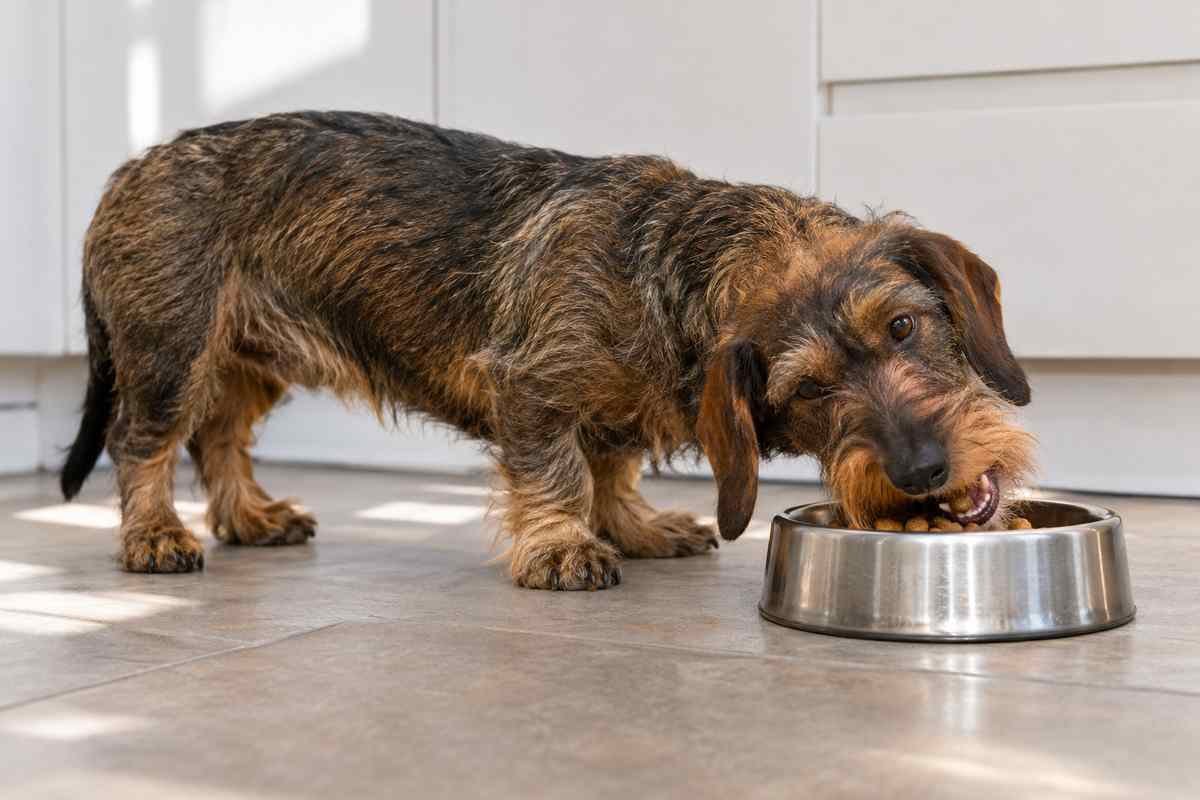
A broken tooth needs a look too. One owner blamed hard bones for fractures that cost their dog several teeth.
If your dachshund is older, don’t put it off. AAHA warns that small senior dogs can lose so much bone around their teeth that the jaw can fracture. Our list of dachshund health problems puts teeth alongside the breed’s other common issues.
Dachshund teeth questions
Is it normal for a dachshund puppy to lose teeth?
Yes. Baby teeth start falling out from about 3.5 to 4 months, and you might find a tiny one on the floor. Most puppies have all 42 adult teeth by 6 to 7 months. A baby tooth still sitting next to its adult replacement is the one to show your vet.
Why are my adult dachshund’s teeth falling out?
Adult teeth shouldn’t fall out on their own. The AVDC explains that untreated gum disease damages the roots and the bone that holds teeth in, so a loose adult tooth is a reason to book a dental exam. Your vet will likely want X-rays under anesthesia to see what’s happening below the gums.
