
Socialise Your Dachshund Puppy the Right Way

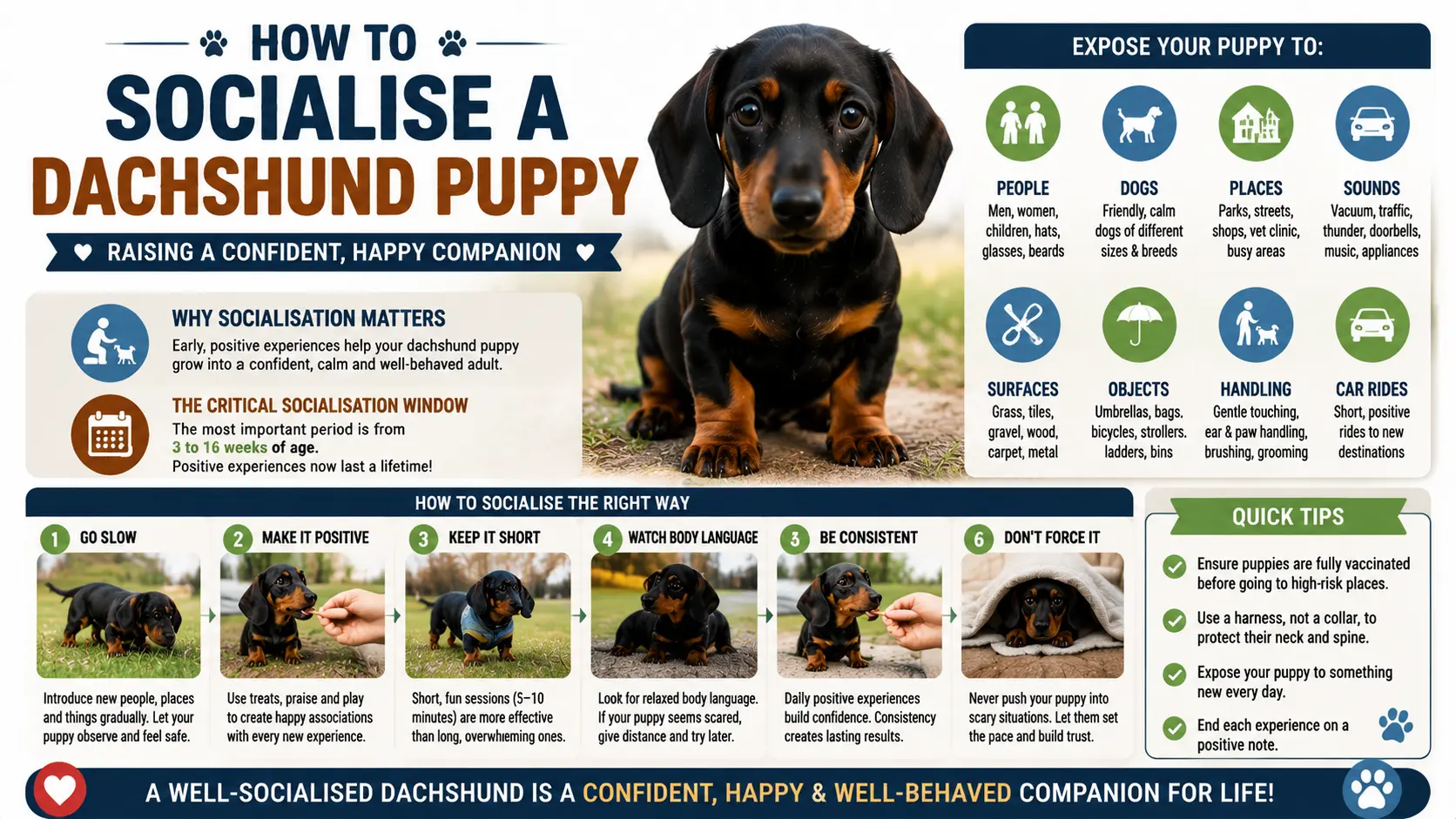
If you have ever watched a tiny dachshund puppy tuck its long little body behind your legs at the sight of a stranger, you know that sinking feeling. You wonder: Did I miss something? The good news is that learning how to socialise a dachshund puppy is one of the most rewarding things you will ever do as a dog owner — and you are not too late to start.
I still remember the first time I took my dachshund, Pretzel, to a park. He barked at a toddler’s balloon like it had personally offended him. That moment pushed me to really dig into what proper socialisation looks like for this breed. What I found changed everything.
Why Socialising A Dachshund Puppy Matters More Than You Think
Dachshunds are not just cute little sausages. They were originally bred as tenacious hunting dogs, designed to chase badgers underground. That fearless, stubborn spirit is still very much alive today, which means knowing how to socialise a dachshund puppy is not optional it is essential.
A 2008 University of Pennsylvania study published in the Journal of Applied Animal Behaviour Science found that dachshunds ranked as the most aggressive breed toward strangers among 32 breeds tested. A separate survey by Dachshund Health UK of over 1,000 owners found that 16% of dachshunds were described as always or often nervous or fearful of people, and 8 in every 100 were frequently aggressive toward other dogs. These are not statistics to fear they are a call to action.
The science is clear: the way you socialise a dachshund puppy in those first critical weeks directly shapes how they respond to the world for the rest of their life.
The Golden Window: When To Socialise A Dachshund Puppy
Understanding the Critical Socialisation Period
Research consistently shows that the most critical window to socialise a dachshund puppy or any puppy falls between 3 and 14 weeks of age. According to a peer-reviewed study in Animals (Basel) (2022), at no other point in a dog’s life do they habituate as easily to novel and potentially startling stimuli as during this sensitive period.
During this window, a puppy’s brain is actively building neural pathways. Positive experiences during these weeks are literally wired into long-term memory as “safe.” Miss this window, and you are not out of options, but you will work considerably harder.
Most dachshund puppies arrive in their new homes at around 8 weeks old, giving you a precious 4–6 week runway to make the most of this opportunity. This is exactly why every responsible owner needs a clear plan to socialise a dachshund puppy from day one.
What Happens If You Miss the Window?
Inadequately socialised puppies are significantly more likely to exhibit heightened fear, anxiety, or aggression as adults. A Finnish study found that 72.5% of pet dogs displayed some form of highly problematic behaviour, including noise sensitivity, fears, and aggression many of which trace back directly to missed socialisation in puppyhood.
Behavioural problems, not health issues, are the leading cause of dog relinquishment and shelter surrender. When you commit to properly socialising a dachshund puppy, you are not just building a better pet you are potentially saving a life.
How To Socialise A Dachshund Puppy: A Step-By-Step Plan
Step 1 — Start With Controlled, Positive Exposure
The first rule of knowing how to socialise a dachshund puppy is: never flood them. Flooding throwing a puppy into overwhelming situations and hoping they adapt backfires badly with this breed.
Instead, use gradual, positive exposure:
- Introduce one new thing at a time
- Keep sessions short (5–10 minutes for young puppies)
- Always pair new experiences with high-value treats or praise
- Let your puppy choose their own pace when safe to do so
Think of it like building confidence layers. Every successful new experience adds one more layer of emotional resilience to your dachshund puppy.
Step 2 — Introduce Different Types of People
To properly socialise a dachshund puppy, they need to meet a wide variety of humans during that 8–14 week window:
- Men and women of different ages
- Children (supervised, calm interactions only)
- People wearing hats, glasses, or high-visibility jackets
- People with beards, umbrellas, or walking aids
My personal tip: keep a small bag of soft treats and hand it to each new person. Let them offer your puppy a treat at ground level without reaching over the puppy’s head, which many dachshunds find threatening. This single technique transformed Pretzel’s reaction to strangers within two weeks.
Step 3 — Safe Dog-to-Dog Socialisation
Because dachshunds can show dog-directed aggression without proper early experience, knowing how to socialise a dachshund puppy with other dogs is particularly important.
Before full vaccination, safe options include:
- Playdates with known, vaccinated, healthy dogs
- Puppy classes that require vaccination proof
- Carrying your puppy in public so they see and smell other dogs from a safe distance
Once vaccinated, enrol in a properly run puppy class. The structured environment teaches bite inhibition, reading body language, and appropriate play all things that help you socialise a dachshund puppy more effectively than free-for-all dog park visits.
Step 4 — Expose Them to Sounds and Environments
Dachshunds have sensitive hearing that bark that can rattle your windows was bred in for a reason. Part of learning how to socialise a dachshund puppy means building positive associations with sounds:
- Traffic noise, sirens, and thunder
- Children playing and babies crying
- Vacuum cleaners, hair dryers, and kitchen appliances
- Fireworks (use desensitisation audio tracks between 8–12 weeks)
You can find desensitisation sound tracks specifically designed for puppy development. Using these at low volume during feeding or playtime is a powerful and underused tool when you are working to socialise a dachshund puppy.
Step 5 — Surfaces, Textures, and Environments
Dachshunds were built to move through varied underground terrain, yet many become anxious on slippery floors, wet grass, or unfamiliar surfaces. As you socialise a dachshund puppy, include:
- Tile, wood, carpet, grass, gravel, and wet pavement
- Ramps and stairs (important for spinal health in this breed)
- Busy indoor spaces like pet-friendly stores
- Outdoor environments: parks, car parks, quiet streets
| Environment Type | Socialisation Goal | Best Age to Introduce |
|---|---|---|
| Home (various rooms) | Build baseline confidence | Weeks 8–9 |
| Quiet outdoor areas | Exposure to nature sounds | Weeks 9–10 |
| Pet-friendly stores | People, trolleys, surfaces | Weeks 10–11 |
| Puppy class | Dog-to-dog interaction | Weeks 10–14 |
| Busy streets/parks | Full environmental exposure | Post-vaccination |
Common Mistakes When You Socialise A Dachshund Puppy
Knowing how to socialise a dachshund puppy also means knowing what not to do. These are the mistakes I see most often:
Waiting until vaccinations are complete. The American Veterinary Society of Animal Behavior states that the benefits of early socialisation outweigh the small disease risk in controlled, low-risk environments. Waiting until 16 weeks means missing the most receptive part of the socialisation window entirely.
Forcing interactions. If your dachshund puppy backs away, respect that signal. Forcing contact creates negative associations and makes future socialisation harder, not easier.
Treating every outing as training. Sometimes your puppy just needs to observe. Letting them watch the world from your arms or a safe spot without pressure is valid socialisation too.
Neglecting ongoing socialisation. Learning how to socialise a dachshund puppy does not stop at 14 weeks. Continue varied, positive exposure through adolescence particularly between 6 and 18 months when a second fear period can occur.
Using Positive Reinforcement To Socialise A Dachshund Puppy
Dachshunds are food-motivated and clever. This makes positive reinforcement an incredibly effective tool when you socialise a dachshund puppy. The basic formula is simple:
New experience + treat + calm praise = positive association
Use small, soft, high-value treats (chicken, cheese, or commercial training treats) that your puppy does not get at other times. Reserve them exclusively for socialisation sessions so they carry extra weight.
Clicker training pairs particularly well with socialisation work. The click marks the exact moment of calm, curious behaviour, and the treat follows. Over time, your dachshund puppy learns that new things predict good things which is exactly the mindset you are building when you socialise a dachshund puppy properly.
How To Socialise A Dachshund Puppy With Children and Other Pets
With Children
Children and dachshunds can be a wonderful combination or a stressful one, depending on how you socialise a dachshund puppy around them. Dachshunds do not love rough handling, loud squealing, or fast, unpredictable movements.
Rules for child-puppy interactions:
- Children sit on the floor to interact (no picking up without supervision)
- No grabbing ears, tail, or back
- Calm voices only during the first few meetings
- Always supervise, always
With Other Pets
If you have cats or other small animals, introduce them slowly through a closed door first. Let both animals smell each other under the door before visual contact. When you do socialise a dachshund puppy face-to-face with a cat, keep the puppy on a lead and let the cat set the distance.
The Role of Puppy Classes in Socialisation
Puppy classes are one of the most efficient ways to socialise a dachshund puppy in a structured, safe setting. A good class will:
- Require proof of vaccination for all attending dogs
- Use reward-based methods only (no punishment)
- Include controlled play sessions with appropriate matches
- Provide owner education alongside puppy training
When choosing a class, look for a trainer accredited by the Association of Pet Dog Trainers (APDT) or a similar body in your country. The quality of the class matters enormously when you are trying to socialise a dachshund puppy effectively.
Our Dachshund Guides section has breed-specific recommendations for finding the right puppy class for your dachshund, along with training tips tailored to their independent nature.
Continuing to Socialise A Dachshund Puppy Beyond 14 Weeks
The critical window closes, but socialisation never truly stops. Here is how to maintain what you have built:
- Weekly novelty: introduce one new place, person, or experience every week through the first year
- Positive vet visits: pop in just for treats and cuddles, not procedures, so your puppy does not associate the clinic with stress
- Ongoing classes: adolescent dog classes can help manage the second fear period at 6–14 months
- Consistency: the more you socialise a dachshund puppy throughout their life, the more resilient they become
Frequently Asked Questions
At what age should I start to socialise a Dachshund puppy?
Begin socialisation as early as 8 weeks of age, as soon as your puppy comes home. The period between 8 and 14 weeks is especially important because puppies are most receptive to new experiences. Even before vaccinations are complete, safe and controlled socialisation should begin.
Can I socialise a Dachshund puppy before they are fully vaccinated?
Yes. Focus on low-risk environments, such as your home, the homes of vaccinated dogs, puppy classes approved by your veterinarian, or carrying your puppy through public places. Early socialisation is essential for developing confidence while minimizing disease exposure.
My Dachshund puppy is scared of strangers. Is it too late to socialise them?
No. While early socialisation is ideal, older puppies and adult Dachshunds can still build confidence through positive reinforcement, gradual exposure, and patience. Working with a qualified reward-based trainer can help fearful dogs make significant progress.
How do I socialise a Dachshund puppy with other dogs safely?
Start by introducing your puppy to one calm, healthy, vaccinated adult dog in a neutral environment. Keep the first interactions short and positive, reward calm behavior with treats, and gradually increase exposure. Wait until your veterinarian approves before visiting busy dog parks.
How long does it take to properly socialise a Dachshund puppy?
Socialisation is a lifelong process. While the most important learning occurs between 8 and 14 weeks, continuing to introduce your Dachshund to new people, places, sounds, and experiences throughout life helps maintain confidence and good behavior.
