
Corgi vs Dachshund: Two Short Legs, One Big Decision

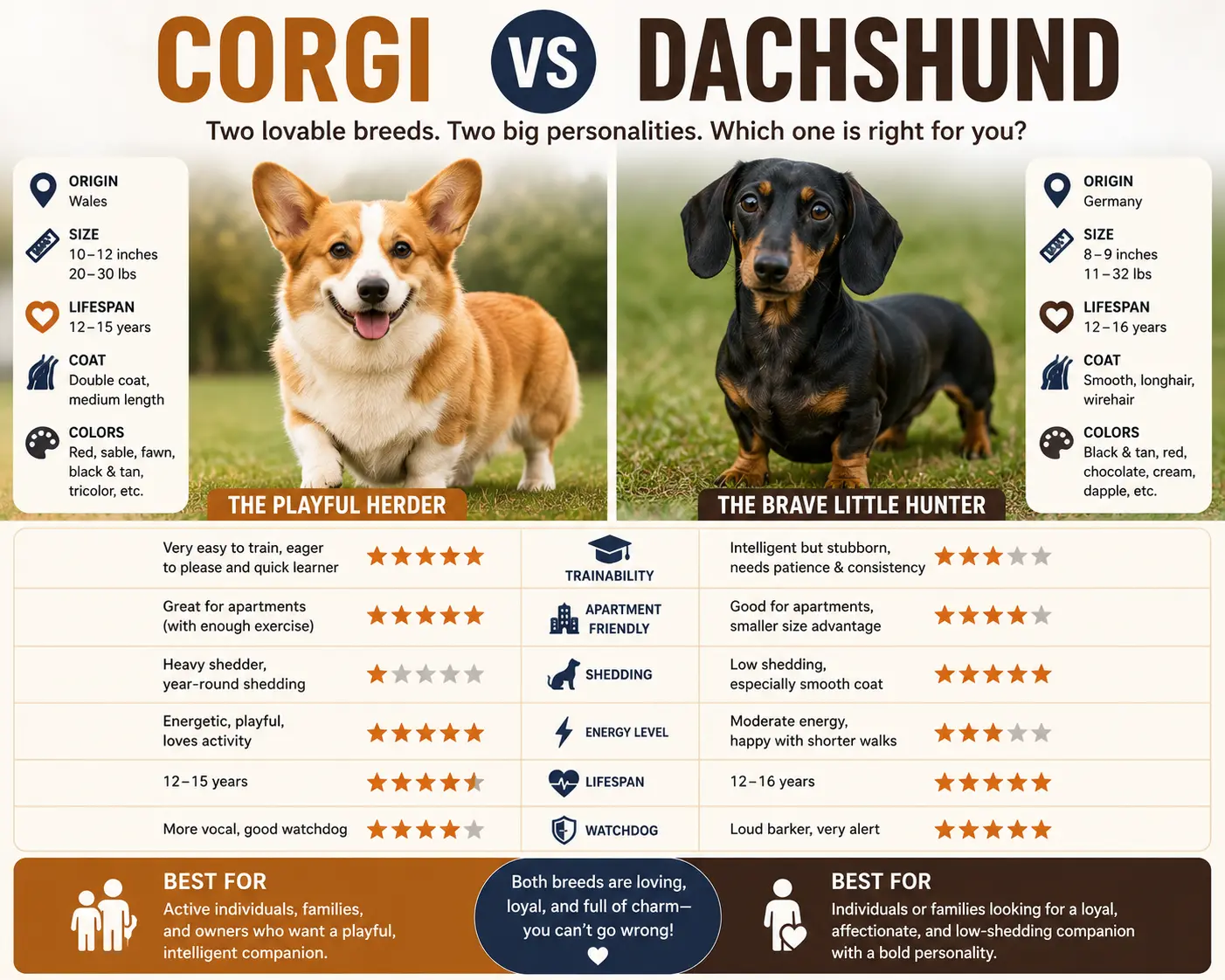
I still remember the Saturday morning I stood in a dog park, coffee in hand, completely unable to take my eyes off two dogs playing tug-of-war with a rope toy. One was a round-eared, fluffy-butted Corgi. The other was a long, low-slung Dachshund. Both were stubborn. Both were winning. And I thought this is the real corgi vs dachshund debate playing out in real life.
If you’ve landed here, you’re probably wrestling with the same question: corgi vs dachshund which breed is actually right for you? These two dogs look deceptively similar at a glance: short legs, long backs, enormous personalities. But underneath those adorable exteriors are very different dogs with very different needs. This guide digs into every angle of the corgi vs dachshund comparison so you can make a confident, informed decision before bringing one of these characters home.
A Tale of Two Breeds: Their History and Origins
Before you can truly understand the corgi vs dachshund comparison, you need to know where these dogs came from because their origins still shape how they behave every single day.
The Dachshund traces its roots to 15th-century Germany. The name itself translates to “badger dog,” and that tells you everything. These fierce little hunters were bred to burrow into underground dens and flush out badgers, rabbits, and other small prey. Their elongated bodies, powerful chests, and short but muscular legs weren’t an accident they were a design feature. The Dachshund Club of America was founded in 1895, and according to the AKC, the breed is described as “clever, lively, and courageous.”
The Pembroke Welsh Corgi, on the other hand, comes from the pastoral hills of Wales, with a breed line stretching back to at least 1107 AD. Rather than chasing prey underground, Corgis were herding cattle nipping at the heels of livestock and darting out of the way of kicks. Their low-set frame was a survival advantage in the field. The AKC calls the Pembroke Welsh Corgi “affectionate, smart, and alert.” Their royal connection Queen Elizabeth II famously kept over 30 Corgis throughout her life only added to their fame.
The corgi vs dachshund origin story matters because a herding dog and a hunting dog have fundamentally different instincts, energy levels, and working styles. That working DNA never fully disappears.
Size and Appearance: More Different Than They Look
At first glance, the corgi vs dachshund pairing seems like two peas in a pod both are low-riding, long-bodied, and big-eared. But there are real physical differences between these two breeds.
Dachshunds come in two official sizes:
- Standard: 16–32 lbs
- Miniature: 11 lbs or under
They also come in three coat types smooth, wirehaired, and longhaired and a spectacular range of color patterns including dapple, brindle, sable, and piebald.
Corgis are stockier and heavier:
- Pembroke Welsh Corgi: 27–30 lbs
- Cardigan Welsh Corgi: 25–38 lbs
Their coat is denser and fluffier, and they come in red, sable, fawn, black, and tan typically with white markings and that signature fluffy behind.
In the corgi vs dachshund size battle, the Dachshund wins for those who want a truly compact dog, especially in miniature form. But if you want a sturdier, slightly meatier companion, the Corgi is your match.
Corgi vs Dachshund: Side-by-Side Comparison
Here’s a quick-reference table for the key differences in the corgi vs dachshund comparison:
| Feature | Dachshund | Corgi (Pembroke) |
|---|---|---|
| Weight | 11–32 lbs | 27–30 lbs |
| Height | 5–9 inches | 10–12 inches |
| Lifespan | 12–16 years | 12–15 years |
| Energy Level | Moderate | High |
| Trainability | Moderate (stubborn) | High (eager to please) |
| Shedding | Moderate | Heavy |
| Apartment Friendly | ✅ Yes | ✅ Yes |
| Good with Kids | Older children | All ages |
| AKC Popularity (2025) | #5 | #11 |
Temperament and Personality: Big Personalities, Different Styles
This is where the corgi vs dachshund debate gets genuinely fascinating and where most people make their final decision.
Dachshunds are fiercely independent. They’re scent-driven, curious, and will absolutely decide for themselves whether your command is worth following. Owners who love Dachshunds often describe them as “cats in dog suits.” They’re deeply affectionate with their people but operate firmly on their own terms. They can alternate between intense bursts of play and long, cozy, sprawled-out naps with zero transition time.
Corgis are energetic extroverts. They’re biddable, socially tuned-in, and seem to wake up every morning with a to-do list. They love having a “job” whether that’s learning a new trick, running agility, or just managing where everyone in the house is standing at all times (old herding instincts die hard). Corgis score 4/5 for playfulness compared to the Dachshund’s 3/5 in breed evaluations.
When it comes to personality match:
- Choose a Dachshund if you love independent, quirky dogs who march to their own drum.
- Choose a Corgi if you want an engaged, lively partner who’s always ready for the next adventure.
Both breeds are highly affectionate scoring 5/5 in affection level ratings and both bond deeply with their families.
Training: Who’s Easier to Teach?
Let’s be honest: neither breed is a pushover. But in the corgi vs dachshund training matchup, there’s a clear winner.
Corgis are significantly more trainable. They were bred to respond to commands quickly in the field, and that eagerness to cooperate carries over into the living room. They excel at obedience, agility, and complex commands. Corgis score 4.5/5 for intelligence versus a Dachshund’s 3/5, according to breed assessment platforms.
Dachshunds, bless them, are stubborn. They have a strong prey drive and a short attention span when something smells more interesting than your treat bag. Experts recommend keeping Dachshund training sessions to just 10-minute blocks, two to three times per day, using positive reinforcement consistently. Patience isn’t optional it’s mandatory.
For the corgi vs dachshund training comparison, first-time dog owners may find the Corgi more forgiving. Experienced owners who appreciate a challenge often love the Dachshund’s independent spirit. Regardless of which breed you choose, early socialization is non-negotiable for both.
Exercise and Energy: How Much Do They Need?
Both breeds require more exercise than their small size suggests this is a critical point in any corgi vs dachshund discussion.
Dachshunds need around 30–60 minutes of exercise per day, depending on size. They enjoy walks, play sessions, and nose-work activities that tap into their scent-hunting instincts. They’re active but tend to be more selective about exerting themselves bursts of energy followed by championship-level lounging.
Corgis are built like compact athletes. They need a minimum of 60 minutes of vigorous daily activity, plus mental stimulation to prevent boredom behaviors like excessive barking or destructive chewing. Interactive puzzle toys, agility training, and fetch sessions are ideal.
One shared concern in the corgi vs dachshund exercise discussion is their shared vulnerability to spinal injury. Both breeds have long backs and short legs, which puts them at risk for Intervertebral Disc Disease (IVDD). Veterinarians consistently recommend avoiding repetitive jumping on and off furniture, stairs, and high-impact activities for both breeds.
Health: What to Watch Out For
Health is often the most sobering part of any corgi vs dachshund comparison, and both breeds come with breed-specific concerns worth understanding before you commit.
Dachshunds are highly susceptible to IVDD Intervertebral Disc Disease due to their extreme body length. Studies suggest up to 25% of Dachshunds will experience some form of spinal issue during their lifetime. They’re also prone to obesity, dental disease, and progressive retinal atrophy.
Corgis face similar spinal risks, plus a higher tendency toward hip dysplasia, degenerative myelopathy, and obesity. Their weight must be carefully managed, as excess pounds put massive strain on their already-stressed backs.
The good news: Dachshunds typically live 12–16 years, giving them one of the longer lifespans among small breeds. Corgis average 12–15 years. With proper vet care and weight management, both breeds can live long, healthy lives.
Grooming Needs: One Clear Winner
If dog hair on your furniture is a dealbreaker, the corgi vs dachshund grooming comparison will matter a lot to you.
Corgis are heavy, relentless shedders. They shed every single day, with extra “blowouts” twice a year when they lose their undercoat in impressive quantities. Daily brushing is strongly recommended, along with periodic bathing and coat trimming.
Dachshunds are moderate shedders, with grooming needs that vary by coat type:
- Smooth coat: A weekly once-over with a hound glove
- Wirehaired: Hand-stripping a few times per year
- Longhaired: Regular brushing to prevent tangles
If low-maintenance grooming is a priority, the corgi vs dachshund winner is the Dachshund especially in smooth-coat variety.
Family Life: Kids, Pets, and Apartment Living
Both breeds can thrive in family settings, but the corgi vs dachshund dynamic with kids and other pets deserves honest discussion.
Dachshunds do best with older children who understand how to handle them gently. Their long backs are fragile, and rough play or careless grabbing can cause real injury. They can also be territorial and may nip if they feel threatened. That said, a well-socialized Dachshund can be a wonderfully loyal family dog.
Corgis tend to be more adaptable with all ages of children. Their herding instinct can sometimes lead to nipping at heels especially with toddlers but with consistent training, this is manageable. Corgis also score highly on territorial protection (5/5 vs. the Dachshund’s 3/5), making them naturally watchful family dogs.
For apartment living, both score well. Corgis earn a 5/5 for apartment adaptability, while Dachshunds score a strong 4/5. Noise is a consideration for either both are certified barkers who will alert you to every squirrel, delivery person, and leaf that dares enter their territory.
Check out our Dachshund Guides for deeper breed-specific care tips on keeping your sausage dog happy and healthy in any living situation.
Corgi vs Dachshund: Which One Is Right for You?
Here’s the honest truth about the corgi vs dachshund decision: there’s no universally correct answer. Both breeds are incredible in the right hands and genuinely challenging in the wrong ones.
Choose a Dachshund if you:
- Want a smaller, more compact dog
- Have a relaxed lifestyle with room for independent thinking
- Don’t mind a training challenge
- Prefer lower-maintenance grooming
- Live alone or have older children
Choose a Corgi if you:
- Lead an active lifestyle with daily outdoor time
- Want a highly trainable, responsive dog
- Have young children (with proper supervision)
- Don’t mind or enjoy regular brushing
- Want a dog that’s naturally tuned in to the household
According to the latest AKC 2025 popularity rankings, the Dachshund has climbed to #5 among all U.S. breeds cracking the top five for the first time, displacing the Poodle while the Pembroke Welsh Corgi holds steady around #11. Both breeds are clearly beloved, but the Dachshund’s surge suggests it’s having a major cultural moment right now.
Conclusion
The corgi vs dachshund debate doesn’t have a loser it has two winners who suit different people. The Dachshund brings independent charm, a smaller frame, and a hunting dog’s determination. The Corgi brings athletic energy, impressive trainability, and a herding dog’s intensity. Both are short-legged, opinionated, and capable of stealing your heart on day one.
Whether you’re drawn to the sausage dog’s soulful eyes or the Corgi’s fluffy backside, the best thing you can do is be honest about your lifestyle, your experience level, and what you want from a dog. The right choice in the corgi vs dachshund conversation is simply the one that fits your life.
FAQ: Corgi vs Dachshund
Q1: Which is easier to train a Corgi or a Dachshund?
Corgis are generally easier to train than Dachshunds. Their herding heritage makes them eager to learn and respond well to commands. Dachshunds are highly intelligent but more independent, so they often require extra patience, consistency, and positive reinforcement during training.
Q2: Are Corgis or Dachshunds better for apartments?
Both breeds can adapt well to apartment living. Corgis are adaptable but require plenty of daily exercise to stay happy. Dachshunds, thanks to their smaller size and moderate exercise needs, are often a better fit for compact living spaces, provided they receive regular walks and mental stimulation.
Q3: Which breed sheds less Corgi or Dachshund?
Dachshunds generally shed less than Corgis, particularly Smooth-Haired Dachshunds. Corgis have thick double coats and are known for heavy year-round shedding, with even more shedding during seasonal coat changes.
Q4: Do Corgis or Dachshunds live longer?
Dachshunds typically have a slightly longer lifespan, averaging 12–16 years, while Corgis usually live 12–15 years. Proper nutrition, regular exercise, and routine veterinary care can help both breeds enjoy long, healthy lives.
Q5: Is the Corgi vs Dachshund choice difficult for first-time dog owners?
It depends on your lifestyle. Corgis are generally easier to train and may be more suitable for first-time owners. Dachshunds are affectionate and loyal but can be stubborn, making consistent training and early socialization especially important.
