
Corgi Dachshund Mix (Dorgi): Two Spine Risks, Two Different Answers

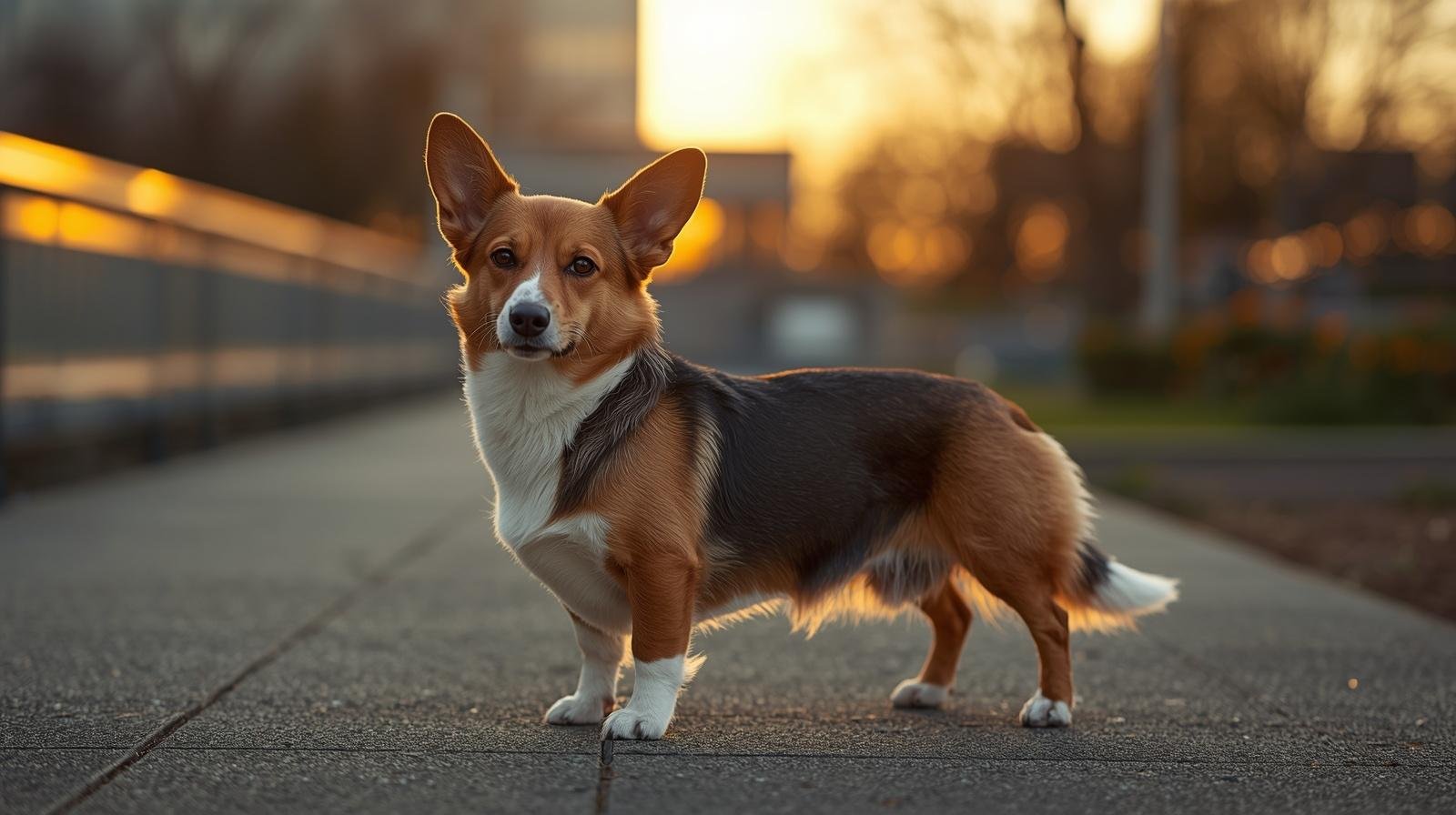
A corgi dachshund mix, or Dorgi, is a cross between a Pembroke Welsh Corgi and a standard or miniature dachshund. Going by the AKC standards for the two parents, that puts it anywhere from about 5 to 12 inches tall and from under 11 pounds (with a miniature parent) to about 30 pounds, and the parents’ life expectancies are 12 to 13 years (corgi) and 12 to 16 years (dachshund). Both parents are long and low, so you’d expect the spine risks to simply add up.
They don’t. For disc disease, crossing these two breeds doesn’t help you at all. For degenerative myelopathy, the dachshund parent works strongly in your puppy’s favor, and the reason is in the genetics.
What a Dorgi is
The cross has a famous origin: according to the account of the royal corgis, one of Queen Elizabeth II’s corgis mated with Pipkin, a dachshund belonging to Princess Margaret, and produced the first royal dorgi.
There’s still no breed standard, and nobody has measured a sample of Dorgis, so you won’t get an invented size range here, just what the AKC lists for each parent:
| Dachshund | Pembroke Welsh Corgi | |
|---|---|---|
| Height | 8-9 in (standard), 5-6 in (miniature) | 10-12 in |
| Weight | 16-32 lb (standard), 11 lb and under (miniature) | up to 30 lb (male), up to 28 lb (female) |
| Life expectancy | 12-16 years | 12-13 years |
If your dachshund parent is a miniature, expect a noticeably smaller dog than a corgi. With a standard, the two parents overlap in weight, so your puppy could land anywhere in that range. Ask the breeder which size the dachshund was.
If you’re comparing the purebreds instead, the corgi vs dachshund page covers that.

What a Dorgi looks like
A Dorgi is long and low, since both parents are built that way, and the ears are where the two sides differ most. The AKC standard asks for a Pembroke’s ears to be erect, firm and medium-sized, while a dachshund’s hang close to the cheek, so a Dorgi’s can stand up, flop over or sit somewhere in between.
The coat can come from either side. A Pembroke has a medium-length coat over a thick, weather-resistant undercoat, and dachshunds come smooth, long-haired or wire-haired, so a Dorgi can be anything from sleek to fluffy. A thick-coated one will shed like the corgi side, which the care section below covers.
Colors overlap a lot. The Pembroke standard lists red, sable, fawn, and black and tan, each with or without white markings, and dachshunds add patterns such as dapple and piebald. Dapple shows with a single copy of the gene, so a Dorgi with a dapple parent can be dappled too.
An owner who adopted a six-month-old Dorgi described her in a June 2026 r/Dachshund post:
“She is so funny, FAST as lightning, witty, lover of all toys and a wee bit of a terror to our senior weenies. Can’t get over those ears and her goofy personality!”
– r/Dachshund, June 2026 (287 upvotes)
Two spine diseases, two different answers
Long-backed dogs carry two quite different spinal problems. Intervertebral disc disease is a disc that degenerates and presses on the spinal cord. Degenerative myelopathy is a slow loss of function in the spinal cord itself. Different genes sit behind each, and that’s why your Dorgi ends up in a different position for each one.
Disc disease: the cross doesn’t dilute it
A 2019 UC Davis study traced disc disease to an extra copy of a gene called FGF4 on chromosome 12. It works in a dominant way, so a single copy is enough, and among mixed-breed dogs it was linked to disc herniation with an odds ratio of 18.42.
Now look at your puppy’s parents: the study found that copy at an allele frequency of 0.92 in Pembroke Welsh Corgis and 0.99 in dachshunds.
Work those numbers through, which is my arithmetic and not the study’s, and almost every Dorgi puppy gets at least one copy. About 91% would get two copies, one from each side, since 0.92 × 0.99 comes to roughly 0.91. So the cross doesn’t water this risk down; if anything, your puppy is more likely to carry two copies than a cross with a breed that lacks it.
Still, carrying it isn’t the same as your dog getting sick, and among purebred dachshunds the DachsLife survey of 2,031 dogs found 15.7% had been affected, and 24.4% of standard smooth-haired dogs. I’ve been through disc surgery with Bruno, so I’d plan for it from the start with any long-backed cross. There’s more in the guide to dachshund health problems.
Degenerative myelopathy: here the dachshund helps
Degenerative myelopathy, or DM, is tied to a mutation in a gene called SOD1. A large genotyping study of 33,747 dogs across 222 breeds found most dogs with confirmed DM carried two copies of it, and that dogs with two copies were at a much higher risk than dogs with one.
The breed numbers are where your Dorgi gets lucky:
| Breed | Dogs tested | DM mutation allele frequency |
|---|---|---|
| Pembroke Welsh Corgi | 3,209 | 0.79 |
| Cardigan Welsh Corgi | 544 | 0.32 |
| Dachshund | 50 | none found |
Of those 3,209 Pembrokes, 2,091 already carried two copies, while every one of the 50 dachshunds carried none.
What does that mean for your puppy?
If your dachshund parent is clear, a first-cross puppy can inherit at most one copy, from the corgi side. Roughly 79% of puppies would be carriers, and almost none would have the two copies linked to most DM cases, which is a real advantage the cross gives you.
Don’t stretch it too far, though, because the study confirmed DM in 8 dogs that carried only one copy, so the risk drops a long way but doesn’t vanish. Fifty dachshunds is also a small sample, so it’s worth checking the actual parent rather than trusting the breed average.
The advantage also disappears in the next generation: breed two carrier Dorgis together and, by ordinary inheritance, about one puppy in four will get two copies.
What to ask the breeder
- A DM DNA result for both parents. The dachshund’s matters most, because it decides whether your puppy can get two copies.
- Whether either parent is itself a Dorgi. A second-generation litter brings the two-copy risk back.
- The corgi’s health screening. The AKC says responsible Pembroke breeders screen for hip and elbow dysplasia, eye disorders, cardiac issues, degenerative myelopathy and von Willebrand’s disease, a bleeding disorder.

Dorgi health and care at a glance
Health
- Disc disease: both parent breeds carry the FGF4 disc gene at high frequency, so plan for it from the start. Why the cross doesn’t dilute it.
- Degenerative myelopathy: the risk comes from the corgi side, and a clear dachshund parent means a first-cross puppy can get at most one copy. What that means for your puppy.
- Breeder screening: ask for a DM DNA result for both parents and the corgi’s hip, elbow, eye and heart checks. What to ask.
Care
- Weight: the AKC notes some Pembrokes are prone to getting overweight, so count training treats.
- Coat: expect daily shedding from the corgi’s double coat; a comb and slicker brush once a day keeps it in check.
- Exercise: walks at your dog’s pace suit both parents better than runs or jumping games. More on shedding, weight and exercise.
Shedding, weight and exercise
You’ll need to plan for hair, because the AKC describes the Pembroke’s thick double coat as shedding a fair amount every day, and more in late spring and early summer, and recommends a daily once-over with a comb and slicker brush.
Watch your Dorgi’s weight, too, since the AKC notes that some Pembrokes are prone to getting overweight and that too many training treats can cause obesity.
Corgis need moderate daily exercise and can manage long walks, but their short legs won’t keep up with a bicycle. Dachshunds aren’t built for distance running or leaping, so walks at your dog’s pace suit both sides better than runs or jumping games.
Barking and temperament
Do corgis bark as much as dachshunds? The AKC gives both breeds a “big dog” bark. It describes the Pembroke as a vigilant watchdog, fearless and independent, bred to herd cattle, and the dachshund as a watchdog that’s a bit stubborn.
Expect your Dorgi to announce visitors. The AKC also says the Pembroke is bright, sensitive and responds well to training, so starting early gives you a good chance of a dog that barks once and settles.
Owners who’ve had both breeds tend to laugh at the idea of combining them. Under a December 2021 r/corgi post of a Corgi/Dachshund mix, one wrote:
“I have had dachshunds and corgis at separate times in life. I cannot imagine the melodramatic slinky long dog nonsense combined into a single package.”
– r/corgi, December 2021 (24 upvotes)
Corgi dachshund mix: common questions
What is a dachshund and corgi mix called?
It’s called a Dorgi. The name dates back to the royal dorgis, but it doesn’t come with a breed standard, so it won’t tell you your puppy’s size or coat.
How big does a Dorgi get?
It depends on your dachshund parent, since the AKC lists Pembrokes at 10-12 inches and up to 30 pounds, standard dachshunds at 16-32 pounds and miniatures at 11 pounds and under.
Can a Dorgi get degenerative myelopathy?
It can, but a first cross with a dachshund that doesn’t carry the mutation is far less likely to have the two copies behind most cases. Ask for DM DNA results on both parents.
Are corgi dachshund mixes good dogs?
A corgi dachshund mix can be a good dog if you want a sturdy, alert companion and are ready for three things: daily shedding from a corgi-type coat, a dog that announces visitors, and lifelong back care. The disc gene is almost certain to be there, so ramps, a lean weight and pet insurance taken out before any back symptom matter more than with most mixes.
What is the best corgi mix?
There isn’t a single best one, and each cross brings its parents’ risks with it. For other long-backed crosses, the dachshund basset mix guide covers the same disc gene, and the dachshund mixes page compares the rest.
