
Basset Hound vs Dachshund: The Ultimate Breed Face-Off

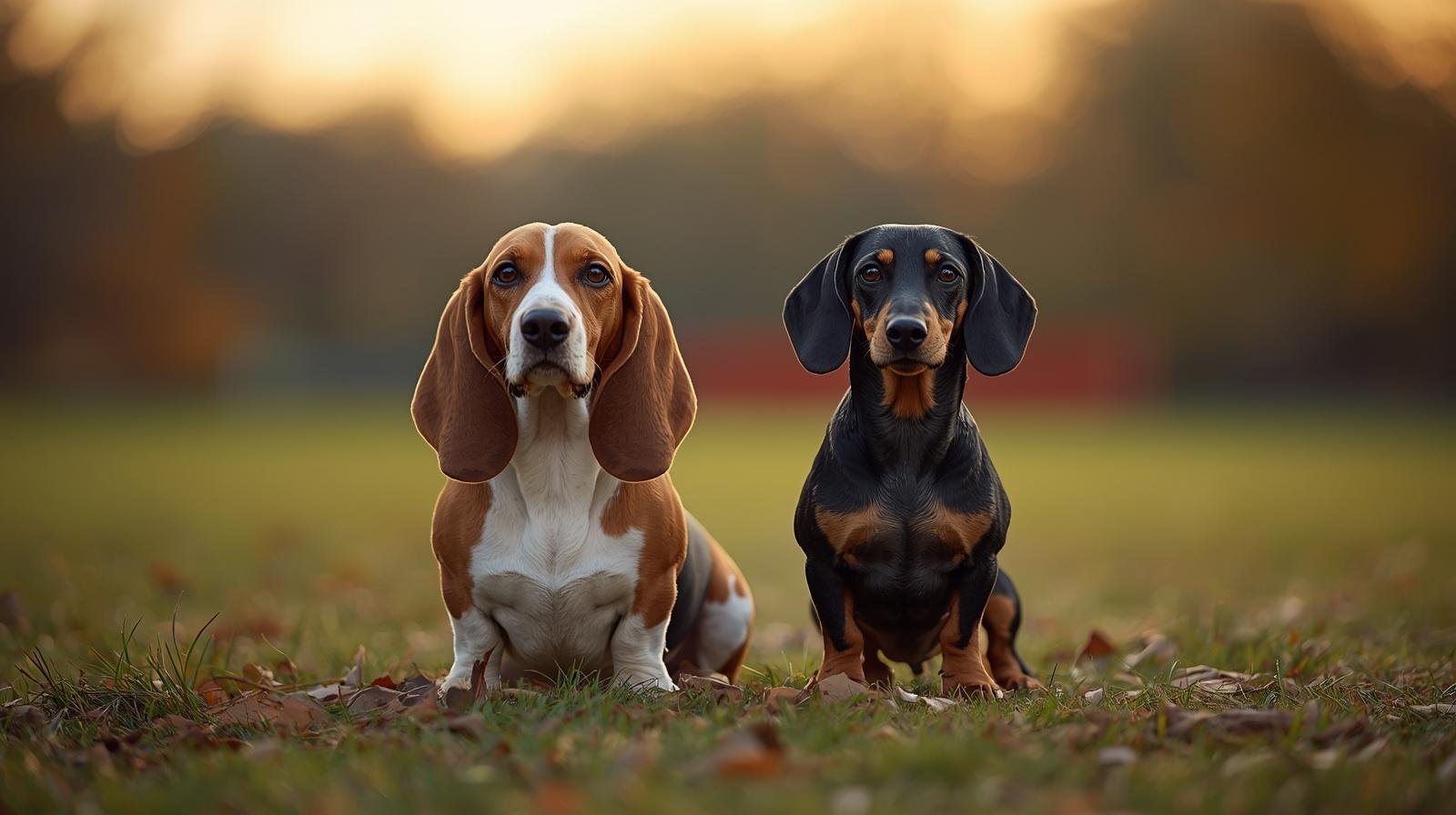
I still remember the first time I stood in a room with both a Basset Hound and a Dachshund. The Basset was sprawled dramatically across a couch like he owned the place, and the Dachshund was zooming in tight circles around his food bowl like a furry little torpedo. In that moment, I completely understood why so many potential dog owners find themselves stuck at the crossroads of the basset hound vs dachshund debate both breeds are irresistibly charming, yet wildly different in personality.
If you’re trying to decide which low-rider hound belongs in your home, you’re not alone. According to the American Kennel Club’s 2026 breed popularity rankings, the Dachshund moved up from No. 6 to No. 5 in overall popularity, pushing the Poodle out of the top five while the Basset Hound holds a steady position at No. 34. That gap in rankings tells a story, but numbers don’t tell the whole tale.
Let’s dig deep into the basset hound vs dachshund showdown covering everything from size and temperament to health, training, and family suitability.
The Origins: Two Hunters With Different Roots
Before you can truly understand the basset hound vs dachshund comparison, you need to appreciate where these dogs came from because history shapes behavior more than most people realize.
The Basset Hound: France’s Ground-Level Tracker
Originating from France, Basset Hounds were originally bred for hunting small game such as rabbits. With their exceptional sense of smell and short legs, they were perfectly suited for tracking scent trails close to the ground. The breed’s name, “Basset,” is derived from the French word bas, which means “low” a name that perfectly describes their unique physical characteristics, including their short legs, long ears, and droopy skin.
The breed became popular in the lower classes after the French Revolution, when peasants wanted hounds that they didn’t need horses to keep up with. That democratic, accessible quality is baked into the Basset Hound’s DNA and it shows in their laid-back, approachable personalities today.
The Dachshund: Germany’s Underground Warrior
Dachshunds have their origins in Germany, where they were affectionately termed “badger dogs,” or “Dachshund” in German. Bred specifically to hunt, they exhibit an elongated body and short stature that allowed them to dig into dens and flush out badgers and other burrow-dwelling animals.
It was in 1881 that the Dachshund Club of England was formed, the German Deutscher Teckelklub was formed in 1888, and the Dachshund Club of America was founded in 1895. Centuries of purpose-driven breeding turned the Dachshund into a dog with a big personality stuffed into a small, fearless package.
Size & Physical Appearance: Low and Long vs Low and Longer
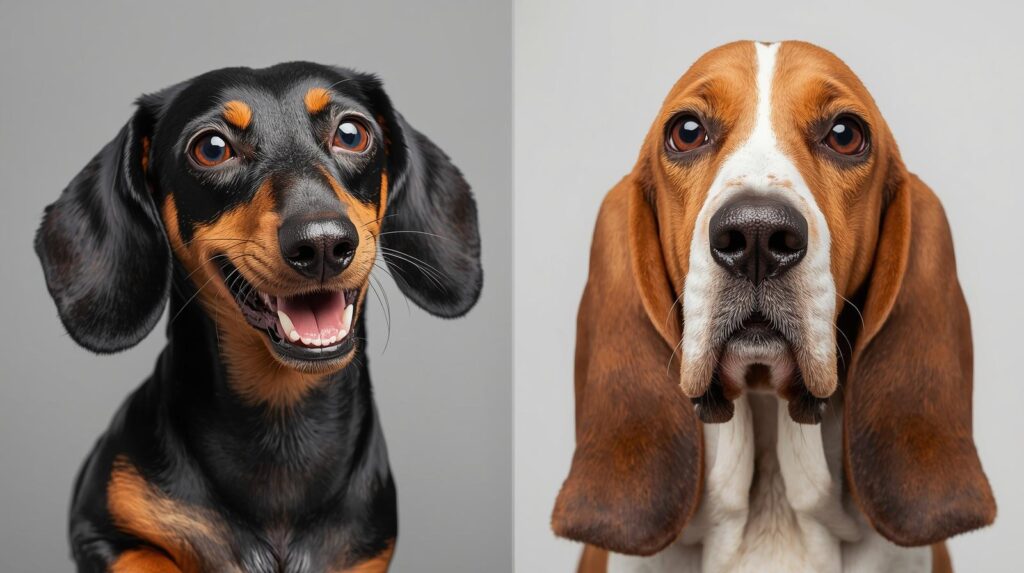
One of the most immediate factors in the basset hound vs dachshund decision is size. These two dogs share a similar silhouette long bodies, short legs, floppy ears but they differ more than you’d think.
| Feature | Dachshund | Basset Hound |
|---|---|---|
| Height | 8–9 inches | Under 14 inches |
| Weight | 16–32 lbs (standard) | 40–65 lbs |
| Body Type | Compact and elongated | Heavy-boned and muscular |
| Coat Types | Smooth, Wire, Long | Short and dense |
| Ear Style | Long, floppy | Extra-long, draped |
A Dachshund may grow 10 cm shorter than a Basset Hound and may weigh 14 kg (about 30 pounds) less. If you live in an apartment or have limited space, the Dachshund’s compact frame is naturally appealing. If you prefer a heftier, more substantial dog to cuddle with on the couch, the Basset Hound delivers.
Temperament: The Couch Philosopher vs The Curious Adventurer
This is where the basset hound vs dachshund debate really heats up and where personal lifestyle matters most.
Basset Hound Temperament
The Basset Hound has a similar temperament to the Dachshund, with the same independent stubbornness. However, they’re also more laid-back than the smaller dog and are much more likely to get along with strangers, children, and other animals. They’re an even-tempered breed that is often vocal and an excellent watchdog. As social dogs that were originally intended to hunt in packs, the Basset Hound dislikes being alone and is happiest surrounded by their family members and other dogs.
Think of the Basset Hound as the “golden retriever” of the hound world they just want love, snacks, and a warm spot to snooze.
Dachshund Temperament
The Dachshund is smaller and more energetic. Both breeds were favorites of the aristocracy before they became beloved companion dogs. Dachshunds are bold, curious, and often hilariously convinced they’re the largest dog in the room. They bond fiercely with their primary person and can be a bit wary of strangers.
For a deeper breakdown of Dachshund personality quirks, coat types, and training tips, check out our Dachshund Guides it’s the most comprehensive resource we’ve put together for wiener dog lovers.
Exercise Needs: Surprisingly Different Energy Levels
Many people assume that because both dogs are small and short-legged, their exercise requirements must be similar. The basset hound vs dachshund reality is more nuanced.
Although Basset Hounds are bigger than Dachshunds, they are not as energetic. Their low energy levels and willingness to laze about don’t mean you should skip out on regular exercise, though. They need around 30–60 minutes of exercise a day in the form of walks and play sessions.
Dachshunds, by contrast, were bred for more active underground pursuit. They tend to need slightly more mental stimulation and playtime to stay out of mischief especially since a bored Dachshund is a destructive Dachshund. If you’ve ever come home to a shredded sofa cushion, there’s a good chance a Dachshund was involved.
Health Considerations: What Every Owner Must Know
No basset hound vs dachshund guide is complete without an honest look at health. Both breeds carry breed-specific risks that can affect your veterinary budget and your heart.
Dachshund Health
As many as 25% of Dachshunds develop Intervertebral Disc Disease (IVDD) in their lifetime, which can lead to permanent paralysis if not treated quickly. This is the single most important health fact every prospective Dachshund owner needs to know. Their long spine is their biggest vulnerability.
Dachshunds typically enjoy a longer lifespan than many larger breeds, with an average life expectancy of 12 to 16 years. In fact, it’s not uncommon for Dachshunds to live well into their late teens some even reach 20 years of age!
Basset Hound Health
The average Basset Hound lifespan is 12–13 years, and the dogs are prone to skin, ear, and joint problems. However, with proper care and management, Basset Hound dogs can live healthy and happy lives.
Common Basset Hound health problems include gastric torsion (bloat), obesity, elbow dysplasia, Von Willebrand’s Disease, and lymphoma. Regular veterinary check-ups are crucial in identifying and managing these health issues early.
According to PetMD, both breeds benefit enormously from weight management their long bodies and short legs place unusual stress on joints, and excess weight accelerates that damage for both breeds.
| Health Issue | Dachshund Risk | Basset Hound Risk |
|---|---|---|
| IVDD (Back Problems) | Very High (up to 25%) | Moderate |
| Obesity | High | Very High |
| Ear Infections | Moderate | High |
| Joint Issues | Moderate | High |
| Lifespan | 12–16 years | 10–13 years |
Training & Intelligence: Stubborn Is Their Middle Name
Here’s something both breeds share in the basset hound vs dachshund conversation: neither is going to win an obedience championship. Both were bred to work independently, following their nose rather than taking human direction.
The Basset Hound and the Dachshund share some traits, such as their short legs and elongated bodies, and both have keen senses of smell and strong tracking instincts. That prey drive and scent obsession means neither will reliably come when called if something interesting is on the ground nearby.
That said, Dachshunds tend to be slightly more eager to please their favorite human, while Basset Hounds will look at you, consider your request, and file it away for later (maybe). Positive reinforcement, patience, and short training sessions work best for both.
Which Breed Is Better for Families?
The basset hound vs dachshund question often comes down to family dynamics do you have kids, other pets, or a busy household?
Basset Hound wins for multi-pet households and families with young children. Their gentle, tolerant nature means they rarely snap and love being part of a pack. They’re the ultimate “everybody’s friend.”
Dachshund wins for adults and older children who can respect a smaller dog’s boundaries. Dachshunds are loyal and loving but can be snappy if startled or handled roughly especially by unpredictable toddlers.
For single owners or couples looking for a devoted, personality-packed companion, the Dachshund’s fierce loyalty is hard to beat. For busy family homes wanting a gentle, easygoing presence, the Basset Hound is your dog.
Cost of Ownership: Budgeting for Your Low-Rider
The basset hound vs dachshund financial picture is worth planning carefully.
The price for a Dachshund puppy in America varies widely, with owners generally paying between $800 and $2,500, with some specialty coat types or rare color variations pushing the price higher.
Basset Hound puppies from reputable breeders typically range from $600 to $1,500. However, ongoing costs including potential IVDD treatment for Dachshunds (which can run $1,500–$4,000 for surgery) or skin/ear management for Basset Hounds should factor heavily into your decision. Pet insurance is strongly recommended for both breeds.
My Personal Take on the Basset Hound vs Dachshund Debate
After spending considerable time with both breeds, here’s my honest take: if you want a dog that mirrors your adventurous, curious energy and bonds to you like velcro, the basset hound vs dachshund answer leans Dachshund. They’re spirited, hilarious, and deeply personal dogs.
But if you want a calm, gentle, community-oriented companion who gets along with everyone and is content to simply be with you the Basset Hound is one of the most underrated family dogs out there.
Both breeds demand your commitment. Neither is low-maintenance in the health department. Both will steal your heart.
Frequently Asked Questions (FAQ)
1. Is a Basset Hound or Dachshund easier to train?
Neither breed is particularly easy to train due to their independent, scent-driven nature. Dachshunds tend to be slightly more food-motivated and responsive to short, positive training sessions. Basset Hounds are affectionate but notoriously stubborn patience and consistency are non-negotiable for both.
2. Do Basset Hounds and Dachshunds get along together?
Yes, in most cases they make excellent companions for each other. Both are pack-oriented hound breeds with compatible energy levels. The Basset’s calm demeanor can actually balance out a Dachshund’s more excitable nature.
3. Which breed sheds more Basset Hound or Dachshund?
Both breeds shed moderately year-round. Smooth-coated Dachshunds and short-coated Basset Hounds shed at roughly similar rates. Long-haired and wire-haired Dachshunds may require more grooming attention.
4. Are Dachshunds or Basset Hounds better apartment dogs?
Dachshunds are generally better suited to apartment living due to their smaller size. However, both breeds can bark enthusiastically which is worth considering if you have neighbors. Proper exercise and mental stimulation are key for both.
5. Which breed lives longer Basset Hound or Dachshund?
Dachshunds typically outlive Basset Hounds. With a lifespan of 12–16 years (and sometimes longer), they edge out Basset Hounds who average 10–13 years. However, the IVDD risk in Dachshunds can significantly impact quality of life so which breed truly “lives better” depends on the care they receive. Ultimately, isn’t the quality of those years what matters most?
