
House Plants Safe for Pets: The ASPCA-Listed Picks and What to Swap Out

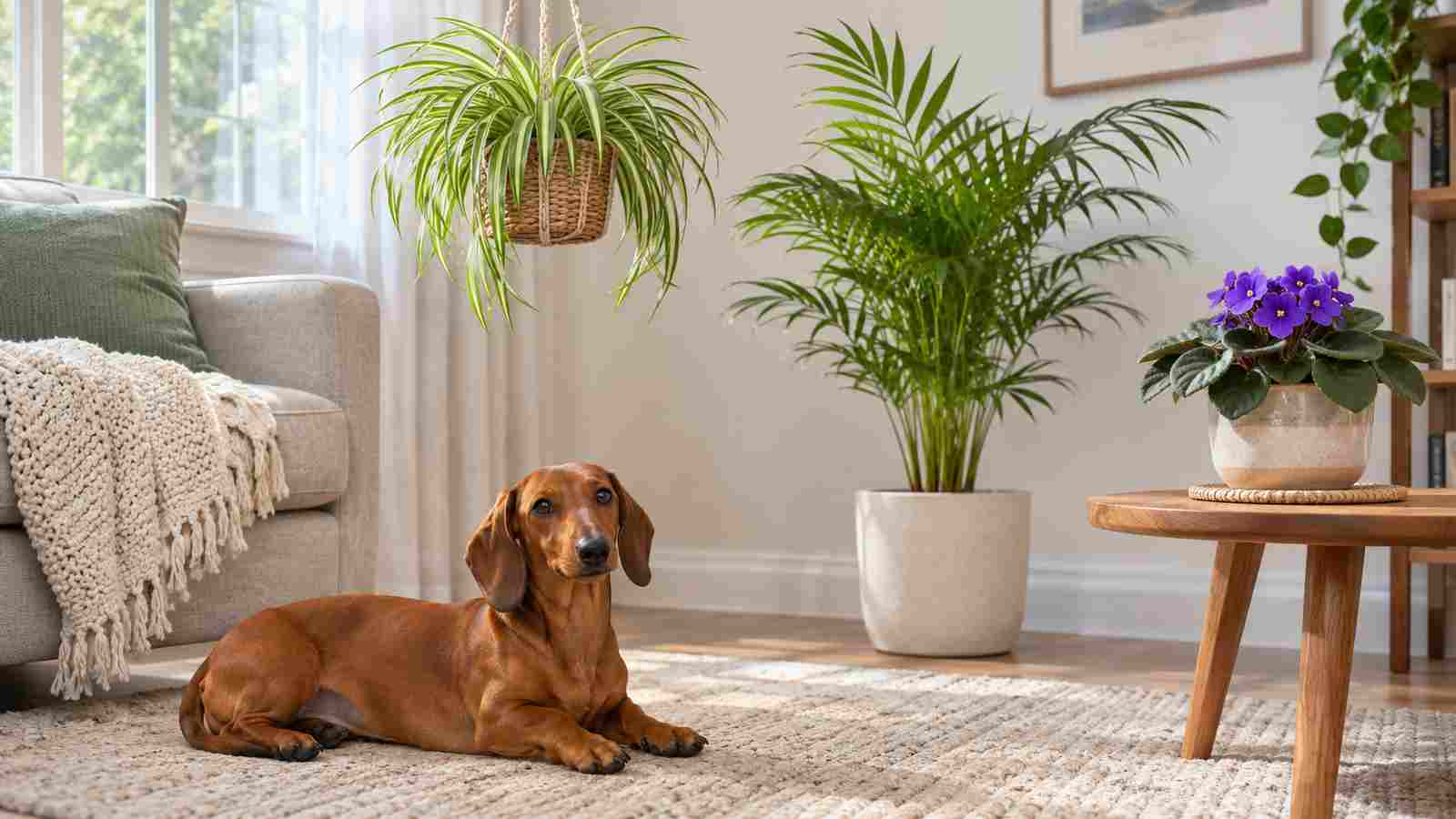
House plants safe for pets, according to the ASPCA’s plant database, include the spider plant, Boston fern, parlor palm, areca palm, calathea, African violet, moth orchid, Christmas cactus, cast iron plant, haworthia and baby rubber plant. All of them are listed as non-toxic to both dogs and cats.
Several of the plants people call easy aren’t on that list. Pothos, snake plant, monstera, peace lily, aloe and jade are all listed as toxic to dogs and cats, so if you’re shopping for a home with pets, those are the ones to skip.
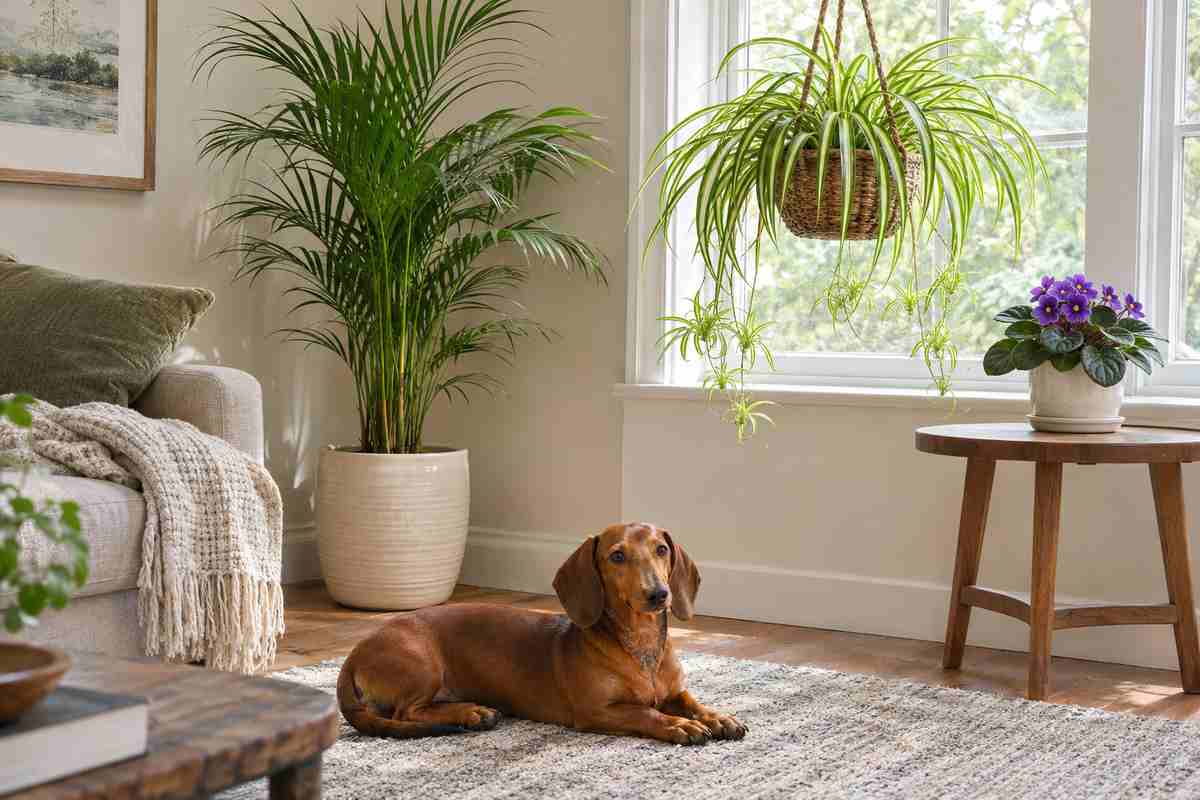
House plants safe for pets, checked one by one
Every plant below was checked against its own entry in the ASPCA toxic and non-toxic plants database. Scientific names are included for a reason: they’re what you’ll want to match on the nursery tag when you buy.
| Plant | Scientific name | ASPCA listing | Good for |
|---|---|---|---|
| Spider plant | Chlorophytum comosum | Non-toxic to dogs and cats | Hanging baskets, trailing |
| Boston fern | Nephrolepis exaltata ‘Bostoniensis’ | Non-toxic to dogs and cats | Hanging baskets, plant stands |
| Parlor palm | Chamaedorea elegans | Non-toxic to dogs and cats | A tall floor plant |
| Areca palm | Dypsis lutescens | Non-toxic to dogs, cats and horses | A tall floor plant |
| Calathea / prayer plant | Calathea spp. | Non-toxic to dogs, cats and horses | Patterned leaves |
| Cast iron plant | Aspidistra elatior | Non-toxic to dogs, cats and horses | Upright foliage |
| African violet | Saintpaulia spp. | Non-toxic to dogs, cats and horses | Small flowering plant |
| Moth orchid | Phalaenopsis sp. | Non-toxic to dogs, cats and horses | Long-lasting flowers |
| Christmas cactus | Schlumbergera bridgesii | Non-toxic to dogs, cats and horses | Winter flowers |
| Haworthia | Haworthia species | Non-toxic to dogs and cats | Small succulent |
| Hens and chickens | Echeveria elegans | Non-toxic to dogs, cats and horses | Rosette succulent |
| Baby rubber plant | Peperomia obtusifolia | Non-toxic to dogs and cats | Shelves and desks |
Light still matters, though. Will the spot you have in mind actually suit the plant? Clemson Extension’s Home & Garden Information Center, in its own list of pet-safe houseplants, says the spider plant prefers bright, indirect light and the parlor palm needs at least 10 hours of bright, indirect light to grow well.
Popular plants that aren’t safe, and what to grow instead
You probably didn’t go looking for a toxic plant. You bought the one everybody says is impossible to kill, and it happened to be on the list.
Here’s what each of those does, per its ASPCA entry, and a non-toxic plant that fills the same spot in your room.
| Instead of | What the ASPCA lists | Try |
|---|---|---|
| Pothos (devil’s ivy) | Insoluble calcium oxalates: mouth pain and swelling, drooling, vomiting | Spider plant |
| Monstera (Swiss cheese plant) | Insoluble calcium oxalates: intense burning of mouth, tongue and lips, drooling | Areca or parlor palm |
| Snake plant | Saponins: nausea, vomiting, diarrhea | Cast iron plant |
| Peace lily | Insoluble calcium oxalates: burning mouth, drooling, trouble swallowing | Moth orchid or African violet |
| Aloe vera | Saponins and anthraquinones: vomiting, lethargy, diarrhea | Haworthia |
| Jade plant | Unknown toxin: vomiting, depression, incoordination | Hens and chickens |
| English ivy | Triterpenoid saponins: vomiting, abdominal pain, drooling, diarrhea | Boston fern |
Each swap is about the job the plant does in the room, a trailing basket or a tall green corner, not an exact match in looks. A cast iron plant won’t pass for a snake plant up close, but it fills the same upright spot.
Toxic doesn’t always mean dangerous
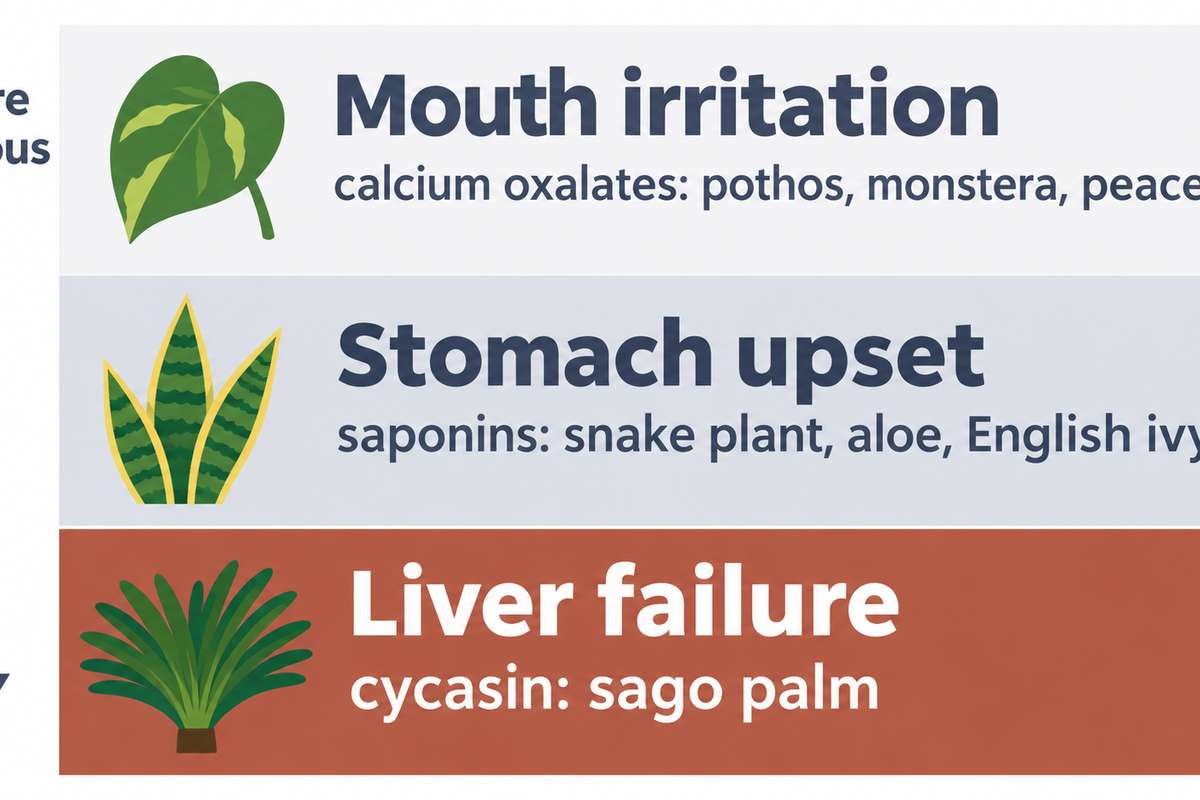
A toxic listing covers a wide range, and the clinical signs on each entry tell you how wide.
One plant sits at the far end.
Sago palm is the one to keep out of the house entirely. Its ASPCA entry lists cycasin as the toxin, and the signs run from vomiting and black, tarry stools to bruising, liver failure and death. Check the tag on anything palm-shaped before it comes home: Cycas revoluta is the name to avoid.
The calcium oxalate plants, which include pothos, monstera, peace lily and dieffenbachia, work differently. Those crystals hurt as soon as they’re chewed, so the signs the ASPCA lists are mostly in the mouth: burning, swelling, drooling. A commenter on r/houseplants explained why that matters:
“There are million of cats and dogs that live alongside calcium oxalate producing plants and are not in danger because one bite will turn them off. Which is why I advise people with toddlers or puppies to be careful, because they may take a large bite and swallow something before realizing what it is.”
– r/houseplants, March 2026
An owner’s reasoning isn’t a study, but it matches what the database describes. I’d treat these plants as off limits if you’ve got a puppy that swallows first and thinks later, at least until it’s grown out of that.
Then there are bulbs. Amaryllis is listed by the ASPCA as toxic to dogs and cats, with vomiting, diarrhea, abdominal pain, drooling and tremors. One cat owner on r/houseplants had to get rid of three amaryllis plants after learning they were “super toxic.”
Safe for your dog isn’t always safe for your cat
“Pets” covers more than one animal, and the lily is where that shows. The ASPCA lists true lilies, including the Easter lily, as non-toxic to dogs. For cats it lists kidney failure, and says cats are the only species known to be affected.
Despite the name, the peace lily isn’t a true lily at all. Botanically it sits in the arum family with pothos and monstera, and it’s toxic to both dogs and cats.
So if a dachshund and a cat share your home, shop for the cat. Every plant in the first table is listed as non-toxic to both, so you don’t have to choose. The dachshund and cat guide covers the rest of living with both.
Gift plants that show up around the holidays
November and December are when plants arrive as gifts, and three come up a lot. Christmas cactus is listed as non-toxic to dogs and cats. Amaryllis is toxic, as covered above.
Got a poinsettia on the coffee table? It has a worse reputation than it deserves, and the page on whether poinsettias are toxic to dogs explains why they’re only mildly irritating, and which holiday plants are worse.
Where plants go in a dachshund home
A dachshund can’t reach a shelf, but it lives at the level of every floor pot and every leaf that drops. So placement is your second line of defense after the list, and it’s the one I’d lean on for any plant you haven’t checked.

- Use height for anything you’re unsure of. A spider plant in a hanging basket is safe either way, but height is what protects a plant you haven’t checked yet.
- Pick up dropped leaves and flowers. A plant on a high shelf still sheds onto the floor.
- Match the scientific name. The ASPCA asks you to check the plant’s name rather than go by photos, because individual plants can look different from the photos in its listings.
Outdoors, the plant isn’t the only thing you need to check. If you treat the yard, the weed killers safe for pets page covers what product labels can and can’t promise.
House plant and pet questions
What should you do if your dog eats a houseplant?
Find out exactly which plant it was, then call your vet or the ASPCA Animal Poison Control Center at (888) 426-4435. A consultation fee may apply, the ASPCA notes; one owner on r/houseplants put the base fee at about $150. Keep the plant tag or a photo of the plant handy for the call.
Can a non-toxic plant still make a dog sick?
Yes, a little. The ASPCA says eating any plant material may cause vomiting and stomach upset in dogs and cats, even plants listed as non-toxic. You can see it in the polka dot plant: it’s listed as non-toxic, yet its entry still mentions mild vomiting and diarrhea. Non-toxic means the signs aren’t expected to be life-threatening, not that nothing will happen.
Are succulents safe for pets?
Some are and some aren’t, which is why the name on the tag matters. Haworthia and hens and chickens are listed as non-toxic to dogs and cats, while aloe vera and jade plant are listed as toxic. If you want a succulent, start with those first two.
