
Cleaning Products Safe for Pets: The Ingredients That Matter and When the Floor Is Safe Again

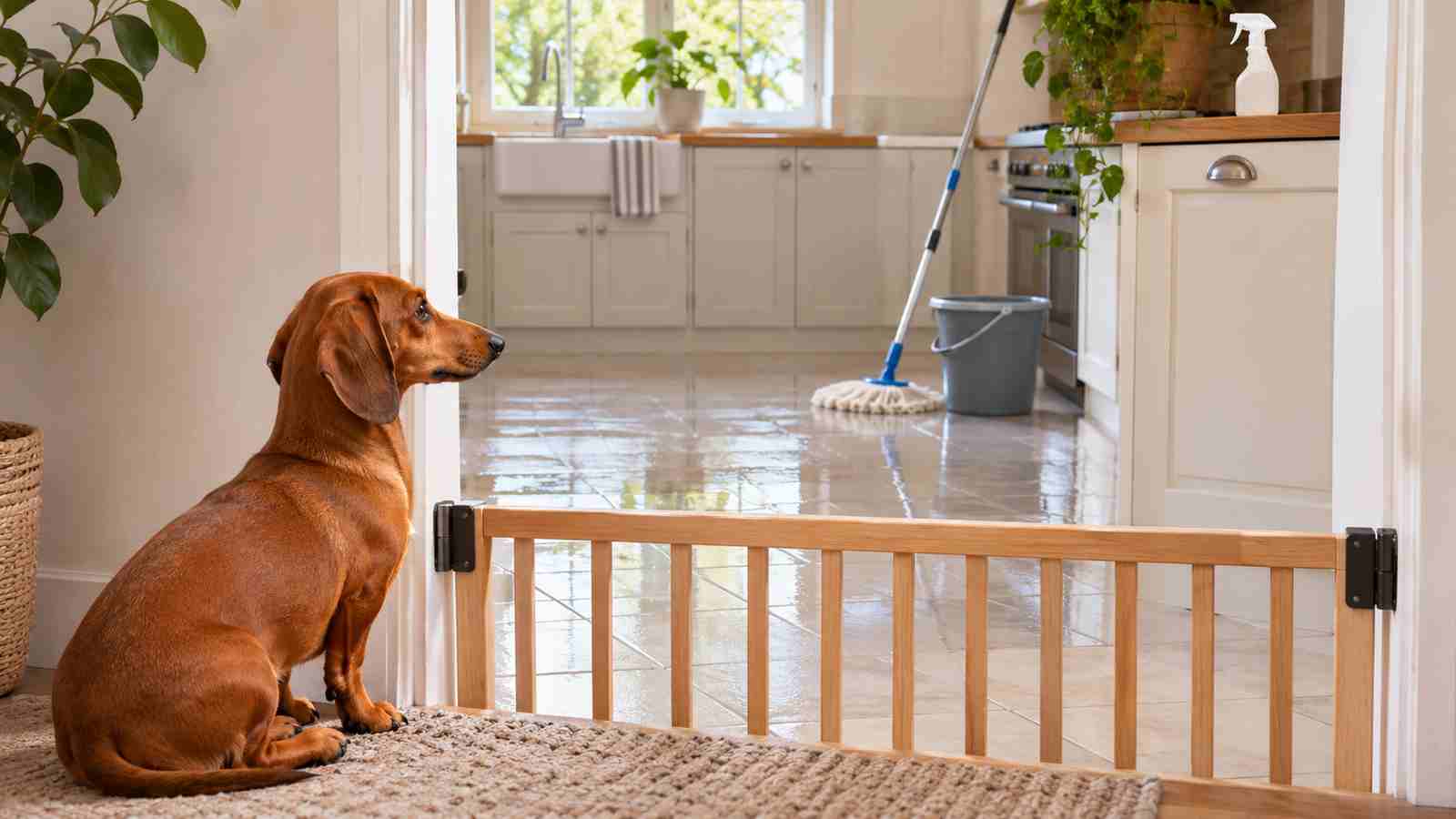
The cleaning products safe for pets are, for the most part, the ones already under your sink, as long as they’re diluted the way the label says and the surface has dried. The Merck Veterinary Manual puts it plainly: casual exposure to areas where household cleaners were used appropriately rarely causes serious problems.
The trouble comes from a short list of exceptions. Disinfectants built on quaternary ammonium (quats) can burn a cat’s mouth, chlorine bleach mixed with ammonia makes a toxic gas, and drain and oven cleaners are corrosive straight from the bottle.
So you don’t need a special brand. You need to know what’s in the bottle and when your dog can walk back in.
Cleaning products safe for pets: what the vet references actually judge
None of the veterinary sources I read rank cleaners by brand. They judge three things: the ingredient, how concentrated it is, and whether your pet meets it wet or dry.
The Merck Veterinary Manual’s household hazards overview, updated in February 2026, draws the line at concentrates and undiluted products. Those carry the real risk of poisoning. A floor that was mopped with a properly diluted cleaner and left to dry is a different situation, and it rarely causes anything serious.
The ASPCA Animal Poison Control Center (APCC) lands in the same place. Its 2020 guide to ten common cleaning products says most cleaning agents can be used safely in homes with pets, as long as you follow the label.
That doesn’t make the label “pet safe” meaningless, but it does mean the sticker isn’t doing the work. The dilution and the drying are.
The ingredients on the label that matter
Turn the bottle around and look for these. Each row is what the Merck manual or the APCC guide says about that ingredient, and what I’d do about it at home.
| Ingredient on the label | Where you’ll find it | What the vet references say | What to do |
|---|---|---|---|
| Quaternary ammonium compounds (benzalkonium chloride, alkyl dimethyl benzyl ammonium chloride or saccharinate) | Disinfectant sprays and wipes, sanitizers, fabric softener and dryer sheets | Merck: concentrations of 2% or less have been linked to mouth ulcers in cats, and signs can take 6 to 12 hours to show | Keep pets out until it’s fully dry; be strictest with cats |
| Chlorine bleach (sodium hypochlorite) | Bleach, some bathroom and mildew sprays | Merck: household bleach is 3% to 10% hypochlorite; diluted per the label it’s little more than a mild stomach or eye irritant | Dilute, rinse, air the room; never mix with ammonia |
| Oxygen bleach (hydrogen peroxide, sodium percarbonate) | Color-safe bleach, some stain removers | Merck: relatively weak, with lower risk than concentrated chlorine bleach | A gentler choice for stains; still store it closed |
| Everyday detergents (dish soap, laundry detergent, most all-purpose cleaners) | Sink, laundry room, spray bottles | Merck: generally mild stomach irritation; dishwasher detergent (pH above 11) is corrosive, and chewed laundry pods cause worse signs | Fine on surfaces; keep pods and dishwasher detergent up high |
| Essential oils | “Natural” and scented cleaners, diffusers | APCC: cats are especially sensitive; ingestion can cause liver damage, and inhaled oil can lead to aspiration pneumonia | Skip them where pets can reach, unless your vet approves |
| Vinegar | DIY vinegar-and-water sprays | APCC: an acidic irritant; drinking it concentrated can cause vomiting, diarrhea and mouth pain | Diluted is fine for wiping; don’t leave a bowl of it out |
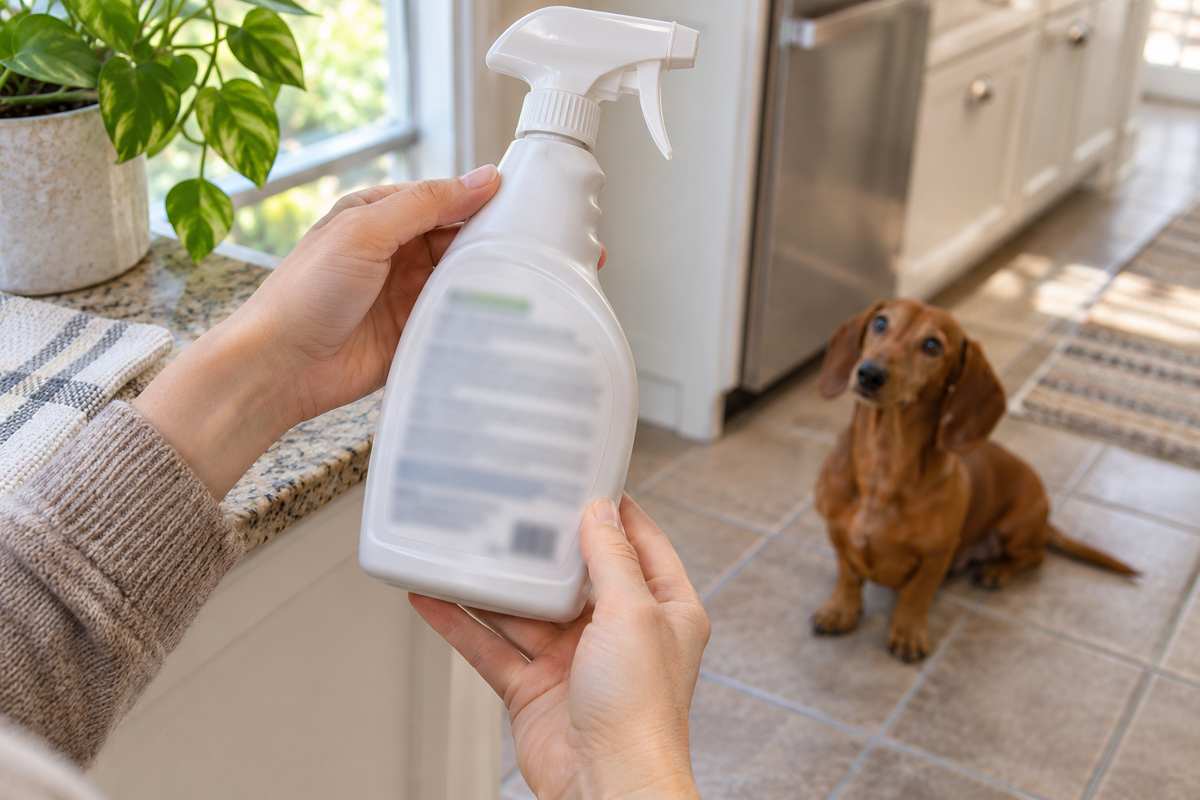
Why single out quats? Those sprays and wipes don’t smell harsh, so they’re easy to trust. Merck explains that many are pH neutral, yet they damage tissue the way an alkaline corrosive does, and the effects show up hours later. Lysol’s pet-area disinfectant spray, for example, lists 0.10% alkyl dimethyl benzyl ammonium saccharinate alongside 58% ethanol.
If you only change one habit, make it this: read for “ammonium” on any spray or wipe you use around food bowls, cat beds or the floor your dog sleeps on.
Wet floors are the risky stage
A dachshund meets the floor more than most dogs do. Short legs keep the belly close to the boards, and plenty of them lick their paws once they’ve walked across something interesting. So the window between mopping and drying is the one you need to manage.

The APCC’s note on the Swiffer WetJet is a good example. It found the product doesn’t contain cleaning agents in large enough amounts to be a serious risk, and no antifreeze ingredient, despite the rumor.
What it did flag was mild skin irritation or stomach upset if a pet walks through the wet floor or licks the solution. Even Lysol’s own pet-area spray label says to remove all animals before use and let it fully dry before they come back.
Plenty of owners feel the worry anyway. One person with two cats and a dog posted on r/housekeeping that every time they clean, they end up worrying about what’s left on the floor and whether it could hurt their pets through paws or fur. The top reply took the opposite line:
“This is a non issue. In all the history of people with pets mopping with Mr Clean, zero pets have died from it. All of this “swiffer kills pets,” stuff was disinformation. You’re being greenwashed, it’s fear mongering propaganda.”
– r/housekeeping, April 2026
So which one is right? The vet references sit between the two. A dried floor cleaned with a diluted product isn’t something you need to lose sleep over, and the Swiffer rumor really was false.
But a wet floor with a quat disinfectant on it, walked through and licked off, is exactly the exposure Merck describes. Another commenter in the same thread said it simply: measure correctly and keep pets off the floor until it’s completely dry.
Products to lock away, not just use carefully
Some products are dangerous even when you use them right, because one chewed bottle or lapped spill is enough. Keep these behind a latched cabinet door, not under an open sink.
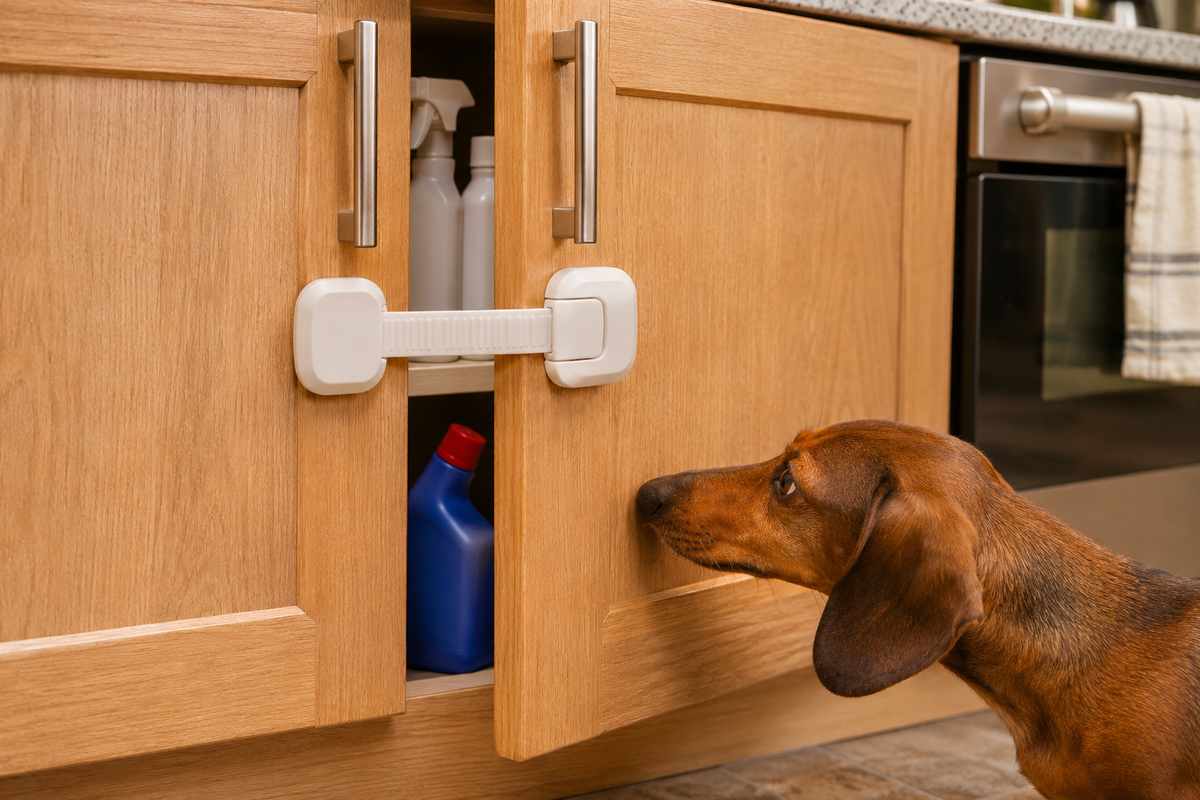
Pet Poison Helpline lists the corrosive ones: drain cleaners, pool chemicals, concentrated dishwashing products, lime and scale removers, oven cleaners and concentrated toilet cleaners.
Mixing is the other hazard. Merck warns that hypochlorite bleach and ammonia together produce chloramine gas, which can cause breathing distress right away or fluid in the lungs 12 to 24 hours later. You’d never do it on purpose, but it can happen when you pour one cleaner down the toilet and follow it with a second.
If your dog does chew a container or lick up a spill, Pet Poison Helpline advises flushing the mouth with tap water for 10 to 15 minutes, without letting your dog choke on it. Then get veterinary help straight away. Bring the bottle with you, or call the APCC at (888) 426-4435.
If a cat shares your home
Cats raise the bar. Merck points out that they’re at higher risk from cationic detergents, the family quats belong to, because they groom whatever lands on their fur and paws.
Essential oils are the second cat-specific problem, since the APCC says cats are especially sensitive to them. And dryer sheets count too: they carry the same detergents, and a cat that chews a new one can end up with mouth ulcers.
If you live with a dachshund and a cat, pick your cleaners for the cat. The dachshund and cat page has more on keeping the two happy under one roof.
A pet-safe mopping routine
This is the routine I’d follow, and none of it needs a new product:
- Measure the concentrate. More isn’t cleaner. Dilution is what turns bleach and most detergents into mild irritants, according to Merck.
- Mop when your dog is out or crated, and keep doors shut until the floor is dry to the touch.
- Rinse surfaces near bowls and beds, especially after a disinfectant. Lysol’s label says its spray isn’t meant for feeding or water bowls at all.
- Empty the bucket and put the mop away. The APCC says to store mops where pets can’t reach, and a bucket of leftover solution is just a bowl of water to a thirsty dog.
- Use a steam mop if you’d rather skip chemicals. One r/housekeeping reply suggested it because it works with hot water only.
Accidents are the exception, since soap and disinfectant won’t remove urine odor. For that, the page on how to get dog pee smell out of carpet walks you through enzyme cleaners and why the smell keeps coming back.
More questions about cleaning products safe for pets
Is Lysol disinfectant spray safe for pets?
Used as directed, yes, but the label sets the conditions. Lysol’s pet-area spray contains a quat and 58% ethanol, and it tells you to remove animals first, let the surface fully dry, and never spray it on an animal or its bowls. With a cat, I’d also wipe down any spot it sleeps on afterward.
How can you make your house smell good without harming your pets?
Clean the source first, since a dry floor and washed bedding beat any scent. If you do want a freshener, the APCC regards Febreze fabric fresheners as safe in homes with cats and dogs. It’s essential oil diffusers it advises against wherever pets can get to them, and that goes double with cats. Something like peppermint oil isn’t the harmless shortcut it looks like.
