What Were Dachshunds Bred For? Badgers, Rabbits and Blood Trails

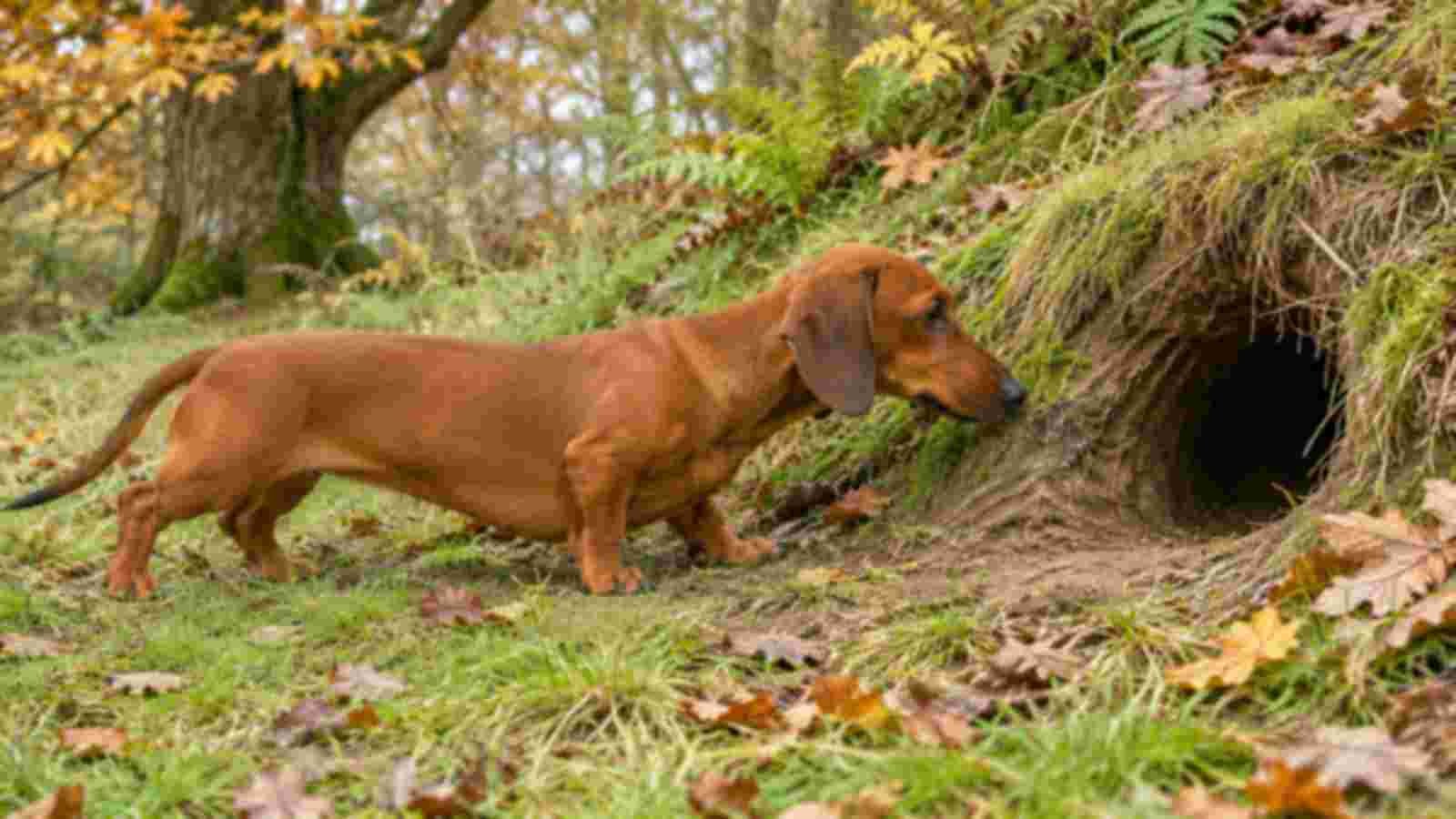
Dachshunds were bred in Germany as hunting dogs that work both below and above ground. Below ground, they followed badgers and other burrowing animals into their dens. Above ground, they flushed game, chased it while barking and tracked wounded animals.
So what were dachshunds bred for, in the breed’s own words? Today’s standard still sums up the job in five: “Hunting dog, above and below ground.” If you live with one, that sentence explains a lot, from the bark to the digging to the way a squirrel turns your lap dog into someone you don’t recognize.
The job description, in the breed’s own standards
Dachshunds were bred as hunting dogs, and the breed’s own standards still say so. Start with the name: Dachs is German for badger and Hund means dog, so a dachshund is a badger dog. Germans usually call the breed Dackel or Teckel instead.
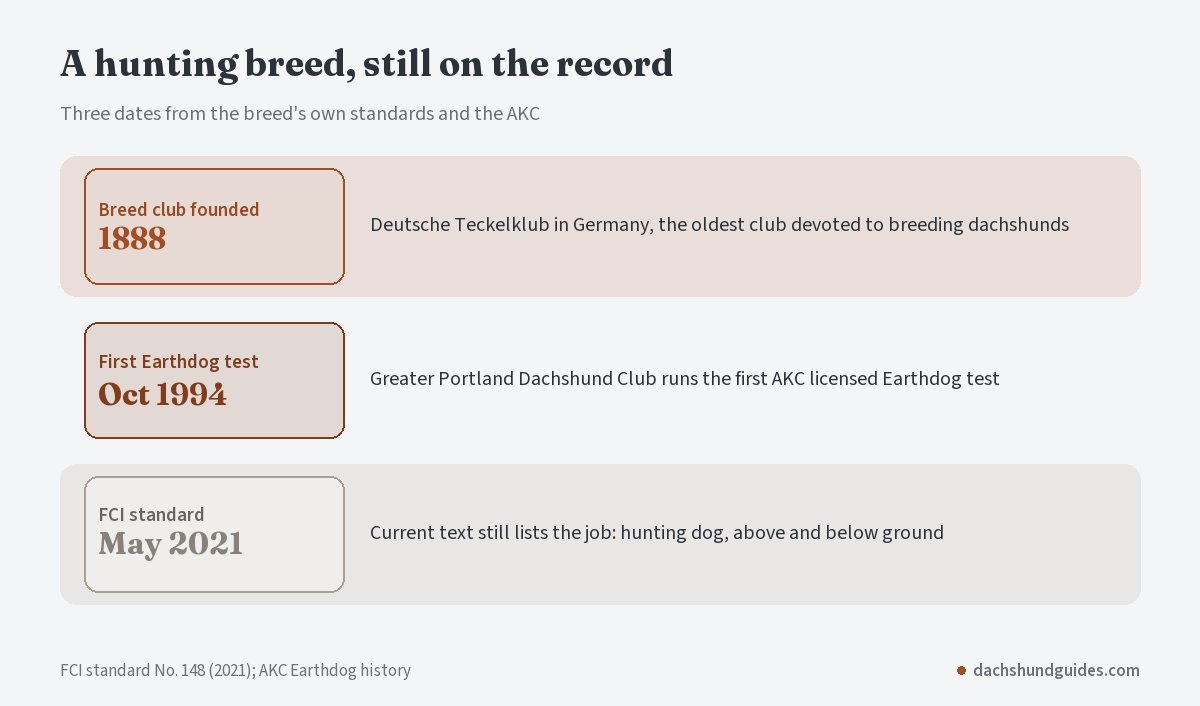
The FCI, the international kennel federation whose dachshund standard comes from Germany, says the breed “has been known since the Middle Ages.” Its current standard dates from May 2021. Breeders took the Bracken, a family of hounds, and kept the dogs best suited to hunting below ground.
From those short-legged dogs the dachshund developed. The FCI calls it “one of the most versatile hunting breeds.”
America’s standard says the same thing in different words. Written by the Dachshund Club of America and used by the AKC, it describes a dog whose “hunting spirit, good nose, loud tongue and distinctive build make him well-suited for below-ground work and for beating the bush.”
You’ll also find a line most owners never read: scars from “honorable wounds” don’t count as a fault. That tells you what the dog was expected to run into.
Why the body looks the way it does
Everything people find funny about a dachshund’s shape was working equipment. The FCI standard describes a low, short-legged, elongated but compact dog whose build “allows agile, quick work above and below ground.”
Those short legs weren’t an accident of fashion. They were the point.
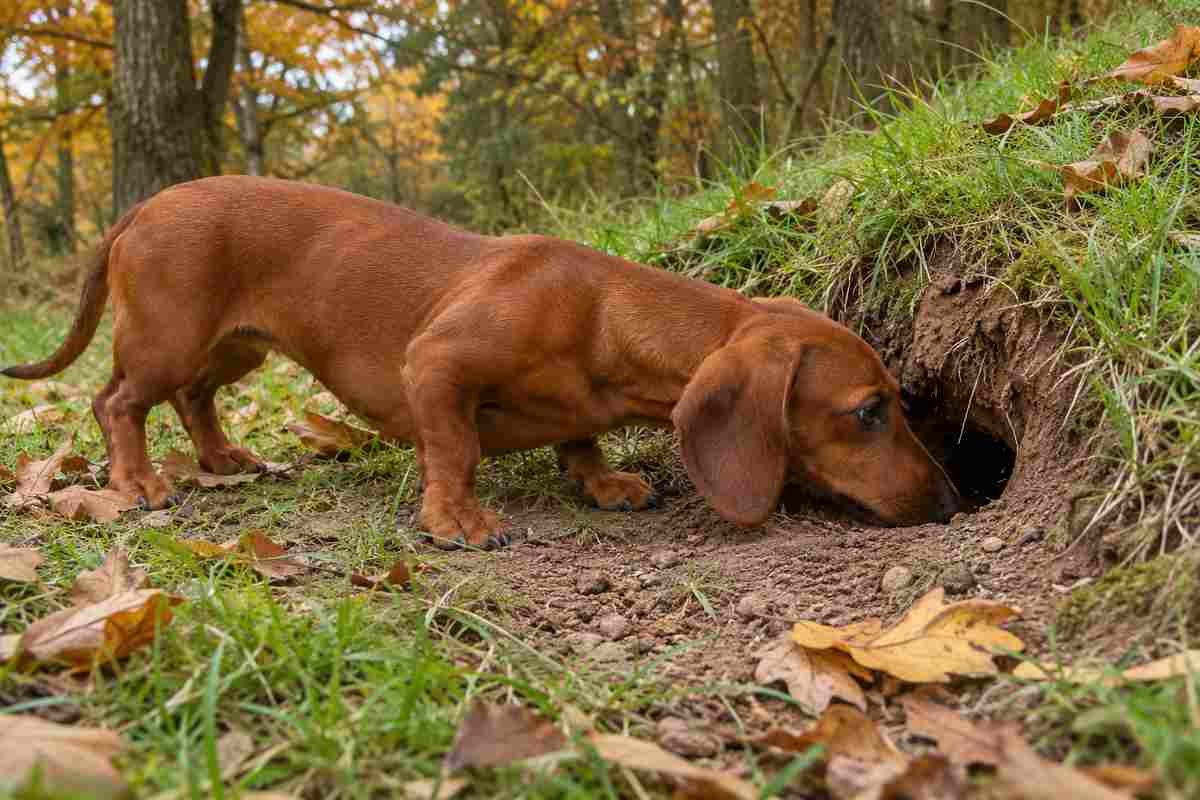
Then there’s the bark. Hunters call barking on a scent “giving tongue,” and the FCI lists it as part of the job: the dog hunts “while giving tongue.” A dog underground can’t be seen, so the hunter has to hear it.
Ever wonder why your dachshund’s bark is so big for such a small dog? That’s the bark. It shakes your windows when a delivery driver walks past because somebody once needed to hear it through the ground.
We’ve covered the badger side in detail in dachshund vs badger, so I won’t repeat it here. What you need to know is that the badger gave the breed its name, but it wasn’t the only animal dachshunds hunted.
Pretzel, my miniature dachshund, barked at everything and tried to escape the backyard fence when he was young. Knowing what his ancestors did for a living made that a lot less personal.
Three sizes for different quarry
Badgers weren’t the only target. According to the FCI, dachshunds have been bred “for decades” in three sizes: standard, miniature and rabbit, also called the Kaninchen. Add three coat types and you get nine varieties.
Smaller sizes went after smaller game. Dogs Queensland, an Australian kennel club, says the miniature and the Kaninchen “were bred to specialise in hunting small prey, like rabbits.”
Here’s a detail most breed guides skip. Unlike the AKC, the FCI doesn’t size dachshunds by weight. Judges measure the chest, all the way around, once the dog is at least 15 months old.
Why would a working breed care about chest size rather than weight? Think about the narrowest part of a tunnel, and you’ve got your answer.
| FCI size | Male chest | Female chest |
|---|---|---|
| Standard | over 37 cm to 47 cm (14.6 to 18.5 in) | over 35 cm to 45 cm (13.8 to 17.7 in) |
| Miniature | over 32 cm to 37 cm (12.6 to 14.6 in) | over 30 cm to 35 cm (11.8 to 13.8 in) |
| Rabbit (Kaninchen) | 27 cm to 32 cm (10.6 to 12.6 in) | 25 cm to 30 cm (9.8 to 11.8 in) |
In the US, the AKC recognizes only two sizes, standard and miniature, and splits them by weight. Our guide to the types of dachshunds puts the two systems side by side, and the Kaninchen dachshund page covers the smallest size if you’re curious.
Above ground: flushing and blood tracking
Underground work gets the attention, but the FCI says the breed “also shows excellent performance above ground.” It lists three jobs: hunting while giving tongue, flushing game out of cover and tracking wounded game.
Hunters still use that last one. When a deer is hit and runs, a tracking dog on a long leash follows the trail to find it. A 2021 article from the Virginia Department of Wildlife Resources profiled a 4-year-old German wirehaired dachshund that had found dozens of deer.
Fair’s fair, though. The handler in that same article said “the breed really doesn’t make any difference” and that intelligence, persistence and a good nose matter more.
So a dachshund isn’t the only dog that can do this job. It’s one of the breeds bred for it. If you’ve got a wirehair, our wire haired dachshund guide covers that coat.
Do people still hunt with dachshunds?
Yes, though most dachshunds today never see a burrow. Germany’s Deutsche Teckelklub, the oldest club devoted to breeding dachshunds, was founded in 1888. The FCI still lists the breed as one that takes a working trial.
Some owners in the US hunt too. One r/Dachshund owner who posted their dog working a groundhog hole in September 2026 explained the setup:
“they are also considered nuisance species legally where I live so the hunting season is year round and I’m licensed + have permission to be hunting where I am.”
– r/Dachshund, September 2026
For everyone else, there’s a sport built on the old job. The AKC’s Earthdog program went into effect on October 1, 1994, and the Greater Portland Dachshund Club ran the first licensed test that same weekend. Dachshunds and 14 small terrier breeds could enter, and no animal gets hurt. Rats sit in a cage at the end of the tunnel, and your dog works them by barking, digging and growling at the bars.
Introduction to Quarry, the first level, just checks whether your dog will follow a scent to the entrance, go into a dark den and work the quarry.
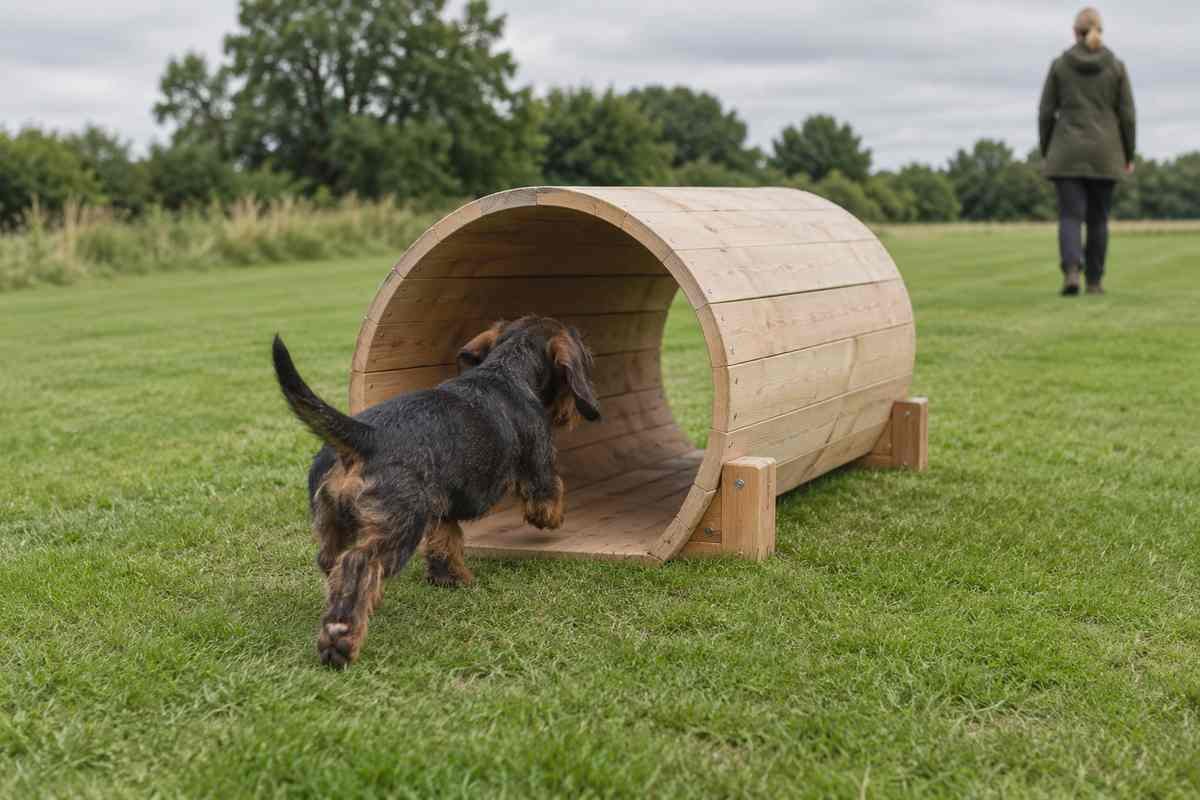
How do you train for more? One owner who competes at Earthdog Nationals described the path: start with short wooden tunnels above ground, then short ones underground, until the dog can run a 50-foot tunnel. “Some dogs never get it, others excel at it,” they added.
What this history means for your dachshund at home
A dog bred for centuries to chase small animals into holes doesn’t lose that because it now sleeps on a duvet. Owners on Reddit describe the switch flipping without warning.
One wrote that their eight-month-old pet saw a giant rat on a walk and “from that moment she hunts.”
You’ll see the same drive in smaller ways. Your dog digs at the couch cushions, burrows under blankets and barks long and loud at noises outside. Our dachshund digging guide covers the burrowing, and how to stop your dachshund barking deals with the voice.
Most replies in one r/Dachshund thread on prey drive agreed you can’t switch it off. You can give it somewhere to go.
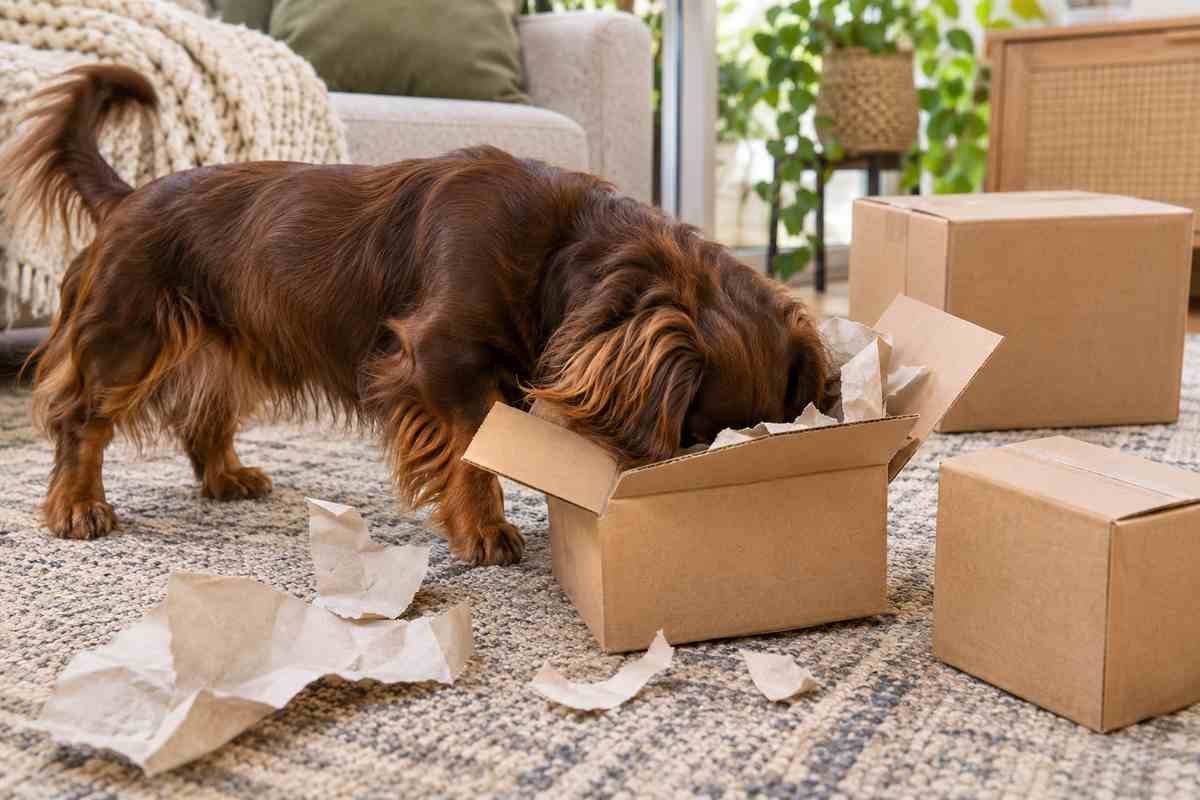
One owner hides treats wrapped in paper, stuffed into boxes and toys, so their dog gets to sniff, dig and tear every day. Another was blunter: “if you don’t want your dachshund to kill animals you’re going to have to remove the opportunity for them to do so.”
If I were starting tomorrow, I’d do both. I’d hide breakfast around the house in a few cardboard boxes, and I’d check the yard before letting the dogs out at night. If your dog loves the boxes, look for an Earthdog club practice day near you.
What were dachshunds bred for? Quick answers
Were dachshunds bred to hunt badgers or rabbits?
Both. The breed is named for the badger, and the FCI standard says it was bred for hunting below ground. Miniatures and rabbit dachshunds were bred smaller to hunt small prey like rabbits, according to Dogs Queensland.
Are dachshunds hounds or terriers?
The AKC puts the dachshund in the Hound Group. The FCI gives the breed a group of its own, Group 4, which contains only dachshunds. In the US, dachshunds compete in Earthdog alongside small terriers.
Why do dachshunds bark so loud?
A dachshund working underground couldn’t be seen, so hunters needed to hear it. The AKC standard lists a “loud tongue” among the traits that suit the dog to its work. If your dog’s bark is too loud for your apartment, you can blame centuries of breeding.
