
Dachshund Digging: Why They Do It, and Why You Shouldn’t Try to Stop It

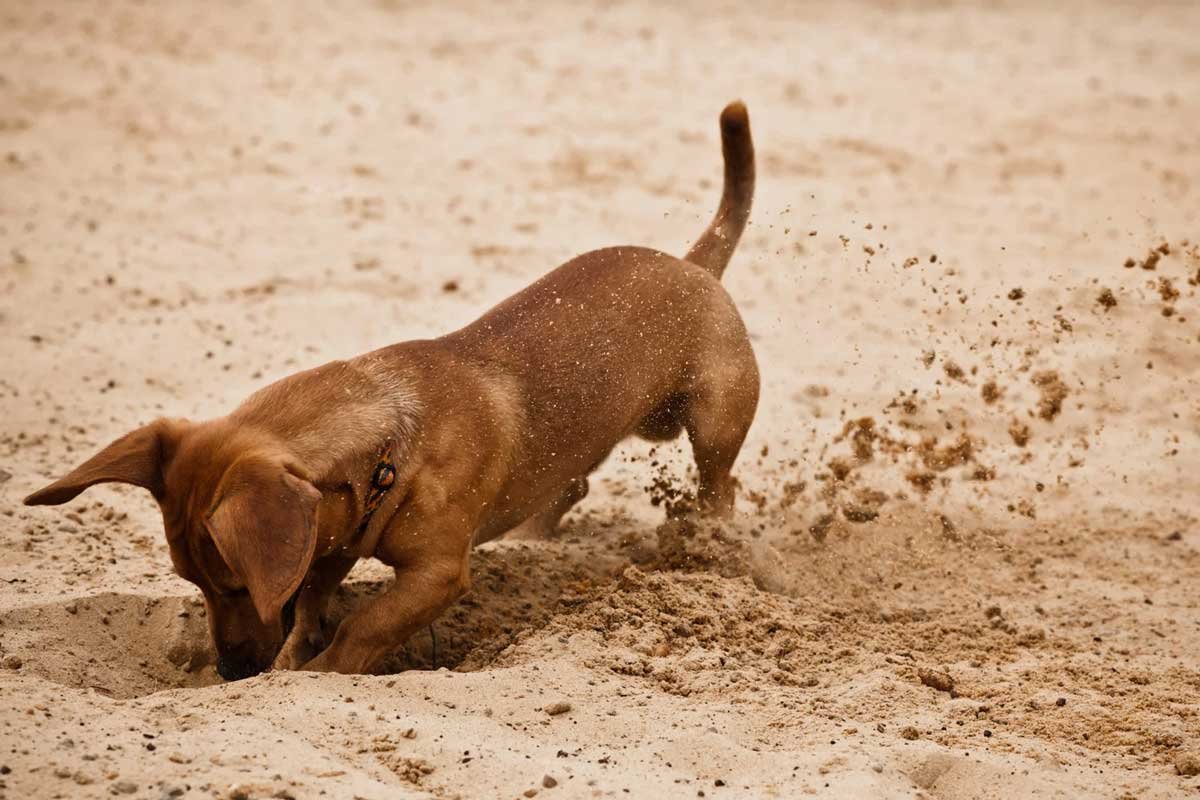
Dachshund digging isn’t a behavior problem. It’s the job the breed was built for, and the American Kennel Club runs a sport to test how well your dog still does it.
That matters for what you try next, because you can decide where the digging happens but you aren’t going to train it away.
Why does my dachshund keep digging?
Because the breed was made to go underground after badgers, and you don’t get the shape without the instinct that came with it. The name says it outright: Dachshund is German for badger dog, and the long body, short legs and broad front paws are working equipment rather than a styling choice.
Here’s the part that surprised me when I went looking into it. The AKC has a whole program built on this instinct, called Earthdog, and it’s open to small terriers and dachshunds.
Dogs are judged on “seeking its quarry, locating and working it underground,” in man-made tunnels with caged rats safely behind bars, so it’s the real job in miniature. The tests are non-competitive, so each dog is measured against what it can do rather than against other dogs.
So a national breed registry considers tunneling ability worth formally testing in this breed. Your dog isn’t misbehaving when it does the thing the registry hands out titles for, and that’s worth remembering at the moment you find the hole.
There’s a practical consequence to that, because digging is self-reinforcing and the dog doesn’t need you to reward it. Loose soil moves, the paws work, there’s always a chance something interesting is under there, and the activity pays for itself. Behaviors that pay for themselves are the hardest ones to extinguish by telling a dog off.
Why they dig at blankets, beds and the sofa
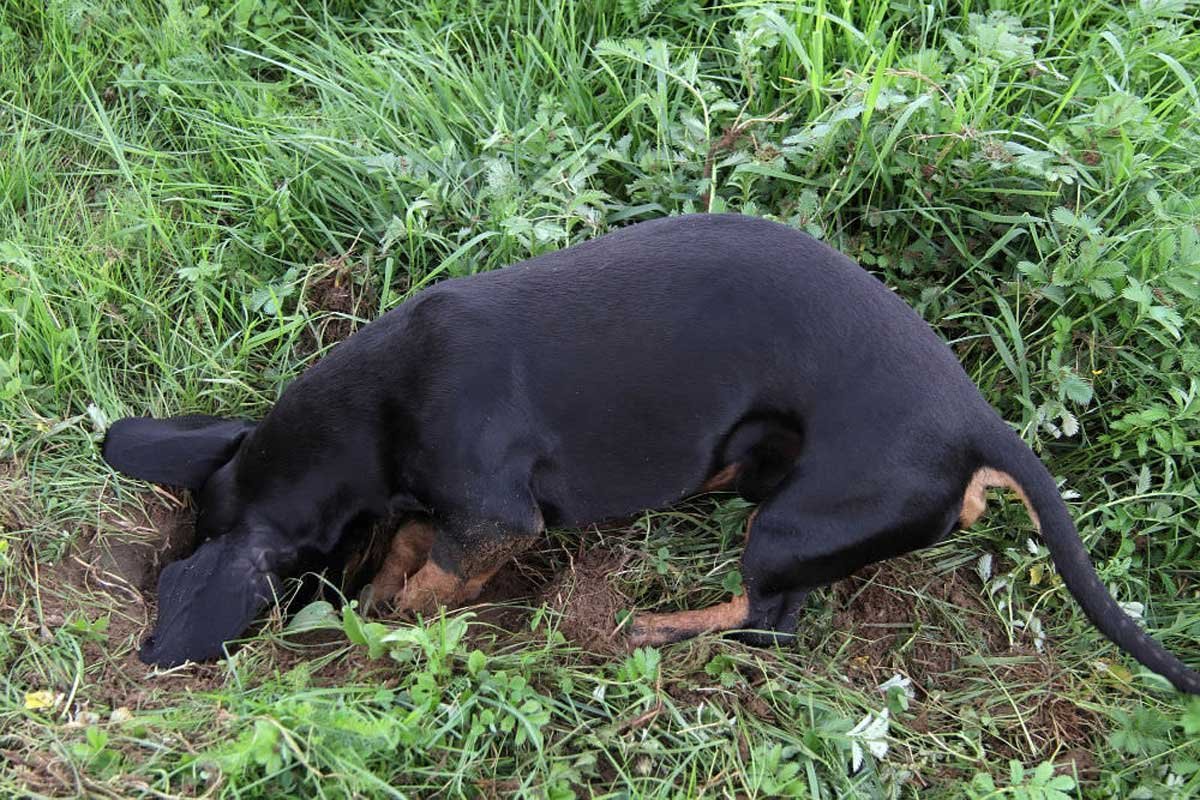
This is the same instinct, indoors, and most owners search for it as though it were a separate problem. The AKC connects the two directly: “Earthdogs, those breeds that go in burrows, often like to sleep under the covers. These might include terriers and breeds such as Dachshunds.”
So is the sofa a different problem from the flowerbed? Not really. The dog scraping your duvet into a pile at bedtime and the dog excavating the border are running the same program, and one of them just has better soil to work with.
The AKC gives three reasons a dog burrows under covers, and they stack rather than compete:
- It feels like a den. A dark, enclosed space under a blanket mimics the burrow the breed evolved to work in.
- Warmth. Under the covers is simply warmer, which matters more to a short-coated dog lying on a cold floor.
- Feeling hidden. Being out of sight reads as safe, and anxious dogs will burrow during fireworks or a thunderstorm.
That third one is worth holding onto. Burrowing that happens at bedtime every night is a habit. Burrowing that starts during a storm and stops afterwards is your dog telling you it’s frightened, and the fix is the storm, not the blanket.
Practically, give them a legitimate version of it: a blanket they’re allowed to wreck, a covered bed, or a fleece in the crate will absorb most of the energy that would otherwise go into your sofa cushions.
Should you stop it?
No, and the attempt is what usually goes wrong. An instinct with nowhere to go doesn’t evaporate; it picks its own outlet, and the one it picks is rarely the one you’d have chosen.
What happens when there’s nothing to dig and nothing to do? You get the fence line, which is the version of this problem that ends with a lost dog.
Pretzel spent a stretch of his first year working out how to get past the back fence. He wasn’t being difficult; he was a small hunting dog in a boring rectangle, and the boundary was the most interesting thing in it. That’s usually a sign the dog needs more to do, so it’s worth checking how much exercise a dachshund needs against what yours is actually getting.
What does work is deciding in advance where the digging is allowed to happen, then making that spot better than the alternatives. That’s a smaller ambition than “stop digging” and it’s the one that succeeds.
The dig zone, and how to get them to use it
A dig zone is a patch of yard, or a sandbox, that belongs to the dog. The principle’s simple: make the approved spot pay better than the flowerbed does.
A few things make the difference between a sandbox that works and one your dog ignores:
- Bury things in it. Toys, a chew, a handful of kibble. The zone has to be the place where digging produces results, and at first you should be obvious about it.
- Loose fill. Sand or turned soil. Digging hard ground isn’t satisfying, so if the zone is baked solid you’ll lose them to the border again.
- Be there for the first few sessions. Dig with your hands, let them see you find the buried thing, and praise the moment they take over.
- Interrupt and redirect, don’t punish. When you catch them in the flowerbed, get their attention, walk them to the zone and restart there. Telling a dog off after the fact teaches it to dig when you’re not watching.
- Make the wrong spots dull. Fence the beds, cover bare earth, and put the interesting smells where you want the holes.
Expect the fence line to need separate attention. A dog digging along a boundary is usually trying to get somewhere rather than just digging, and that’s a containment problem with a different fix: buried mesh, a gravel strip, or more to do on your side of it.
When a change in digging is worth a vet call
Digging and burrowing are normal for this breed, and I couldn’t find a single source connecting either one to a specific illness. Disc disease and digging are both popular dachshund topics, and they get discussed near each other constantly, but that proximity isn’t a documented link and I’m not going to present it as one.
What’s worth your attention instead is change. A dog that suddenly stops doing something it always did, or starts doing it far more, has had something change.
Behavior is often the first place you’ll see it, because pain, anxiety and illness all show up there before anything more obvious does.
Separately, and for reasons that have nothing to do with digging, back trouble is the thing to keep in view with this breed. Dachshund Health UK, the registered charity that runs breed health work in Britain, puts it plainly: around one in four dachshunds may be affected by disc disease at some stage in their lives.
That’s the reason the breed’s health problems are worth knowing before you need them. Bruno was one of that one in four, and what took us to the vet was how he was moving, not how he was digging.
So there’s no cause for alarm about a dog that digs, and good reason to pay attention to a dog that has changed.
Dachshund digging: common questions
Why does my dachshund keep digging?
It’s the instinct the breed was developed around. Dachshunds were bred to tunnel after badgers, and the AKC still tests that ability formally through its Earthdog program, which is open to dachshunds and small terriers. Digging is also self-reinforcing, so it continues without any reward from you.
Why do dachshunds dig at blankets?
Same instinct, different surface. The AKC groups burrowing under covers with the earthdog breeds specifically, and gives three reasons: it feels like a den, it’s warmer, and being hidden feels safe. Give them a blanket of their own and most of it moves off your bedding.
Why do dachshunds dig on furniture?
Sofas offer the closest thing indoors to loose material: cushions that move, gaps to get into, and a soft surface that responds when they scrape it. It’s nest-building rather than destruction, which is why a covered dog bed usually redirects it better than telling them off will.
Should I let my dachshund dig?
Yes, somewhere you’ve chosen. Stopping it outright means the instinct finds its own outlet and you don’t get a say in where, whereas a dig zone hands that decision back to you.
How do I stop a dachshund from digging holes in the yard?
Redirect rather than forbid. Build a sandbox or a patch of turned soil, bury toys and food in it, and dig there with them for the first few sessions, while making the flowerbeds physically dull and awkward.
Interrupt holes in progress and walk them over to the zone. Don’t tell them off afterwards, because that only teaches them to dig out of sight.
Why is my dog suddenly burrowing much more than usual?
A sudden change is the part worth noticing, and the cause is usually simple: colder weather, a new bed, or something that frightened it. If nothing in the environment explains it, or the dog also seems quieter, stiffer or reluctant to move, book the vet. The change is the signal, not the burrowing itself.
Are dachshunds known for burrowing?
Yes, and by the registry as well as by owners. The AKC names dachshunds among the earthdog breeds that go into burrows and tend to sleep under the covers, so a dachshund that disappears into your duvet is doing something entirely typical of its breed.
