Stop the Growl: Dachshund Resource Guarding

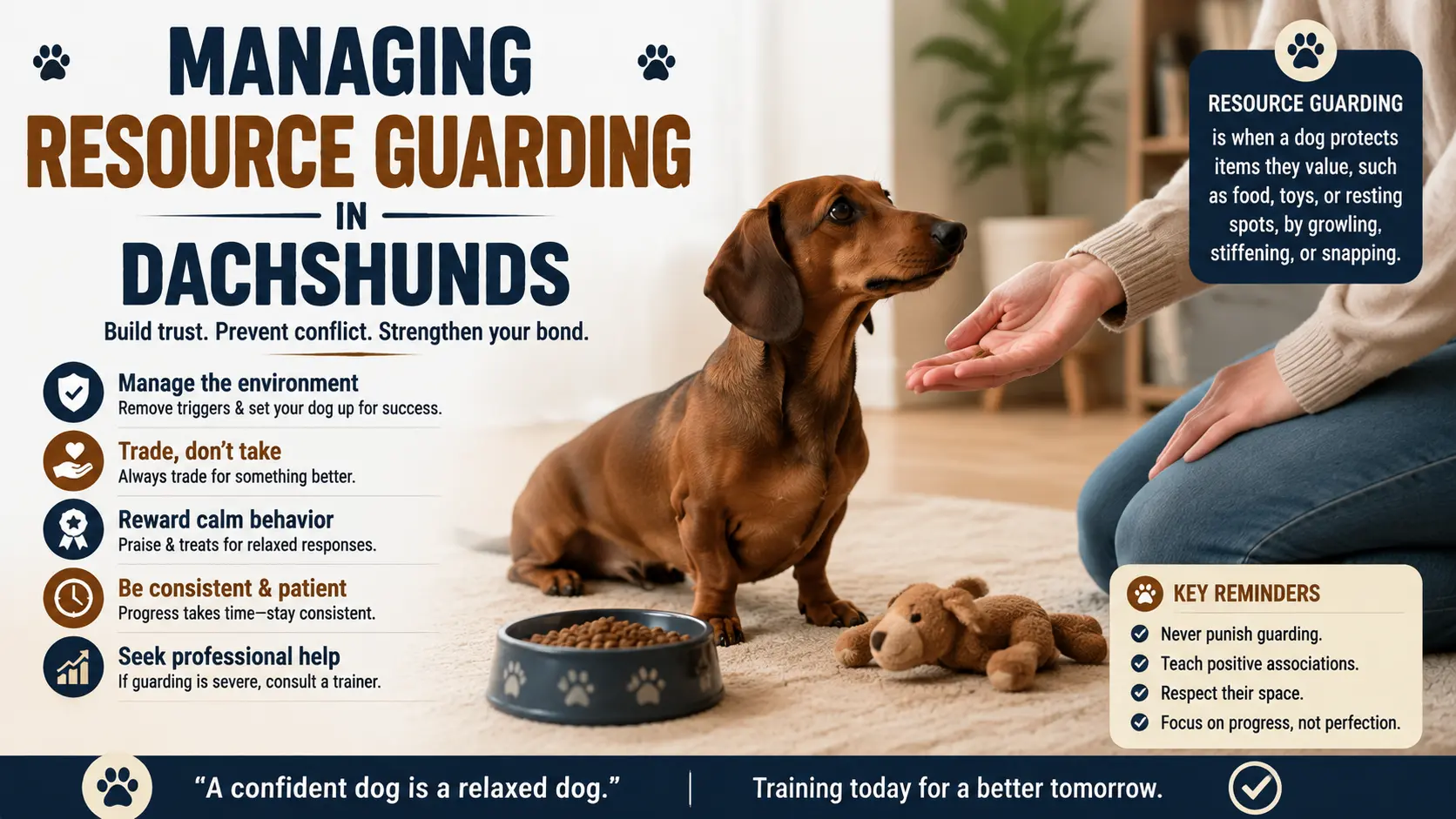
A dachshund that goes stiff and growls when you walk past his food bowl is resource guarding, and it’s common. Managing resource guarding in dachshunds starts with one rule: don’t take the item by force, because confrontation tends to make guarding worse. I’ve dealt with it in my own house, and it’s fixable.
The first time my own dachshund snapped at me over a chew treat, I froze. He is eight pounds. But in that moment, those eight pounds felt enormous. What followed was weeks of research, consultation with a certified behaviorist, and a lot of patience. The good news? Managing resource guarding in dachshunds is absolutely achievable with the right approach.
What Is Resource Guarding and Why Do Dachshunds Do It?
Resource guarding is when a dog protects something they value, such as food, toys, a resting spot, or even a person, by using growling, snapping, stiff posture, or biting. It is a deeply instinctual behavior, not a personality flaw.
Dachshunds, bred originally in Germany to hunt badgers independently underground, carry a particularly independent and tenacious streak. That hunting heritage means managing resource guarding in dachshunds requires understanding you are working with a breed that is wired to hold on to things. They were literally bred never to let go.
According to research published in the Animals journal (2019), small and large dogs showed higher rates of resource guarding than medium-sized dogs in shelter populations, with an overall prevalence of 15% across more than 1,000 dogs evaluated. Broader owner surveys suggest that between 20% and 50% of domestic dogs display some form of resource guarding at least once in their lives. For dachshund owners, those numbers hit close to home.
Recognizing the Warning Signs Early
One of the smartest things you can do when managing resource guarding in dachshunds is catch it before it escalates. The behavior rarely starts with a full bite. It builds.
Early Signs to Watch For
- Freezing or stiffening when you approach during eating or play
- Side-eye or “whale eye” (showing the whites of the eyes)
- Eating faster when you approach the bowl
- Low growling without breaking eye contact
- Snapping or lunging if the early signals are ignored
- Hovering over an item, toy, or sleeping spot
Managing resource guarding in dachshunds early, when these signs are subtle, is dramatically easier than addressing it after a bite has occurred. A 2024 study noted that 62% of guarding cases worsened when owners used confrontational methods like forcibly taking items away. The takeaway is clear: the approach you take matters enormously.
The Root Causes Behind the Guarding
Understanding why your dachshund guards helps you address the right problem. Managing resource guarding in dachshunds is not about dominance or your dog trying to “win.” It is about anxiety and self-protection.
Common Triggers Include:
| Trigger | Why It Causes Guarding |
|---|---|
| Food and high-value chews | Primal survival instinct |
| Favorite toys | Play drive + possessiveness |
| Sleeping spots (couch, bed) | Territory and comfort security |
| A favorite person | Social resource guarding |
| Limited resources (multi-pet home) | Competition anxiety |
Research published in Applied Animal Behaviour Science found that dogs with higher levels of impulsivity and fearfulness were significantly more likely to display resource guarding aggression. Dachshunds, known for their bold-yet-sensitive temperament, can tick both of those boxes, which is exactly why managing resource guarding in dachshunds takes a tailored, calm, consistent strategy.
Proven Strategies for Managing Resource Guarding in Dachshunds
Here is where things get practical. These are the techniques that work, backed by behavioral science and real-world dachshund experience.
1. Trade-Up Method (Not Confiscation)
The single most effective immediate tool for managing resource guarding in dachshunds is the trade-up method. Never just grab something from your dachshund. Approach calmly with a higher-value treat, toss it near them so they move away from the item, pick up the item, and then return it along with more praise and treats. This teaches your dachshund that your approach means good things, not loss.
Zoom Room trainers describe this as teaching your dog that “sharing predicts good outcomes,” and it is a philosophy that transforms the dynamic from confrontational to cooperative.
2. Desensitization to Approach
Managing resource guarding in dachshunds through desensitization means gradually getting your dog comfortable with you being near their valued items. Start at a distance that causes zero reaction. Walk past the food bowl and casually drop a treat in without stopping. Over days and weeks, close that distance slowly. The goal is to make your approach feel neutral, then positive.
3. Counter-Conditioning the Emotional Response
Counter-conditioning goes deeper than just trading items. It rewires your dachshund’s emotional response. A 2024 review of counter-conditioning research confirmed that this technique can meaningfully reduce unwanted guarding behaviors when applied consistently and patiently.
In practice, every time you approach a resource your dachshund values, something wonderful happens. Chicken. Cheese. Their favorite squeaky toy. Over time, their brain starts predicting “good things come when a human approaches,” rather than “threat incoming.”
4. Predictable Feeding Schedules
Anxiety fuels resource guarding. One underrated strategy for managing resource guarding in dachshunds is simply reducing meal-time anxiety through structure. Feed at the same times every day, in the same quiet spot, away from other pets if needed. Predictability tells your dachshund’s nervous system there is no scarcity. There will always be food. There is nothing to protect.
5. Teach “Drop It” and “Leave It”
These two commands are non-negotiables for managing resource guarding in dachshunds. Practice “drop it” with low-value items first, rewarding generously every time your dachshund releases. Build up to higher-value items only after the behavior is solid at lower stakes.
“Leave it” is equally powerful. It gives you a way to interrupt guarding behavior before it escalates, without any physical confrontation.
6. Management in Multi-Pet Households
If you have multiple dogs or cats, managing resource guarding in dachshunds includes smart environmental management. Feed dogs in separate rooms. Use baby gates to create feeding zones. Give high-value chews only when your dachshund is alone in a safe space. Removing the competition removes much of the trigger.
What Not to Do When Managing Resource Guarding in Dachshunds
This is just as important as knowing what to do. Some commonly tried approaches actually make resource guarding worse.
Avoid these mistakes:
- Punishing or scolding growling removes your warning signal. A dog that stops growling has not stopped being anxious, they have just stopped warning you before they bite.
- Alpha rolling or forcing submission escalates fear and anxiety, making guarding significantly worse.
- Repeatedly taking items without trading reinforces the idea that your approach means loss, exactly the opposite of what you want.
- Ignoring early signals because “it is just a small dachshund” lets the behavior solidify and intensify over time.
As professional behaviorists note, managing resource guarding in dachshunds is about changing how your dog feels, not just how they behave in the moment.
When to Bring in a Professional
There are situations where DIY training is not enough. If your dachshund has bitten someone, if the guarding is escalating rapidly, or if you have young children in the home, please consult a certified applied animal behaviorist (CAAB) or a certified professional dog trainer (CPDT-KA) who uses force-free methods.
Managing resource guarding in dachshunds in these higher-stakes scenarios often requires a structured behavior modification plan. Do not wait for a serious bite to act. Early professional intervention has far better outcomes.
You can find breed-specific guidance and training resources through our Dachshund Guides to help you stay informed at every stage.
For additional expert context on canine aggression and behavior science, the ASPCA offers thoroughly researched, veterinarian-reviewed resources.
Building Long-Term Trust With Your Dachshund
Ultimately, managing resource guarding in dachshunds is a trust-building journey. The goal is not to eliminate your dog’s instincts. It is to build enough security that those instincts stop feeling necessary.
When your dachshund understands, truly understands, that your presence near their things means abundance and good things, the guarding impulse quiets down. Not overnight. But steadily, with consistency.
I remember the first time I walked past my dachshund’s bowl and he looked up at me with his tail wagging, waiting for the treat he had learned to expect. That moment felt like a genuine breakthrough. Managing resource guarding in dachshunds is not just about safer behavior. It is about a deeper, more trusting relationship with your dog.
Frequently Asked Questions
Is resource guarding normal in Dachshunds?
Yes. Resource guarding in Dachshunds is relatively common because of the breed’s strong hunting instincts and naturally determined temperament. Guarding food, toys, or resting spots doesn’t necessarily mean your dog is aggressive it usually reflects instinct or insecurity that can be improved with proper training.
Can resource guarding in Dachshunds be completely cured?
In many cases, resource guarding can be reduced to the point where it is rarely seen. Some dogs overcome the behavior almost entirely, while others require lifelong management. The outcome depends on the dog’s history, the severity of the behavior, and the consistency of positive reinforcement training.
At what age should I start addressing resource guarding?
Start as early as possible. Puppies respond especially well to positive handling, trading games, and gentle socialization around food and toys. However, adult Dachshunds can also make significant progress with patient, reward-based training.
Should I punish my Dachshund for growling?
No. Growling is an important form of communication and serves as a warning signal. Punishing a growl may suppress the warning without resolving the underlying fear or anxiety, increasing the risk of a bite. Instead, focus on building positive associations and reducing your dog’s stress.
How long does it take to see improvement?
Every Dachshund learns at a different pace. Mild cases may improve within a few weeks of consistent counter-conditioning, while more severe cases can require several months of structured training. Patience, consistency, and avoiding punishment are the keys to long-term success.
