The Truth About Dotson vs Dachshund Explained

The first time I heard someone at a dog park ask about their “dotson,” I did a double take. Were they talking about a new hybrid breed? A rare import? After a moment, it clicked they meant the iconic long-bodied sausage dog trotting beside them, nose to the ground, completely unbothered. If you’ve ever Googled dotson vs dachshund, you’re in excellent company. It’s one of the most searched pet questions on the internet, and the answer is both simple and genuinely fascinating.
Let’s clear the air once and for all.
What the Dotson vs Dachshund Debate Is Really About
When people search dotson vs dachshund, they’re often expecting to find two separate dogs. Here’s the truth that surprises nearly everyone: there are no differences whatsoever. A dotson and a dachshund are the exact same dog. “Dotson” is simply a phonetic misspelling or casual mispronunciation of “dachshund,” a German word correctly pronounced “daks-hund.”
The word breaks down cleanly: dachs means badger, and hund means dog. Put together, the dachshund is literally a “badger dog.” English speakers unfamiliar with German phonetics heard “dachshund” and began writing and saying “dotson,” “doxin,” or “doxie” in its place. Over time, those informal spellings spread through everyday conversation, regional dialects, and eventually, social media. So when someone raises the dotson vs dachshund question online, it’s really a conversation about linguistics not breeds.
A Brief but Rich History of the Dachshund Breed
Understanding the dotson vs dachshund question starts with the breed’s remarkable history. Dachshunds were developed in Germany, with origins traced to at least the 15th century. By the 17th century, breeders had refined the dog specifically for hunting badgers and other burrowing animals like rabbits and foxes.
Their distinctive long body and short, powerful legs weren’t accidents they were engineered. These physical traits allowed dachshunds to enter narrow underground tunnels, flush out prey, and hold their ground against animals far larger than themselves. That same fearless tenacity still shows up in every modern-day “dotson” napping on someone’s couch.
According to the AKC, the dachshund made history in 2025 by breaking into the top five most popular dog breeds in the United States for the first time ever, replacing the Poodle. With 19,826 individual registrations and 13,941 litters recorded in 2024, it’s clear America has wholeheartedly embraced the breed no matter what name they use for it.
Why “Dotson” Became So Common Across America
The dotson vs dachshund confusion isn’t a new internet phenomenon. It’s been happening in American English for decades, especially in parts of the country with less exposure to German pronunciation. There are a few reasons the nickname stuck so firmly:
- Phonetic adaptation: To the American ear, “dachshund” genuinely sounds like “dotson” or “datsun.”
- Cultural simplification: In casual conversation, people naturally gravitated toward the easier-to-say version.
- Online amplification: Pet forums, Facebook groups, and Instagram pages repeatedly used “dotson,” giving it a life of its own.
No dog registry including the AKC acknowledges “dotson” as an official breed name. If you search for a “dotson breeder,” you’ll always land on dachshund results. This is why the dotson vs dachshund distinction matters especially for first-time dog owners researching health needs, diet, or reputable breeders using the correct term opens up far more accurate information.
Dotson vs Dachshund: Key Facts Side by Side
To visually illustrate the dotson vs dachshund relationship, here’s a direct comparison:
| Feature | Dotson | Dachshund |
|---|---|---|
| Official Breed Status | ❌ Not recognized | ✅ AKC-recognized breed |
| Origin | N/A (informal nickname) | Germany, 15th–17th century |
| Name Meaning | Phonetic Americanization | “Badger dog” in German |
| Size Variations | Same as Dachshund | Standard & Miniature |
| Coat Types | Same as Dachshund | Smooth, Long-haired, Wirehaired |
| Primary Health Risk | Same as Dachshund | IVDD (back disc disease) |
| AKC 2024 Registrations | Not applicable | 19,826 individuals registered |
The table makes it clear every dotson vs dachshund comparison always resolves the same way. One name is official; the other is affectionate. The dog beneath either name is identical.
Physical Characteristics: What Does This Dog Actually Look Like?
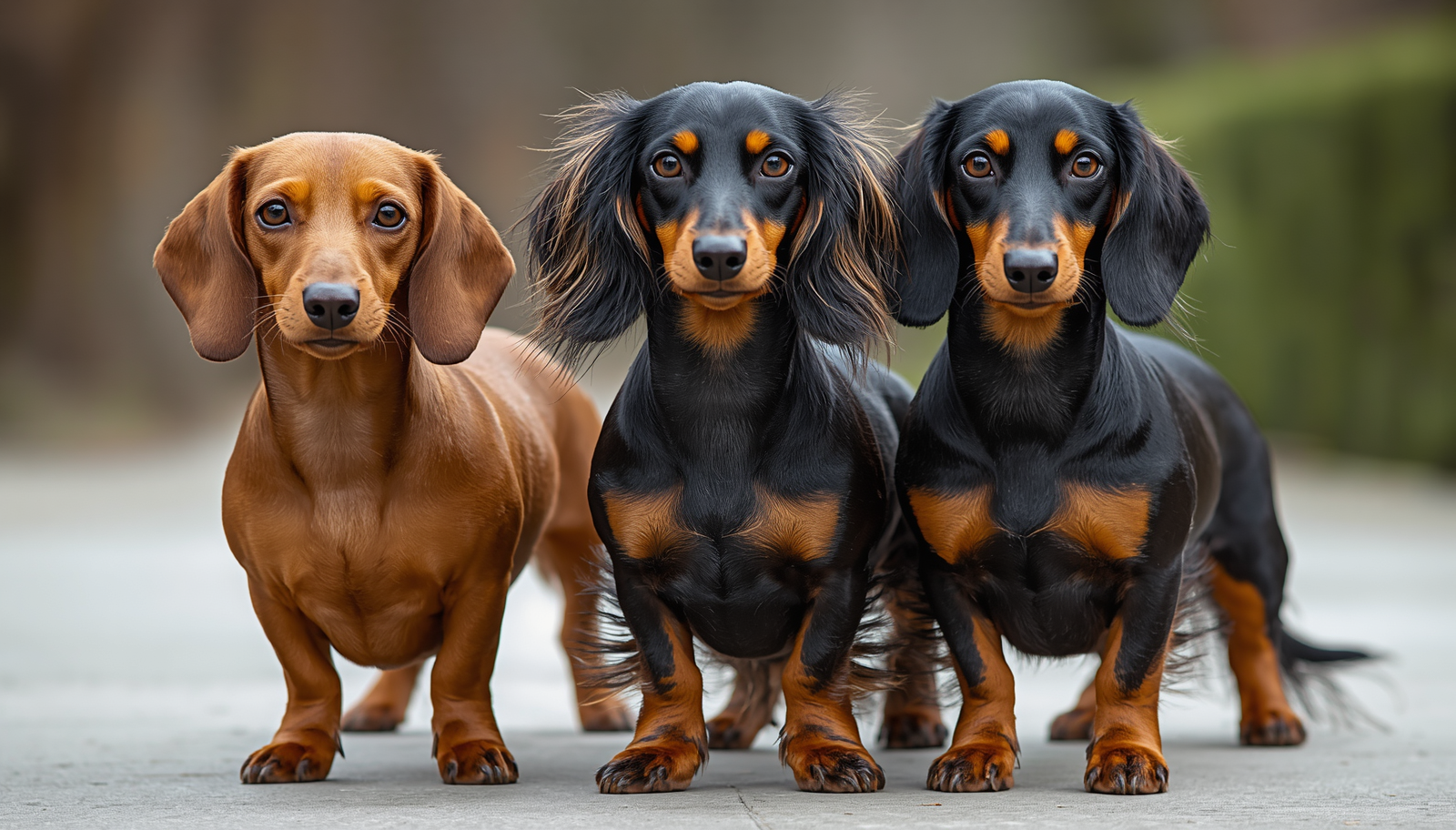
Whether someone calls it a dotson or a dachshund, the physical profile is unmistakable. The breed is among the most recognizable in the world:
- Long, low-slung body built for burrowing underground
- Short, muscular legs with large front paws designed for digging
- Barrel-shaped chest for efficient breathing while underground
- Floppy ears that naturally keep dirt out of ear canals
- Long, expressive snout ideal for tracking a wide range of scents
Standard vs Miniature: Size Matters
The dotson vs dachshund conversation also involves knowing this breed comes in two official sizes:
- Standard Dachshund: 8–9 inches tall, weighing 16 to 32 pounds
- Miniature Dachshund: 5–6 inches tall, weighing under 11 pounds
There’s also an unofficial “tweenie” dogs that fall between standard and miniature weight ranges, adored for being the Goldilocks of the dachshund world.
Three Coat Varieties
- Smooth coat: Short, shiny, and minimal grooming required
- Long-haired: Silky and flowing, requiring regular brushing
- Wirehaired: Rough and bristly the rugged outdoor adventurer of the three
Temperament: The Big Personality in a Small Body
I’ve spent time around more dachshunds and self-described “dotsons” than I can count, and every single one had a personality that seemed too large for its frame. When people debate dotson vs dachshund, they often don’t realize they’re talking about a dog with the courage of a much bigger animal.
Dachshunds are:
- Curious and bold — genuinely unafraid of dogs or animals twice their size
- Deeply loyal — they typically bond intensely with one person
- Stubbornly independent — their hunting DNA means they won’t always come when called
- Surprisingly vocal — their bark is deep and loud for such a compact dog
A friend of mine rescued what she called her “little dotson” from a local shelter a black-and-tan smooth mini named Biscuit. Within three days, Biscuit had claimed the largest armchair in the house and established a strict no-cat policy on the sofa. His owner still calls him a dotson. He has no objections.
Health and Care: What Every Owner Needs to Know
One of the most practical reasons the dotson vs dachshund clarification matters is health. When owners search for medical information using an incorrect term, they risk missing critical, breed-specific guidance.
IVDD: The Breed’s Most Serious Health Risk
Intervertebral Disc Disease (IVDD) is the most significant health concern for this breed. Due to their elongated spine and shortened limb structure, dachshunds are disproportionately prone to disc herniation, which can cause back pain, mobility loss, or in severe cases, paralysis.
Key care tips to protect your dotson/dachshund:
- Avoid allowing them to jump off furniture or down stairs
- Install ramps or dog stairs to reduce spinal stress
- Maintain a healthy weight with a breed-appropriate diet
- Schedule regular veterinary check-ups, particularly after age five
Lifespan and Long-Term Health
With proper care, dachshunds typically live 12 to 16 years well above average for most small breeds. That longevity makes the dotson vs dachshund naming question even more meaningful: whatever name you use, knowing this breed’s specific health profile can genuinely add years to your dog’s life.
Popularity and Cultural Footprint of the Breed
The cultural impact of the dotson vs dachshund breed is impossible to overstate. In 2025, AKC data confirmed the dachshund entered the top five most popular breeds in America for the first time, surpassing the Poodle. The 2024 registration figures 19,826 individual dogs and 13,941 litters place the dachshund among the most actively bred and registered dogs in the country.
But beyond registration data, dachshunds carry a remarkable cultural legacy:
- 1972 Munich Olympics: The very first Olympic mascot was a dachshund named Waldi a nod to the breed’s deep German roots.
- Cloning history: A 12-year-old British dachshund named Winnie was famously cloned, producing a healthy pup named Minnie Winnie.
- Social media royalty: Dachshund accounts routinely rack up millions of followers across Instagram and TikTok.
This search trend is itself a testament to that popularity a breed so beloved that even its misspelled name generates massive search traffic every month.
Every Nickname This Breed Has Ever Earned
The dotson vs dachshund pairing is just one of many naming variations for this breed. Here’s a full rundown of the nicknames dachshunds have collected over the years:
- Doxie / Doxy
- Doxin / Doxen
- Wiener Dog
- Sausage Dog
- Badger Dog
- Hot Dog
- Teckel (Germany)
- Dackel (Germany)
Each name tells a different story their shape, their origin, or their outsized personality. Every time you see a dotson vs dachshund debate online, you’re watching the world grapple with a dog so popular and distinctive that people invented an entirely new vocabulary just to talk about it.
Should You Actually Get One? A Practical Guide
If you’re on the fence about getting this breed, the dotson vs dachshund naming debate shouldn’t slow you down the more important question is whether this dog matches your lifestyle.
Dachshunds are excellent companions for:
- Singles and couples in apartments (they adapt surprisingly well to small spaces)
- Families with older children (young kids should be supervised due to back sensitivity)
- Active individuals who enjoy daily walks and moderate outdoor activity
- Seniors seeking a loyal, manageable, low-maintenance companion
They’re not the best fit for high-energy outdoor lifestyles or owners who need a consistently obedient dog. The stubborn streak is part of the charm but it requires patient, reward-based training.
For more detailed breed breakdowns, care tips, and mix guides, explore our Dachshund Guides your complete resource for everything sausage-dog related.
Adopting or Buying: What to Look For
Whether you’re searching for a dotson vs dachshund puppy from a breeder or checking your local shelter, here’s what to keep in mind:
When buying from a breeder:
- Ask for AKC registration papers (they’ll say “Dachshund,” not “dotson”)
- Request health screenings for IVDD and eye conditions
- Meet the parent dogs and inspect the living conditions
- Walk away from any breeder who can’t answer basic health questions
When adopting from a rescue: Always search using the official breed name “dachshund rescue.” The dotson vs dachshund mix-up occasionally causes confusion in online adoption searches, and using the correct terminology will surface far more results.
Quick Summary: What You Need to Remember
- Dotson = Dachshund. There is no biological, behavioral, or breed-level difference.
- “Dotson” is a phonetic Americanization of the German word “dachshund.”
- The breed has been around since at least the 15th century and was purpose-built for hunting.
- In 2025, the dachshund entered the AKC top five most popular breeds in the United States.
- Whether you say dotson or dachshund, you’re talking about one of the most loved dogs on the planet.
The next time someone brings up the dotson vs dachshund question, you’ll know exactly what to say and you’ll have the history, the statistics, and the personal stories to back it up.
Frequently Asked Questions
Is a dotson the exact same dog as a dachshund?
Yes, completely. In any dotson vs dachshund comparison, you’re always looking at the same breed. “Dotson” is an informal phonetic spelling of “dachshund” that became widespread through American casual speech. No official kennel club or dog registry recognizes “dotson” as a separate breed or category.
Why do so many people say “dotson” instead of “dachshund”?
The dotson vs dachshund confusion stems from pronunciation. The correct German pronunciation of “dachshund” “daks-hund” sounds like “dotson” or “datsun” to many American English speakers. Over time, the phonetic version caught on and spread through everyday conversation and online pet communities.
What are the different types of dachshunds?
Dachshunds come in two official sizes (standard and miniature) and three coat varieties (smooth, long-haired, and wirehaired). Regardless of what the dotson vs dachshund search debate implies, all of these are the same recognized breed just with different physical presentations.
Are dachshunds good with families and children?
Dachshunds are loyal, playful, and genuinely affectionate dogs that thrive in many family environments. They do best with older children given the sensitivity of their long backs, and they benefit from consistent, patient training. Their independent nature is charming once you learn to work with it rather than against it.
How long does a dachshund typically live?
With proper nutrition, exercise, and veterinary care, dachshunds generally live between 12 and 16 years making them one of the longest-lived small breeds. Their primary health risk is Intervertebral Disc Disease (IVDD), which is why back care is so critical. Now that you know your “dotson” is actually a dachshund, are you ready to give one the lifelong, breed-informed care it truly deserves?
