Signs Your Dog Is Dehydrated: What to Check and How to Keep Them Drinking

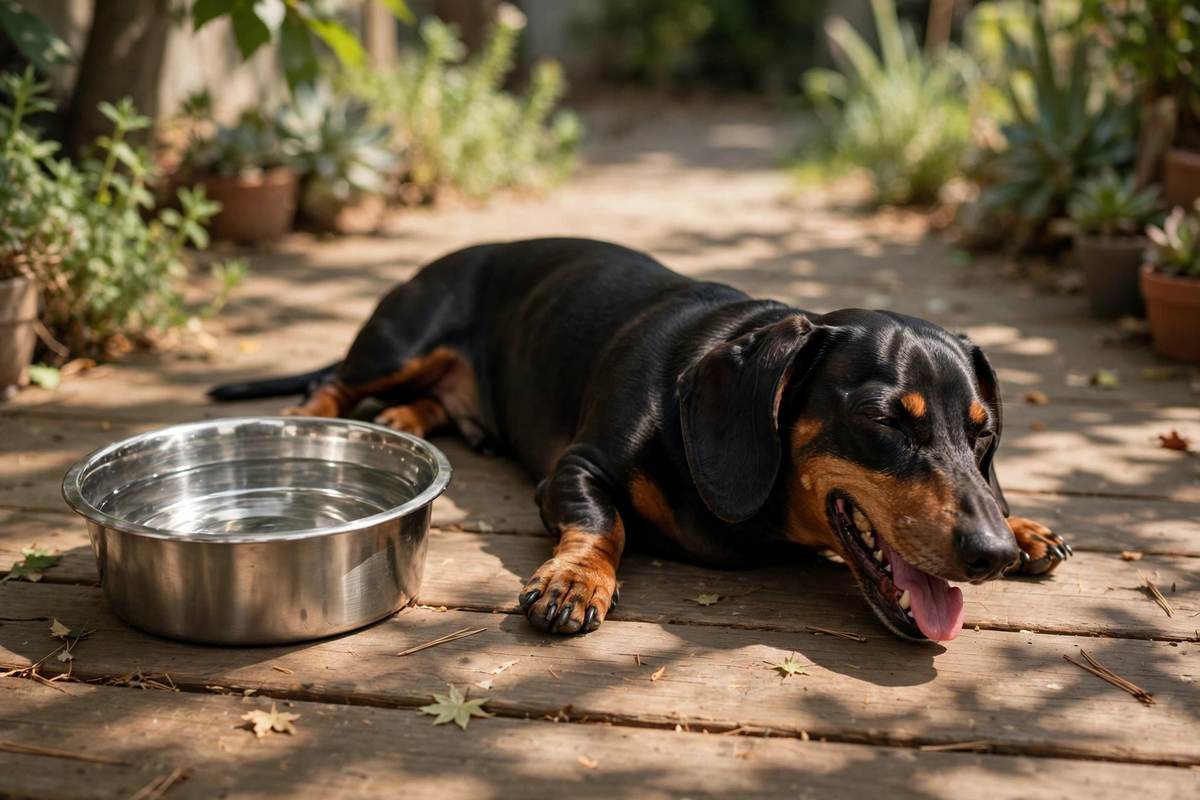
A dog who needs water right now usually shows it in three places: the gums, the skin over the shoulder blades and the energy level. Whether you share your home with a long-backed dachshund, an active adult dog or a healthy Mini Goldendoodle puppy, it’s worth learning those signs before the hot months arrive.
Water does a lot of quiet work in a dog’s body. It supports the organs, helps control body temperature and keeps them steady through the day. Spotting the early signs is what keeps a slow afternoon from turning into a vet visit.
Why dogs dry out faster in summer
Dogs don’t sweat over most of their bodies the way we do. They cool off mainly by panting, and every pant carries water out with it. On a hot day they lean hard on two things: a full bowl and a cool place to lie down.
Long walks, backyard games, hikes and park trips all add to the water they lose. Puppies, seniors and very active dogs tend to run low faster than a healthy adult.
Short legs make it worse.
A dachshund’s chest and belly ride only a few inches above the pavement, and that’s exactly where the heat comes off the ground. So while you’re standing in a mild breeze at waist height, your dog is walking through the hottest air on the street, which is why a walk that feels fine to you can leave a low-slung dog panting and flat by the time you’re home.
Indoor dogs aren’t automatically safe, either. A bowl that’s been knocked over or left empty in a warm room does the job just as well. Some owners also notice their dogs drink more in dry, air-conditioned homes.
Certain medical conditions and medications can raise water needs, too. That’s why it helps to know your dog’s normal habits well enough to spot a change.
Early warning signs your dog is dehydrated
Heavy panting that doesn’t settle even after a rest is one of the first signs to take seriously. Some panting on a hot day is normal. Loud, fast panting that’s still going well into a rest in the shade could mean they need water and a cooler spot right away.
Next, check the gums. Healthy gums look pink and feel slick and wet. When a dog is running low on fluid, the gums turn tacky or dry to the touch.
You might also see sunken-looking eyes and a dry nose. A dry nose isn’t a reliable sign on its own, though. Plenty of well-hydrated dogs wake up from a nap with a warm, dry nose.
The third sign is a dog who suddenly seems flat. Has yours stopped wanting to play, walk or come over to you? They may simply need water and a cooler room. Bruno had heat exhaustion in his first summer with us, and the dullness came before anything I’d have called a symptom.
If the weakness gets worse, or your dog starts vomiting, call your vet or an emergency clinic straight away.
Simple checks you can do at home
The skin tent test takes five seconds. Zoetis Petcare’s guide describes it this way: gently lift the loose skin over your dog’s shoulder blades and let it go. In a well-hydrated dog it snaps back straight away. Skin that’s slow to settle can point to dehydration.
Try it on a normal day first, so you know what your own dog’s skin feels like.
The same guide suggests a gum refill check. Press a fingertip lightly on the gum until the spot goes pale, then let go and watch how quickly the pink comes back. A slow return alongside slow skin is a reason to call the vet rather than wait it out.
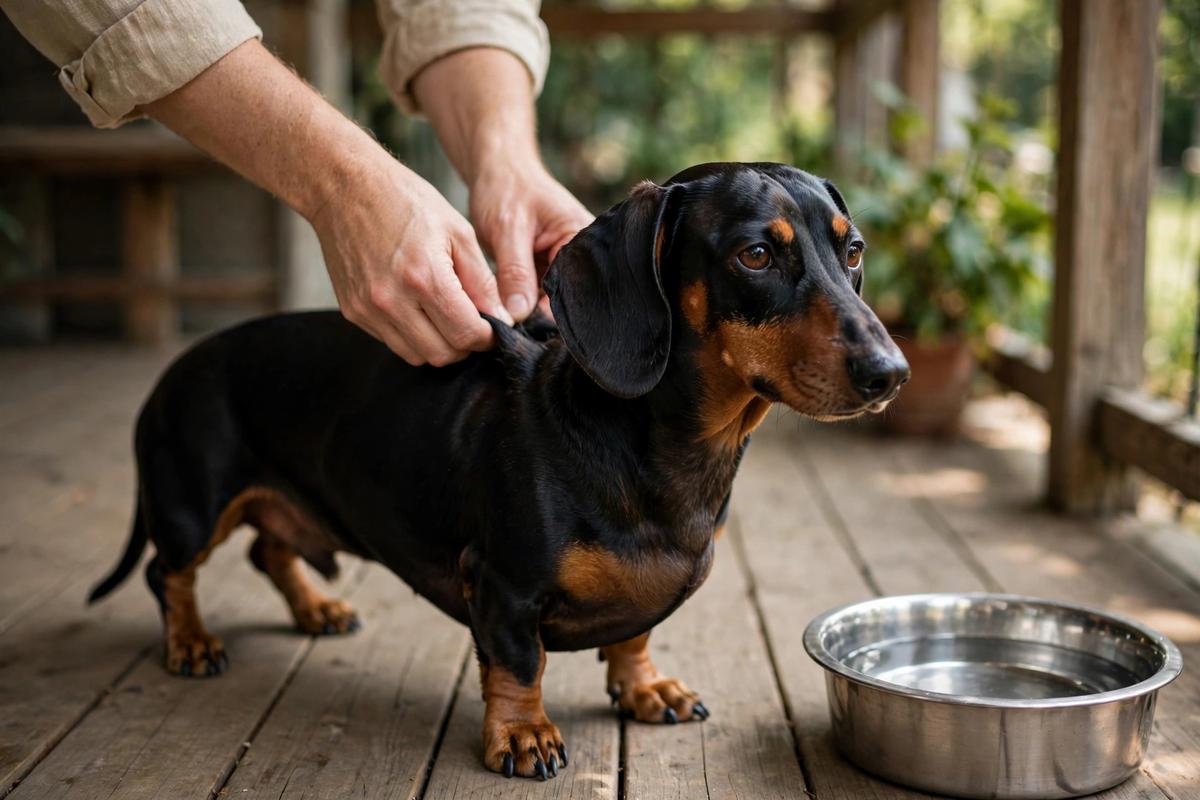
Keep half an eye on the water bowl as well. Every dog’s needs shift with size, activity and weather, and our guide to how much water a dachshund needs gives you a starting point. If your dog keeps drinking a lot more, or a lot less, than usual, mention it to your vet.
Urine tells you something too. Darker urine can mean they need to drink more, and pale yellow usually means they’re getting enough.
Practical ways to keep your dog drinking
Fresh, clean water should be out indoors and outdoors all the time. On hot days, change it several times, since many dogs don’t like warm water. Washing the bowl often keeps slime and bacteria from building up.
Does your dog struggle to reach a low dish? It’s worth reading up on whether an elevated bowl helps.
A water bottle and a collapsible bowl make walks, road trips and park visits easy. Offering water every 20 to 30 minutes during exercise helps replace what’s lost through panting, and short drink breaks can stop overheating before it starts.
Some dogs just don’t drink much. For those, a few ice cubes in the bowl, safe frozen treats or a splash of water over their regular food can add fluid without changing their feeding routine. Picky drinkers often come around with one of these.
Keeping puppies safe in the heat
Young puppies have a harder time regulating their body temperature than adult dogs. That’s true whether you’ve just brought home a Mini Goldendoodle or a dachshund pup, and it’s why they can overheat so quickly. Frequent rest breaks and water they can always reach matter most in their first months.
Keep exercise short when it’s hot. Early-morning and evening walks cut down on heat while still letting puppies burn off energy. Skip hot sidewalks, too, because young paw pads burn easily.
At home, set up a cool resting spot with a fan, shade, a cooling mat or good airflow. Our guide on how to keep your dachshund cool this summer covers more of those setups.
The short version
Keeping your dog hydrated through summer comes down to noticing early and planning ahead. Learn what normal gums, skin and energy look like for your dog, so you can act before a minor problem becomes an emergency.
Whether you’re caring for a growing Mini Goldendoodle puppy or an older companion, fresh water, shade and sensible exercise go a long way. Tomorrow morning, I’d do the skin test once while your dog is fine, just so you know what normal feels like.
