
Filtered Water for Dogs: Tap, Filtered or Bottled for Your Dachshund?

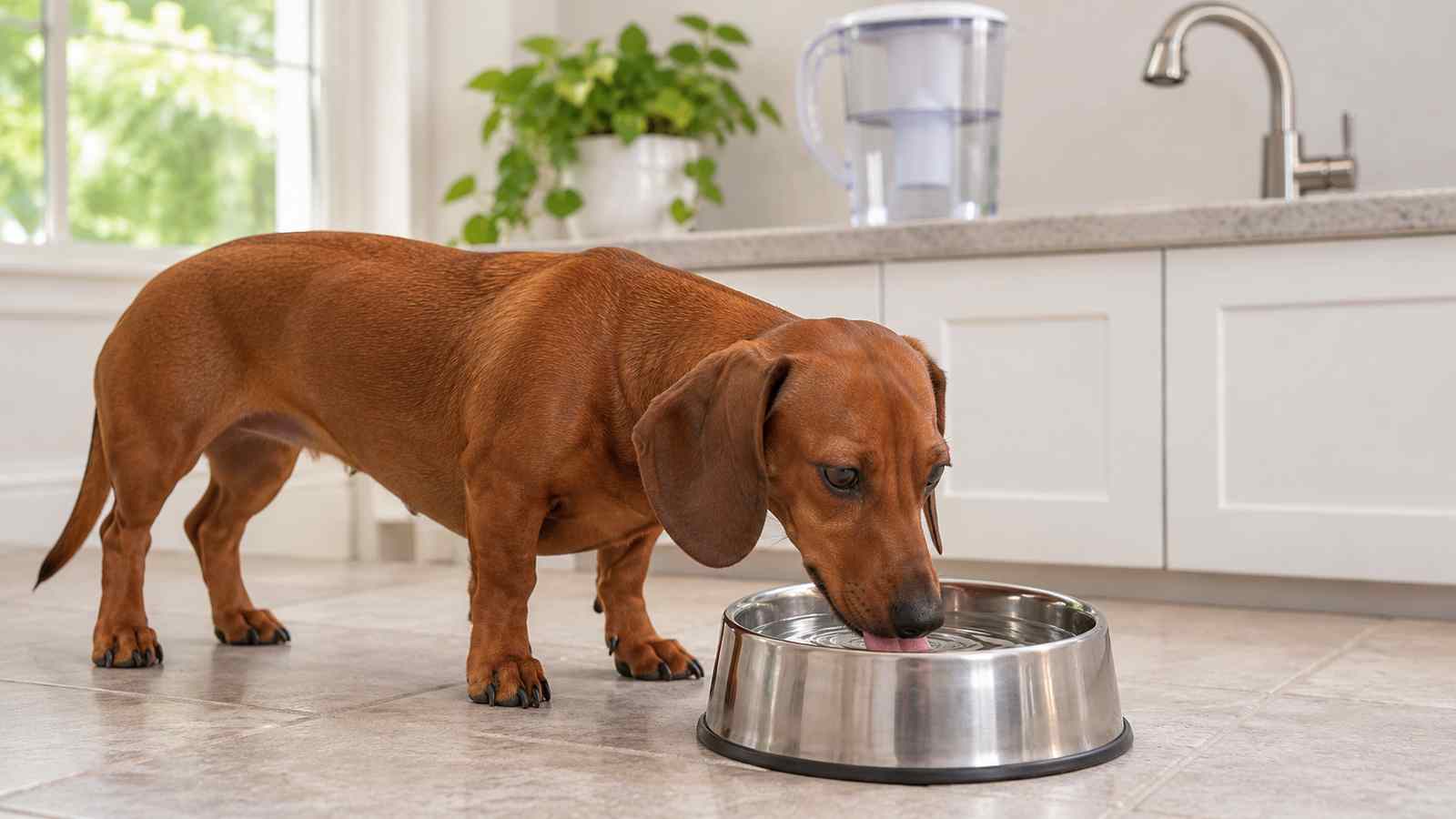
Filtered water for dogs is safe, and so is clean tap water. Hill’s Pet Nutrition calls tap water the best option for pets, because it’s treated for people to drink. A filter earns its place when your tap has a specific problem, such as lead from old pipes or a chlorine taste your dog won’t drink.
A Michigan agriculture department spokesperson put the simplest rule into words during the Flint water crisis: “whatever you’re doing for water in your home you do for your pets, too.” If you’d drink it, your dachshund can.
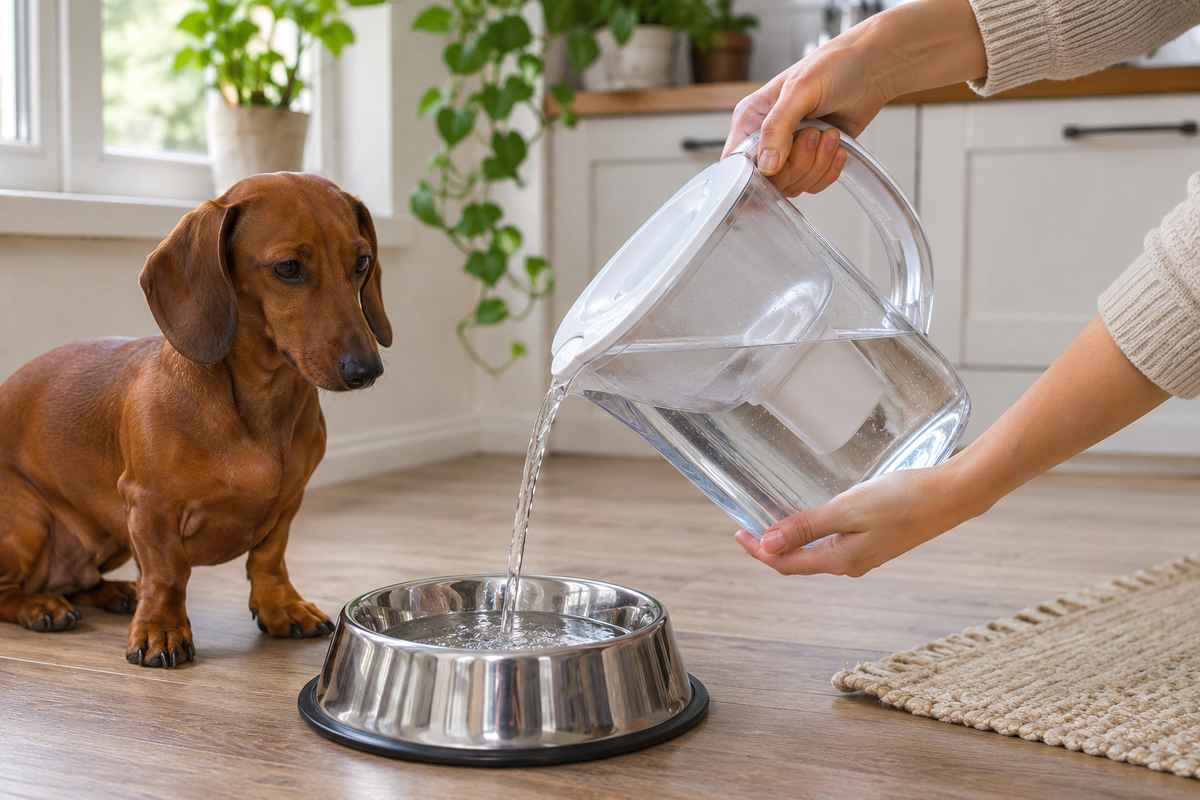
Filtered water for dogs: is it better than tap?
It’s fine, and it can help, but it isn’t a health supplement: a filter only improves the water by removing whatever it’s certified to remove.
If your tap water was already safe, the main thing a filter changes is taste.
Taste still matters to a dog, though, and owners regularly report their dogs drinking more once the water changes, like this one on r/dogs:
“I usually give my dog tap water and she drinks what I’d consider a normal amount. But whenever I give her filtered water she drinks it all up in one go. She acts like I’m giving her a treat.”
– r/dogs, May 2021
That’s one dog’s reaction, not a study, and it doesn’t show filtered water is healthier. Still, a dog that likes its water is a dog that drinks enough of it, and that’s worth something on a hot day.
How much water does a dachshund need?
Hill’s puts a dog’s daily need at about one ounce of water per pound of body weight. The AKC standard puts miniatures at 11 pounds and under, so a mini needs roughly 11 ounces, a little under a cup and a half.
A standard dachshund, usually 16 to 32 pounds under the same standard, needs roughly 2 to 4 cups.
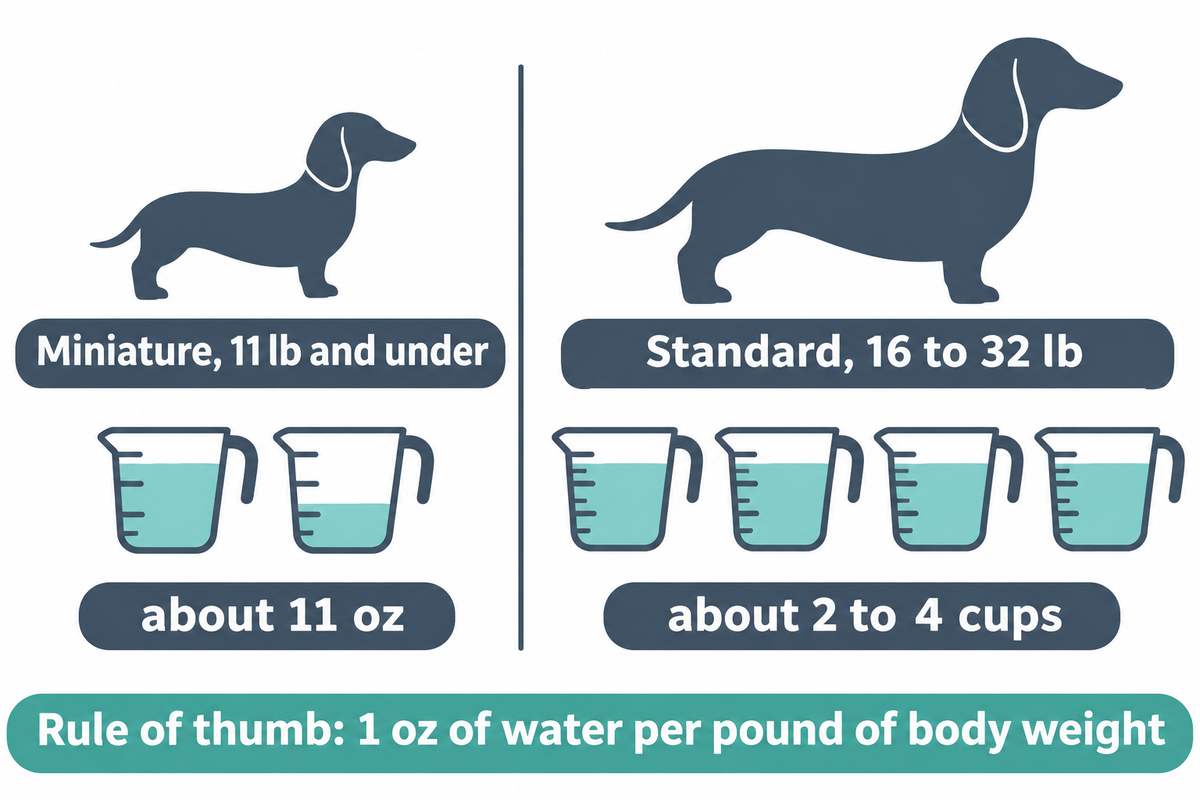
Hot weather and exercise push that number up, while older or less active dogs, and dogs on wet food, usually drink a bit less, Hill’s says. Even the top of that range, 4 cups, is only about a liter, so you’re not filtering much.
When filtering your dog’s water makes sense
Start with your own water report, because US community water systems have to send customers an annual drinking water quality report, the Consumer Confidence Report, by July 1 each year, and the EPA has a search tool if you can’t find yours. It lists what was detected and whether anything broke a federal limit. Have you ever actually read yours?
Lead needs a closer look, because it often comes from the pipes and fixtures in your own home rather than the treatment plant. According to the EPA’s guide to lead in drinking water, the most common sources are lead pipes, faucets and fixtures, and lead pipes are more likely in older cities and homes built before 1986.
Dogs aren’t immune to lead either. In February 2016, NBC News reported that two dogs in the Flint area had tested positive for lead poisoning, and Michigan’s agriculture department said it hadn’t had a report of lead toxicity in household pets in the five years before.
Officials didn’t confirm the water was the cause, but they told Flint owners to give pets filtered or bottled water until the tap was known to be safe.
So if you’re in an older home, or your report flags lead, filtered water from a jug or under-sink filter is the simple fix for both of you. Check that the filter is certified for lead, though, because not all of them are.
Chlorine taste is the other common reason. Plenty of owners take the practical view, like the one on r/dogs who said their dogs drink tap water, but “if the tap water wasn’t drinkable for me” they’d get the same filtered water their owner drinks.
Which filter does what
NSF, the organization behind the main US filter standards, is clear that certification doesn’t mean a filter removes everything. Each one is certified for specific contaminants, and you need to match the claim to the problem you actually have.
| Filter type | What it’s certified for | For your dog |
|---|---|---|
| Jug or pitcher filter (carbon) | NSF/ANSI 42: chlorine, taste and odor. NSF/ANSI 53 only if the box lists a health contaminant such as lead. | A good everyday option; check for a lead claim if you need one. |
| Under-sink filter (carbon) | Same 42 and 53 standards, on a larger cartridge. | Same as a jug, with more water on tap. |
| Reverse osmosis | NSF/ANSI 58: water forced through a membrane, plus extra filters. | Use as a top-up, not as your dog’s only water. |
| Distiller | NSF/ANSI 62: water boiled and condensed, leaving heavy metals behind. | Same caution as reverse osmosis. |
Why the caution on the last two? Reverse osmosis takes out minerals along with contaminants: Finer Filters, a UK filter retailer, says in its own reverse osmosis guide that these systems “tend to remove minerals like calcium, magnesium and potassium,” which is why many people add a remineralising stage. For distilled water, Hill’s notes that some veterinarians are skeptical of its effects on pets’ urinary and cardiac health.
Is that proof that distilled or RO water harms dogs? No, but it’s a good reason for caution.
That’s why I wouldn’t make it the only water a dachshund drinks without asking your vet first, especially if your dog has a urinary or heart condition.
Bottled, hard and outdoor water
Bottled water is safe for dogs, Hill’s says, and it suggests spring water or bottled tap water rather than distilled. It’s a handy backup on trips, but you don’t need it at home if your tap or filtered water is fine.
Hard water is less clear-cut. Hill’s cites the American Animal Hospital Association’s warning that extremely hard water can trigger urinary problems in pets, and suggests softened water where it’s available. If your vet has ever found urinary crystals in your dog, that’s worth raising at the next visit.
You’ll also see owners use filtered water for tear stains. One r/dogs owner with a breed prone to them said they always give filtered water “to keep his face white.” That’s owner experience, and I couldn’t find anything that tests it.
Outdoors, the risks are bigger than anything in your tap. Hill’s warns against pond, river, puddle, pool and ocean water, from bacteria and algae in standing water to salt poisoning from the sea.
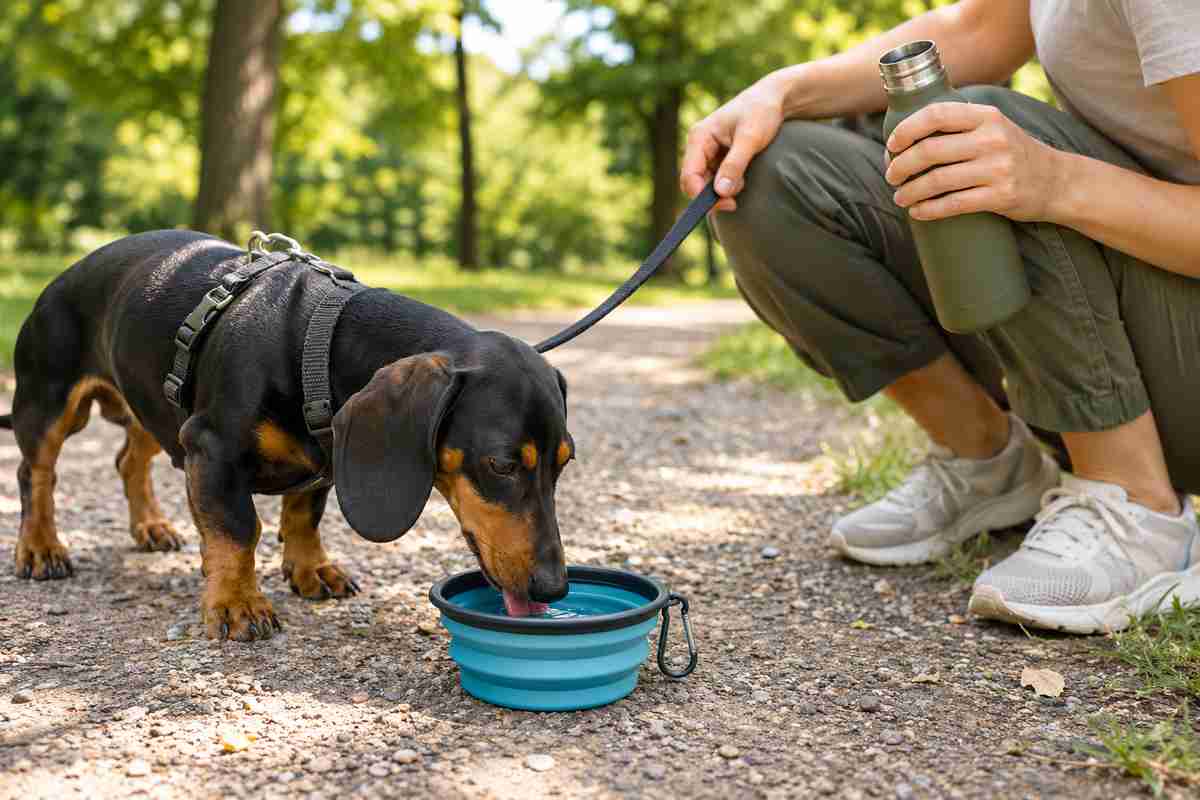
On warm walks, carry water from home; our tips for keeping your dachshund cool in summer cover the rest.
Water questions from dachshund owners
Is filtered water from the fridge OK for dogs?
Yes, if it’s fine for you. A fridge filter is certified like any other, so check which standard it lists, change the cartridge on schedule, and don’t assume it handles lead unless the listing says so.
Can dogs drink reverse osmosis water?
The caution is about making it the only water in the bowl, since reverse osmosis strips out minerals as well as contaminants. Ask your vet before you switch over completely. A carbon jug or under-sink filter is the simpler choice for everyday water, and many RO systems can add minerals back with a remineralising stage.
