Min Pin Dachshund Mix: Size, Energy and the Joints to Watch

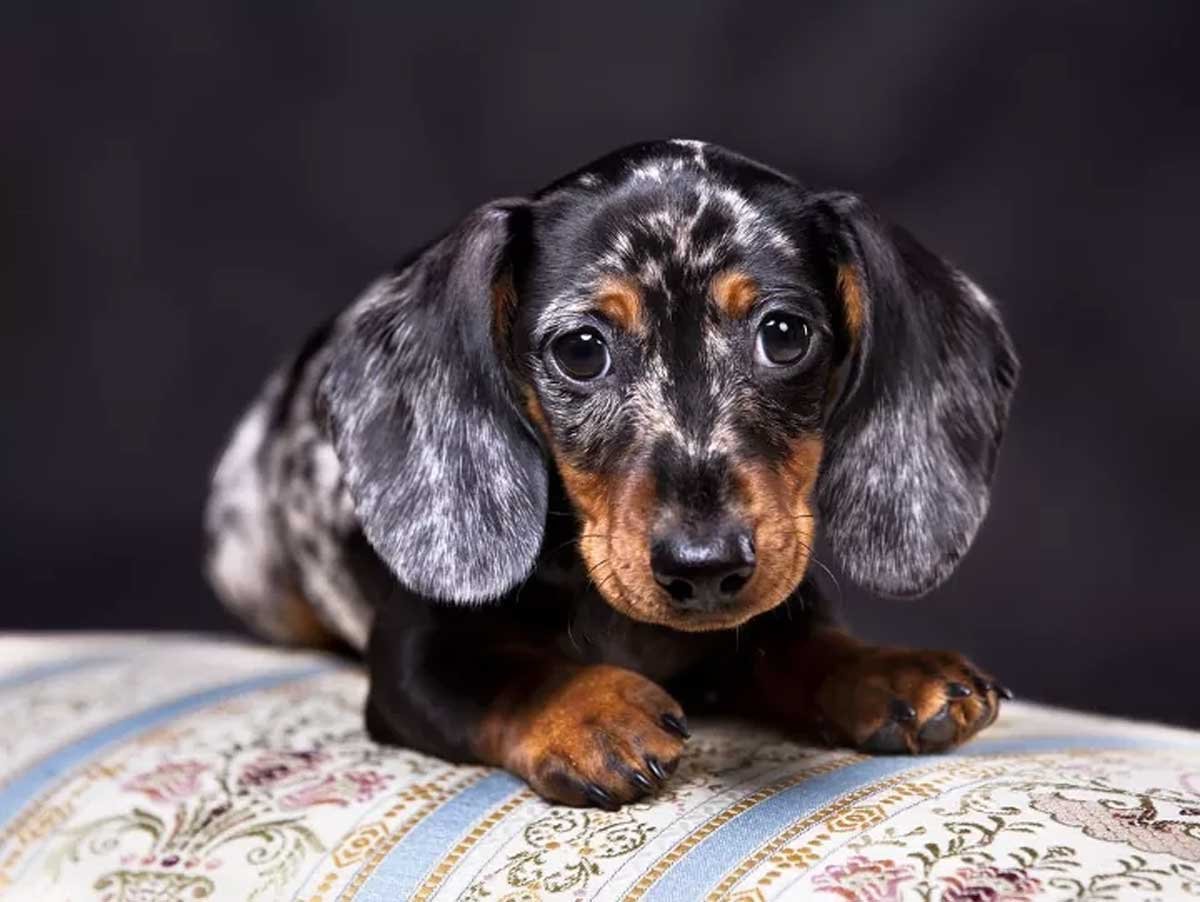
Ten to twenty-five pounds, a long back, and more engine than you’d guess from the size. That’s the min pin dachshund mix, and you’ll see it sold as a Doxie-Pin.
What you’re really planning for is three vulnerable joints rather than one, plus a dog that wants to investigate everything at ankle height.
There’s also a twist in the family tree that almost nobody mentions: the dachshund may already be in the min pin. More on that below, because it changes how you read the word “designer”.
The name, and what “recognized” means here
Doxie-Pin is the name the directories use. You’ll also see Pinscher Doxie and Mini Pinscher Dachshund mix in listings, and they all mean the same cross. Nothing rides on which one a seller picks.
Wag’s directory notes that the cross is recognized by five designer registries, including the American Canine Hybrid Club and the Designer Breed Registry. Sounds official, doesn’t it? Here’s what it actually means. A registry lists the cross and will register your puppy’s paperwork, and that’s the whole of it.
No kennel club has written a breed standard, so nobody can tell you what a correct adult should look like, and nobody on that registry list is checking.
So treat the papers as paperwork: they aren’t a health guarantee, and they aren’t evidence that anyone screened the parents for anything.
The dachshund may already be in the min pin
Here’s the part I didn’t expect when I went looking for this cross’s history. The United Kennel Club breed standard says the Miniature Pinscher has been bred in Germany for hundreds of years, and that one theory of its development is the German Pinscher crossed with Dachshunds and Italian Greyhounds to get a smaller dog.
Is that settled history? No, the UKC calls it one theory. But if it holds, your Doxie-Pin isn’t a modern invention at all. It’s a recombination of stock German breeders had already put together, and the designer label is roughly a century late.
It also explains something owners notice: Wag calls the two parent breeds “surprisingly similar” in build, which is why this cross looks more coherent than most designer dogs do. If you want the third breed in that same old German recipe, the Italian Greyhound dachshund mix has its own guide here.

Size: what the parent standards allow for a min pin dachshund mix
Adults usually land between 10 and 25 pounds, and where your dog lands depends almost entirely on which dachshund was in the litter. The min pin side barely moves your number.
The American Kennel Club puts the Miniature Pinscher at 10 to 12.5 inches and just 8 to 10 pounds. The Dachshund is 11 pounds and under for miniatures, 16 to 32 pounds for standards.
Run the arithmetic and you get a free sanity check.
Two parents of 8 to 10 pounds and 11 pounds or less can’t produce a 25 pound adult, so the top of that range implies a standard dachshund parent. If a seller calls the litter min pin crossed with a miniature dachshund, then shows you a 20 pound adult from an earlier litter, ask about the parents again.
Wag lists the cross at 6 to 13 inches tall and 10 to 25 pounds, which spans both versions of the dog. Treat that as a range covering two different animals, not a forecast for yours.
Three joints, not one
Wag’s health listing runs wider than the back alone: intervertebral disc disease, hip dysplasia and Legg-Calve-Perthes disease as major concerns, with patellar luxation, cataracts and glaucoma as minor ones. That’s three joints you’re watching, not one.
Legg-Calve-Perthes is a hip condition seen in small breeds, where the head of the femur loses its blood supply and deteriorates, and you usually meet it in a young dog. Patellar luxation is a kneecap that slips out of its groove. Both come from the toy side of this cross, and both tend to show up as a limp or a skipping stride in a young dog rather than an old one.
The back comes from the other parent. Dachshund Health UK estimates around 1 in 4 dachshunds are affected by IVDD at some stage, and nobody can tell you how much of that crosses over into a mix.
My own dachshund Bruno went through a disc episode, surgery and a long recovery, which is why I’d set your house up before the dog needs it: a ramp at the couch, a lean body condition, and a two-handed lift, the way Dachshund IVDD Support Australia describes it.
Household stairs are less of a worry than the folklore says, and the evidence on stairs is worth reading first.
Wag’s suggested checks are an eye examination, a physical, radiographs and blood tests. Ask which of those the parents had, then ask to see the results rather than a yes.
Energy, and the timid streak
Wag describes the cross as high-energy like the min pin parent, often timid, and more even-tempered than a min pin on its own, because the dachshund side settles it.
It puts your exercise commitment at two 30-minute walks a day, which is moderate rather than demanding.
The AKC calls the Miniature Pinscher the “King of Toys”, a fearless little dog with a high-stepping gait. Pair that with a dachshund’s nose and you get a dog that investigates everything at ground level, and one that won’t back down easily when you’d rather it did.
Wag also notes they’re often wary of strangers and bark mainly in alarm rather than constantly, which is easier to live with than a dog that narrates the street. Socialize early anyway, because timid plus fearless is a combination that can tip either way, and the tipping usually happens in the first year.
A thin coat over a long back
Both parents wear short smooth coats, and Wag says the cross usually does too, most often in black and tan, so your grooming job comes down to a weekly brush.
Winter is the real consideration. A smooth-coated small dog loses heat fast, and you shouldn’t rush a long-backed dog through a cold walk either, so a coat that covers the whole back earns its price. How cold is too cold sits on the cold-weather walking page.
Common questions
What is a Min Pin Dachshund mix called?
Doxie-Pin is the usual name, with Pinscher Doxie as a variant. Several designer registries list the cross under that name, though no kennel club recognizes it, so there’s no official standard behind the label.
How big does a Doxie-Pin get?
Roughly 6 to 13 inches tall and 10 to 25 pounds, per Wag’s directory. The dachshund parent decides most of it. A miniature dachshund parent keeps your adult in the low teens, while a standard dachshund parent pushes it toward the top of the range.
How long do they live?
Both parent breeds are given 12 to 16 years by the AKC, so a healthy Doxie-Pin should sit in that band, and there’s no separate published figure for the cross itself.
Do they shed much?
Some, but it’s manageable: a short smooth coat sheds year-round at a low level, and a weekly brush plus a wipe-down keeps most of it off the furniture.
Are Doxie-Pins good family dogs?
They can be, with early socialization and a household that takes the back seriously. The dog is small, alert and affectionate, but it needs the same ramp-and-no-jumping routine any long-backed dog does.
