
Dachshund Border Collie Cross: Full Breed Guide

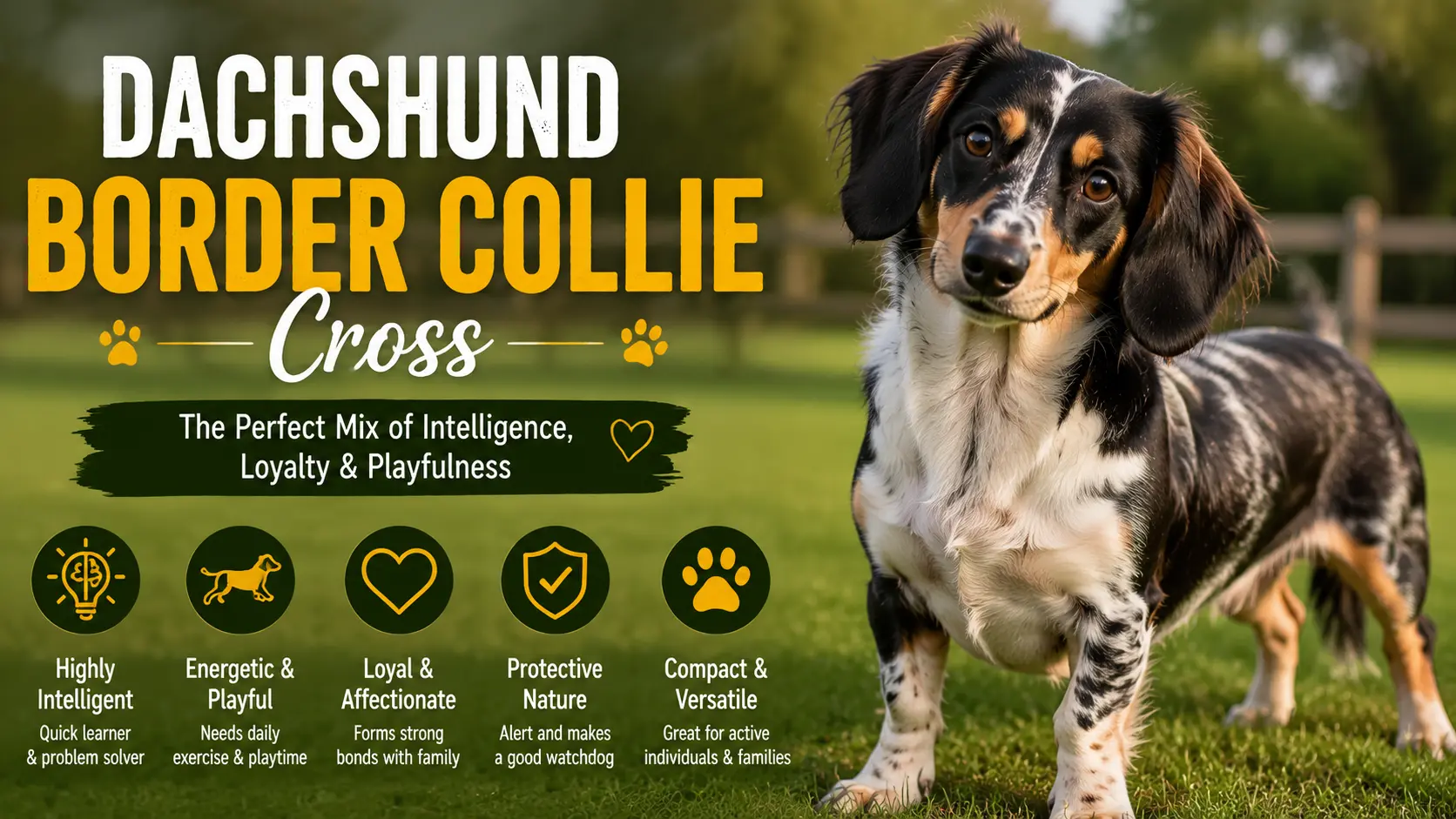
If you’ve ever looked at a dog and thought, “How did those two breeds end up in one body?” the dachshund border collie cross is exactly that dog. Equal parts mystery and magic, this hybrid turns heads on every walk, and for good reason. I personally spent hours researching this mix after meeting one at a dog park who somehow managed to herd every child in the playground using nothing but eye contact and a stubborn little stride. It was genuinely unforgettable.
This crossbreed is one of the more unusual designer dogs you’ll encounter, and that’s precisely what makes it so fascinating. Let’s dig into everything you need to know from what it looks like to how to keep it healthy and thriving for years to come.
What Is a Dachshund Border Collie Cross?
The dachshund border collie cross sometimes called a Border Weenie or Border Dachshund is the result of intentionally breeding a purebred Dachshund with a purebred Border Collie. Due to the significant size difference between the two parent breeds, this pairing is typically achieved by mating a male Dachshund with a female Border Collie, sometimes through assisted reproduction.
Both parent breeds bring strong personalities and deep histories to the table:
- The Dachshund (or Doxie) was originally bred in Germany centuries ago to hunt badgers and flush out underground rodents. Their courage, loud bark, and elongated body were all purpose-built for that task.
- The Border Collie was developed along the Anglo-Scottish border in the late 19th century as a herding dog, known for legendary intelligence, intense focus, and near-supernatural energy levels.
When you combine these two, you get a hybrid that is simultaneously a bold little hunter and a brilliantly clever herder packed into one very interesting body.
For a deeper dive into the Dachshund’s remarkable history, visit our Dachshund Guides section.
The Rise of Designer Dogs in 2025
It’s worth pausing to appreciate the broader cultural moment in which the dachshund border collie cross exists. According to the American Veterinary Medical Association, up to 53% of dogs in U.S. homes are mixed breeds. Rover’s 2025 data confirmed that mixed-breed dogs claimed the top spot as the most popular dog “type” in America edging out even Labrador Retrievers and French Bulldogs.
A 2024 Rover survey also found that Gen Z pet parents are 60% more likely to choose mixed or designer breeds compared to older generations. This tells us a lot: hybrid dogs can bring together the strengths of two beloved breeds, and an unusual cross like this one benefits from that growing enthusiasm for unique canine companions.
What Does a Dachshund Border Collie Cross Look Like?
Here’s where things get wonderfully unpredictable. The dachshund border collie cross draws from two very different-looking parent breeds, so appearances can vary widely even within the same litter.
That said, Dachshund genes tend to be more dominant in terms of body structure. Most puppies from this pairing will inherit:
- An elongated body frame reminiscent of the Dachshund parent
- Short to medium legs, often noticeably shorter than the rest of the body
- A bi-color coat that typically resembles the Border Collie (black and white, brown and white, or merle patterns)
- Floppy or semi-erect ears, depending on which parent they favor
- Medium-length fur ranging from smooth to slightly wavy
In terms of size, a fully grown dachshund border collie cross typically falls somewhere between its two parent breeds. Most weigh between 16 and 45 pounds and stand between 8 and 22 inches tall, though this can vary significantly based on the individual parents involved.
Temperament: What to Expect From This Hybrid
This is where this mix truly shines. Both the Dachshund and Border Collie are known for intelligence, loyalty, and affectionate natures and offspring from this pairing typically inherit all of these in spades.
Here’s what you can generally expect from a dachshund border collie cross personality:
- Highly intelligent: Border Collies are widely regarded as the smartest dog breed in the world, and Dachshunds are no slouches. This cross picks up commands quickly sometimes too quickly.
- Energetic and playful: This is not a couch-potato dog. Expect an active mix that loves to move, explore, and engage.
- Loyal and affectionate: Both parent breeds form deep bonds with their families, and so does this one.
- A little stubborn: Dachshunds are famously independent. Your hybrid may have inherited that “I’ll do it when I feel like it” attitude.
- Herding-driven: Don’t be surprised if the dachshund border collie cross tries to round up children, other pets, or even you during walks.
As I discovered in that dog park encounter this dog will look at you with the same intensity a Border Collie uses to control a flock of 200 sheep, even if it stands only 18 inches tall.
Training Tips That Actually Work
Given the intelligence of both parent breeds, the dachshund border collie cross responds well to positive reinforcement training. The AKC recommends starting training and socialization early for any hybrid breed, as consistent early experiences shape long-term behavior.
Top training tips for this mix:
- Start early: Begin socialization at 8–12 weeks. Expose your pup to different people, animals, and environments.
- Keep sessions short and engaging: This mix gets bored fast. Keep training to 10–15 minutes with varied activities.
- Use puzzle toys and games: Mental stimulation is just as critical as physical exercise.
- Be consistent with the stubborn streak: Dachshund-inherited stubbornness means patience and repetition are your best friends.
- Try agility training: Given the Border Collie heritage, many dogs in this cross thrive in agility or nose-work activities.
How Much Exercise Does This Mix Need?
The dachshund border collie cross is a moderately-to-highly active dog. While it won’t match the relentless output of a purebred Border Collie, it still needs far more than a casual stroll.
A healthy routine typically includes:
- 45–90 minutes of daily activity split across walks, play, and mental challenges
- Fenced yard access where possible the herding instinct combined with prey drive can make off-leash recall unreliable
- Interactive games like fetch, tug-of-war, and scent work
- Avoidance of high-impact jumping, especially important given the spinal risk inherited from the Dachshund side
An under-stimulated dachshund border collie cross can quickly become destructive or anxious two problems that are much easier to prevent than to fix.
Health Issues: What Every Owner Should Know
Like all hybrid breeds, this cross can inherit health conditions from either parent. Here’s a side-by-side look at the main concerns:
| Health Condition | Inherited From | Risk Level |
|---|---|---|
| Intervertebral Disc Disease (IVDD) | Dachshund | High |
| Hip Dysplasia | Border Collie / Dachshund | Moderate |
| Epilepsy | Border Collie | Moderate |
| Collie Eye Anomaly (CEA) | Border Collie | Moderate |
| Obesity | Dachshund | High |
| Cushing’s Disease | Dachshund | Low–Moderate |
| Hypothyroidism | Border Collie | Low–Moderate |
IVDD is perhaps the most serious concern for the dachshund border collie cross. PetMD notes that up to 25% of Dachshunds experience disc-related back problems during their lifetime. Because this mix often inherits a long spine, it faces an elevated risk compared to shorter-bodied breeds.
The AVMA also highlights that over 50% of all dogs in the U.S. are overweight or obese a condition that can reduce life expectancy by up to 2.5 years. Weight management is especially critical here, given the back and joint vulnerabilities in play.
A well-cared-for dachshund border collie cross has an average lifespan of 10 to 16 years, which reflects the Dachshund’s generally long life expectancy when health risks are proactively managed.
Grooming and Daily Care
Grooming this hybrid is relatively straightforward, though it depends on which parent’s coat dominates.
- Short-coated crosses: Weekly brushing and occasional baths are sufficient
- Wavy or medium-coated crosses: Brush 2–3 times per week to prevent matting
- Nail trimming: Every 3–4 weeks
- Ear cleaning: Regular checks, especially if the ears are floppy
- Dental care: Daily brushing or quality dental chews strongly recommended
The dachshund border collie cross is not a heavy shedder on average, though this varies by individual coat type. Expect moderate shedding year-round with seasonal increases.
Is This the Right Dog for You?
Let me be real with you, because I think honesty is more useful than enthusiasm: the dachshund border collie cross is not a beginner dog. It is clever enough to outsmart you, stubborn enough to test your patience, and energetic enough to outlast your motivation on a lazy afternoon.
But if you’re an active person or family who loves a dog with a personality roughly four times larger than its body, this hybrid could be one of the most rewarding companions you’ll ever own.
Best suited for:
- Active individuals or families with time and space
- Experienced dog owners comfortable training independent or herding breeds
- Homes with a fenced yard
- Owners who enjoy dog sports, puzzle toys, and interactive play
Less suitable for:
- First-time dog owners with limited training experience
- Sedentary households
- Homes with very young toddlers and no structured routines
Frequently Asked Questions (FAQ)
What is a Dachshund Border Collie cross called?
A Dachshund Border Collie cross goes by several nicknames, including Border Weenie, Border Dachshund, and Doxie Collie. These are informal names only, as the hybrid is not officially recognized by major kennel clubs.
How big does a Dachshund Border Collie cross get?
A fully grown Dachshund Border Collie cross typically weighs 16–45 pounds and stands 8–22 inches tall. Adult size varies depending on which parent’s genetics are more dominant.
Is a Dachshund Border Collie cross good with children?
Yes, in most cases. This hybrid is affectionate, loyal, and enjoys family life. However, the Border Collie’s natural herding instinct may lead to heel-nipping around young children. Early socialization and consistent training help prevent this behavior.
How long does a Dachshund Border Collie cross live?
With proper nutrition, regular exercise, and routine veterinary care, this mix typically lives 10–16 years. Maintaining a healthy weight and protecting the Dachshund’s long spine are two of the most important factors for a long, healthy life.
Is the Dachshund Border Collie cross easy to train?
This mix is highly intelligent thanks to its Border Collie heritage, but it may also inherit the Dachshund’s independent streak. Positive reinforcement, consistency, and early training produce the best results, helping this clever hybrid become a well-behaved companion.
