
Doberman Dachshund Mix: The Doberdach Explained

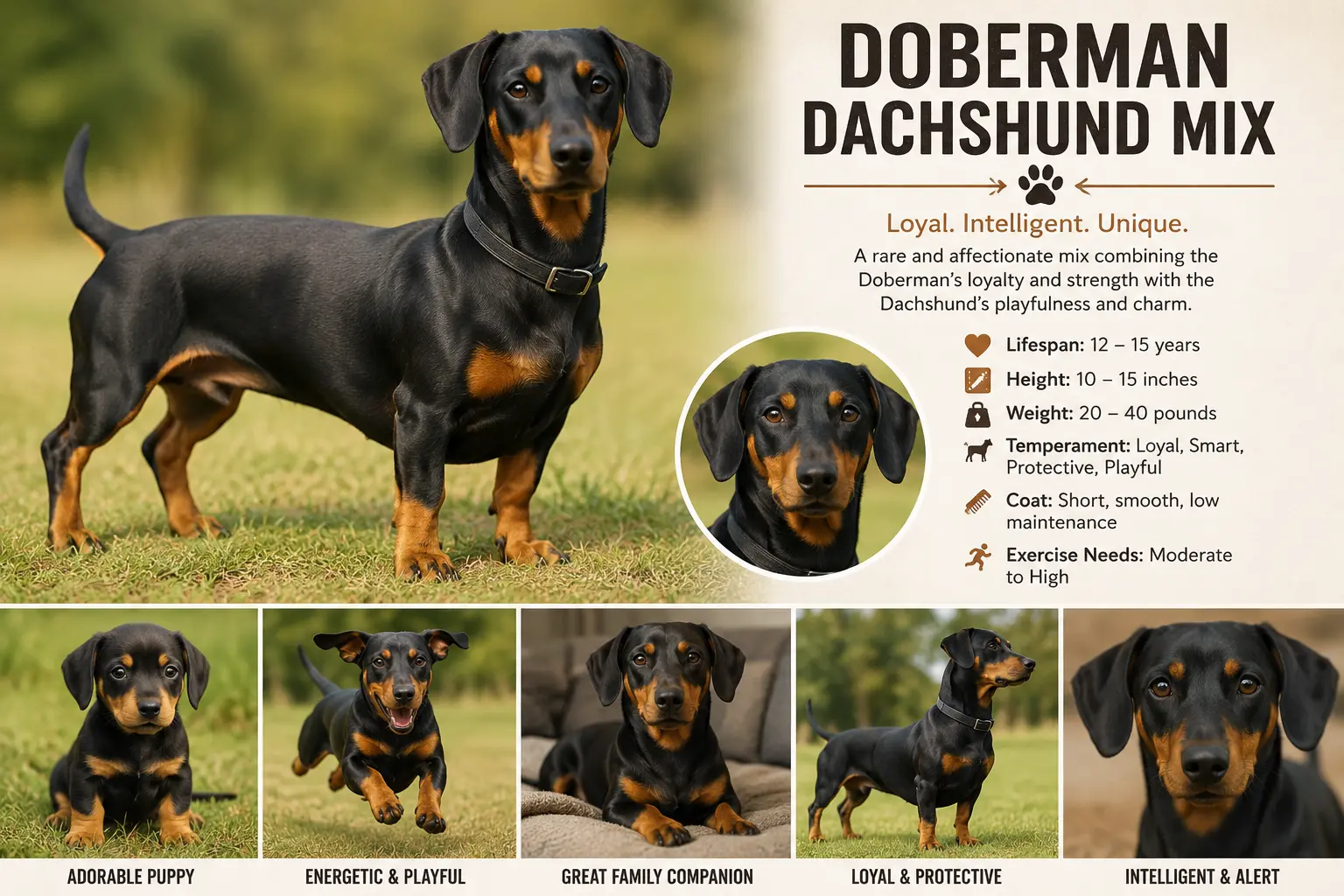
If you’ve never heard of the doberman and dachshund mix, you’re not alone but once you do, it’s hard to stop thinking about it. Imagine the sleek, alert energy of a Doberman Pinscher channeled into the long-bodied, big-hearted frame of a Dachshund. The result? A compact, fiercely loyal hybrid that dog lovers are quietly discovering and falling hard for.
Nicknamed the Doberdach or Doxie Dobie, this crossbreed is a relatively recent addition to the designer dog world. Breeders believe the doberman and dachshund mix originated in the United States, where the goal was to merge the Doberman’s legendary intelligence and protective instincts with the Dachshund’s spirited personality and more manageable size.
I’ll be honest the first time I came across a photo of a doberman and dachshund mix, I did a full double-take. It looked like someone had pressed “shuffle” on a dog breed generator. But the more I researched, the more I understood the quiet appeal of this unusual hybrid.
A Tale of Two German Breeds
Both parent breeds carry deep German roots, which makes this crossbreed a fascinating study in history and purpose.
The Dachshund has roots stretching back to the 15th century, originally bred to hunt badgers underground their long spines and short legs were purpose-engineered for tunneling. The Dachshund Club of America was founded in 1895, and the breed has never looked back. According to the AKC, in 2026, the Dachshund moved up from No. 6 to No. 5 on the most popular dog breeds list, pushing the Poodle out of the top five its highest national ranking in years.
The Doberman Pinscher was developed in Apolda, Germany around 1890 by Karl Friedrich Louis Dobermann, a tax collector who needed a dog capable of protecting him on dangerous routes. The AKC officially recognized the breed in 1908.
When you combine these lineages, this hybrid inherits a gene pool packed with intelligence, tenacity, loyalty, and a surprising amount of personality.
Physical Traits: What Does a Doberdach Look Like?
One of the most exciting and unpredictable aspects of the doberman and dachshund mix is its appearance. As a first-generation hybrid, physical traits can vary widely from puppy to puppy depending on which parent exerts more genetic influence.
Here’s what you can generally expect:
| Trait | Typical Range |
|---|---|
| Height | 8–18 inches |
| Weight | 15–40 lbs |
| Body Type | Long-bodied (Dachshund build), muscular frame (Doberman influence) |
| Coat | Short and smooth, occasionally wiry |
| Colors | Black & tan, brown, fawn, or combination |
| Lifespan | 10–14 years |
Generally, Doberdach dogs are medium-sized with a unique look that can feature the long body of a Dachshund and the sleek build of a Doberman, often exhibiting a blend of colors typical of both breeds, such as black, tan, or a combination of shades.
The coat of a Doberdach is typically short and low-maintenance, leaning toward the Doberman’s sleek coat type making grooming refreshingly simple.
Temperament: Big Personality in a Compact Body
Ask any owner of a doberman and dachshund mix, and they’ll tell you the same thing: this dog has personality in abundance.
Loyal, Alert, and Endlessly Devoted
The doberman and dachshund mix inherits the Doberman’s famous loyalty. Dobermans bond so deeply with their humans and are so dedicated to their families that these affectionate dogs are sometimes referred to as “Velcro dogs.” Blend that with the Dachshund’s bold, curious, sometimes stubborn character, and you get a dog that is simultaneously protective and entertaining.
Doxie Dobies are smart, loyal, and protective they inherit the Doberman’s guarding instincts and the Dachshund’s curiosity, making them alert and watchful pets.
These dogs tend to:
- Form deep bonds with their primary caregiver
- Act as alert watchdogs, barking at suspicious sounds or strangers
- Display playful curiosity that borders on mischief
- Thrive on mental stimulation as much as physical exercise
Is the Doberdach Good With Families and Other Pets?
This is where early socialization becomes critical. The doberman and dachshund mix can be a wonderful family companion particularly when raised alongside children. However, thanks to the Doberman’s guarding instincts and the Dachshund’s strong prey drive, they need consistent training to manage their protective nature and are often good with children and can be a playful companion.
For families considering a doberman and dachshund mix, think of socialization not as optional extra work but as the foundation for a balanced, happy life together.
Training the Doberdach: Brilliant but Headstrong
Here’s where things get interesting. The doberman and dachshund mix is undeniably intelligent both parent breeds rank high in canine intelligence studies. Dobermans are consistently cited among the world’s top five smartest breeds, while Dachshunds are crafty problem-solvers known for outsmarting their owners.
But intelligence doesn’t always equal easy training. A doberman and dachshund mix may inherit the Dachshund’s independent, willful streak. Training sessions should be:
- Short and engaging — 10–15 minutes maximum to hold their focus
- Reward-based — high-value treats or favourite toys as motivators
- Consistent — mixed signals from different family members create confusion
- Started early — the socialization window closes around 12–16 weeks
Positive reinforcement is the only approach worth using. Harsh corrections tend to backfire, especially with the sensitive Dachshund temperament running through this mix.
Exercise Needs: Balanced Energy for Daily Life
One of the most appealing qualities of the doberman and dachshund mix is its balanced energy level. The Doberman Dachshund mix combines the best of both breeds’ energy levels, resulting in a dog that is energetic enough to keep up with an active owner, but not so high-energy that it becomes overwhelming.
A typical doberman and dachshund mix does well with:
- Two daily walks of 20–30 minutes each
- Interactive play — fetch, tug, or puzzle feeders
- Scent-tracking activities that honour the Dachshund’s hunting heritage
Don’t underestimate the consequences of boredom, though. A bored doberman and dachshund mix will find its own entertainment and it may not be the kind you’d prefer for your furniture or garden.
Health Considerations: What Every Owner Must Know
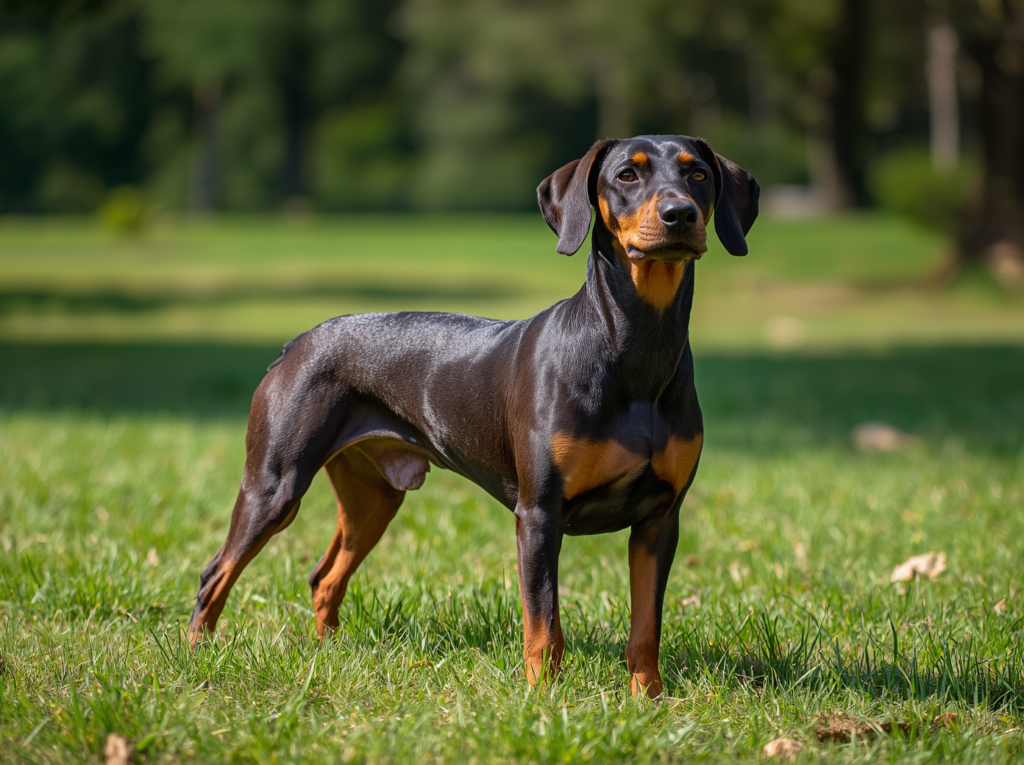
Like any hybrid, the doberman and dachshund mix may inherit health predispositions from both parent breeds. Understanding these risks upfront is the most responsible thing a prospective owner can do.
IVDD: The Dachshund’s Defining Challenge
Intervertebral Disc Disease (IVDD) is the most significant health risk passed through the Dachshund bloodline. IVDD represents a major problem in Dachshunds, with the breed at a relative risk 10–12 times higher than other breeds, and 19–24% of Dachshunds estimated to show clinical signs related to IVDD during their lifetime.
A 2025 study published in the Journal of the American Veterinary Medical Association (JAVMA), drawing on data from 43,517 companion dogs, confirmed that Dachshunds had the highest lifetime prevalence of owner-reported IVDD at 15.3%.
Any doberman and dachshund mix carrying the Dachshund’s long spine should be managed proactively. Use ramps instead of stairs where possible, avoid high-impact jumping, and keep your dog at a lean, healthy weight.
Doberman-Side Health Risks
From the Doberman parent, watch for:
- Dilated Cardiomyopathy (DCM) — a serious and common heart condition in the breed
- Von Willebrand’s Disease — a hereditary blood clotting disorder
- Wobbler’s Syndrome — cervical vertebral instability affecting the neck
- Hypothyroidism — one US study found 6.3% of Dobermanns to have the condition, compared to 1.54% for mixed-breeds
A doberman and dachshund mix sourced from health-tested parents significantly reduces genetic risk. Always request health clearances for both parents before committing to a puppy.
Summary Health Table
| Health Area | Proactive Recommendation |
|---|---|
| Spine care | Use ramps and steps; discourage jumping |
| Heart health | Annual cardiac screening from age 3 onward |
| Weight management | Lean body weight reduces IVDD risk significantly |
| Dental care | Brush weekly; smaller breeds are prone to dental disease |
| Vet schedule | Bi-annual check-ups recommended |
Grooming and Coat Care: Minimal Effort Required
Good news for busy owners: the Doberdach is a low-maintenance dog in the grooming department. With a short, smooth coat typically inherited from the Doberman side, weekly brushing is usually all it takes to keep shedding under control and the coat looking healthy.
Bathing every 4–6 weeks is generally sufficient. Dogs like this Doxie Dobie are statistically more prone to dental disease than larger breeds, so weekly tooth brushing should be a non-negotiable part of your routine. Ear cleaning and regular nail trims round out the maintenance schedule.
Is the Doberdach the Right Dog for You?
Let me be straightforward: the doberman and dachshund mix is not for every household and that’s perfectly fine. This hybrid is best suited to an owner who:
- Has some prior dog experience both parent breeds can challenge first-time owners
- Can commit fully to early training and socialization
- Wants a loyal, protective companion who is also playful and affectionate
- Understands that a long-backed dog requires thoughtful care to protect its spine throughout life
The Doxie Dobie is suitable for families or individuals who can provide the structure and leadership this cross needs, along with homes with space to move and for those who want a protective and playful companion.
For those who are ready, owning a doberman and dachshund mix is a genuinely rewarding experience. These dogs give everything they’ve got to the people they love. For a deeper dive into the Dachshund side of this mix’s heritage, the Dachshund Guides on our website cover everything from breed history and training strategies to mix-by-mix comparisons.
Conclusion
The doberman and dachshund mix is one of those rare hybrids that catches you completely off guard. It’s compact but commanding, playful but protective, and endlessly devoted to the family fortunate enough to call it their own. With the right home, early training, consistent socialization, and attentive veterinary care particularly around spinal and cardiac health the Doberdach can be a companion for life.
Frequently Asked Questions (FAQs)
Q1: What is a doberman and dachshund mix called?
The doberman and dachshund mix is most commonly referred to as a “Doberdach” or “Doxie Dobie.” These are informal but widely used nicknames among breeders and enthusiasts in the hybrid dog community.
Q2: How big does a Doberdach typically get?
Size varies depending on which parent’s genes dominate, but most doberman and dachshund mix dogs weigh between 15–40 pounds and stand 8–18 inches tall, placing them comfortably in the small-to-medium category.
Q3: Is the doberman and dachshund mix good for apartment living?
With sufficient daily exercise and mental engagement, a Doberdach can adapt well to apartment life. However, their watchdog instincts mean they may bark at unfamiliar sounds early training helps manage this considerably.
Q4: What is the lifespan of a Doberdach?
The typical lifespan of a doberman and dachshund mix ranges from 10 to 14 years, with longevity influenced by genetics, body weight, diet quality, and preventive veterinary care throughout the dog’s life.
Q5: Are Doberdachs difficult to find from a breeder?
Yes the doberman and dachshund mix remains relatively uncommon compared to more established designer breeds. Because of this rarity, and the importance of genetic health testing in both parent breeds, choosing a responsible and transparent breeder is one of the most important decisions you can make.
