
Dachshund vs Mini Dachshund: The Real Differences

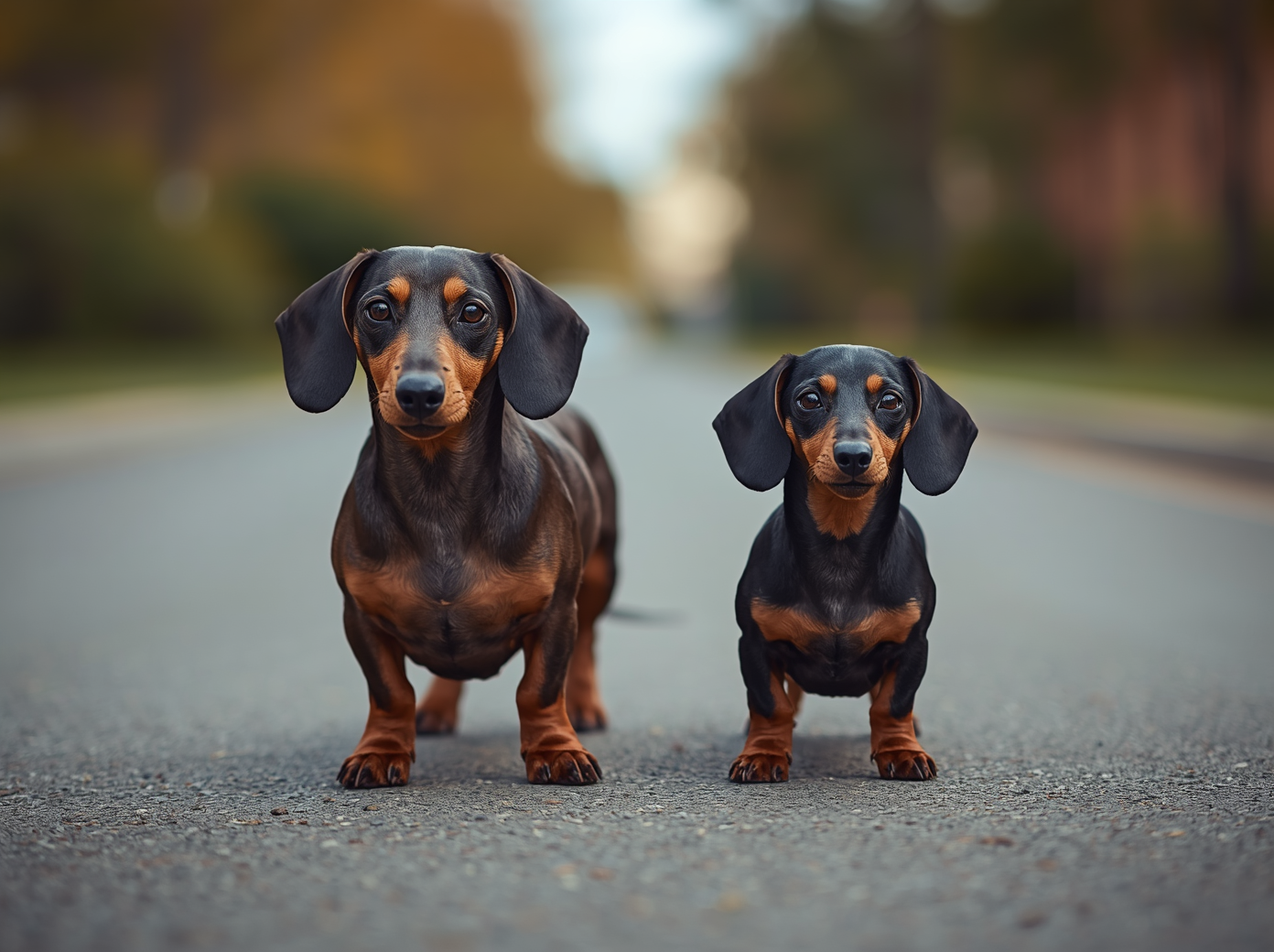
The first time I stood in a breeder’s living room surrounded by dachshunds, I thought choosing would be simple. Then someone placed a miniature next to a standard, and I realized I had underestimated this decision entirely. One looked like a confident little athlete. The other looked like someone had shrunk the first one in the wash and made it even cuter somehow.
If you have been researching the dachshund vs mini dachshund question, you already know both versions share that iconic long body, those soulful eyes, and a personality that is three sizes too big for either frame. But the differences between them are more meaningful than most people expect. Size affects everything from how much they eat and how far they walk, to how long they live and what health risks they carry.
This guide gives you the complete, honest picture on dachshund vs mini dachshund so you can make the right call for your home, your lifestyle, and your heart.
Are They the Same Breed? Let’s Settle This First
Before diving deep into the dachshund vs mini dachshund comparison, one thing needs to be clear: they are the same breed. There is no separate genetic lineage that creates a miniature dachshund. The American Kennel Club (AKC) recognizes both as a single breed the dachshund differentiated only by size category. In the United States, the dividing line is weight: anything 11 pounds or under at 12 months of age is classified as a miniature, and anything above that (typically 16–32 pounds) is a standard.
Same temperament DNA. Same coat varieties. Same ancient hunting heritage tracing back to 17th-century Germany. The dachshund vs mini dachshund distinction is fundamentally a question of scale but that scale matters enormously in real-world ownership.
Dachshund vs Mini Dachshund: Size and Weight Breakdown
The most obvious starting point in any dachshund vs mini dachshund conversation is physical size. Here is how the two stack up according to current breed standards:
| Feature | Standard Dachshund | Miniature Dachshund |
|---|---|---|
| Weight | 16–32 lbs (7.3–14.5 kg) | Up to 11 lbs (5 kg) |
| Height at shoulder | 8–9 inches (20–23 cm) | 5–6 inches (13–15 cm) |
| Body structure | Longer, more muscular | Compact, more delicate |
| Full maturity age | 10–12 months | 10–12 months |
| Best living situation | House with yard or larger apartment | Apartment, condo, small home |
| Average monthly food cost | $40–$70 | $20–$40 |
The miniature is roughly half the weight and noticeably shorter than the standard. That size gap changes daily life in surprising ways from how easily you can pick them up and take them on a train, to how much they cost to feed and medicate over a lifetime.
A Brief History: Why the Mini Dachshund Was Created
Understanding the dachshund vs mini dachshund story means understanding why breeders developed the smaller size in the first place. The original standard dachshund was bred in Germany over 300 years ago as a fearless underground hunter, built to chase badgers into their burrows and emerge victorious. Their long, low bodies were functional engineering not a design choice.
By the late 19th century, as dachshunds transitioned from working hunters to beloved companions, breeders began selectively pairing smaller individuals to create a dog that could pursue rabbits into tighter tunnels and fit more comfortably into city homes. The miniature dachshund emerged from this process, not as a separate breed, but as a refined, scaled-down version of the original.
Today, when you compare dachshund vs mini dachshund, you are comparing a hunting specialist with its apartment-ready cousin two expressions of the same extraordinary animal.
Lifespan: Does Size Affect How Long They Live?
One of the most frequently asked questions in the dachshund vs mini dachshund debate is about longevity. The data is genuinely encouraging for both, with a slight edge for miniatures:
- Standard dachshund lifespan: 12–14 years on average
- Miniature dachshund lifespan: 13–16 years on average, with some living up to 17 or even 20 years
This follows the well-documented pattern across the dog world smaller dogs tend to outlive larger ones. The miniature’s lighter frame places less long-term strain on joints and organs. That said, both sizes are vulnerable to specific health conditions that can significantly affect quality and length of life if not actively managed.
For a deeper look at care routines that support longevity, our Dachshund Guides cover everything from nutrition timelines to senior dachshund wellness protocols.
Health Risks: What Every Owner Must Understand
Health is where the dachshund vs mini dachshund comparison gets serious. Both sizes carry the breed’s signature vulnerabilities largely because of their elongated spines and the genetic trait called chondrodystrophy that gives them those short legs.
Intervertebral Disc Disease (IVDD): The Biggest Concern
IVDD is the defining health challenge of this breed across both size categories. The condition occurs when spinal discs bulge or rupture, compressing the spinal cord and potentially causing paralysis. According to PetMD, up to 25% of all dachshunds standard and miniature alike will develop IVDD at some point in their lives.
Prevention for both sizes:
- Never allow jumping from furniture or stairs without ramps
- Always support both the chest and hindquarters when lifting
- Maintain a healthy weight obesity dramatically accelerates disc deterioration
- Avoid tug-of-war and high-impact rough play
Size-Specific Health Considerations
While IVDD affects both equally, the dachshund vs mini dachshund health picture diverges in a few important ways:
Standard dachshund-specific risks:
- Joint strain from higher body weight
- Greater risk of obesity-related complications
- Gastric torsion (rare but possible in larger individuals)
Miniature dachshund-specific risks:
- More fragile bone structure more prone to fractures from falls
- Higher susceptibility to patellar luxation (kneecap dislocation)
- Progressive Retinal Atrophy (PRA) noted more frequently in miniatures
Both sizes benefit enormously from ramps or pet stairs at home, regular vet check-ups, and weight management as a top priority.
Personality: Big Attitude in Both Packages
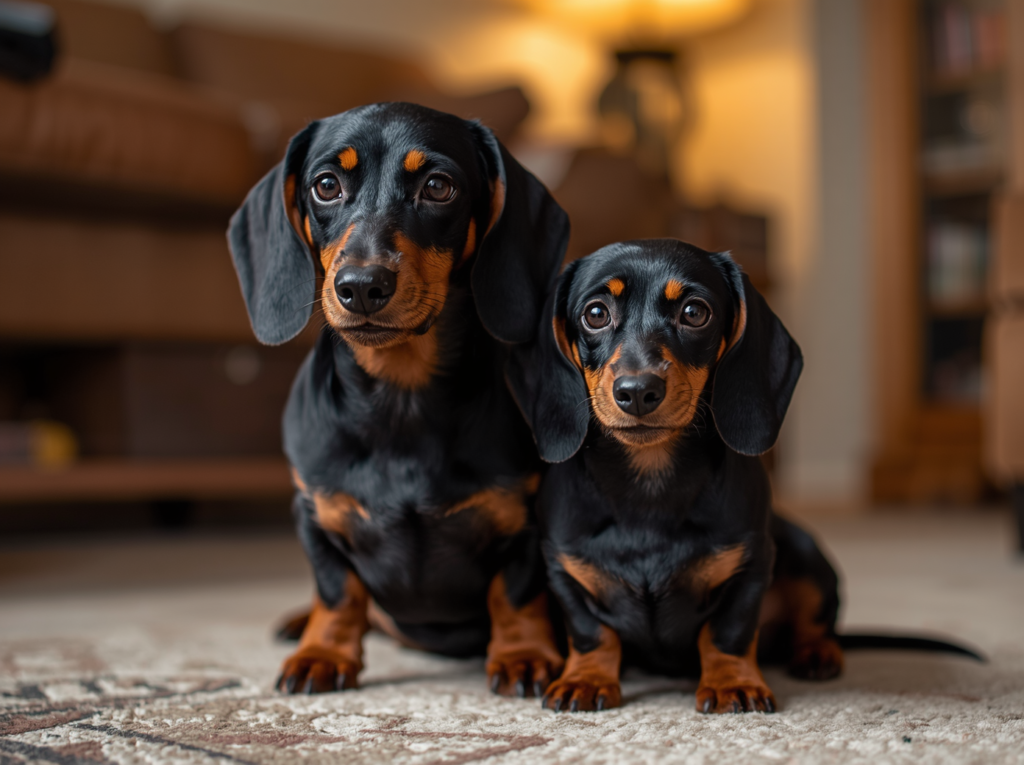
Anyone who has spent time researching dachshund vs mini dachshund temperament will tell you the personality difference is subtle but it is there.
Standard dachshunds tend to be slightly more independent and focused. Their larger size and stronger prey drive means they can be more determined, more persistent, and sometimes more stubborn in training. They were built for serious work, and that work ethic still shows. Standards are often described as bold, confident, and a little opinionated.
Miniature dachshunds carry all of that personality in a more socially calibrated package. Many owners and trainers describe them as slightly more people-oriented and quicker to respond to positive reinforcement. Their smaller size also means they tire more quickly in active play, making them well-suited to shorter, more frequent bursts of activity.
Both sizes share these traits universally:
- Fierce loyalty to their primary person
- A bark that surprises everyone — deep, loud, and designed to carry underground
- Keen nose and strong prey drive — they will follow a scent straight off a cliff edge if you let them
- Stubbornness that requires consistent, patient training
- Velcro behavior — they will follow you everywhere, always
In the dachshund vs mini dachshund personality debate, what you gain in miniature is not a calmer dog it is a slightly more manageable one.
Exercise Needs: How Much Activity Do They Really Need?
Exercise is a critical topic in the dachshund vs mini dachshund conversation, especially because both dogs look deceptively fragile while actually craving real physical activity.
| Exercise Factor | Standard Dachshund | Miniature Dachshund |
|---|---|---|
| Daily walk time | 45–60 minutes | 30–40 minutes |
| Walk intensity | Moderate–brisk | Moderate |
| Backyard need | Beneficial | Optional |
| Mental stimulation | High | High |
| Swimming suitability | Moderate (with support) | Low (more delicate) |
| Best activities | Scent games, hiking, fetch | Scent work, short walks, indoor play |
A key point for both sizes: exercise must protect the spine. High-impact activities like jumping off beds, running down stairs, or aggressive tug-of-war create unnecessary risk for those elongated backs. Low-impact options leisurely walks, sniff-heavy exploration, puzzle feeders serve both sizes far better.
Which Size Fits Your Living Situation?
This is the practical heart of the dachshund vs mini dachshund decision. Your daily environment should carry significant weight in the choice.
Miniature Dachshund: The Urban Companion
Dachshunds are considered among the best apartment breeds, as both standard and miniature varieties adapt well to smaller spaces, have moderate exercise needs, and tend to be quieter indoors than working breeds. That said, the miniature holds a clear edge for city living. Its smaller footprint, lower food costs, and easier portability make it the natural choice for apartment dwellers, frequent travelers, and those in compact homes.
Experts consistently affirm that small dog breeds, particularly the miniature dachshund, are among the best choices for apartment living in 2025, with urban pet owners highlighting their manageable size and affectionate nature as key factors.
Standard Dachshund: The Suburban Hunter
The standard is best suited to homes with a yard, families with older children, and owners who enjoy longer, more adventurous walks. Its larger size makes it slightly more robust and resilient in active outdoor settings. Standards also handle periods of alone time slightly better than miniatures, which can be more prone to separation anxiety due to their stronger attachment behavior.
Cost Comparison: What to Budget for Each Size
The dachshund vs mini dachshund financial picture favors neither clearly both are significant long-term commitments but there are real differences in day-to-day costs.
| Cost Category | Standard Dachshund | Miniature Dachshund |
|---|---|---|
| Puppy purchase price | $800–$2,000 | $1,000–$2,500 |
| Monthly food | $40–$70 | $20–$40 |
| Annual vet routine | $900–$2,160 | $800–$1,800 |
| IVDD surgery (if needed) | $3,000–$8,000 | $3,000–$8,000 |
| Monthly pet insurance | $35–$65 | $25–$50 |
Interestingly, miniature dachshund puppies often cost more to purchase initially because of higher demand and the additional care required by responsible breeders to produce healthy small-sized litters. However, ongoing costs run lower due to smaller food portions and generally lower medication dosing.
The Popularity Numbers in 2025
According to the AKC, the dachshund jumped from No. 6 to No. 5 on the most popular breeds list in 2025 a significant climb that AKC president Gina M. DiNardo noted by saying: “The breed has hovered in the top 10 most popular breeds for many years, and it’s no surprise that it’s back in the top five. Dachshunds are very intelligent, excellent problem solvers, and adorable.”
Within that surge, the miniature variety is the dominant force. UK registration data from the Kennel Club shows miniature dachshunds accounting for nearly 71% of all dachshund registrations in 2023, with the Mini Smooth alone growing over 1,270% since 1999. The dachshund’s rise is driven by converging trends: a surge in apartment living, social media’s love affair with the breed’s distinctive look, and growing appreciation for small dogs with big personalities.
The dachshund vs mini dachshund trend is clearly tilting toward the miniature and it is easy to see why.
My Personal Take on Dachshund vs Mini Dachshund
Personally, I think the dachshund vs mini dachshund debate reveals something important about how we choose dogs. We often start with aesthetics “I want the cute small one” but the best outcomes come when we match energy, space, and temperament honestly.
If you live in a studio apartment, work long hours, and want a dog you can tuck under your arm on the subway, the miniature is your answer. If you have a yard, kids who are old enough to handle a dog respectfully, and you enjoy hour-long morning walks, the standard will reward you with more endurance and slightly more independence.
Both versions of this comparison dachshund vs mini dachshund will give you a dog that is convinced it is the most important creature in any room it enters. And honestly? It is probably right.
Quick Comparison: Dachshund vs Mini Dachshund at a Glance
| Factor | Standard Dachshund | Miniature Dachshund |
|---|---|---|
| Weight | 16–32 lbs | Up to 11 lbs |
| Height | 8–9 inches | 5–6 inches |
| Lifespan | 12–14 years | 13–16 years |
| Best for | Houses, active owners | Apartments, city living |
| Prey drive | Very strong | Strong |
| Separation anxiety risk | Moderate | Moderate–High |
| Puppy price (USA) | $800–$2,000 | $1,000–$2,500 |
| AKC recognition | Yes (same breed) | Yes (same breed) |
Frequently Asked Questions (FAQs)
Q1: What is the main difference between a dachshund vs mini dachshund?
The primary difference is size. Standard dachshunds weigh 16–32 pounds and stand 8–9 inches tall, while miniature dachshunds weigh 11 pounds or less and stand 5–6 inches. Both belong to the same breed and share similar personalities, coat varieties, and health concerns.
Q2: Does a mini dachshund live longer than a standard dachshund?
Yes, in general. Miniature dachshunds typically live 13–16 years, while standard dachshunds average 12–14 years. Smaller dogs often enjoy slightly longer lifespans than larger dogs.
Q3: Are miniature dachshunds better for apartments than standard dachshunds?
Miniature dachshunds are often considered better suited for apartment living because of their smaller size and lower space requirements. However, both varieties can adapt well when provided with regular exercise and mental stimulation.
Q4: Do both sizes suffer from the same health problems?
Yes. Both standard and miniature dachshunds are susceptible to intervertebral disc disease (IVDD), the breed’s most common health issue. Miniatures may also be prone to patellar luxation, while standards can experience greater joint stress due to their heavier weight.
Q5: Which is easier to train a standard or miniature dachshund?
Neither size is significantly easier to train. Both are intelligent but independent-minded dogs. Consistent training, patience, and positive reinforcement are important for success with either variety.
