
Wiener Dog, Real Food: The Truth About Feeding Your Dachshund at Home

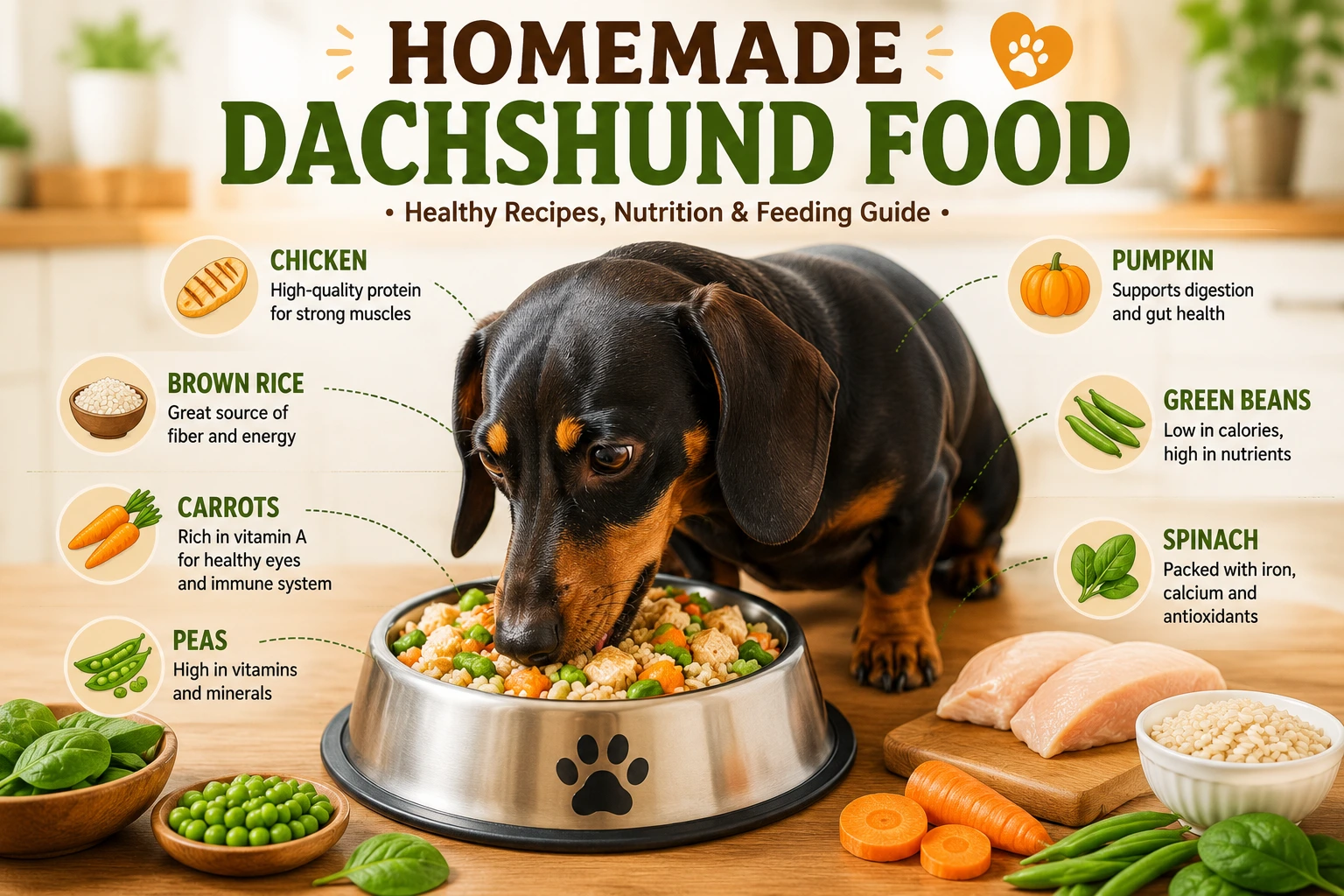
Dachshunds just had a moment. In the American Kennel Club’s 2025 registration data, the breed cracked the top five most popular dogs in the country for the first time since 2003, edging out the Poodle thanks to a mix of apartment-friendly size, internet fame, and that unmistakable “hot dog” silhouette.The Dachshund’s rise to fifth place is driven by a surge in apartment living, social media’s love affair with the breed’s distinctive look, and growing appreciation for small dogs with big personalities. And with that surge in popularity comes a surge in a very specific search: homemade dachshund food.
I get it. My mini doxie, Pretzel, has the kind of soulful eyes that make you want to cook him a five-course meal instead of pouring kibble into a bowl. But dachshunds aren’t just any small dog their long spine and short legs mean nutrition, weight management, and ingredient quality matter more than usual. This guide walks through what homemade dachshund food actually requires, what the data says about home-cooked diets, and how to do it without accidentally shortchanging your pup’s health.
Why Homemade Dachshund Food Is Trending Right Now
Pet “humanization” isn’t a buzzword anymore it’s a measurable shift in how people feed their dogs. Fresh dog food sales have risen 86.5% since 2021, and pet parents increasingly want meals that look and feel like something they’d eat themselves. That same appetite for transparency is fueling interest in homemade dachshund food, since owners can control every ingredient that goes into the bowl.
The broader dog food market backs this up. The global dog food market is projected to reach $61.4 billion by 2030, growing at roughly 7.7% annually, and a meaningful slice of that growth comes from fresh and home-prepared feeding trends rather than traditional kibble. For dachshund owners specifically, this shift makes sense: a breed prone to obesity-related back injuries benefits enormously from portion-controlled, ingredient-conscious meals which is exactly what homemade dachshund food is designed to deliver.
What Makes Dachshunds Nutritionally Unique
Before diving into recipes, it helps to understand why dachshunds need a slightly different approach than, say, a Labrador. Dachshunds are prone to joint and bone problems from their long backs and short limbs, and breed-specific nutrition including added calcium and phosphorus for bone and joint support is often recommended. That single fact should shape every homemade dachshund food recipe you try.
Key nutritional priorities for the breed include:
- Weight control — extra pounds put direct pressure on a dachshund’s long spine
- Joint-supportive minerals — calcium and phosphorus in the correct ratio
- Lean protein — to maintain muscle without excess calories
- Controlled portions — dachshunds are notorious food-motivated eaters
I learned this the hard way with my other dachshund, Bruno. He’d sit by the stove looking absolutely tragic every time I cooked chicken, and for a while I gave in more than I should have. The pounds crept on, and our vet gently pointed out that every extra bit of weight was extra strain on his back. That conversation changed how I thought about homemade dachshund food entirely it’s not just about love, it’s about engineering a diet that protects his spine.
The Real Risk: Most Homemade Diets Aren’t Balanced
Here’s the statistic that should make every dachshund owner pause before freelancing in the kitchen. A Dog Aging Project analysis of 1,726 homemade dog food formulations found that only 6% had the potential to be nutritionally complete. In other words, roughly 94% of homemade diets studied were missing something critical.
Researchers found that ingredient substitutions like swapping oils or skipping calcium supplements can quietly compromise a diet’s completeness, and imbalanced calcium and phosphorus levels can lead to bone and kidney problems. For a breed already predisposed to spinal and joint issues, that’s not a small detail it’s the whole ballgame. This is precisely why any homemade dachshund food plan should be built around a vetted recipe rather than improvisation.
The researchers recommend that owners work with a board-certified veterinary nutritionist, follow the diet exactly as prescribed, and periodically send samples to food-testing labs for long-term feeding programs. It sounds intense, but it’s a one-time consultation that can save years of correcting a nutritional gap.
Building a Balanced Homemade Dachshund Food Recipe
A nutritionally sound bowl of homemade dachshund food generally includes four building blocks. None of these amounts are a substitute for a vet-reviewed plan, but they illustrate the proportions most veterinary nutritionists start from.
| Component | Example Ingredients | Approx. Share of Meal | Purpose |
|---|---|---|---|
| Lean protein | Chicken breast, turkey, whitefish | 40–50% | Muscle maintenance, satiety |
| Complex carbs | Sweet potato, brown rice, pumpkin | 20–30% | Sustained energy, fiber |
| Vegetables | Carrots, green beans, spinach | 15–20% | Vitamins, gut health |
| Fat & supplements | Fish oil, calcium powder | 5–10% | Joint support, coat health |
Notice that vegetables like carrots, sweet potatoes, and peas keep showing up and that’s not a coincidence. The pet food industry itself is shifting back toward these familiar, recognizable vegetables because pet owners want ingredients they can identify without technical knowledge. The same logic applies beautifully to homemade dachshund food: simple, whole ingredients you can name are usually the safest starting point.
Portion Control: The Non-Negotiable Rule
Because obesity is the single biggest controllable risk factor for a dachshund’s back health, portioning matters as much as ingredients. A general starting point is roughly 25–30 calories per pound of body weight per day for an adult, moderately active dachshund, split into two meals though this should always be adjusted with your vet based on age, activity, and body condition. Weigh your dog monthly and adjust homemade dachshund food portions the same way you’d adjust your own diet after a checkup.
Cost and Time: Is Homemade Dachshund Food Worth It?
Cost is a legitimate concern. Dog owners in the US already spend an average of $442 per year on food, and home-cooked meals with quality protein often cost more than mid-range kibble, though usually less than premium fresh-food subscription services. Interestingly, about a quarter of owners say they would cut costs on specialty food to save money which is exactly the group that benefits most from learning to batch-cook affordable, balanced meals at home instead of buying pricey pre-made options.
In my experience, batch-cooking once a week (usually a Sunday afternoon with a big pot of chicken, sweet potato, and vegetables) keeps costs manageable and turns homemade dachshund food from a daily chore into a simple reheat-and-serve routine.
Ingredients to Never Include
No homemade dachshund food guide is complete without a warning list. Avoid onions, garlic, grapes, raisins, chocolate, xylitol, cooked bones, excess salt, and fatty trimmings. Cooked bones are especially risky for dachshunds, since a fractured tooth or gut obstruction adds unnecessary strain to a body already vulnerable at the spine.
A Simple Vet-Inspired Starting Recipe
- 1 cup shredded cooked chicken breast (unseasoned)
- 1/2 cup cooked sweet potato, mashed
- 1/4 cup steamed green beans, chopped
- 1 teaspoon fish oil
- Vet-recommended calcium supplement, per label directions
Mix, cool completely, and portion according to your dachshund’s target daily calories. This is a starting template only for daily feeding, confirm quantities and supplement levels with your veterinarian, ideally the same way you’d double-check any long-term nutrition plan.
If you’re building out a full feeding routine, our Dachshund Guides hub has breed-specific advice on everything from weight management to back-health-friendly exercise, which pairs naturally with any homemade dachshund food plan.
Homemade vs Commercial: A Quick Comparison
| Factor | Homemade Dachshund Food | Commercial Kibble |
|---|---|---|
| Ingredient control | Full control | Limited to label |
| Nutritional completeness | Requires vet formulation | Regulated & tested |
| Cost | Moderate to high | Low to moderate |
| Convenience | Requires prep time | Ready to serve |
| Customization for joint/back health | Highly customizable | Breed-specific formulas exist |
Many dachshund owners land on a hybrid approach homemade dachshund food as the primary diet, topped with a small amount of a vet-approved commercial formula to fill any nutritional gaps. According to the pet nutrition data source Innova Market Insights, protein remains the single biggest purchase driver for pet owners, with 49% saying it most influences their food choices, which tracks with why so many dachshund parents lean on lean proteins as the backbone of home-cooked meals.
Final Thoughts on Feeding Your Wiener Dog Well
Homemade dachshund food can be one of the most rewarding parts of dog ownership watching your dog’s coat shine and energy improve because you made a deliberate choice about what goes into their bowl. But it only works when it’s balanced, portion-controlled, and built with your dachshund’s uniquely long spine in mind. Start with a vetted recipe, weigh your ingredients, check in with a veterinary nutritionist, and treat homemade dachshund food as a long-term commitment rather than a one-time kitchen experiment.
FAQ: Homemade Dachshund Food
Is homemade Dachshund food actually healthier than kibble?
Homemade Dachshund food can be healthier than kibble if it is properly balanced and formulated. While homemade meals offer greater control over ingredients, they must provide all essential nutrients. Veterinarian-approved recipes are the safest choice.
How much should I feed my Dachshund on a homemade diet?
Most adult Dachshunds require approximately 25–30 calories per pound of body weight per day, divided into two meals. However, the ideal amount depends on your dog’s age, activity level, metabolism, and overall health, so consult your veterinarian for personalized guidance.
Can Dachshund puppies eat homemade Dachshund food?
Yes, but puppies have much higher nutritional requirements than adult dogs. Any homemade diet for a growing Dachshund puppy should be formulated or reviewed by a veterinary nutritionist to ensure healthy growth and development.
What foods should never go into homemade Dachshund food?
Never include onions, garlic, grapes, raisins, chocolate, xylitol, cooked bones, excessive salt, or high-fat foods in homemade Dachshund meals. These foods can be toxic or pose serious health risks.
Do I need supplements if I make my own dog food at home?
In most cases, yes. Homemade dog food often requires supplements such as calcium, vitamins, minerals, and sometimes joint-support nutrients to provide complete and balanced nutrition. Your veterinarian can recommend the right supplements based on your dog’s specific needs.
