
Weiner Dog Mix: What a Dachshund Cross Really Inherits

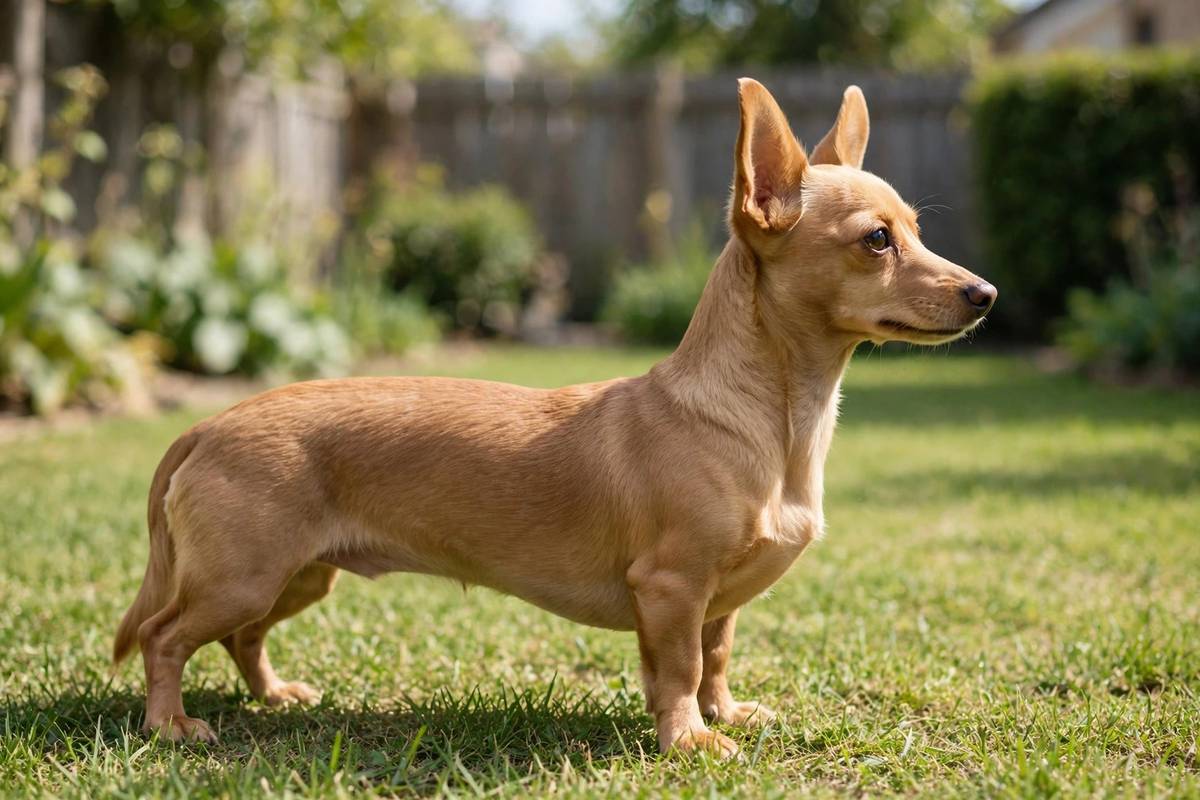
A weiner dog mix is a dachshund crossed with another breed, most often a chihuahua, beagle, poodle or corgi. The puppy keeps the long back and the short legs, then takes its adult size and much of its temperament from the other parent. The American Kennel Club puts a standard dachshund at 16 to 32 pounds, so you know the frame you’re starting from.
None of that is guaranteed.
No registry recognizes the cross as a breed, so there’s no standard for weight, coat or lifespan, and two puppies from one litter can land at opposite ends of the range. What you can plan for is the part the dachshund side always brings.
What Is a Weiner Dog Mix?
A weiner dog mix is a first-generation cross between a dachshund and a second breed. The dachshund side gives the long spine, the short legs and a deep chest, while the other parent sets adult weight, coat and most of the working temperament. No kennel club registers the cross, so there’s no fixed standard for your puppy.
- Spine: long and low, on a chest deeper than either parent’s
- Weight: 16 to 32 pounds from the dachshund side, 11 or under for a miniature
- Lifespan: 12 to 16 years from the dachshund side, which sets the rough middle of the range you can expect
- Coat: smooth, long or wire from the dachshund, then whatever the other parent throws
- Registry status: none, so the designer name is a label and not a breed
- Back risk: the disc disease odds travel with the dachshund genes
The label does most of the confusing work. A chiweenie, a doxle and a dorgi all answer to weiner dog mix, and the name on the advert changes nothing inside the dog.
What changes your dog is the breed on the other side and which of the two parents was the mother. Both are worth asking about before you pay a deposit.
The Mixes You’ll See Most
Most of the crosses sold under a cute name trace back to a short list of parent breeds, and each one leans a different direction. Here’s what you’re getting from the ones people ask about.
- Chiweenie (chihuahua): chihuahua size at the small end, one-person loyalty, and a bark that outruns the body
- Doxle (beagle): a nose that works all day and a voice to match, plus a serious appetite
- Doxiepoo (poodle): the lowest-shedding of the group, with a coat that needs brushing instead of vacuuming
- Dorgi (corgi): short legs on both sides and a herding urge that shows up as ankle work
- Golden dox (golden retriever): a parent that weighs 65 to 75 pounds, on dachshund legs and with the calmest temperament here
- Dachsador (labrador): a steady, food-motivated dog that inherits the retriever’s size and the dachshund’s spine
- Daug (pug): the shortest muzzle of the group, so watch breathing and heat before anything else
- Dorkie (yorkie): terrier attitude in a small package, with the softest coat of the ten
- Jackshund (jack russell): the highest energy on this list and the hardest to recall off-lead
- Schweenie (shih tzu): a calm house dog with a long back and a coat that mats without brushing
Guessing a mix from a photograph is where a lot of these names get used, and the guesses aren’t reliable. Owners make them anyway, and you’ll see them land on the same handful of answers.
He kinda looks like a chiweenie, but I don’t know what he’s mixed with. — r/WhatKindOfDogIsThis, 9 upvotes
Which Parent Decides the Size
The parent that matters most is the mother, and the breed pairing comes second. When the dachshund is the mother and the father is a large breed, the puppies are built to a frame her pelvis was never shaped for.
That’s a load question as well as a genetics question, and it isn’t settled by anything on the advert.
A University of California, Davis teaching handout on difficult births lists “mismatch fetal/maternal size” among the causes of dystocia, the term for a birth that stalls without help.
A 65-pound golden retriever father and a 20-pound dachshund mother is that mismatch by design. Put those two weights together and the birth is the part to plan for, long before the name on the advert.
So who carries the litter? Breeders who make these crosses on purpose put the smaller dog in the father’s role, so the larger parent gestates. It lowers the odds of a stuck puppy. It doesn’t remove them, because a dachshund’s pelvis stays narrow whatever the father weighs.
The direction of the cross is the closest thing to a safety rule this subject has, which is why a breeder who knows the field tells you who the mother is before showing you a puppy.
There’s a second cost that follows your puppy home.
A dog with a large parent’s frame on a dachshund’s short legs moves more body weight through the same short spine.
That load argument is mechanics, and it isn’t a measured finding, since no study has tracked disc pressure in these crosses. It’s still the reason to weigh the father’s size as well as the mother’s.
The rule doesn’t apply to every cross. A chiweenie, a doxiepoo or a dorgi pairs two dogs of similar size, so you’ve got no mismatch to manage.
It’ll bite hardest on the golden dox, the dachsador and the boxer cross, where the other parent outweighs the dachshund two to one.
The Back Comes With the Mix
A mixed puppy gets half its genes from the dachshund, and the disc disease numbers don’t wash out. In a 2025 study of 43,517 dogs published in JAVMA, dachshunds showed a 15.3% lifetime prevalence of owner-reported IVDD against 1.2% across the whole sample.
The same study found higher odds in overweight dogs (odds ratio 1.67) and in toy and small breeds. A chiweenie sits in two of those groups at once, and a dachsador sits in one.
IVDD is a disc disease before it’s an accident.
Dachshund-type dogs are chondrodystrophic, meaning the cartilage in their discs hardens early in life, and the cushion between the vertebrae loses some of its give.
Vets describe a jump as the last straw rather than the cause, which is why the same fall injures one dog and won’t injure the next. Your job is to keep the landing soft for the dog you end up with.
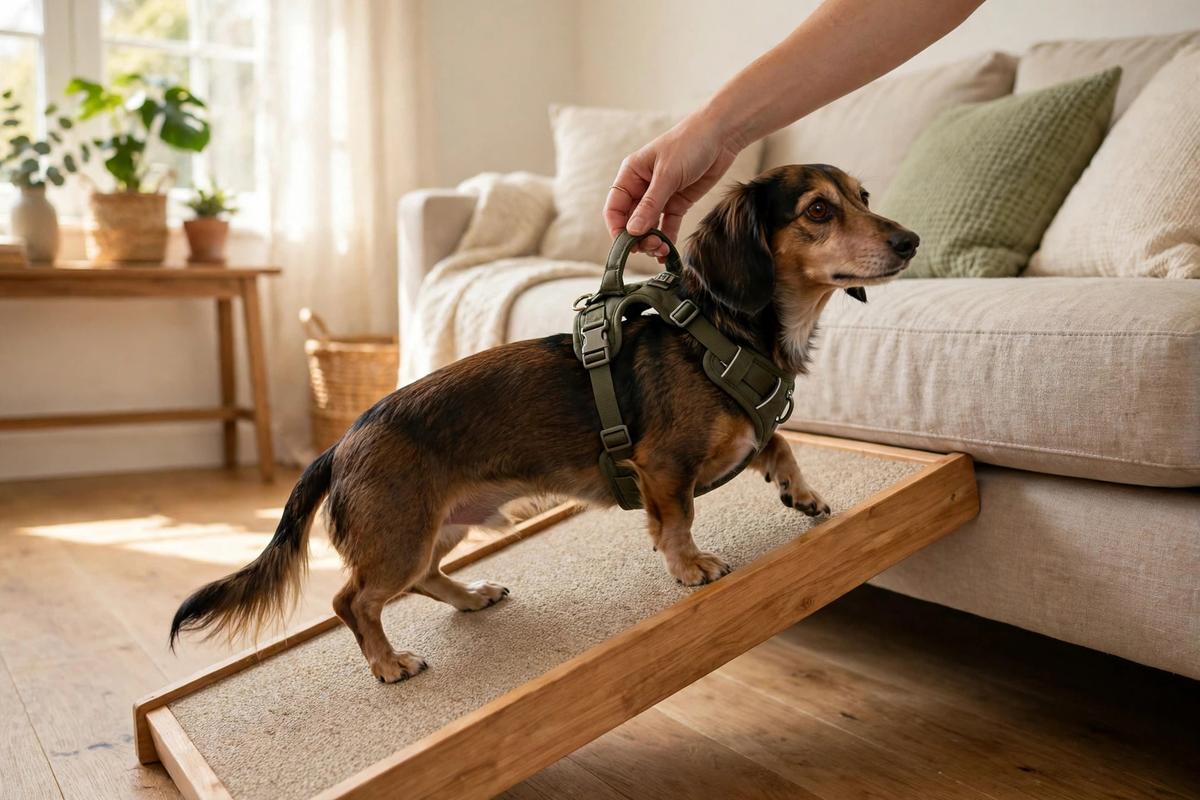
What actually protects the back? Body weight first, then the way you lift the dog. A harness spreads a pull across the chest instead of the neck, and two hands under the chest and hips every time you move the dog off the couch costs nothing.
A ramp beside the car helps if the dog won’t jump in. So does a low step by your bed, which is where most of the leaping happens.
One result doesn’t fit the usual breed advice. Regular stair use came out associated with lower odds of IVDD in that study, and the authors don’t present it as permission to launch a dog down a flight.
Owner-reported data can’t separate a careful owner from a cautious dog. The practical line is to stop the leaping and treat a staircase as something to walk, not something to fear.
Temperament: What the Other Parent Adds
The dachshund side brings independence, a loud bark and a firm opinion about being moved. The other parent sets whether that surfaces as a beagle’s nose, a terrier’s temper or a poodle’s need for company. A beagle cross follows its nose past your call and keeps going.
A dachshund was bred to go to ground after badgers, and that history shows up in a mix as a dog that doesn’t take no for an answer. Fence gaps are suggestions.
Recall is optional from your dog’s point of view.
Training works when the sessions stay short, the treats are real food and the rules don’t move.
Barking is the part neighbors notice. Pair a dachshund with a terrier, a beagle or a pinscher and you get a dog with a lot to say about the mail carrier. Pair it with a cocker spaniel, a shih tzu or a bichon and the volume drops, though not to silence.
Socialization has a deadline, and it doesn’t wait for you to notice it. Vets generally put the end of that window at around 16 weeks, which is why a puppy class and a few calm introductions beat a year of apologizing at the park.
Prey drive doesn’t train out. Management does the work, so a rabbit-proof fence and a leash in open ground cost less than a trainer and a lost afternoon.
Buying or Rescuing a Weiner Dog Mix Puppy
There’s no pedigree weiner dog mix, so the paperwork is thinner than the price suggests.
Ask for both parents’ health records, the mother’s weight, and whether the litter arrived naturally or by cesarean.
A listing that calls the cross rare is selling a label. Nothing about a first-generation cross is rare except the price tag. What’s worth paying for is a breeder who shows you the mother, names the father and hands over records on both.
Rescue is the cheaper route and often the better one for this shape of dog. Dachshund rescues take mixes, and an adult arrives with a known weight, a known bark level and a vet who has already looked at the back.
Does a rescue dog come with the same risk? The same spine, yes, but with the size and the temperament already visible before you commit.
Two things you should walk away from. A breeder who won’t let you see the mother is hiding either her size or her condition. A litter sold before eight weeks trades your convenience for a puppy that missed what its siblings teach. Neither is negotiable, and you’ll see both in one visit.
Weiner Dog Mix FAQ
What is the best dachshund mix breed?
There’s no single best answer. Choose by the trait you can live with: a beagle cross if you want a dog that’ll work a scent all day, a poodle cross if shedding is the deal-breaker, a chiweenie if floor space is tight.
Are dachshund mixes good dogs?
Yes, for a household that plans for the back and the barking. The temperament is affectionate and stubborn in roughly equal measure, and the health risk stays manageable when you control weight, lift with a harness and put a ramp on the sofa.
How big does a weiner dog mix get?
Adult size follows the larger parent. A chiweenie stays close to chihuahua size, while a golden dox or a dachsador lands somewhere between its two parents, often nearer the big one. That’s why you should see the father before you decide.
Do weiner dog mixes shed?
It depends on the coat parent. A poodle cross sheds less than a labrador or golden retriever cross, and wirehaired dachshunds are often described as shedding least of the three dachshund coats. If shedding is your one hard limit, the doxiepoo is the safest bet.
Are weiner dog mixes good with kids?
Often, if the child is taught to stop picking the dog up. A long back makes a mid-air grab the most dangerous move in the house, and a dog in pain may snap at whoever is holding it. Teach the lift before you bring the dog home and you’ll avoid most of it.
