
Chihuahua Jack Russell Mix Size, Health and Temperament


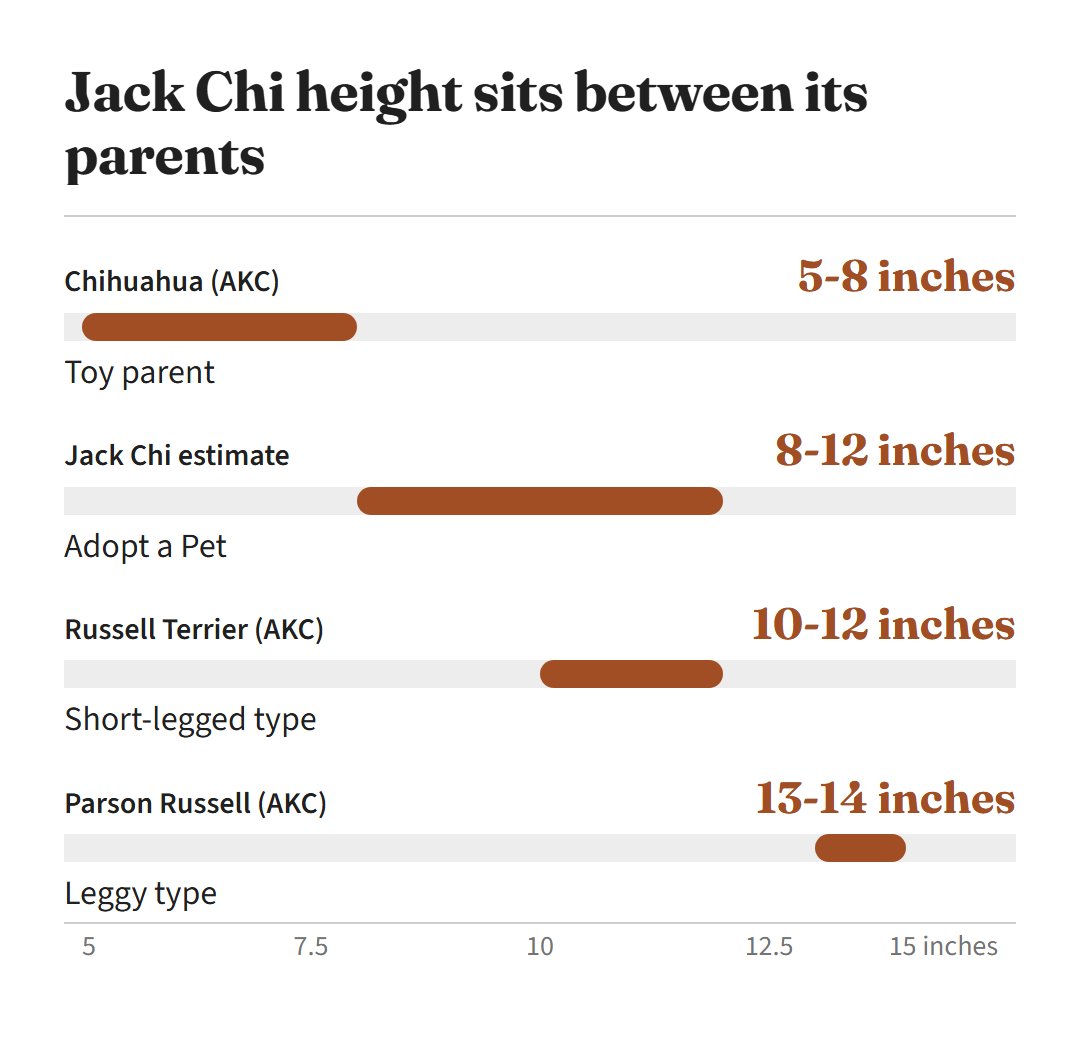
Expect your Jack Chi to weigh about 8 to 15 pounds and stand 8 to 12 inches tall, going by Adopt a Pet’s estimate, and to live roughly 13 to 17 years. It’s a loud, quick, people-focused dog with a chase drive you’ll notice on day one.
The Chihuahua side of a Chihuahua Jack Russell mix is the predictable half, since the AKC standard caps a Chihuahua at 6 pounds.
The terrier side is where the spread comes from. A dog sold as a “Jack Russell” can be built like one of two different AKC breeds, or like neither.
How big does a Chihuahua Jack Russell mix get?
A Chihuahua Jack Russell mix most often lands between 8 and 15 pounds, per Adopt a Pet’s Jack Chi guide. The ceiling depends on the terrier parent: a short-legged Russell Terrier type tops out around 15 pounds, while a leggy Parson type can reach 17.
Here are the parent numbers from each breed’s AKC page. No kennel club publishes a standard for the cross itself, so they’re the only fixed points you’ll get.
| If the parent is | Height | Weight | Life expectancy |
|---|---|---|---|
| A Chihuahua (AKC standard) | 5 to 8 inches | Not over 6 pounds | 14 to 16 years |
| A short-legged Russell Terrier type | 10 to 12 inches | 9 to 15 pounds | 12 to 14 years |
| A leggy Parson Russell Terrier type | 13 to 14 inches | 13 to 17 pounds | 13 to 15 years |
So what happens when a 5-pound Chihuahua meets a 15-pound terrier? The puppies can land anywhere between the two, and littermates often don’t match. The parents’ weights give you a rough idea, not a promise.
Which “Jack Russell” is the parent?
Two of them, actually. The AKC registers two terriers that trace back to the same English parson’s foxhunting dogs, and they aren’t the same size. The AKC’s Russell Terrier page lists 10 to 12 inches and 9 to 15 pounds. Its Parson Russell Terrier page lists 13 to 14 inches and 13 to 17 pounds, a taller, longer-legged dog.
Most terriers used in casual crosses aren’t papered as either. Can you see the terrier parent? Look at its legs.
A low, rectangular dog points you toward the smaller end of the Jack Chi range. A square, long-legged one points toward the top, and toward an adult that may outgrow the 15-pound estimate.
Coat varies just as much. Adopt a Pet notes that short hair is the likelier result, and that a Jack Chi can also inherit the long, soft coat of a long-haired Chihuahua, so a fluffy puppy isn’t proof of a different mix.
Is your dog a Jack Chi at all?
Maybe not. A shelter or seller label of “Chihuahua Jack Russell mix” is a guess based on looks, and a DNA test is the only way you’ll know which breeds are actually in a rescue dog, which is why owners on r/Chihuahua keep finding out their “terrier mix” is something else.
One owner posted a picture of a white-and-tan dog everyone mistook for a Jack Russell cross. The parents were both Chihuahuas:
“All I know is that her ma was a 5lbs chi and her pa was a 6.6lbs chi. How I got a 11lbs “JRT” is mystery 😂 Other than that it gives me chronic back pain to carry her around, she’s my perfect baby 🥰”
– r/Chihuahua, August 2026 (214 upvotes)
In the same thread, another owner said their dog Alfredo was called a Jack Russell mix by the people they got him from and by their vet. His DNA result came back as Chihuahua crossed with Maltese, Pomeranian and Shih Tzu, with no terrier listed.
An 11-pound dog from two small Chihuahuas tells you parent weight sets no hard cap. And a tan saddle on a white body doesn’t prove there’s a terrier in the family tree.
If you’re adopting and the breed matters to you for size or energy, a DNA kit settles it.
Temperament: chase, noise and guarding
The AKC describes the Russell Terrier as upbeat, lively, inquisitive and friendly, and notes it was developed for foxhunts. That hunting job is what surprises you in a small dog. A Jack Chi that spots a squirrel, a cat or a rolling ball can go from calm to gone in a second.
Adopt a Pet lists barking, chewing, digging and nipping as the usual problem behaviors when the dog’s energy isn’t used up. Both parents alert to sounds, so you’ll hear about the delivery driver, the neighbor’s door and the leaf that moved.
Can you train the barking out? You can teach a quiet cue, but you can’t remove the alarm system.
Resource guarding is the one to plan for if you have children. Adopt a Pet warns that Jack Chis may guard toys, food or their favorite person, which can make them snappy when kids reach in. Give your dog its own space, feed it away from foot traffic, and teach kids to let the dog come to them.
Adopt a Pet calls the mix spirited, affectionate and people-oriented.
How much exercise and training a Jack Chi needs
A Jack Chi needs daily walks plus play and some brain work, more than its size suggests. Adopt a Pet says owners of small dogs often underestimate the training these pets need, and the terrier half means a bored dog finds its own jobs.
Split activity into two or three sessions a day. A walk, a game of fetch in a fenced yard and ten minutes of sniff work or a puzzle feeder usually beat one long outing.
Off-leash recall near open ground is a gamble because of the chase drive. Keep the leash on unless you’re in a fully enclosed area.
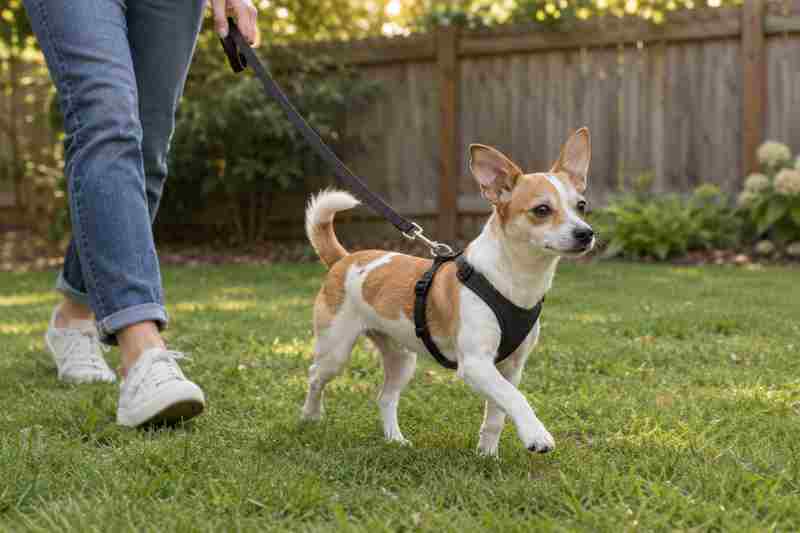
Training works best in short, reward-based sessions. Harsh corrections tend to make small, bold dogs dig in. Start house training early and stay consistent, since small bladders and cold mornings don’t help.
Use a harness, not a neck collar, for walks. Cornell’s Riney Canine Health Center lists switching from neck collars to harnesses as one of the lifestyle changes for dogs with tracheal collapse, a windpipe problem common in toy and small breeds.
Health and lifespan
A healthy Jack Chi often lives 13 to 17 years, according to Adopt a Pet. That fits the parents: the AKC gives the Chihuahua 14 to 16 years and the Russell Terrier 12 to 14 years. You’re likely signing up for a dog that’s with you well into its teens.
The knee is the first thing to ask a breeder or rescue about. According to VCA Animal Hospitals, many toy and small breeds, including the Chihuahua, have a genetic tendency toward a luxating patella, a kneecap that slips out of its groove.
The sign to watch is a skip in your dog’s step, or a few strides on three legs before it carries on as normal. Mild cases may not need surgery. Higher grades usually do, and earlier repair protects the knee from arthritis.
Tracheal collapse is the second one to know by name. Cornell describes its most common sign as a harsh, dry, “goose-honking” cough that excitement, heat or pressure on the neck can set off. A harness and a lean body weight both help.
Weight control matters more on a dog this small. A pound or two over target is a big share of body weight for an 8-pound dog, and it’s extra load on those knees. Feel for your dog’s ribs every couple of weeks and adjust meals before the scale climbs.
Jack Chi, Chiweenie or Jackshund?
These three crosses share parents and get mixed up all the time. Pick by the body and energy level you want, not by the name on the listing.
- Jack Chi (Chihuahua × Jack Russell): the most athletic of the three, with legs for running and the strongest chase drive.
- Chiweenie (Chihuahua × Dachshund): a longer, lower body, with the back care that comes with dachshund genes. See the Chiweenie guide for size and spine notes.
- Jackshund (Dachshund × Jack Russell): a heavier, terrier-driven dog that can outweigh a Jack Chi. The Jackshund guide covers that cross.
If you’re still choosing between the two smaller parents, the Chihuahua vs Dachshund comparison puts their sizes and care needs side by side. For other Chihuahua crosses, the Pug Chihuahua mix is a calmer, flatter-faced option, and the dachshund mixes list collects the rest.
FAQ
Are Jack Chis hypoallergenic?
Jack Chis are not hypoallergenic. Both the Chihuahua and the Russell-type terrier shed, and a Jack Chi with a smooth coat drops short hairs year-round. Weekly brushing cuts down on loose hair but won’t make the dog safe for someone with a dog allergy.
How long do Jack Chis live?
Jack Chis often live 13 to 17 years, per Adopt a Pet. The AKC’s parent figures, 14 to 16 years for the Chihuahua and 12 to 14 for the Russell Terrier, point the same way. Lean weight, dental care and knee checks help a dog reach the top of that range.
How much does a Jack Chi cost?
A Jack Chi has no club-set price, because no kennel club registers the cross. Sellers set their own prices, and rescues charge an adoption fee. Before paying, ask what knee checks the parents had and whether you can meet at least one of them.
What is a Chihuahua Jack Russell mix called?
A Chihuahua Jack Russell mix is most often called a Jack Chi. You’ll also see Jackhuahua and Chihuahua Russell Terrier mix on listings. All three names describe the same first-generation cross, not a separate breed.
If you can, meet the adult dog and put it on a scale before you commit. Parent figures frame the odds; the scale gives you the actual number.
