
Why Do Dachshunds Shake and When It Points to Back Pain

Why do dachshunds shake? Most of the time it’s because they’re cold, excited or nervous, and the shaking stops once your dog is warm and calm. If it doesn’t stop, think pain first, because dachshunds get back disc disease far more often than other dogs.
I’m not a vet, so treat this as an owner’s map of the likely causes, checked against vet and breed sources. Bruno has been through a disc episode and surgery. That’s why back pain is the first thing I’d rule out, and it’s the cause people most often wave off as “he’s just cold.”
Why Do Dachshunds Shake When Nothing Is Wrong?
Cold is the big one, and the Royal Kennel Club says small, thin-coated and slim dogs shiver more in the cold because they lose heat faster. A smooth dachshund ticks all three boxes.
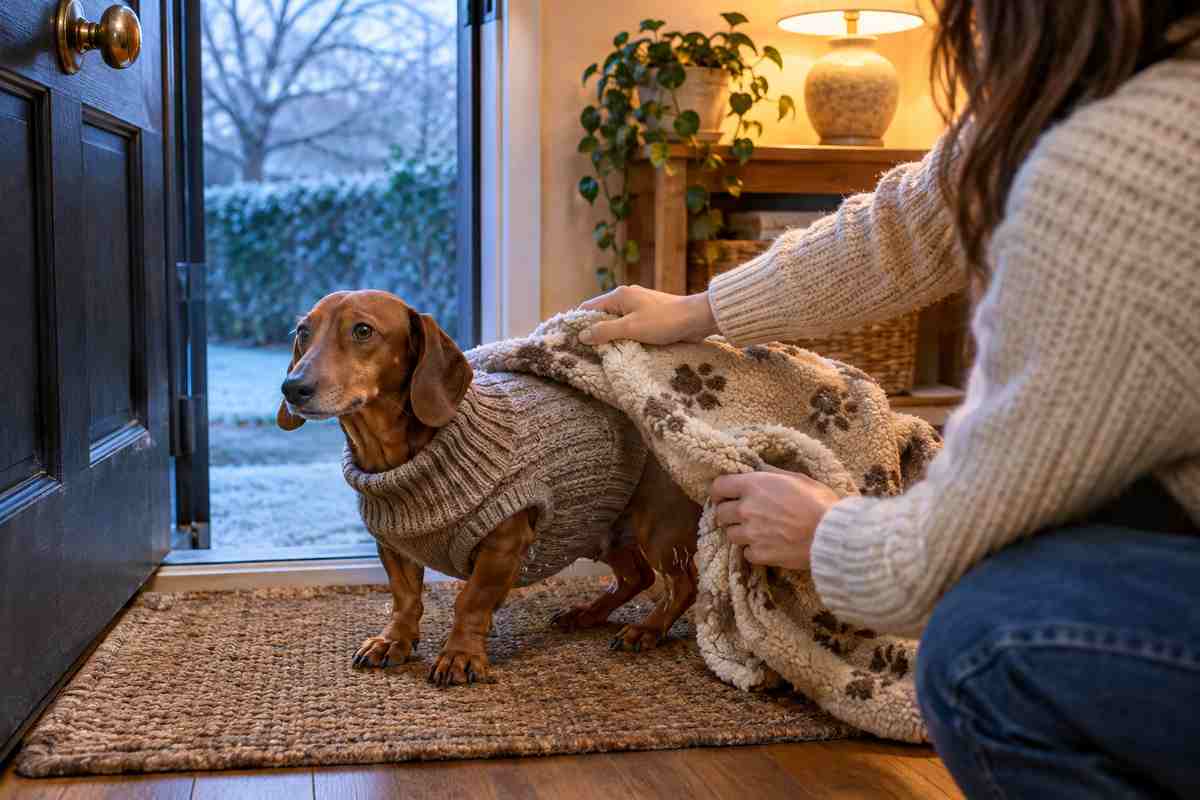
Shivering is how the body makes heat, so it’ll fade once your dog warms up. Put a blanket over him indoors or a coat on him outside. Our page on when it’s too cold to walk your dachshund sets out the temperatures to plan around.
Excitement comes next, and the RKC says excited shaking is most common in younger dogs and stops once they calm down. You’ll see it at the door when you get home, or when you reach for the leash.
Fear and stress are the third cause. Adrenaline readies the muscles to run, so the shaking comes with panting, whimpering, flattened ears or hiding, and it tends to show up during fireworks, thunderstorms and trips to the vet.
If your dog falls apart every Fourth of July, our guide to firework season with a dachshund walks you through the bad nights. Nervous shaking should ease once it’s over.
When an owner on r/Dachshund asked why her dog was trembling, one reply ran through the whole list in a breath:
“Cold. Hungry. Pain. Upset tummy. Dreaming. But usually for mine the answer is he’s a tiny bit cold. If you can’t figure it out, then vet.”
– r/Dachshund, November 2026 (9 upvotes)
That’s a fair way for you to work through it. Warm him up, keep the room quiet, and give it ten minutes. If he’s still shaking once he’s warm and settled, cold probably wasn’t your answer.
When Shaking Means Pain, Look at the Back First
Dogs hide pain well, and the RKC lists shivering or shaking as one of the common signs that a dog is hurting. For your dachshund, the place to look first is the spine.
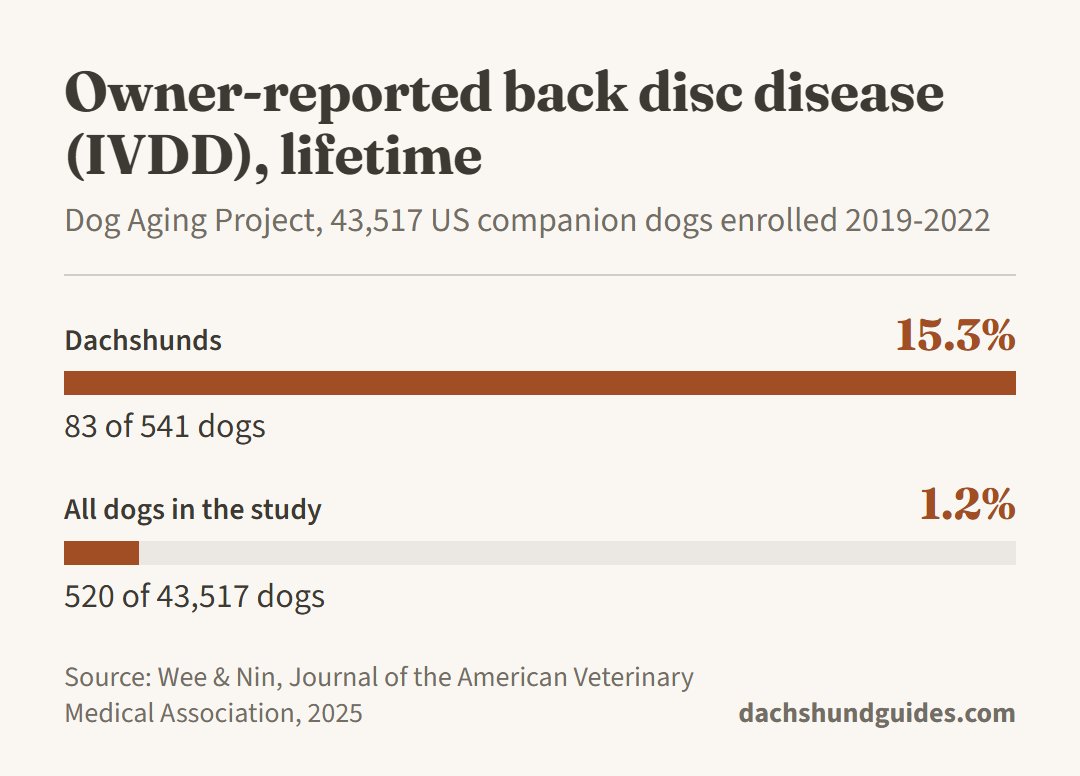
Intervertebral disc disease, or IVDD, is when a disc between the vertebrae bulges or ruptures and presses on the spinal cord. Dachshunds lead the field. In the Dog Aging Project, which tracked 43,517 US companion dogs, Wee and Nin (2025) found owner-reported IVDD in 1.2% of all dogs.
Dachshunds had the highest rate in the study, at 15.3%. That’s 83 of 541 dogs, more than twelve times the overall rate.
Coat type matters too. A 2026 study of 4,295 dachshunds from the UK, Norway and Denmark linked smooth coats to worse spinal health in all three countries. Small smooth dachshunds, the miniatures and kaninchen, came out worst in 12 of 15 comparisons.
So the smooth dachshund that shivers in a breeze is also the one most likely to have a bad back. “He’s just cold” is a fair first guess for that dog. It’s the guess you test, though, not the one you settle on.
PetMD lists anxious behavior such as shivering or panting among the signs of IVDD. Cornell’s vet college adds a quieter clue. A dog with a disc problem may walk to the food bowl and just look at it, then eat if you lift the bowl to him.
Here’s what to look for alongside the shaking:
- a hunched back or a stiff, tense neck
- refusing a jump he’d normally take, like the couch or the car
- not wanting to turn his head one way
- wobbly back legs, or stumbling over his back feet
- eating less than usual
- a sudden snap or growl from a sweet dog, which Cornell says can happen with back pain

In an r/Dachshund thread about a dog who wobbled and shook, then seemed fine five minutes later, one of the top replies was blunt:
“Dogs are very good in hiding pain. They try and soldier on. I suggest you take her to the vet and show them the video.”
– r/Dachshund, June 2026 (73 upvotes)
If you spot any of those signs with the shaking, keep him off the couch and stairs and call your vet that day. Cornell’s advice is to call at the first sign of back discomfort. It also warns that when surgery is recommended, waiting lowers the chance the spinal cord recovers.
Our IVDD in dachshunds guide goes through treatment. If you’re wondering what surgery costs, our dachshund cost breakdown lists one US neurology practice’s price.
Low Blood Sugar in Puppies and Things He Shouldn’t Have Eaten
A tiny puppy that shakes needs a different first question. When did he last eat? Purina’s breeding guide says juvenile hypoglycemia, or low blood sugar, happens in puppies under 3 months old.
Stress, cold, poor feeding and worms can all set it off. The signs it lists are trembling, muscle twitching, weakness, poor coordination and extreme tiredness, with seizures if it goes further.
That guidance isn’t about dachshunds; it’s written for toy breeds. Still, a young miniature puppy shares the same risk factors: a small body, long gaps between meals and a chilly room.
Purina says a puppy that seems dazed during an attack should get sugar water or corn syrup dabbed on or under the tongue, and I’d call the vet straight after. Small, frequent meals are what you’ll lean on to prevent it, and our page on how many times a day a mini dachshund should eat has the schedule by age.

Poisoning is the other cause you’ll want to rule out fast. The RKC’s list of things that can make a dog shake, tremble or twitch includes chocolate, caffeine, xylitol, macadamia nuts, cannabis, nicotine, moldy food and metaldehyde slug bait.
Did he get into a chocolate bar? Our chocolate toxicity calculator works out the dose for his weight while you’re phoning the vet.
Nausea causes shaking too: if you see lip licking, drooling and repeated swallowing with the trembling, the RKC says an upset stomach is the likely reason. Eating too much, motion sickness or something he shouldn’t have eaten are the common culprits.
Shaking, a Tremor Disorder or a Seizure?
Your best test at home is whether your dachshund is still with you. A dog that’s shaking but follows you with his eyes and reacts to his name is aware. A dog in a generalized seizure isn’t.
If you think it’s a seizure, our guide to dachshund seizures explains what to do while one is happening. Time it and film it if you can.
Some tremor disorders leave the dog fully aware. Generalized tremor syndrome, also called shaker syndrome or steroid-responsive tremor, causes shaking all over the body. The RKC says signs usually start between 9 months and 2 years.
It was first noticed in small white dogs, hence the nickname “little white shakers.” But Yamaya and colleagues (2004) described it in a brown, 22-month-old miniature dachshund. His tremors stopped on the first day of treatment with prednisolone and diazepam.
Color isn’t the rule, then. In a 1997 series of 24 dogs with generalized tremors, Wagner and colleagues found more than half weren’t white, and every one weighed under 33 lb.
Paroxysmal dyskinesia is another possibility. It’s an episodic movement disorder with stiffening, odd movements and tremor while the dog stays conscious. A 2026 study from the Hannover vet school calls it hard to tell apart from a focal seizure, so a video of the episode is the most useful thing you can bring.
Go to an emergency vet now if the shaking comes with any of these:
- he can’t stand or is dragging his back legs
- you know or suspect he ate something toxic
- he’s a young puppy who is limp, wobbly or won’t eat
- he doesn’t respond to you, or his legs are paddling
More Questions About Dachshund Shaking
Is it normal for dachshunds to shake a lot?
Yes, shaking when cold, excited or nervous is normal for a dachshund, and it should stop once he’s warm and calm. Shaking that keeps going, comes with a stiff or hunched back, or is new for your dog is worth a vet visit.
Why are my dachshund’s back legs shaking?
Back-leg shaking is common in older dogs and can mean muscle weakness, arthritis or pain, the RKC says. In a dachshund, think of the spine too. Wobbly back legs can be an IVDD sign, so watch how he walks and call your vet if it’s new.
Why is my dachshund shaking and panting?
Shaking with panting usually points to stress or pain. The RKC links both to fear, and PetMD lists shivering or panting among the signs of IVDD. If there’s no obvious scare, like a storm or a car ride, run your hand gently along his back and look for the pain signs in the back section.
If yours is trembling tomorrow morning, I’d go in that order. Warm him up, wait ten minutes, then watch how he walks and whether he’ll take the stairs. A dachshund that’s still shaking once he’s warm and calm gets a call to the vet.
