
Dachshund Seizures and What to Do While One Is Happening


Dachshund seizures usually last one to two minutes. While one is happening, time it, keep your dog from falling, and keep your hands away from the mouth. VCA Animal Hospitals treats any seizure that runs past five minutes as an emergency, and you should too.
I’m not a vet, and nothing here replaces an exam: any dog that has had a seizure should be seen by one. What follows comes from veterinary neurology sources, two published studies on our breed and a couple of owners who’ve been through it. One part is specific to dachshunds: miniature wirehaireds carry an inherited epilepsy called Lafora disease, and it’s worth knowing the numbers before you buy a puppy.
What a Dachshund Seizure Looks Like
In a generalized seizure, your dog loses consciousness, drops onto one side, stiffens and paddles its legs. VCA notes the head is often pulled back, and the dog may drool, pee or poop. It looks violent, but VCA says seizures aren’t painful for the dog.
A focal seizure is smaller. You’ll see twitching on one side of the face or body, and your dog may stay partly aware. Focal seizures are what people usually mean by “mini seizures,” and VCA says they can spread into a full generalized one.
So how do you tell a seizure from something that only looks like one? Jay McDonnell, a board-certified veterinary neurologist, lists heart and lung disease, narcolepsy and metabolic problems among the mimics.
In an r/Dachshund thread about a “possible seizure,” the owner of an epileptic dachshund described what her own dog’s seizures look like:
“She goes completely stiff and can’t support her weight. She’ll shake a little too. She won’t even try looking around.”
– r/Dachshund, May 2026 (49 upvotes)
Awareness is the clue you can use at home: a dog that follows you with its eyes and reacts to its name is less likely to be in a generalized seizure, because that kind takes consciousness away.
Film the episode either way. I’d rather hand my vet a shaky phone video than my own memory of a scary two minutes, and you’ll feel the same once you’re in the exam room.
What to Do While Your Dachshund Is Seizing
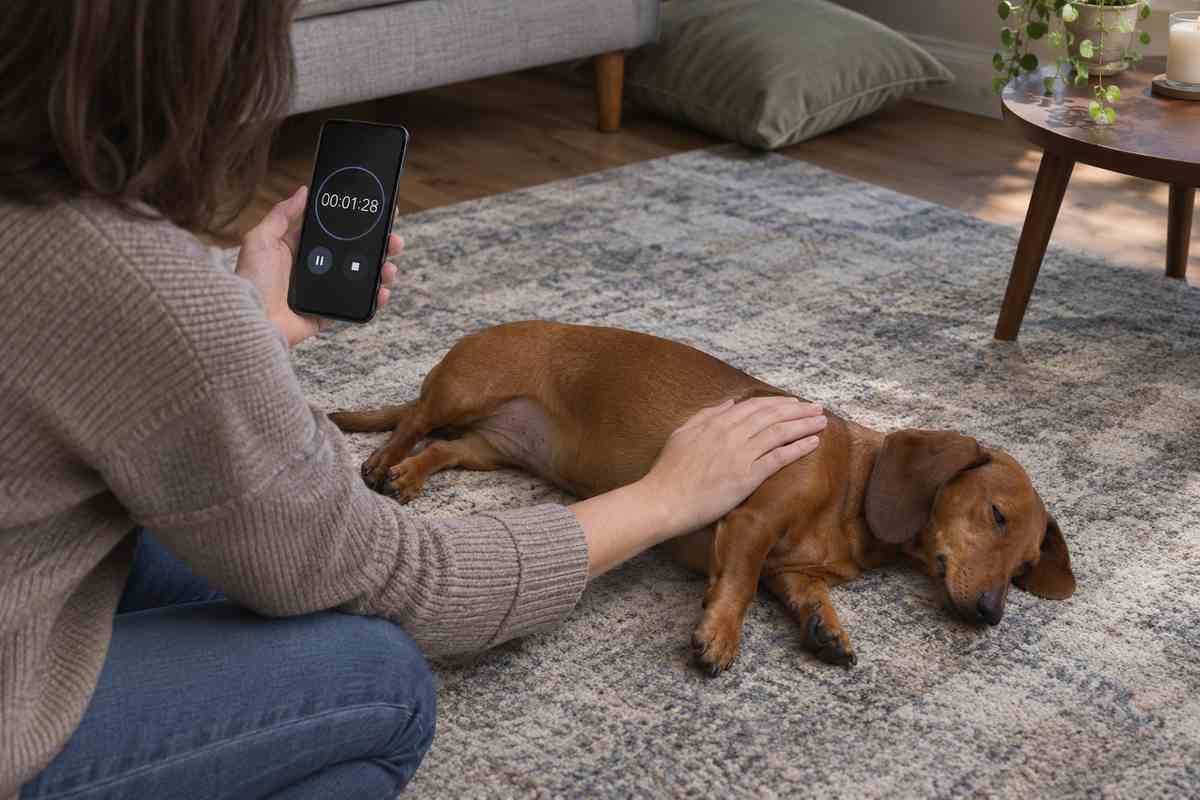
Stay with your dachshund, time the seizure and move whatever it could hit or fall from. Don’t hold the mouth or reach for the tongue. VCA says dogs don’t swallow their tongues during a seizure, and fingers near those jaws can get a bad bite.
- Look at the clock when it starts. The exact length is the first thing your vet will ask about.
- If your dog is on a couch or near stairs, ease it down to the floor by the body, well away from the head.
- Push furniture and hard objects back, and move other pets out of the room. McDonnell writes that other animals can be frightened by a seizing dog.
- Keep the room quiet and the lights low, since his guide says loud or sharp noises may prolong a seizure.
- Talk to your dog softly. The same guide says your voice may comfort a dog and smooth the recovery.
- If someone else is home, ask them to film while you watch the time.
Then decide whether it’s a “go now” seizure. Head to an emergency vet if any of these happen:
- The seizure passes five minutes. VCA calls this status epilepticus and says it needs a vet immediately.
- A second seizure starts before your dog is back to normal. McDonnell counts as few as two seizures in thirty minutes as a cluster.
- You know or suspect your dog ate something toxic.
A first seizure that stops on its own still deserves a call to your vet the same day, and so does a recovery that seems slow.
VCA describes the time after a seizure as a stretch of confusion, pacing, drooling, restlessness and sometimes temporary blindness. Keep your dachshund on the floor and off the stairs until it’s steady on its feet again.
Why Dachshunds Have Seizures
Idiopathic epilepsy, meaning seizures with no cause a vet can find, is the most common reason dogs have seizures, according to VCA, and it’s inherited. McDonnell’s guide names the dachshund among the breeds where a genetic factor is proved or highly suspected.
Age helps. McDonnell writes that primary epilepsy usually starts somewhere between 6 months and 5 years of age, and that a genetic cause is most suspected when the first seizure comes between ages 1 and 3.
From about 5 onward, he says, metabolic problems such as low blood sugar, heart rhythm trouble and liver disease, along with brain tumors, become more common causes. That’s why a first seizure in a senior dachshund usually gets a fuller workup than one in a young dog.
Then there are reactive seizures, set off by something outside the brain, and two kitchen risks stand out.
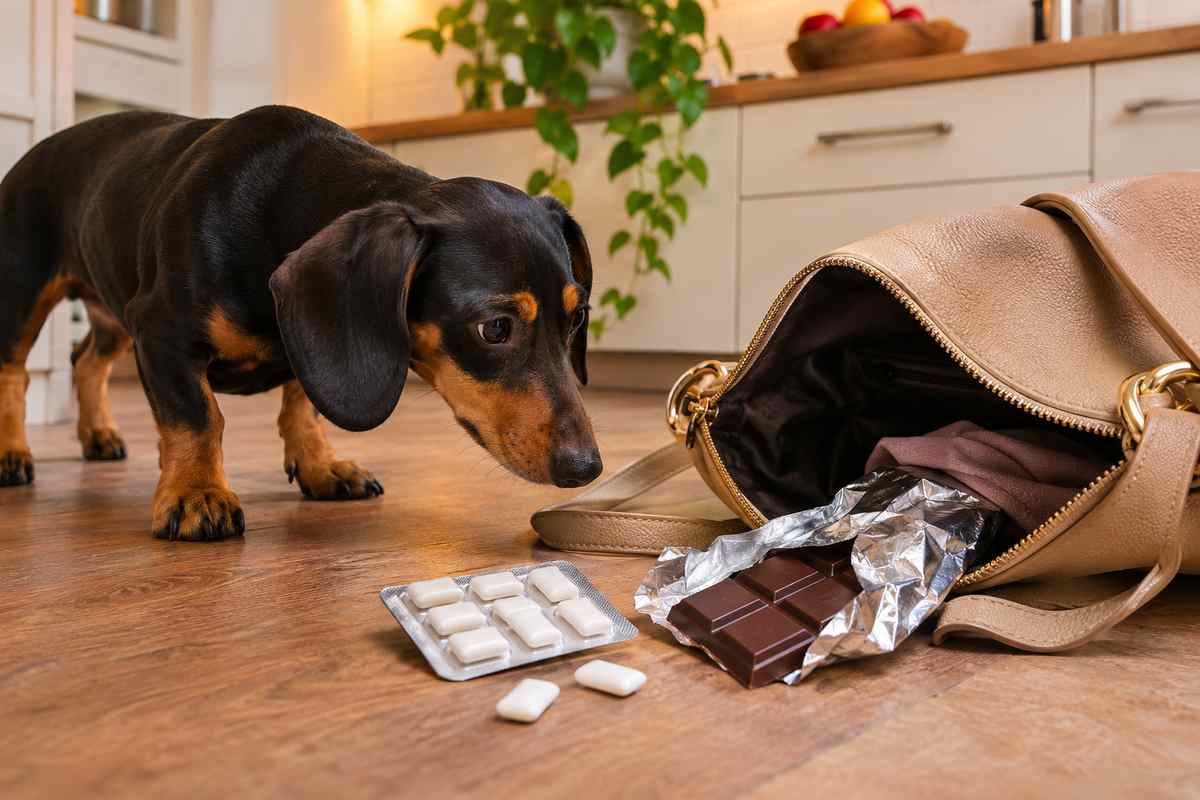
The FDA warns that xylitol, a sweetener in sugar-free gum, some peanut and nut butters and plenty of other products, can drop a dog’s blood sugar within 10 to 60 minutes. Weakness, staggering, collapse and seizures can follow.
The ASPCA lists tremors and seizures among the effects of chocolate, and darker chocolate carries more risk. Did your dog get into a bar? Our chocolate toxicity calculator works out the dose for your dog’s weight.
Seizures sit alongside back disease and obesity on the breed’s longer health list, which our dachshund health problems guide covers in one place.
Lafora Disease in Miniature Wirehaired Dachshunds
Lafora disease is an inherited, progressive epilepsy with a high rate in miniature wirehaired dachshunds. It’s recessive, so a dog needs two copies of a faulty NHLRC1 gene to get sick, and a DNA test tells breeders which dogs carry it.
It starts late, and it starts small. In a 2017 survey of 27 affected miniature wirehaireds published in PLoS One, Swain and colleagues found signs began at an average of 6.94 years, anywhere from 3.5 to 12.
In 77.8% of those dogs, the first sign was myoclonus: sudden jerks of the head or body, either out of the blue or set off by something the dog sees. A case report in the Canadian Veterinary Journal describes that visual trigger in a single dog.
Generalized seizures were a first sign in 40.7% of the dogs. Over time the jerks got stronger and harder to treat, and later signs in that survey included dementia in 51.9% of dogs and blindness in 48.1%.
One owner whose dog had a confirmed diagnosis described how fast it moved once the seizures began:
“The myoclonic jerks were mild for months before the grand mal seizures started. We started with one seizure a month, then after a month were up to one grand mal a week.”
– r/Dachshund, January 2023 (2 upvotes)
That’s why the testing numbers matter. Through a UK breed club testing program, Ahonen and colleagues tracked 733 miniature wirehaireds, reporting in Canine Genetics and Epidemiology in 2018. Overall, 7.0% had two copies and were at risk, and 31.9% were carriers. Between 2012 and 2017, the at-risk share among tested dogs fell from 10.4% to 2.7%, and carriers fell from 41.5% to 25.7%.

If you’re pricing a miniature wirehaired puppy, put both parents’ Lafora DNA results on your list of things to see. Because the disease is recessive, a puppy with at least one clear parent can’t inherit two copies.
The studies above are about wirehaired miniatures. The same gene change has turned up in other breeds, including two beagles described in the Journal of Small Animal Practice. A smooth or long-haired dachshund with seizures is more likely looking at the causes in the section before this one.
What Happens at the Vet, and When Medication Starts
Blood and urine tests usually come first. VCA says they rule out liver, kidney, heart, electrolyte and blood sugar problems, and your vet will ask about toxins and head injuries. What if those come back normal and the seizures keep coming? McDonnell lists an MRI and a spinal fluid test as the next steps.
Don’t be surprised if your dog comes home without pills after a first seizure. In a VetCompass study of 455,553 dogs at UK first-opinion vets, Erlen and colleagues (2020) found that 69.2% of the 2,834 dogs with a new seizure weren’t prescribed an anti-seizure drug at that visit.
VCA’s usual reasons to start treatment are:
- two or more seizures within six months
- a seizure lasting more than five minutes
- cluster seizures
- a recovery that’s severe or lasts longer than 24 hours
- seizures that are getting more frequent, longer or worse
Phenobarbital is the most commonly used drug, according to VCA, with potassium bromide, zonisamide and levetiracetam (Keppra) as other options, and dogs that don’t respond well to one often end up on a combination. The aim is fewer, milder seizures. That isn’t always zero.
The rule that matters most is the dull one. Once your dachshund starts a seizure drug, it’s usually for life, and VCA warns that stopping it suddenly can bring on seizures that are hard to control.
Order refills before you run low, and don’t change a dose without your vet. If it were Bruno or Pretzel, I’d set a phone alarm for every dose and keep a dated seizure log next to the pill bottle.

More About Dachshund Seizures
How long do dachshund seizures last?
A generalized seizure in a dachshund usually lasts one to two minutes, according to VCA. Past five minutes it counts as status epilepticus and needs a vet right away. The confused recovery afterward often lasts much longer than the seizure itself.
Can a dachshund die from a seizure?
A single short seizure is rarely dangerous to a dog, VCA says. The danger is a seizure that won’t stop: without IV medication, status epilepticus can cause brain damage or death, and body temperature climbs during long or repeated seizures.
Is epilepsy in dachshunds hereditary?
Often, yes. VCA describes idiopathic epilepsy as inherited, and McDonnell lists the dachshund among breeds with a proven or highly suspected genetic factor. Lafora disease in miniature wirehaireds comes from a known recessive gene that a DNA test can detect.
