
Cavalier King Charles Spaniel Dachshund Mix: The Two Questions That Matter

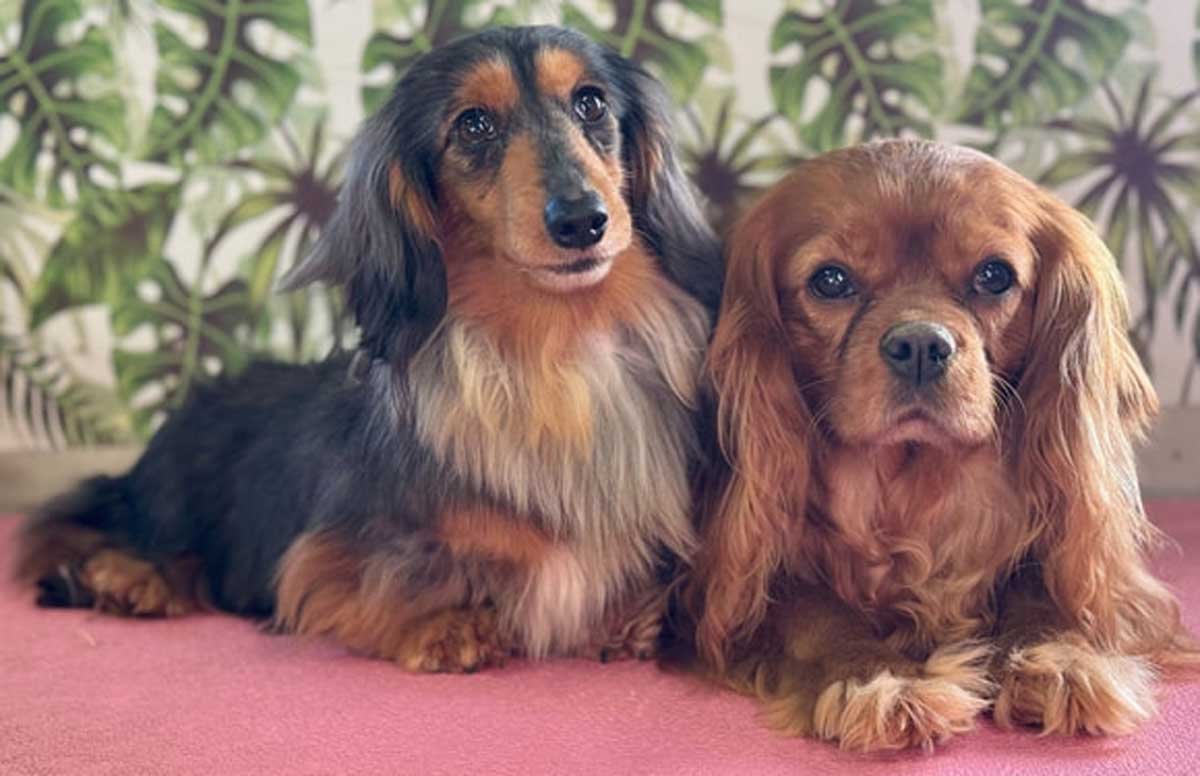
Two parents, two inherited conditions, and one of them has a study attached that tells you exactly what lowers the odds. It isn’t the crossing.
The Cavalier King Charles Spaniel Dachshund mix, which breed-profile sites call a Dashalier, is easier to size up than most dachshund crosses. Your two parents sit within a few inches and a few pounds of each other and their life expectancies nearly match, so what you really need to weigh is what each side carries.
What a Dashalier actually is
A first-generation cross between a Cavalier King Charles Spaniel and a dachshund, standard or miniature. Here is what the AKC lists for each parent:
| Dachshund | Cavalier King Charles Spaniel | |
|---|---|---|
| Height | 8-9 in (standard), 5-6 in (miniature) | 12-13 in |
| Weight | 16-32 lb (standard), 11 lb and under (miniature) | 13-18 lb |
| Life expectancy | 12-16 years | 12-15 years |
Notice how close that last row is. Have you looked at other dachshund crosses? Some of them put the two parents four to six years apart on the registry’s own figures, and this isn’t one of them, which is a genuine point in your favor.
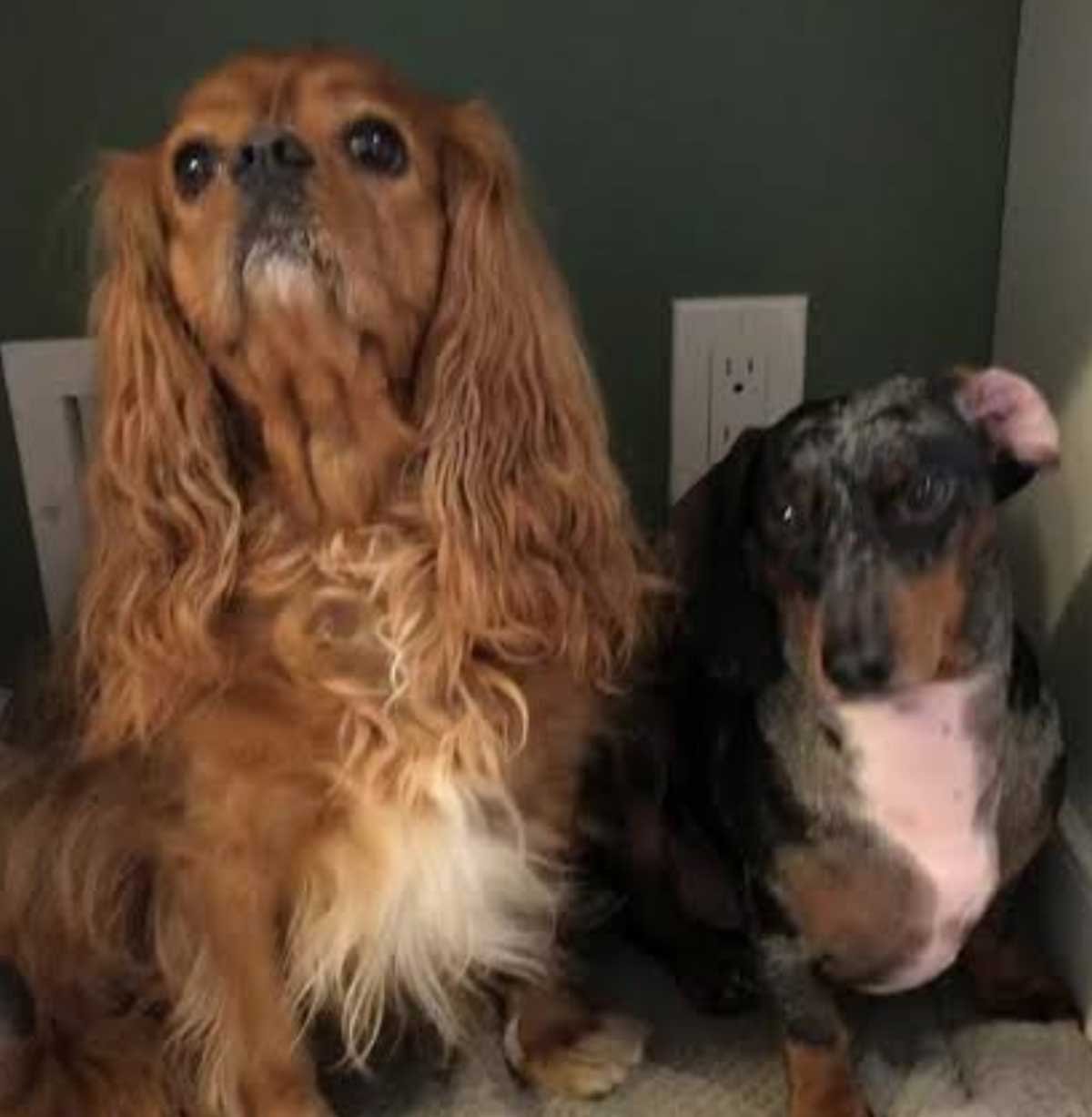
Expect your adult somewhere between the two: longer in the body than a Cavalier, taller and lighter-framed than a standard dachshund, and usually with a softer coat and more feathering than a smooth dachshund carries. Ear set and muzzle length are where you’ll see the most variation between littermates, because that’s where the two parent breeds differ most.
The heart question, and the study that answers it
The Cavalier side brings myxomatous mitral valve disease, and it arrives early in this breed compared with others. One group examined 126 Cavaliers aged eight and over, median age 10.3 years, and found a systolic murmur in 112 of them, which is 89%. On echocardiography, all 126 were diagnosed with the disease.
All of them. That’s the number the breed is known for, and it’s probably the reason you’re looking at a cross rather than a purebred Cavalier in the first place.
So does crossing help you? Here’s where the evidence gets specific, and it doesn’t say what the designer-dog pages tell you.
The Danish Kennel Club ran a mandatory breeding scheme built on heart auscultation and echocardiography. Researchers followed 997 purebred Cavaliers across 1,380 examinations between 2002 and 2011, then compared the dogs examined at the end of that period with the dogs examined at the start.
| Offspring group | Change in odds of a mitral regurgitation murmur |
|---|---|
| Both parents approved by the scheme before breeding | odds 0.27, a 73% decrease (P < .0001) |
| At least one parent’s cardiac status unknown | No difference at all (P = .49) |
Look at the second row.
That’s the row a Dashalier buyer is standing in. The variable that moved the risk was both parents being screened before they were bred. One parent of unknown cardiac status was enough for the improvement to disappear entirely.
Crossbreeding wasn’t tested here, so I can’t tell you it does nothing. What I can tell you is that the thing which demonstrably worked is a document, and most designer crosses aren’t produced by programs that generate one.
What “100% by eight years old” does and doesn’t mean
That figure deserves unpacking before you let it decide anything, because taken bare it’s frightening and slightly misleading.
In the same group of 126 older Cavaliers where every dog was diagnosed, 44.4% were clear of echocardiographic signs of cardiac remodelling. Having the disease and being ill from it are not the same thing. A great many of those dogs had a murmur, a diagnosis, and a heart that was still doing its job.
So how worried should you be? The honest version is this. A Cavalier or a Cavalier cross is very likely to acquire this diagnosis if it lives long enough, and a substantial share carry it without their heart ever changing shape. What you’re buying is a dog whose chest needs listening to at every annual check, starting young rather than starting late.
The back question, from the other parent
The dachshund half brings intervertebral disc disease. Dachshund Health UK, the registered charity behind breed health work in Britain, puts the lifetime figure at around one in four.
The largest lifestyle survey of the breed, DachsLife 2015, put point prevalence at 15.7% across 2,031 dogs and found something more useful for you: the varieties differ enormously.
- Standard Smooth-Haired: 24.4%
- Miniature Smooth-Haired: 17.1%
- Standard Wire-Haired: 7.1%
That’s a 3.4-fold spread inside one breed, which turns “which variety was the dachshund parent” into a real question with a real answer behind it. If you get told wirehaired, your puppy starts from a better place than a smooth-coated one does.
One caution on that survey before you carry the numbers around: it also found bodyweight and body condition were not associated with disc disease risk, which is the opposite of the advice most owners are given. The rest of what it does and doesn’t support sits alongside the schedule in the guide to dachshund potty training, and the wider picture on the breed’s inherited problems is in dachshund health problems.
Bruno’s disc episode ended in surgery and a long recovery, and he got full mobility back. I’d still rather you asked the question before you chose the puppy than learned the answer the way we did.
What to ask the breeder
Ask for two documents, and neither of them rests on my opinion: the Cavalier parent’s heart screening, and which variety the dachshund parent was. Both trace straight back to the figures above, and how a breeder answers them tells you more than any conversation about temperament will.
The Cavalier parent’s heart screening. Auscultation plus echocardiography, done before that dog was bred. This is the exact thing the Danish study measured, and “we’ve never had a problem” is the unknown-status condition where the improvement vanished.
Which variety the dachshund parent was. Smooth, longhaired or wirehaired, and standard or miniature. It’s the only back-related question with a prevalence figure attached.
How a breeder handles those two questions tells you most of what you need. Bruno came from Sharon after a four-month wait, and waiting is usually the price of getting answers: a litter you can collect this weekend rarely comes with paperwork attached.
Worth knowing too: the Cavalier carries a second well-documented problem, syringomyelia, a condition where the skull is too small for the brain. I haven’t found a prevalence figure I’d be willing to quote, so I’ll name it rather than dress it up with a number, and suggest you ask whether the Cavalier parent has been scanned.
Temperament and what to expect day to day
Both parents were bred to stay near people, but from opposite directions. The Cavalier is a companion spaniel, selected for centuries to sit on laps and read the room, while the dachshund is a hunting dog that worked within earshot of its handler and came back to report. Those are different jobs with the same side effect, which is a dog that follows you from the kitchen to the bathroom and waits outside the door. If you want a breed that settles alone in another room, this is not the cross for you.
Expect more biddability than a straight dachshund and more stubbornness than a straight Cavalier. Training is usually easier than the dachshund side alone would suggest, because the Cavalier’s willingness to please dilutes the independence that makes dachshunds hard work.
Prey drive is your coin flip. If the dachshund side wins that toss, you’ll have a dog that goes deaf at the sight of a squirrel, and no amount of Cavalier softness will override it in the moment.
Who this cross is wrong for
Anyone buying on the assumption that a mix is healthier by default. Both conditions above are inherited and both run strongly in their respective parent breeds. Crossing does not dilute either one, and the research says nothing that would let you assume otherwise.
It’s also wrong if you can’t commit to annual cardiac checks from early adulthood rather than from old age. The whole point of the Cavalier’s early-onset pattern is that if you wait for a geriatric check, you’ve waited too long.
Who it suits: someone who wants a companion dog that stays close, who is prepared to interrogate a breeder about two specific documents, and who would rather know about a murmur at four than discover it at nine.
Cavalier King Charles Spaniel Dachshund mix: common questions
What is a Cavalier Dachshund mix called?
A Dashalier, which is the name used by the breed-profile sites that cover this cross. You’ll also see Cavachshund and Doxie Cavalier, none of them official, because no registry recognizes the cross.
Is a Dashalier healthier than its parents?
There’s no evidence for that, and the two conditions that matter here are inherited. The Danish breeding-scheme study found a 73% reduction in murmur risk for Cavaliers with two screened parents, and no reduction whatever when one parent’s heart status was unknown. Screening moved the number. Nothing in that study tested crossing.
How big does a Dashalier get?
Between the parents, so an adult usually weighs under about 20 pounds and stands around a foot tall, with the dachshund parent’s size deciding where in that space your dog lands. The AKC lists the Cavalier at 12-13 inches and 13-18 pounds, and the standard dachshund at 8-9 inches and 16-32 pounds, so a miniature dachshund parent pulls the whole thing smaller.
How long does a Dashalier live?
Nobody has published a figure for the cross. The parents bracket it tightly: 12-15 years for the Cavalier and 12-16 for the dachshund, on the AKC’s own numbers. That is an unusually narrow bracket for a designer cross, and it is one of the better things about this particular pairing.
What is the best Cavalier King Charles Spaniel mix?
No study ranks them, so any list is somebody’s preference. If heart health is what’s driving the question, the useful comparison isn’t between crosses at all. It’s between a puppy whose Cavalier parent was screened and one whose wasn’t.
What is the best breed to mix with a Dachshund?
Also unmeasured. What the evidence does support is narrower and more useful: within the dachshund side, the parent’s variety carries a 3.4-fold difference in disc disease prevalence, from 24.4% in Standard Smooth-Haired down to 7.1% in Standard Wire-Haired.
Are Cavaliers hard to toilet train?
Small dogs in general are less likely to end up completely house-trained than large ones, and both parents here are small. A 2020 survey of 735 owners put it at 66.8% against 95.0%. The method matters more than the breed, and I’ve set out the schedule in the guide to dachshund potty training.
Does a Dashalier need a lot of grooming?
More than a smooth dachshund, less than a full Cavalier. The coat is the trait where this cross most often lands between the parents rather than favoring one, so expect feathering on the ears, legs and tail that needs brushing a few times a week to stay out of mats.
