
Dachshund Foxhound Mix: Your Complete Breed Guide

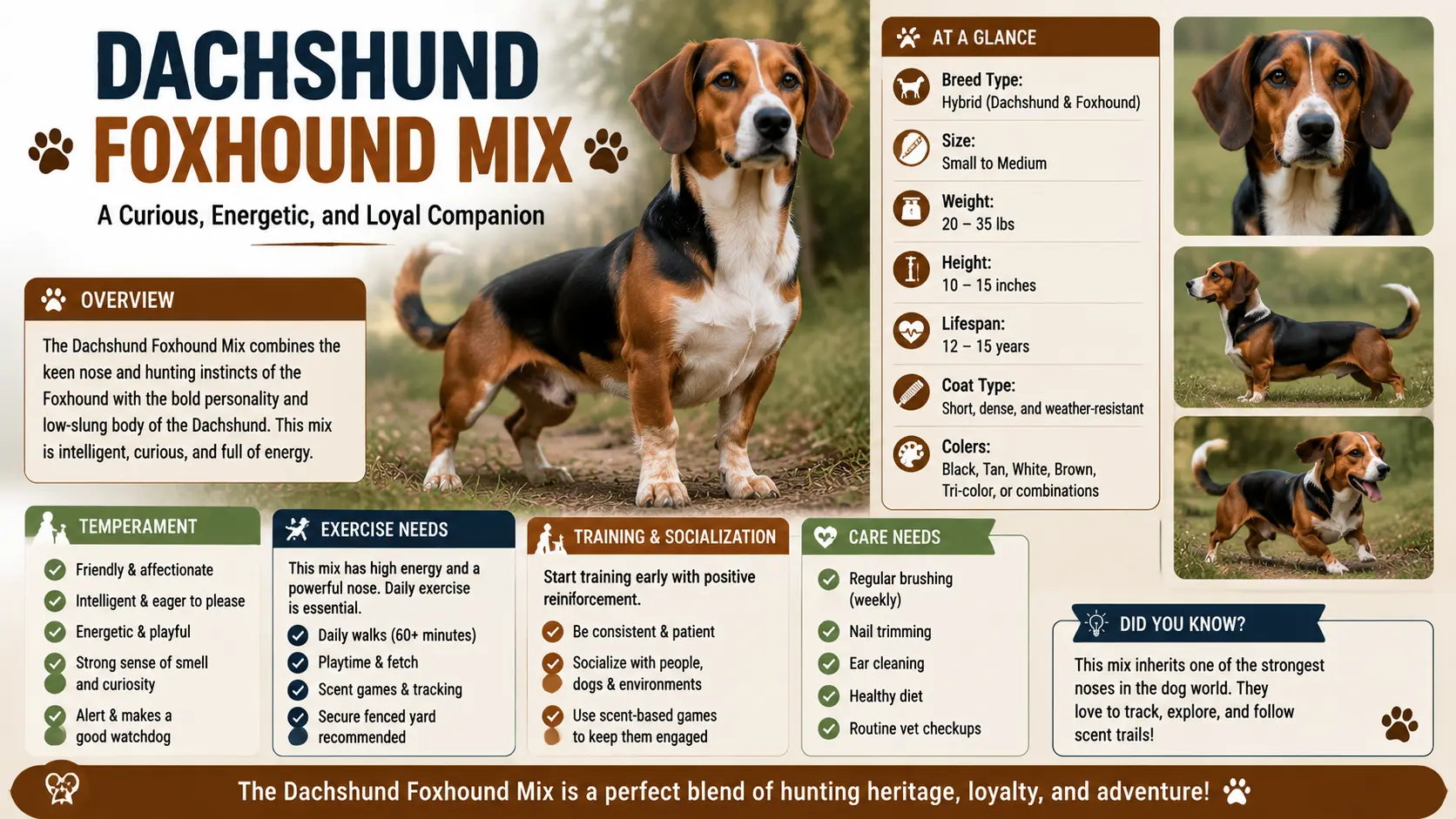
A dachshund foxhound mix crosses a German badger hunter with an American scent hound, so expect a dog that’s led by its nose. A Dachshund stands 5 to 9 inches at the shoulder and weighs 8 to 32 pounds, and a foxhound is far taller, so size varies a lot from one dog to the next. It’s a rare cross, and there’s no breed standard to go by.
I still remember the first time I came across a dog matching this description at a rescue event. Its legs were shorter than a foxhound’s but longer than a standard dachshund’s. Its ears were long, floppy, and impossibly soft. It had this look on its face that said, “I know exactly where the squirrel went, and I am not going to tell you.” I was completely charmed.
If you are thinking about bringing a dachshund foxhound mix into your home, or you are simply curious about this rare hybrid, this guide covers everything you need to know. From personality and size to health, training, and daily care let’s dive in.
What Exactly Is a Dachshund Foxhound Mix?
The dachshund foxhound mix is a hybrid dog bred from a purebred Dachshund and a purebred American Foxhound. Both parent breeds are scent hounds at heart, which gives this crossbreed a double dose of nose-to-the-ground instinct and relentless curiosity.
According to the American Veterinary Medical Association, up to 53 percent of dogs in U.S. homes today are mixed breeds, and the demand for crossbreeds continues to grow. A 2024 Rover survey found that mixed-breed dogs once again topped U.S. popularity charts, with 49 percent of pet parents adopting from shelters.
The dachshund foxhound mix sits in an interesting niche. It is not as heavily marketed as a Goldendoodle or Chiweenie, but for those who find one, it tends to be a deeply satisfying companion.
Parent Breed Profiles: Two Hunting Legends Combined
Before you can fully understand the dachshund foxhound mix, you need to know the two remarkable dogs it comes from.
The Dachshund: Germany’s Tenacious Badger Dog
The Dachshund was developed in Germany as early as the 15th century to hunt badgers by scent. Its elongated body and short, powerful legs allowed it to follow prey directly into underground dens. The AKC recognized the breed in 1885, and it has ranked among America’s most popular breeds ever since.
Dachshunds typically stand 5 to 9 inches at the shoulder and weigh 8 to 32 pounds depending on whether they are miniature or standard. According to PetMD, their lifespan is 12 to 16 years, though they are prone to intervertebral disc disease (IVDD) due to their long spines. They are curious, loyal, and famously independent-minded.
The American Foxhound: A Founding Father’s Breed
The American Foxhound is one of the oldest and rarest dogs in the United States. George Washington played a significant role in the breed’s early development, and the AKC recognized it in 1886. Despite that historical prestige, it currently ranks 196th out of 201 AKC-recognized breeds, making it genuinely rare.
American Foxhounds stand 21 to 25 inches tall and weigh 60 to 75 pounds. PetMD reports a lifespan of 11 to 13 years. The AKC characterizes them as independent, easygoing, and sweet, but they carry extraordinary energy and need one to two hours of vigorous exercise every day.
What Does a Dachshund Foxhound Mix Look Like?
No two dogs from this pairing look exactly alike. Each individual dachshund foxhound mix pulls from both parents in unpredictable ways. That said, most share a recognizable range of physical traits.
| Trait | Dachshund Parent | Foxhound Parent | Dachshund Foxhound Mix (Typical Range) |
|---|---|---|---|
| Height | 5–9 inches | 21–25 inches | 10–16 inches |
| Weight | 8–32 lbs | 60–75 lbs | 20–45 lbs |
| Coat | Short, long, or wire | Short, dense, hard | Short to medium, dense |
| Ears | Long, floppy | Long, low-set | Long and floppy |
| Body Shape | Long and low | Athletic, lean | Moderate elongation |
| Lifespan | 12–16 years | 11–13 years | 11–14 years (estimated) |
Most dogs from this combination land in the small-to-medium range. Size is heavily influenced by whether the dachshund parent is a miniature or standard variety. Coat colors commonly include tricolor (black, white, and tan), solid red, chocolate and tan, and occasional dapple patterns inherited from the dachshund lineage.
Temperament: The Heart of This Hybrid
The personality of a dachshund foxhound mix is one of the most compelling reasons to consider this crossbreed. Both parents were built for work, which means this dog is clever, scent-driven, and highly motivated. But both are also genuinely affectionate with their people.
Here is what most owners can expect:
High energy and relentless curiosity. This hybrid is not a couch dog. Both parent breeds were built to track, chase, and persist. Daily mental and physical stimulation are non-negotiable.
Outstanding nose, unreliable recall. Like both parents, a dog from this pairing will follow a scent trail happily and completely ignore your calls. Always use a securely fenced area or a long lead outdoors.
Deeply affectionate with family. The Foxhound side brings genuine warmth. The dachshund foxhound mix typically bonds deeply with its people and does well with children when properly socialized.
Vocal by nature. The American Foxhound is known for its musical baying call, once heard for miles during hunts. This crossbreed may inherit that vocal trait, something worth thinking about in apartment settings.
Independent stubbornness. Dachshunds are legendarily independent. That trait often shows up in training sessions and calls for patience above all else.
For more breed guides and care resources covering similar hybrids, explore our Dachshund Guides section.
Health Considerations to Know Before You Commit
Every mixed-breed dog benefits from hybrid vigor, the genetic diversity that results when two distinct gene pools combine. This can reduce the likelihood of inheriting certain breed-specific conditions. However, the dachshund foxhound mix can still be predisposed to health concerns from either parent line.
Key Health Risks
Intervertebral Disc Disease (IVDD): This is the primary inherited risk from the dachshund side. The elongated spine structure makes the breed vulnerable to disc herniation. Depending on how much of the dachshund’s body proportion your dog inherits, IVDD risk ranges from moderate to significant. Limiting high-impact jumping and managing weight are essential preventive steps.
Hip Dysplasia: The Foxhound parent carries a predisposition to malformed hip joints, which can lead to arthritis and reduced mobility over time. Regular vet screenings and lean body weight management help.
Ear Infections: Both parent breeds have long, floppy ears that restrict airflow to the ear canal. Weekly ear checks and gentle cleaning will prevent painful bacterial and yeast infections.
Obesity: Dachshunds gain weight easily, which dramatically worsens IVDD risk. Any dog from this pairing should be kept on a measured, age-appropriate diet.
Thrombocytopathy: American Foxhounds can carry a platelet disorder that affects blood clotting. Ask breeders about health clearances for this condition before purchasing a puppy.
Regular veterinary visits, a balanced diet, and consistent daily exercise will significantly improve the long-term health of a dachshund foxhound mix.
Exercise: High Needs, High Reward
Do not underestimate the activity level this hybrid requires. The Foxhound parent alone needs one to two hours of vigorous exercise per day. The dachshund side still calls for consistent daily walks and mental engagement.
A realistic daily activity plan for the dachshund foxhound mix includes:
- 45 to 90 minutes of physical activity daily
- Scent-based enrichment games (sniff trails, puzzle feeders, nose work)
- Securely fenced off-leash time whenever possible
- Regular social interaction with people and other dogs
Without sufficient exercise, this crossbreed becomes bored and can develop destructive or anxious behaviors.
Training Tips That Actually Work
Training this hybrid is both rewarding and genuinely challenging. The Foxhound side brings a willingness to learn; the Dachshund side brings the independence of a dog that has opinions.
Start early. Socialization and basic commands should begin from puppyhood. Early exposure to people, animals, and environments shapes a stable adult dog.
Use positive reinforcement only. Both parent breeds respond poorly to harsh correction. High-value food rewards and enthusiastic praise are your most reliable tools.
Keep sessions short and engaging. A bored dog from this pairing disengages fast. Five to ten-minute sessions repeated throughout the day outperform one long session.
Prioritize leash manners. Given the scent drive inherited from both parents, loose-leash walking should be one of the first skills you build.
Work on a solid recall. It will take time and consistent practice. Use a long line in open spaces until recall is reliable.
Grooming and Daily Care
The dachshund foxhound mix is relatively low maintenance on the grooming side, particularly if it inherits the Foxhound’s short, hard coat. Weekly brushing, monthly baths, and regular nail trims cover the basics.
Ear care is non-negotiable. Those long, floppy ears create a warm, moist environment where bacteria thrive. Check and gently clean them once a week.
Dental care matters too. Dachshunds are prone to periodontal disease, and any dog from this pairing should receive daily tooth brushing or regular dental chews as part of its routine.
Is This Hybrid the Right Dog for You?
The dachshund foxhound mix rewards active, patient, and engaged owners. Here is an honest breakdown:
This dog is likely a great fit if you:
- Have a yard or consistent access to open outdoor spaces
- Enjoy daily walks, hikes, or active outdoor activities
- Are patient with independent-minded dogs and committed to training
- Want a loyal, affectionate companion unlike anything else
This hybrid is probably not the right match if you:
- Live in a small apartment with limited outdoor access
- Work long hours away from home regularly
- Prefer a quiet, low-maintenance companion dog
- Are a first-time dog owner without trainer support
How to Find a Dachshund Foxhound Mix
Because this is not a widely marketed designer breed, dedicated breeders are rare. Your best options are:
Rescue shelters. The ASPCA reported 5.8 million dogs and cats entering U.S. shelters in 2024, with mixed breeds making up the largest share. A dachshund foxhound mix may well be waiting at a local rescue right now.
Breed-specific rescues. Both Dachshund rescues and Foxhound rescues occasionally have mixes available for adoption.
Reputable breeders. If you find a breeder, verify that they health-test both parent dogs, provide a clean environment, and allow you to meet the parents in person.
Never buy from a puppy mill or online pet store. This hybrid, like any dog, deserves an ethical start.
Frequently Asked Questions
How big does a Dachshund Foxhound mix get?
Most Dachshund Foxhound mixes weigh between 20 and 45 pounds and stand 10 to 16 inches tall. Adult size depends on whether the Dachshund parent is a Miniature or Standard and which parent’s genetics are more dominant.
Is the Dachshund Foxhound mix good with kids?
Yes. The Dachshund Foxhound mix is generally affectionate, gentle, and playful, making it a good family companion. Early socialization and supervision around very young children are recommended to ensure safe and positive interactions.
How much exercise does a Dachshund Foxhound mix need each day?
This energetic hybrid typically needs 45 to 90 minutes of daily exercise, including walks, play sessions, scent games, and mental enrichment. Regular activity helps prevent boredom and reduces unwanted behaviors.
Does the Dachshund Foxhound mix bark a lot?
It can. Both parent breeds are naturally vocal, especially the Foxhound. With consistent training, early socialization, and adequate exercise, excessive barking can usually be managed effectively.
What is the lifespan of a Dachshund Foxhound mix?
A healthy Dachshund Foxhound mix generally lives 11 to 14 years. Providing high-quality nutrition, routine veterinary care, regular exercise, and maintaining a healthy weight can help maximize both lifespan and overall well-being.
