
Protecting Your Dachshund: The Ultimate Prevention Strategy

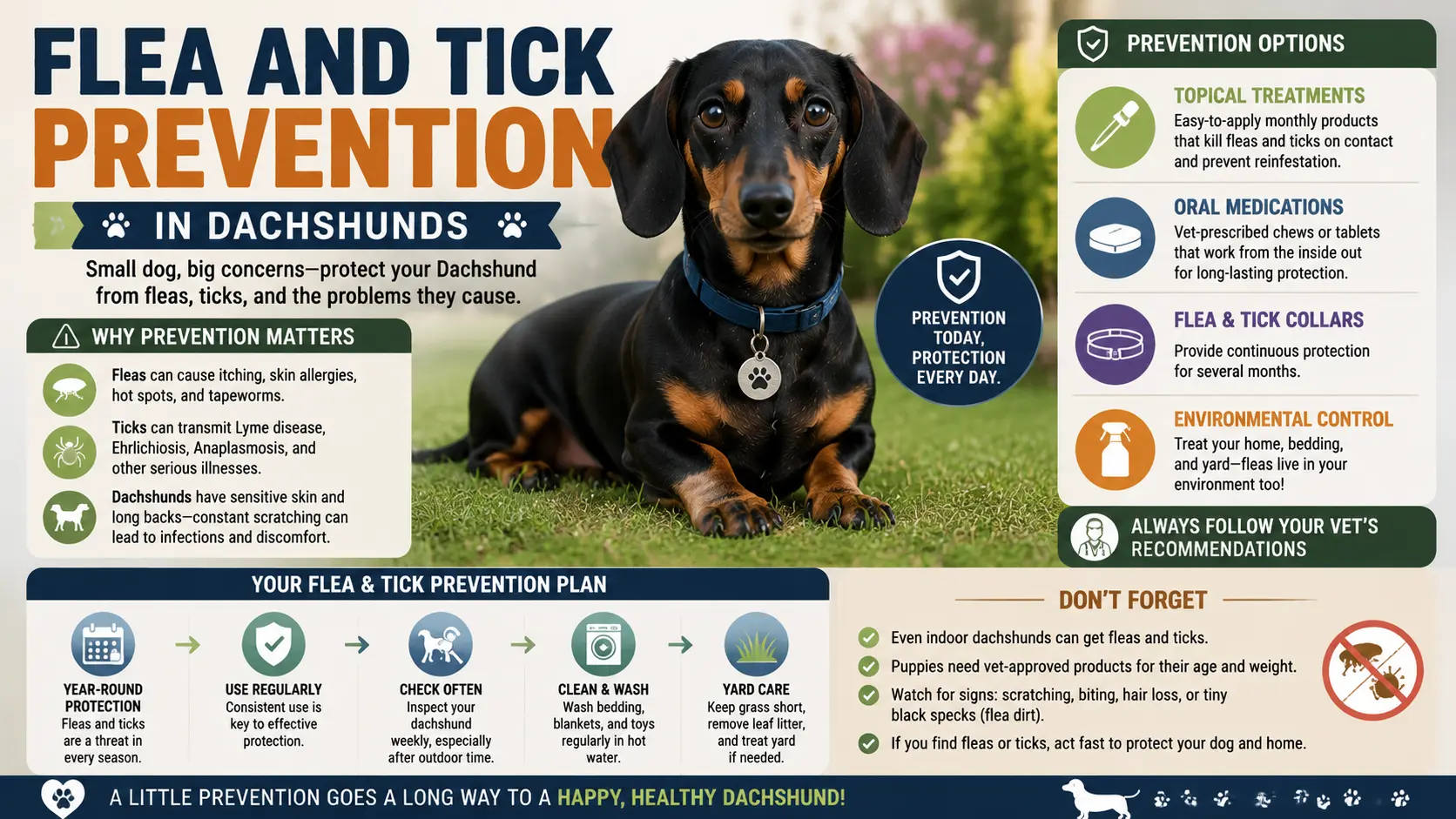
The summer arrived with its golden sunshine, afternoon barbecues, and park adventures but it also brought an unwelcome visitor to our backyard: a tick crawling across my dachshund’s ear. That moment sparked an urgent quest to understand flea and tick prevention in dachshunds thoroughly. I quickly learned that protecting these beloved long-bodied companions requires a different approach than larger breeds. If you’re a dachshund owner who’s ever felt that panic, you’re not alone. Understanding flea and tick prevention in dachshunds is crucial because small breeds face unique challenges that demand tailored solutions.
Why Flea And Tick Prevention in Dachshunds Matters More Than You Think
Dachshunds, affectionately called “wiener dogs” or “sausage dogs,” are small powerhouses of personality. These compact companions typically weigh between 11 to 32 pounds, making them ideal apartment dwellers and travel companions. However, their size creates a critical vulnerability in their health management. When it comes to flea and tick prevention in dachshunds, size becomes both a blessing and a curse.
According to recent EPA investigations, small dogs weighing 10 to 20 pounds show significantly higher adverse reaction rates to topical treatments compared to larger breeds. These reactions include rashes, vomiting, diarrhea, and in severe cases, seizures. This sensitive nature means that flea and tick prevention in dachshunds requires more careful consideration and veterinary guidance than casual pet owners might realize.
The global market for pet parasite prevention reached $10.1 billion in 2025 and continues growing at 4.3% annually, reflecting the serious concern pet owners have about these pests. Dogs lead the market segment with 54.6% of preventive treatments, indicating that protecting our canine companions remains a top priority for responsible ownership.
Understanding the Real Threats: Disease Transmission and Health Risks
When most people think about fleas and ticks, they envision itching and discomfort. However, flea and tick prevention in dachshunds addresses far more serious concerns. These parasites are disease vectors, capable of transmitting dangerous illnesses to your beloved companion.
Tick-borne diseases that threaten dachshunds include:
- Lyme disease (caused by Ixodes scapularis tick)
- Ehrlichiosis
- Anaplasmosis
- Rocky Mountain spotted fever
- Babesiosis
Flea-related complications include:
- Flea allergy dermatitis (the most common skin disease in dogs)
- Anemia from blood loss
- Tapeworm transmission
- Secondary bacterial infections
The research data presents a stark reality: two-thirds of U.S. veterinarians report that most pet owners do not follow a year-round flea and tick prevention in dachshunds protocol, despite year-round parasite activity. This compliance gap means countless dachshunds remain vulnerable to preventable diseases.
My veterinarian explained that dachshunds’ low-to-the-ground body shape and tendency to explore tall grass and wooded areas puts them in direct contact with tick habitats. Their long ears and belly undersides create perfect hiding spots for parasites. This anatomical vulnerability makes consistent flea and tick prevention in dachshunds absolutely non-negotiable.
Prevention Methods: Finding What Works For Your Dachshund
Choosing the right flea and tick prevention in dachshunds approach requires understanding the available options and their suitability for your specific companion.
Oral Medications: Convenience With Effective Coverage
Oral medications represent the fastest-growing segment in parasite prevention, with 27.4% market share among all treatment types. These chewable treatments offer several advantages for flea and tick prevention in dachshunds:
- Once-monthly options like Credelio or NexGard
- Once-quarterly options like Bravecto
- Injectable solutions like Bravecto Quantum (12-month protection)
- No mess or residue on your dog’s coat
- Easy to administer to food-motivated dachshunds
The innovation in oral flea and tick prevention in dachshunds has been remarkable. Recent data shows 73% of pet owners prefer less frequent treatment schedules, and manufacturers responded by developing extended-release formulations.
Topical Treatments: The Traditional Approach
Topical spot-on treatments have served dogs for decades, but flea and tick prevention in dachshunds using this method requires extra caution. Products like Frontline Plus and Advantage II apply between the shoulder blades where dogs can’t lick them off.
Important consideration: Because small dogs react more severely to topical treatments, discuss any topical flea and tick prevention in dachshunds options with your veterinarian before application. Never use products formulated for larger dogs, as the concentration can be dangerous for your 10-to-20-pound companion.
Flea and Tick Prevention Collars: Growing Popularity
Seresto and similar prescription collars offer continuous protection and appeal to owners seeking alternatives to monthly treatments. These collars release pest-repelling gases that create an invisible protective zone around your dachshund’s head and neck.
Advantages for flea and tick prevention in dachshunds:
- Hands-free protection lasting up to 8 months
- No messy applications
- Adjustable sizing for growing puppies
Natural and Environmental Approaches
Many dachshund owners prefer supplementing flea and tick prevention in dachshunds with natural methods:
Indoor Protection:
- Regular vacuuming of carpets and furniture
- Hot water washing of bedding weekly
- Diatomaceous earth (food-grade) for carpets
Yard Maintenance:
- Remove leaf litter where ticks hide
- Keep grass trimmed short
- Trim shrubs and bushes away from pathways
- Clear away fallen branches and debris
Wearable Options:
- Flea and tick-repellent clothing designed for small dogs
- Treat these as supplementary to primary prevention, not replacements
Comparison: Prevention Methods for Dachshunds
| Method | Protection Duration | Cost Range | Best For | Dachshund Suitability |
|---|---|---|---|---|
| Oral Monthly (Credelio) | 30 days | $15-25 | Dogs preferring chewables | Excellent |
| Topical Monthly (Frontline) | 30 days | $12-20 | Budget-conscious owners | Good (use cautiously) |
| Oral Quarterly (Bravecto) | 90 days | $40-60 | Maximum compliance | Excellent |
| Injectable Annual (Bravecto Quantum) | 365 days | $250-400 | Premium protection | Excellent |
| Flea/Tick Collar (Seresto) | 240 days | $25-40 | Long-term convenience | Very Good |
| Natural Supplements | Variable | $10-30 | Holistic approach | Good (supplementary) |
The Critical Role of Regular Checks and Early Detection
Flea and tick prevention in dachshunds isn’t solely about medication administration. Regular physical inspections remain one of the most undervalued preventive tools.
How to properly check your dachshund:
- Part the fur systematically across the entire body
- Pay special attention to:
- Behind and inside ears
- Neck and collar area
- Underarms and armpits
- Belly and groin
- Between toes
- Use a fine-toothed flea comb to catch early infestations
- Check daily during warm months when ticks are most active
- Inspect after outdoor adventures in wooded or grassy areas
An important fact about ticks: they require 24 to 48 hours to absorb a fatal dose of pesticide from your prevention treatment. This means early removal significantly reduces disease transmission risk. Finding and removing a tick within the first 12 hours is dramatically more effective than discovering it three days later.
I developed a routine of checking my dachshund’s ears and neck during our evening cuddle time. This casual inspection has caught three ticks before they could embed deeply a win I never would have achieved without understanding the importance of regular flea and tick prevention in dachshunds beyond just medication.
Year-Round Protection: Why Summer-Only Prevention Fails
This misconception causes countless dachshund owners to make a critical error: discontinuing flea and tick prevention in dachshunds during winter months.
The reality of year-round parasites:
- Fleas survive indoors year-round in heated homes
- Ticks remain active in temperatures above 40°F
- Warmer winters and climate change extend tick season
- Indoor environments provide perfect conditions for flea breeding
The 2025 Merck Animal Health Global Survey revealed that 83% of pet owners understand flea and tick prevention in dachshunds is crucial for pet health. Yet compliance remains the greatest challenge 46% of dog owners admit to forgetting preventive treatments.
Veterinary consensus strongly supports continuous, year-round flea and tick prevention in dachshunds rather than seasonal approaches. Making it routine (like taking daily medication for humans) helps overcome the compliance challenge.
Safety Considerations for Small-Breed Dachshunds
Dachshunds’ sensitivity to topical treatments shouldn’t discourage you from implementing flea and tick prevention in dachshunds it simply requires intelligence in product selection.
Safety guidelines:
- Always consult your veterinarian before starting any flea and tick prevention in dachshunds treatment
- Disclose all current medications, as some interact with parasite preventives
- Never use products formulated for cats or large dogs on your dachshund
- Watch for adverse reactions including lethargy, loss of appetite, or behavioral changes
- Report any side effects to your vet immediately
FDA-approved parasite preventives undergo rigorous testing for safety. The risks of flea and tick-borne diseases far exceed the risks of properly administered prevention. However, the specific formulation matters enormously for flea and tick prevention in dachshunds given their size sensitivity.
Creating Your Personal Flea And Tick Prevention Plan
Effective flea and tick prevention in dachshunds combines multiple strategies tailored to your specific situation.
Assessment questions:
- Does your dachshund spend time in wooded or tall-grass areas?
- Do you live in a region with high tick prevalence?
- How compliant can you realistically be with monthly treatments?
- Are there other pets or health conditions to consider?
- What’s your budget for annual prevention?
Based on these factors, develop your flea and tick prevention in dachshunds protocol with veterinary guidance. My personal protocol combines monthly oral medication (Credelio) with environmental management and daily checks during peak season a multi-layered approach that provides comprehensive peace of mind.
Expert Insights on Parasite Prevention
Veterinary professionals emphasize that successful flea and tick prevention in dachshunds depends on owner education and commitment. The Companion Animal Parasite Council specifically recommends using combination flea and tick control agents year-round for all dogs, including small breeds like dachshunds.
Recent innovations in flea and tick prevention in dachshunds reflect growing understanding of owner challenges. The 2025 introduction of Bravecto Quantum an annual injectable providing 12-month protection directly addressed the compliance issue. By replacing monthly applications with a single veterinarian-administered injection, this advancement in flea and tick prevention in dachshunds virtually eliminates missed-dose scenarios.
Dachshund-Specific Considerations
Beyond size sensitivity, dachshunds present unique challenges for flea and tick prevention in dachshunds:
Intervertebral Disc Disease (IVDD) Connection: While not directly caused by parasites, flea allergy dermatitis can cause excessive scratching and jumping behaviors that strain a dachshund’s vulnerable back. Prevention keeps your dog calmer and more comfortable.
Ear Health: The breed’s long ears create pocket environments where parasites hide and bacteria thrive. Consistent flea and tick prevention in dachshunds protects against ear infections secondary to pest activity.
Temperament: Dachshunds are naturally curious and bold they’ll explore brush and dig in gardens where parasites lurk. Their personality makes proactive flea and tick prevention in dachshunds absolutely essential.
Making the Commitment: Building Sustainable Prevention Habits
The difference between dachshunds protected from parasites and those suffering from preventable diseases often comes down to consistency. Creating sustainable flea and tick prevention in dachshunds habits requires:
- Calendar reminders set for your application schedule
- Automatic refills from your veterinary clinic
- Subscription services for home delivery of monthly treatments
- Regular vet check-ins to adjust your approach
- Community support connecting with other dachshund owners
For my family, setting a phone reminder for the first of each month transformed our flea and tick prevention in dachshunds from something we’d occasionally remember into a non-negotiable routine. That simple system has kept our dachshund parasite-free for three consecutive years.
The Investment in Health and Happiness
When calculating whether flea and tick prevention in dachshunds is worth the expense, consider the alternatives: treating a severe flea allergy reaction ($500-1000), managing Lyme disease complications ($2000+), or dealing with an emergency tick-related condition ($3000+). The annual investment of $150-400 in quality flea and tick prevention in dachshunds is genuinely the best healthcare bargain in pet ownership.
Beyond financial logic, consider your dachshund’s quality of life. A flea-free dog sleeps better, plays more enthusiastically, and maintains healthier skin and coat. That difference is apparent in every interaction with your protected companion.
Frequently Asked Questions
At what age can I start flea and tick prevention for my Dachshund?
Most Dachshund puppies can begin flea and tick prevention at 6–8 weeks of age, depending on the product. Your veterinarian should recommend the safest option based on your puppy’s age, weight, and overall health. Many oral medications and topical treatments are approved for puppies once they reach the manufacturer’s minimum age.
Can I use natural remedies as my primary flea and tick prevention?
Natural remedies, such as essential oil-based sprays or diatomaceous earth, may offer limited supplemental protection. However, veterinarians recommend FDA-approved or prescription flea and tick preventatives as your primary defense because they provide proven protection against disease-carrying parasites.
Why does flea and tick prevention for Dachshunds sometimes cost more?
The cost often reflects specialized formulations designed for small dogs, prescription requirements, and advanced ingredients that provide long-lasting protection. Investing in a high-quality preventative helps reduce the risk of flea infestations and tick-borne diseases.
How quickly does flea and tick prevention start working after application?
Most flea and tick products begin working within 12–24 hours. Oral medications typically start killing adult fleas within one day, while many topical treatments begin protecting against fleas and ticks within several hours of application.
Should I ever skip a month of flea and tick prevention?
No. Missing even one monthly treatment can leave your Dachshund vulnerable to fleas, ticks, and the diseases they spread. Consistent, year-round prevention provides the most reliable protection, even during cooler months when parasites may still be active.
