
Italian Doxie: The Ultimate Breed Guide

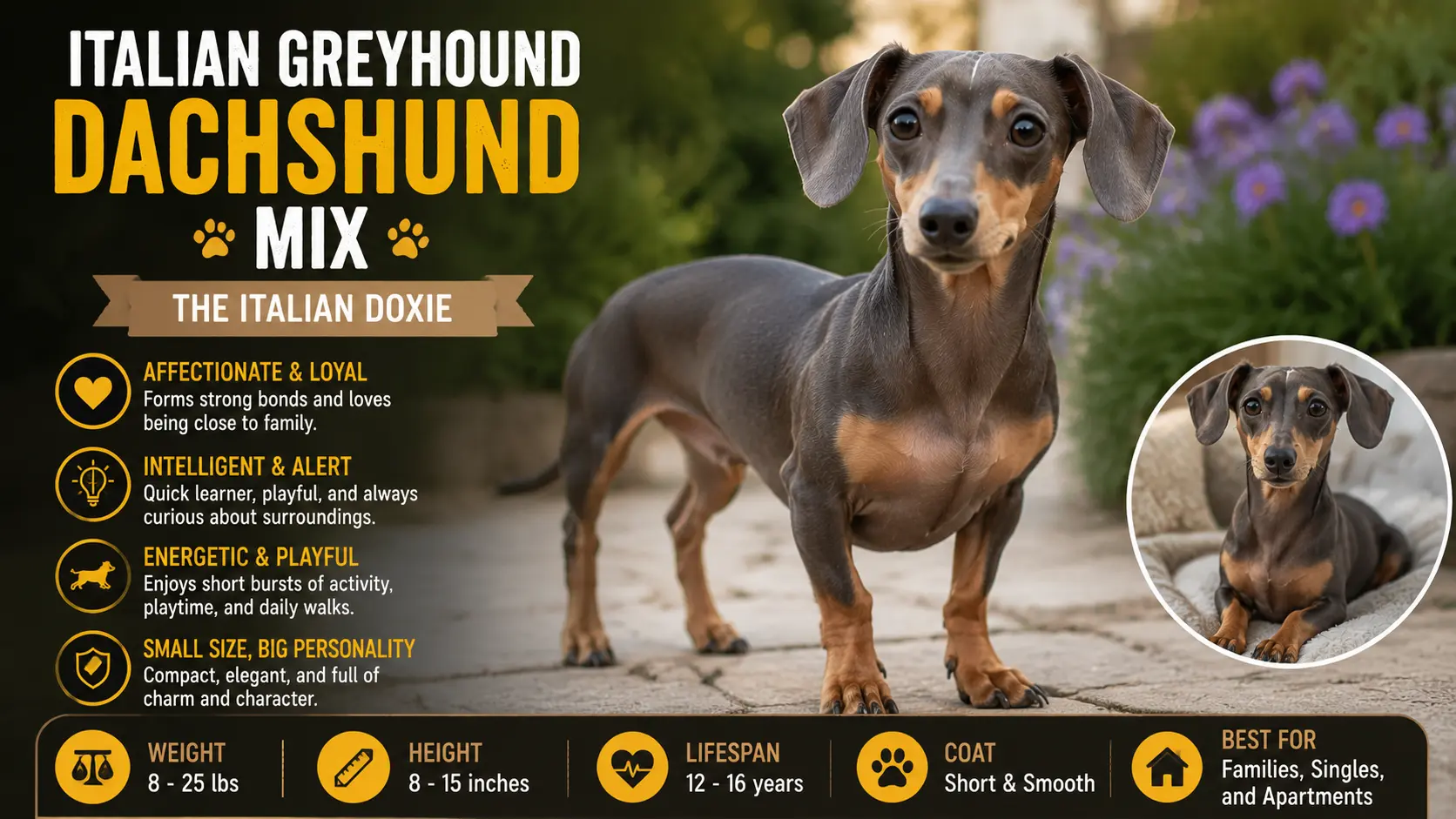
If you’ve ever spotted a dog with the sleek silhouette of a greyhound and the low-slung confidence of a dachshund, you’ve probably done a double-take. That’s the magic of the italian greyhound dachshund mix a little dog that somehow packs two legendary hunting breeds into one utterly irresistible package.
I’ll be honest: the first time I came across an Italian Doxie at a local dog park, I thought someone had put a tiny supermodel in a sausage body. The dog moved with this elegant, prancing gait, then immediately tried to steal someone’s sandwich. That said everything you need to know about this breed’s personality.
Whether you’re seriously considering bringing one home or you’re just curious about this fascinating hybrid, this guide covers everything from breed history and temperament to health, training, and what life with an Italian Doxie actually looks like day to day.
What Is the Italian Greyhound Dachshund Mix?
The italian greyhound dachshund mix, often called the Italian Doxie, is a designer hybrid created by crossing the Italian Greyhound (often called the “Iggy”) with the Dachshund. It is not a purebred dog and is not recognized by the American Kennel Club (AKC) as an official breed. However, it is recognized by the Dog Registry of America (DRA) and the Designer Dogs Kennel Club (DDKC).
This mix is a relatively new hybrid, but it draws on two breeds with remarkably deep histories. And in a pet landscape where mixed breeds are surging in popularity Rover’s 2025 data confirms mixed breeds now hold the #1 spot in U.S. pet homes, with 49% of pet parents adopting from shelters the Italian Doxie is perfectly positioned for growing mainstream appeal.
A Quick Look at the Parent Breeds
Understanding the italian greyhound dachshund mix starts with knowing its parents well.
The Italian Greyhound originated in Italy approximately 2,000 years ago, developed from naturally smaller-sized Greyhounds. In ancient Egypt, Greyhounds were revered as gods, and only royalty were permitted to own them. The Italian Greyhound eventually became a prestigious status symbol among European nobility and was recognized by the AKC in 1886. Today, Italian Greyhounds typically live 14–15 years and are known for their sighthound instincts, lean frame, and minimal shedding.
The Dachshund, on the other hand, hails from Germany and was bred as far back as the 15th century specifically to hunt badgers. Their elongated body and short legs made them perfectly engineered to navigate underground tunnels. In the United States, Dachshunds have also been used to track wounded deer and hunt prairie dogs. Their tenacity and boldness are legendary they are essentially big-dog personalities in a tiny body.
When you cross these two breeds, you get the italian greyhound dachshund mix: a dog that brings together 4,000 years of combined canine heritage into one uniquely charming companion.
Physical Characteristics of the Italian Doxie
One of the most interesting things about the italian greyhound dachshund mix is how unpredictable its appearance can be. Because genetics don’t follow a script, puppies from the same litter can look quite different.
Size, Weight, and Build
Most Italian Doxies fall into a small-to-medium size range. Here’s what you can generally expect:
| Trait | Typical Range |
|---|---|
| Weight | 8–25 lbs |
| Height | 8–15 inches at the shoulder |
| Body Type | Elongated but less extreme than a pure Dachshund |
| Leg Length | Longer than a Dachshund, shorter than an Italian Greyhound |
| Lifespan | 12–16 years |
| Coat | Short, smooth, and low-shedding |
Some individuals inherit the Dachshund’s low, elongated body, while others stand taller and leaner like the Italian Greyhound. Most end up somewhere in between a body that is slightly more stocky than a traditional Dachshund but not as elongated, with slightly longer legs that give them a more proportionate look.
Coat and Colors
The italian greyhound dachshund mix typically has a short, smooth coat that requires minimal grooming. Accepted coat colors mirror those of both parent breeds and include gray, slate gray, fawn, red, blue, black, cream, white, and sable sometimes with white markings. Shedding is generally low, making this an appealing option for those who prefer a tidier home.
One important note: if your Italian Doxie carries the dilution gene, the coat may become patchy or sparse over time. This doesn’t typically affect the dog’s overall health but is worth monitoring.
Temperament: What to Expect from an Italian Doxie
If you ask me, the temperament of the italian greyhound dachshund mix is where things get really interesting. You’re combining a sensitive, affectionate sighthound with a bold, stubborn scent hound. The result? A dog that will cuddle you to death one minute and ignore every training command the next.
Personality Traits
The italian greyhound dachshund mix is widely described as:
- Loyal and devoted — Italian Doxies form strong bonds with their primary owners and love being nearby at all times.
- Playful and energetic — Despite their small size, these dogs have a happy-go-lucky attitude and love interactive play.
- Sweet with children and other pets — When properly socialized, the Italian Doxie gets along well with kids and other animals.
- Confident and sometimes stubborn — The Dachshund’s alpha personality comes through. This is a dog that knows what it wants.
- Somewhat independent — They’re capable of entertaining themselves, which makes them slightly better suited for busy households than some more clingy toy breeds.
The italian greyhound dachshund mix is also known for being an excellent apartment dog. As long as they’re mentally stimulated and not left alone for excessive periods, they tend not to disturb neighbors with barking. That said, Italian Greyhounds are naturally more prone to vocalizing, so early bark training is recommended.
Are They Good for First-Time Owners?
Yes with a caveat. The italian greyhound dachshund mix is generally considered suitable for first-time owners, provided those owners take the time to research both parent breeds, understand the training challenges, and come in with a stock of patience. They respond well to positive reinforcement and short, consistent training sessions.
Training the Italian Greyhound Dachshund Mix
This is arguably the trickiest part of owning an italian greyhound dachshund mix. Both the Italian Greyhound and the Dachshund are intelligent but notoriously headstrong, and together, they create a dog that is smart enough to understand exactly what you’re asking and willful enough to decide whether it feels like complying.
Potty Training Challenges
Italian Greyhounds are famously difficult to housebreak. Combined with the Dachshund’s stubbornness, potty training an Italian Doxie can take considerably longer than with other small breeds. Crate training, consistent schedules, and high-value rewards are your best tools here. Don’t be discouraged if it takes several months this is normal for the breed.
Socialization Is Key
Early socialization is essential for the italian greyhound dachshund mix. Both parent breeds have prey drive Italian Greyhounds as sighthounds, and Dachshunds as hunting dogs. Introducing your Italian Doxie to a wide variety of people, animals, and environments during puppyhood will help temper these instincts and build a well-rounded adult dog.
For more breed-specific training tips and behavioral insights, explore our Dachshund Guides for in-depth resources tailored to dachshund mixes.
Exercise Needs: How Much Activity Does an Italian Doxie Need?
The italian greyhound dachshund mix has moderate exercise requirements. Because of the Iggy’s lean frame and the Dachshund’s short legs and spinal vulnerabilities, long, intense exercise sessions are not recommended and can actually cause long-term joint damage.
Two 20-minute walks per day is generally considered the sweet spot. Beyond that, indoor playtime, puzzle toys, and short romps in a securely fenced yard are ideal. Remember: despite the Italian Greyhound’s speed and athleticism, this mix does not have the bone structure to sustain greyhound-level exercise so don’t let the sleek silhouette fool you.
Mental stimulation matters just as much as physical activity for the italian greyhound dachshund mix. Boredom can lead to destructive behavior, so rotating toys, training games, and interactive feeders are excellent additions to the routine.
Health and Lifespan of the Italian Greyhound Dachshund Mix
One of the genuine advantages of the italian greyhound dachshund mix is hybrid vigor the tendency of mixed-breed dogs to be less susceptible to certain inherited conditions that affect their purebred parents. According to a peer-reviewed study published in Animals (2025), crossbred dogs show a decreased risk of inherited disease compared to some purebred breeds.
Typical Lifespan
The italian greyhound dachshund mix typically lives between 12 and 16 years with proper care a relatively long lifespan that reflects the longevity of both parent breeds (Italian Greyhounds live 14–15 years, according to PetMD; Dachshunds commonly live 12–16 years).
Common Health Concerns
Despite hybrid vigor, the italian greyhound dachshund mix may still inherit health issues from either parent breed. The most important ones to be aware of include:
From the Dachshund side:
- Intervertebral Disc Disease (IVDD): The elongated spine is a structural vulnerability. Preventing jumping from heights and maintaining a healthy weight are critical preventive measures.
- Dental disease: Small breeds are especially prone to tartar buildup and gum disease. Daily brushing is the best prevention.
- Cushing’s disease and hypothyroidism: Both conditions are more common in Dachshunds and can be managed with veterinary care.
From the Italian Greyhound side:
- Progressive Retinal Atrophy (PRA): A hereditary eye disease that can eventually cause blindness. Reputable breeders DNA test for this gene.
- Autoimmune disorders: Italian Greyhounds are prone to autoimmune conditions affecting the skin, joints, and internal organs.
- Patellar luxation: A condition where the kneecap slips out of position, which can also affect the italian greyhound dachshund mix. It is treatable but can be expensive.
- Bone fractures: Italian Greyhounds have finer, more delicate bones than most dogs their size. The Italian Doxie may inherit some of this fragility.
Routine veterinary visits, weight management, and genetic screening where available are the best ways to keep your italian greyhound dachshund mix healthy for the long haul.
Grooming: Low Maintenance With a Few Key Steps
The italian greyhound dachshund mix is one of the easier breeds to groom. The short, smooth coat sheds minimally and requires only a weekly brush with a soft bristle brush or rubber mitt to remove loose hair and keep the coat glossy.
Bathing every 4–6 weeks is typically sufficient unless the dog gets into something messy (which, given the Dachshund’s curious nose, is not uncommon). Nail trimming every 3–4 weeks and regular ear cleaning round out the basic grooming routine.
Pay particular attention to dental hygiene. Small breeds are disproportionately affected by periodontal disease, and the italian greyhound dachshund mix is no exception. Daily tooth brushing yes, daily paired with dental chews and annual professional cleanings is the gold standard.
Feeding the Italian Greyhound Dachshund Mix
Diet plays a major role in the health of the italian greyhound dachshund mix, particularly given the inherited spinal and joint vulnerabilities from the Dachshund side. Keeping your Italian Doxie at a healthy weight reduces stress on the spine and joints dramatically.
A high-quality small-breed dry kibble with meat as the first ingredient, divided into two meals per day, is a solid starting point. The exact portion size will depend on your dog’s weight, age, and activity level your vet is your best resource for personalized recommendations. Avoid free feeding, which commonly leads to weight gain in small breeds.
Is the Italian Greyhound Dachshund Mix Right for You?
Let’s be real the italian greyhound dachshund mix is not for everyone. But for the right person or family, they are an absolute joy.
You’ll thrive with an Italian Doxie if you:
- Live in an apartment or a home without a large yard
- Work from home or have a flexible schedule
- Want a low-shedding, manageable coat
- Are patient with training and understand that progress may be slow
- Can commit to regular vet visits and weight management
You may want to reconsider if you:
- Have very small pets (the prey drive is real)
- Need a dog that can keep up with intense outdoor activities
- Prefer a breed that’s quick to housetrain
- Have a household with very young, rough-playing children (the Italian Greyhound’s fragile bone structure can be a concern)
According to the AVMA, choosing a dog that matches your lifestyle not just your aesthetic preferences is the single most important factor in long-term pet satisfaction. The italian greyhound dachshund mix is a nuanced breed, and that nuance deserves honest consideration before adoption.
Where to Find an Italian Greyhound Dachshund Mix
Given that the italian greyhound dachshund mix is a designer hybrid, your options include reputable breeders or rescue organizations. If you go the breeder route, insist on genetic health testing for both parents, particularly for PRA and IVDD-related markers.
Rescue is another excellent avenue. Both Italian Greyhound and Dachshund rescues occasionally take in mixed-breed dogs, and the AVMA’s 2024 Pet Ownership Sourcebook confirms that rescued mixed breeds now outnumber AKC-registered purebreds in U.S. homes suggesting a wide and growing pool of adoption opportunities.
A 2024 Rover survey also found that Gen Z pet parents are 60% more likely to choose mixed or designer breeds, which means demand for Italian Doxies is likely to increase in the coming years. Getting ahead of that curve especially through rescue is both a financially savvy and compassionate choice.
Frequently Asked Questions (FAQ)
What is the Italian Greyhound Dachshund Mix called?
The italian greyhound dachshund mix is most commonly called the Italian Doxie. You may also see it referred to as the Italian Greyhound Dachshund hybrid or simply the Iggy Dachshund mix.
How big does an Italian Greyhound Dachshund Mix get?
Most italian greyhound dachshund mix dogs weigh between 8 and 25 pounds and stand 8 to 15 inches tall. Their exact size depends on which parent’s genes are more dominant.
Are Italian Doxies easy to train?
Training an italian greyhound dachshund mix requires patience. Both parent breeds are intelligent but stubborn, and potty training in particular can take longer than with other small breeds. Positive reinforcement and short, consistent sessions work best.
Do Italian Greyhound Dachshund mixes shed a lot?
No. The italian greyhound dachshund mix has a short, smooth coat that sheds minimally. Weekly brushing is usually sufficient to keep shedding under control.
What health problems should I watch for in an Italian Doxie?
The most common health concerns for the italian greyhound dachshund mix include intervertebral disc disease (IVDD), patellar luxation, progressive retinal atrophy (PRA), autoimmune disorders, and dental disease. Regular veterinary checkups and weight management are the best preventive strategies but have you scheduled your Italian Doxie’s annual wellness exam yet?
