Teckel vs Dachshund: Same Dog, Different Story?

If you’ve ever Googled “teckel vs dachshund” and ended up more confused than when you started, you’re not alone. I remember the first time someone at a dog park called my little wiener dog a “Teckel.” I blinked. Was that an insult? A different breed entirely? Turns out, the answer is both simpler and more fascinating than I imagined and it says a lot about history, geography, and the surprisingly rich culture surrounding one of the world’s most beloved dogs.
Let’s dig in quite literally, because that’s what these dogs were born to do.
What Exactly Is a Teckel vs Dachshund?
Here’s the short answer: a teckel and a dachshund are the same dog. But that short answer does a disservice to centuries of linguistic evolution, regional identity, and working-dog tradition.
The name dachshund comes from the German words Dachs (badger) and Hund (dog), making its literal meaning “badger dog.” First referenced in texts from the early 18th century, the breed was originally called “Dachs Kriecher” (badger crawler) or “Dachs Krieger” (badger warrior) names that paint a vivid picture of its original purpose.
Teckel, on the other hand, is a regional and contextual variation of the same name. In northern Germany, hunters have long referred to their working dachshunds as Teckels, while southern Germans tend to use “Dackel” itself a shortened, affectionate form of Dachshund. The “-el” suffix is common in German diminutives, similar to how “Gretta” becomes “Gretel.”
So when you pit teckel vs dachshund in a debate, you’re really asking: does geography and purpose change a dog’s identity?
The History Behind the Name: Teckel vs Dachshund Origins
Understanding the teckel vs dachshund debate requires a brief tour through European history.
The Teckel originated in Germany as far back as the 15th century, purpose-built for hunting underground animals particularly badgers. Breeders crossed small hunting hounds with the Deutsche Bracke, producing a dog with an elongated body, stubby legs, and an almost supernatural determination to follow a scent into the darkest burrow.
By the 19th century, the breed had spread across Europe and won admirers in royal courts Queen Victoria herself was famously devoted to her dachshunds. The breed hit a temporary rough patch during World War I, when anti-German sentiment led to them being shunned in Britain and America. But dogs have a way of winning people back.
According to the American Kennel Club, the dachshund has climbed dramatically in popularity in recent years, ranking 6th in 2024 among all AKC-registered breeds in the United States up from 9th in 2023. In 2025, it broke into the top five for the first time, replacing the Poodle in that coveted spot. That’s not a dog in decline that’s a cultural comeback story.
Regional Differences: When Teckel vs Dachshund Really Does Matter
Here’s where the teckel vs dachshund conversation gets genuinely interesting especially if you’re in the UK.
In Germany, all dachshunds are broadly called Teckels in hunting circles, regardless of coat type or size. The distinction is professional rather than physical: a Teckel is a working dachshund, proven in the field. In fact, in Germany, a dog of Dackel heritage can only officially earn the title of “Teckel” after completing a rigorous blood-trailing test following a scent trail at least 48 hours old to its end. Only then is a second tattoo marked in the dog’s ear, officially recognizing its Teckel rank.
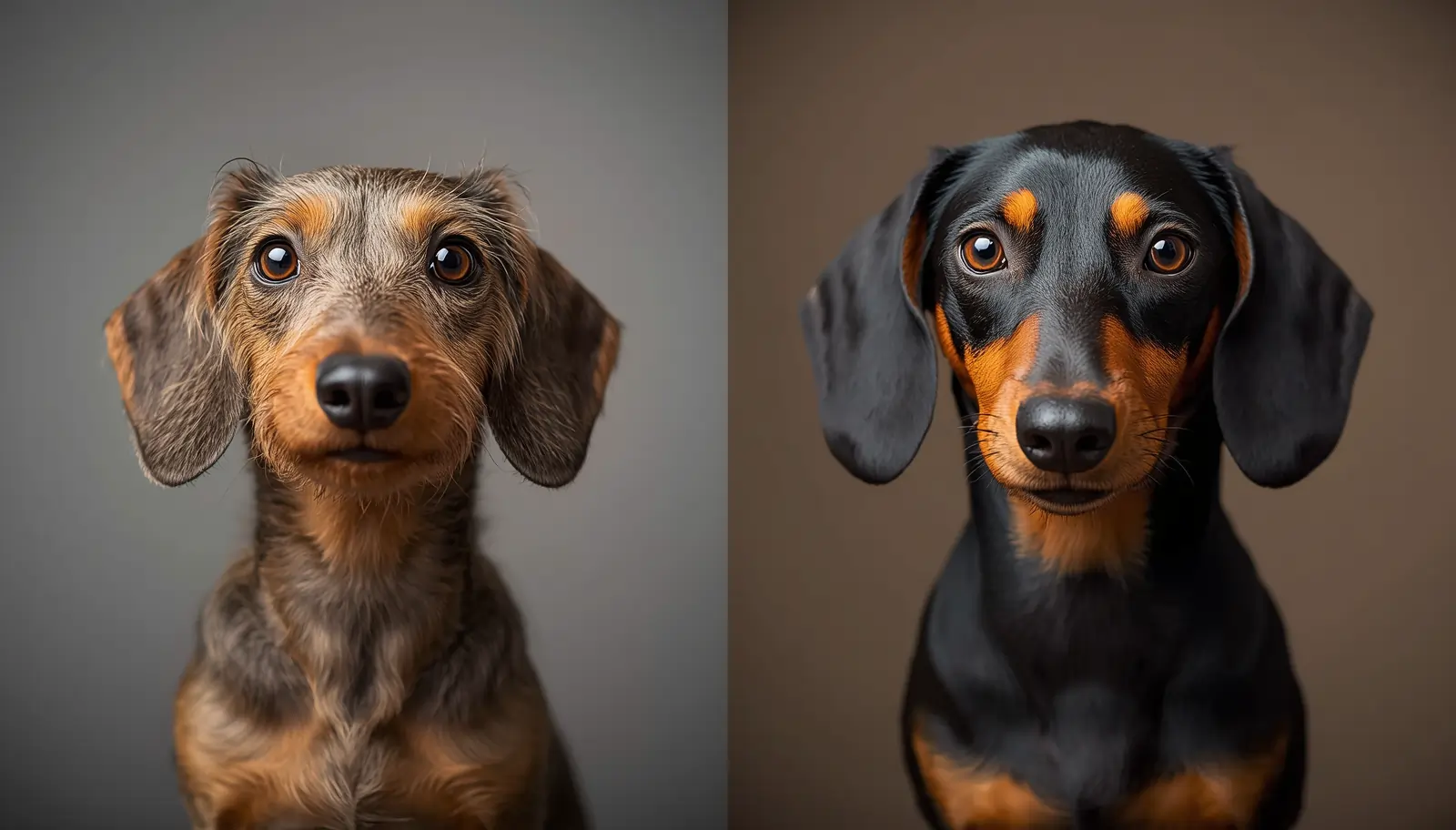
In Britain, the definition narrows considerably. A Teckel there specifically refers to the working, wire-haired variety of dachshund a rugged, field-tested dog with bushy eyebrows, a beard, and paddle-like front feet built for digging. British Teckels trace their lineage to German hunting lines imported in the 1970s, and they’re held to stricter physical and performance standards than their show-dog cousins.
In the Netherlands and other parts of continental Europe, “teckel” is used more loosely as a regional synonym for the breed as a whole.
So when someone asks you about teckel vs dachshund, the honest answer is: it depends on where you are and what the dog does for a living.
Physical Traits: Are There Any Differences?
When comparing teckel vs dachshund physically, the differences are subtle but real particularly in working lines.
| Feature | Standard Dachshund (Show) | Teckel (Working/UK) |
|---|---|---|
| Chest size | Moderate | Broader, larger lung capacity |
| Body length | Elongated | Marginally shorter |
| Coat type | Smooth, long, or wire | Primarily wire-haired |
| Front feet | Standard | Paddle-like for digging |
| Build | Compact | Slightly more robust |
| Primary role | Companion / show | Hunting / field work |
The three recognized coat types smooth-haired, wire-haired, and long-haired exist across all sizes (standard, miniature, and the smallest “kaninchen” or rabbit size). Working Teckels, however, favor the wire coat for its weatherproofing and protective qualities in dense undergrowth.
As Bernd Kügow of Waldmeister Dachshunds explains: “In Europe there’s no real division between animals for working and showing they’re all purpose.” That philosophy is at the heart of the teckel vs dachshund distinction.
Temperament and Personality: Teckel vs Dachshund in the Home
Whether you call yours a teckel or a dachshund, you’re getting the same bold, stubborn, deeply affectionate personality. These dogs were bred to work independently underground, and that independent streak doesn’t disappear just because they’re now sleeping on your sofa.
Personality traits common to both:
- Fiercely loyal to their family
- Intelligent but selectively obedient (they understand “sit” they just weigh the pros and cons first)
- Energetic, curious, and mischievous
- Excellent watchdogs thanks to their sharp hearing and vocal nature
- Prone to stubbornness, especially in wet weather
That last point is more than a joke. Lucy Meager, a working teckel owner quoted in The Field, captured it perfectly: her dogs understood the rules perfectly they just preferred not to follow them if the grass was damp.
One thing that applies equally to teckel vs dachshund owners: early socialization and consistent positive training are non-negotiable. An untrained dachshund is a handful; an untrained teckel, as one expert put it, is “a nightmare.”
For families with children, both teckels and dachshunds are playful and affectionate though supervision with very young children is always advisable given their strong personalities. For apartment dwellers, their moderate size (standard dachshunds typically weigh 16–32 lbs; miniatures under 11 lbs) makes them well-suited to urban life. It’s no coincidence they rank among the top 10 most popular breeds in 76 of 190 major U.S. cities surveyed by the AKC.
Health and Lifespan: What Owners Should Know

Whether you’re raising a teckel or a dachshund, spinal health is the defining health concern. Their elongated spine makes them prone to Intervertebral Disc Disease (IVDD), and activities like jumping, stair-climbing, and rough play should be managed carefully.
A 2024 UK study found that the dachshund’s life expectancy averages 13.2 years above the 12.7-year average for purebreds overall. Miniature dachshunds tend to live slightly longer, with a median expectancy of 14 years.
Other health considerations for both teckel vs dachshund owners:
- Weight management — their low-to-ground build combined with a love of food makes obesity a real risk and major strain on the spine
- Ear care — drooping ears require regular cleaning to prevent infections
- Diet — small, frequent meals suit their fast metabolism better than one large feeding
The good news: with proper care, regular vet visits, and a ramp instead of stairs, these dogs are remarkably resilient. For deeper health guidance, explore our Dachshund Guides for breed-specific advice on nutrition, exercise, and preventative care.
Teckel vs Dachshund in the Field: Working Dog Capabilities
This is where the teckel truly earns its distinct identity. In Europe, particularly in Germany and Scandinavia, working Teckels are serious sporting dogs not the “comical sausage dog capable of nothing more athletic than lifting its leg” that the British show world sometimes presents.
German working Teckels are required to pass tests covering:
- Following a 40-hour-old blood trail to its conclusion
- Retrieving waterfowl from open water
- Flushing and bolting game from burrows
- Tracking wounded deer (a growing role in UK stalking communities)
“They are super sporting dogs,” says David Logan, a stalker and working teckel enthusiast. “Physically they are a proper little package protective coat, floppy ears to protect the eyes, and a nose virtually at ground level.”
In Europe, Teckels are prized for Drückjagd (driven hunts), where their nimble, low-set bodies allow them to work around wild boar animals sometimes five times their height and over 200 lbs. That’s not a lap dog. That’s an athlete in a sausage-shaped package.
In America, breeders have developed working Teckels capable of flushing game to hawks and performing earthdog trials. The teckel vs dachshund distinction in this context is less about name and more about breeding philosophy: working lines vs companion lines.
How to Choose: Should You Get a Teckel or a Dachshund?
Honestly? That’s the wrong question. The better question is: what kind of life are you offering this dog?
If you want a spirited, loyal companion for city living a dog that’ll curl up on your lap at night and demand a walk every morning a standard dachshund from a reputable breeder or rescue organization is a wonderful choice.
If you’re a hunter, stalker, or country dweller looking for a versatile working dog that can also be a devoted family pet, seeking out working Teckel lines (particularly wire-haired) in Britain or Europe will give you a dog with the drive and physical capacity for serious field work.
Either way, the teckel vs dachshund distinction matters less than the individual dog’s temperament, the quality of the breeder, and how well-matched the dog is to your lifestyle.
A dachshund’s life expectancy of 13–15 years means you’re making a decade-plus commitment. Take that seriously, whichever name you use.
FAQ: Teckel vs Dachshund Your Questions Answered
Q1. Are a teckel and a dachshund the same breed?
Yes. Teckel, Dackel, and Dachshund all refer to the same German breed. The differences are regional and contextual “Teckel” is used by hunters in northern Germany and specifically denotes working wire-haired dachshunds in Britain.
Q2. Why do British hunters call them Teckels?
In the UK, “Teckel” specifically refers to the working, wire-haired variety bred from German hunting lines imported in the 1970s. They’re distinguished by their field ability, broader chests, and rougher coats from their show-ring cousins.
Q3. Is a Teckel a better hunter than a regular Dachshund?
Working-line Teckels are bred and tested for hunting ability, including blood-trailing, flushing, and retrieving. Show-type dachshunds retain hunting instincts but are not field-tested. The difference lies in selective breeding, not the base breed.
Q4. How popular is the dachshund globally?
Very. According to American Kennel Club 2025 registration data, the dachshund entered the top five most popular dog breeds in America for the first time a remarkable climb from 9th place just two years prior. They rank in the top 10 breeds in 76 of 190 major U.S. cities.
Q5. What should I know before getting a teckel vs dachshund?
Both share the same spinal health risks, stubborn personalities, and exercise needs. Budget for a ramp (to protect the spine from jumping), prioritize early training, and plan for 13–15 years of companionship. Whether you call your dog a Teckel or a Dachshund, are you truly prepared for a dog that will absolutely outlast your favorite couch?
